
Preventing Middle East Travel Chaos: Saudia Deploys 12 New Aircraft to Shield Passengers from Massive Regional Flight Disruptions
As severe operational bottlenecks paralyze Gulf aviation hubs, Saudia aggressively deploys new Airbus A321neo aircraft to help passengers survive terrifying travel chaos and ground delays.

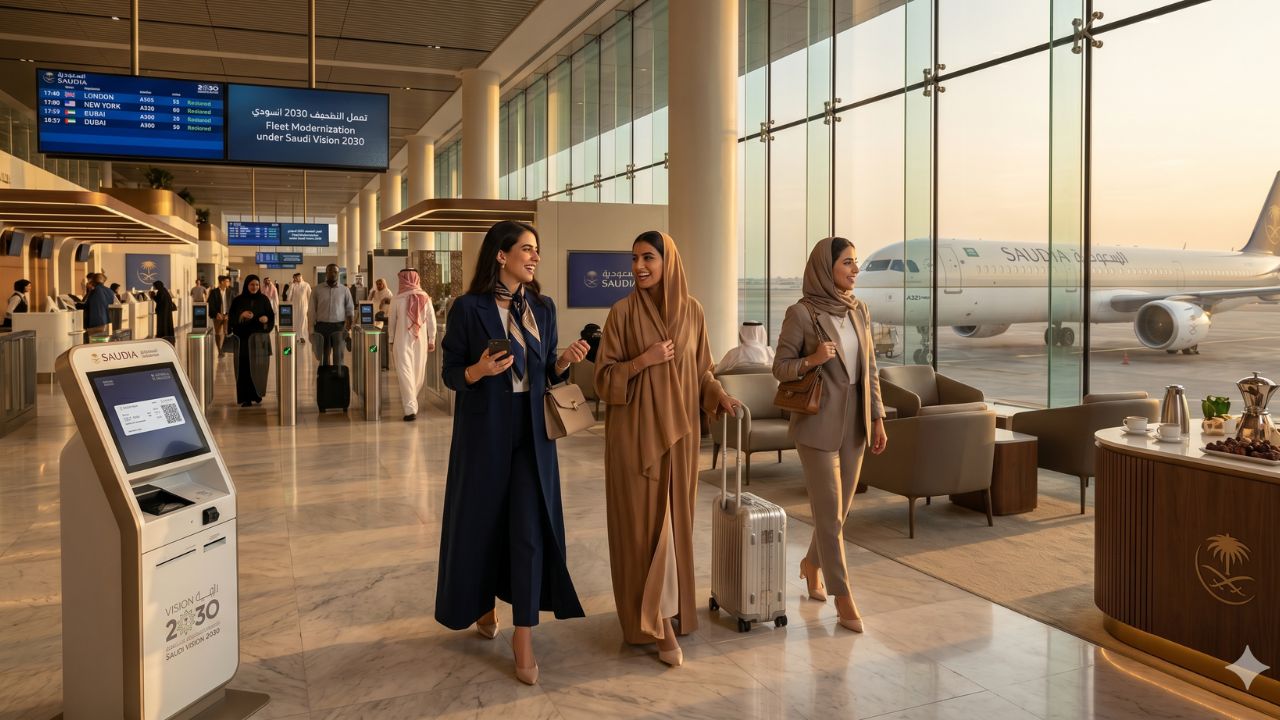
Image generated by AI
Severe Airport Disruptions Force an Aviation Infrastructure Evolution
While massive sectors of the global passenger network frequently battle highly unpredictable weather events, synchronized logistical bottlenecks and horrific aircraft shortages remain the absolute most terrifying catalysts for sudden, unmanageable terminal congestion. Delivering highly urgent, breaking airline news, verified Middle Eastern aviation trackers confirm that ongoing operational meltdowns at massive connecting hubs are actively generating severe, cascading travel chaos across major Gulf corridors. Today, June 2, 2026, as massive flight cancellations violently paralyze connecting flights nationwide due to severe capacity limits, desperate passengers are frantically seeking highly reliable carriers to escape the congested airspace.
While travelers already attempt to navigate sudden, terrifying airport disruptions caused by massive seasonal volumes, these exclusive aviation updates reveal a massive strategic lifeline in Saudi Arabia. Moving aggressively to isolate the operational bottlenecks hitting the territory, Saudia, the national flag carrier of the Kingdom of Saudi Arabia, is fiercely executing a massive fleet expansion. Scheduled for rapid 2026 delivery, the integration of 12 next-generation commercial passenger planes is explicitly designed to reinforce operational efficiency, prevent horrific ground delays, and completely shield global passengers from the massive travel volatility sweeping the industry.
Expanded Overview: Surviving the Terminal Gridlock
The sudden, highly publicized execution of this massive operational strategy serves as an undeniable example of how rapidly the world's most critical transit hubs must adapt to constant logistical delays. Designed explicitly to boost domestic tourism demand under Saudi Vision 2030 and fiercely prevent travel chaos, this massive capacity injection provides a completely direct, incredibly reliable travel corridor for international vacationers and corporate travelers.
By aggressively increasing total operational capacity, the airline's position is massively strengthened within a highly competitive regional market prone to severe scheduling failures. The ongoing modernization is dictated by global aviation standards and the desperate need to eliminate operational bottlenecks. Strategic alignment is maintained with national socio-economic priorities under the overarching framework of Saudi Vision 2030, establishing a highly resilient transportation infrastructure capable of accommodating escalating tourism demands without triggering the catastrophic terminal meltdowns seen in neighboring countries.
Section-Wise Breakdown of the Infrastructure Shield
The Airbus A321neo Integration
Following the historic, highly successful deployment of the first Airbus A321XLR into the network, the narrow-body capabilities of the airline are scheduled to be further upgraded to combat high-volume congestion. The arrival of the massive Airbus A321neo model is a direct countermeasure against regional flight disruptions.
A highly efficient dual-class configuration is strictly utilized within these incoming assets, which are designed to feature exactly 20 premium Business Class seats alongside 168 incredibly spacious Guest Class seats. Comfort, efficiency, and the overall onboard experience are aggressively targeted for optimization. Passenger satisfaction and operational performance are simultaneously augmented by the inclusion of high-speed inflight connectivity systems, ensuring passengers remain updated during any potential weather-related delays.
Eradicating Operational Bottlenecks
A methodical and highly disciplined approach to building adequate capacity, structural efficiency, and absolute institutional readiness is reflected in the fleet expansion strategy, as officially noted by Ibrahim Al-Omar, the Director General of Saudia Group. In an environment defined by intense commercial rivalry and constant threats of ground delays among Gulf carriers, the modernization of the organizational fleet is fiercely guided by clear market insights.
Comprehensive planning is heavily extended to operational readiness. Guarantees are established to ensure that absolutely every individual aircraft entering active commercial service is fully supported by the requisite maintenance, repair, and overhaul capabilities. Capital investments in physical assets are thus paired with parallel investments in logistical frameworks, completely preventing the emergence of terrifying operational bottlenecks or crippling ground delays that strand passengers.
Verified Saudia Fleet Expansion Data
To fully comprehend the massive operational scale and strategic deployment dictating this highly secure network expansion, the following table explicitly details the exact operational metrics officially recorded for Saudia's 2026 fleet integration:
| Operational Metric | Verified Capacity Expansion Data |
|---|---|
| Operating Airline | Saudia (National Flag Carrier) |
| New 2026 Deliveries | 12 Next-Generation Passenger Planes |
| Projected 2026 Fleet Total | 161 Aircraft by End of Year |
| Incoming Aircraft Model | Airbus A321neo |
| Previous Integration | Airbus A321XLR |
| Business Class Seating | 20 Premium Seats (A321neo) |
| Guest Class Seating | 168 Spacious Seats (A321neo) |
| Director General | Ibrahim Al-Omar |
| Strategic Framework | Saudi Vision 2030 Integration |
Passenger Impact: Navigating the New Gateway
For the modern domestic and international commuter attempting to navigate this highly volatile Middle Eastern corridor, the passenger impact of historical operational meltdowns is completely exhausting. Massive flight cancellations caused by aircraft shortages are incredibly frustrating, but knowing that carriers like Saudia are aggressively expanding direct capacity can heavily minimize terminal stress.
- Anticipate Superior Reliability: The total operational fleet of Saudia is officially projected to reach a massive 161 aircraft by the conclusion of the calendar year. This sheer volume of aircraft completely insulates the carrier from the terrifying cascading delays that occur when a single plane breaks down.
- Rely on Expert Human Capital: The preparation of the local aviation workforce is prioritized. New cohorts of commercial pilots, cabin crew members, and aircraft maintenance specialists have already been graduated through specialized institutional academies to ensure absolute operational readiness.
- Utilize the High-Speed Network: The integration of high-speed inflight connectivity guarantees that corporate travelers can maintain productivity and alter connecting plans instantly in the event of severe weather.
Conclusion: A Highly Secure Travel Future
The massive, highly publicized capacity crunch currently facing the global aviation market guarantees that severe delays will continue to violently trap passengers in confined spaces. By actively introducing 12 next-generation Airbus aircraft into the fleet throughout 2026, Saudia acts as a massive shield against terrifying Gulf terminal gridlock. As the operational teams frantically battle this massive industry travel chaos, passengers are heavily urged to aggressively book these newly expanded routes, strictly rely on the massive A321neo capacity, and fully secure their upcoming vacations amidst unprecedented international travel volatility.
Key Takeaways
- Massive Fleet Upgrade: Saudia is actively integrating 12 next-generation commercial aircraft throughout 2026 to combat regional capacity shortages.
- Surviving Terminal Gridlock: The massive fleet expansion prevents the severe ground delays and operational bottlenecks that trigger massive flight cancellations.
- Airbus A321neo Deployment: The new aircraft feature 20 Business Class seats and 168 Guest Class seats, following the successful A321XLR launch.
- 161 Aircraft Fleet: The airline’s total operational fleet is projected to reach an incredibly resilient 161 aircraft by year-end.
- Executive Commitment: Director General Ibrahim Al-Omar confirmed the massive investment in maintenance and workforce readiness to guarantee smooth operations.
Disclaimer: The specific aircraft metrics, seating capacities, and operational timelines presented in this report are based on verified statements from Saudia regarding their 2026 expansion on June 2, 2026. Official airline routing, terminal congestion levels, and final fleet deployment options are highly volatile and subject to continuous, real-time update based on active carrier operational directives. Prospective passengers are urgently advised to fiercely monitor their specific booking status and verify active transit paths directly via the airline's official portal prior to airport arrival.
Disclaimer
This article is for informational and educational purposes only. It does not constitute legal, financial, or professional advice. While we strive to provide accurate and up-to-date information, travel policies, regulations, and conditions change rapidly. Always verify information with official sources before making travel decisions. Nomad Lawyer makes no representations about the accuracy, reliability, completeness, or suitability of the information provided. Readers should consult qualified professionals for advice specific to their circumstances. The views expressed in this article are those of the author and do not necessarily reflect the views of Nomad Lawyer.
Kunal K Choudhary
Co-Founder & Contributor
A passionate traveller and tech enthusiast. Kunal contributes to the vision and growth of Nomad Lawyer, bringing fresh perspectives and driving the community forward.
Learn more about our team →