
Saudi Arabia Teams Up With UK, Qatar, and Kuwait in Security Talks to Safeguard Middle East Aviation Corridors and Tourism in 2026
Saudi Foreign Minister Prince Faisal bin Farhan leads high-level security talks with the UK, Qatar, and Kuwait to protect air corridors and tourism infrastructure.

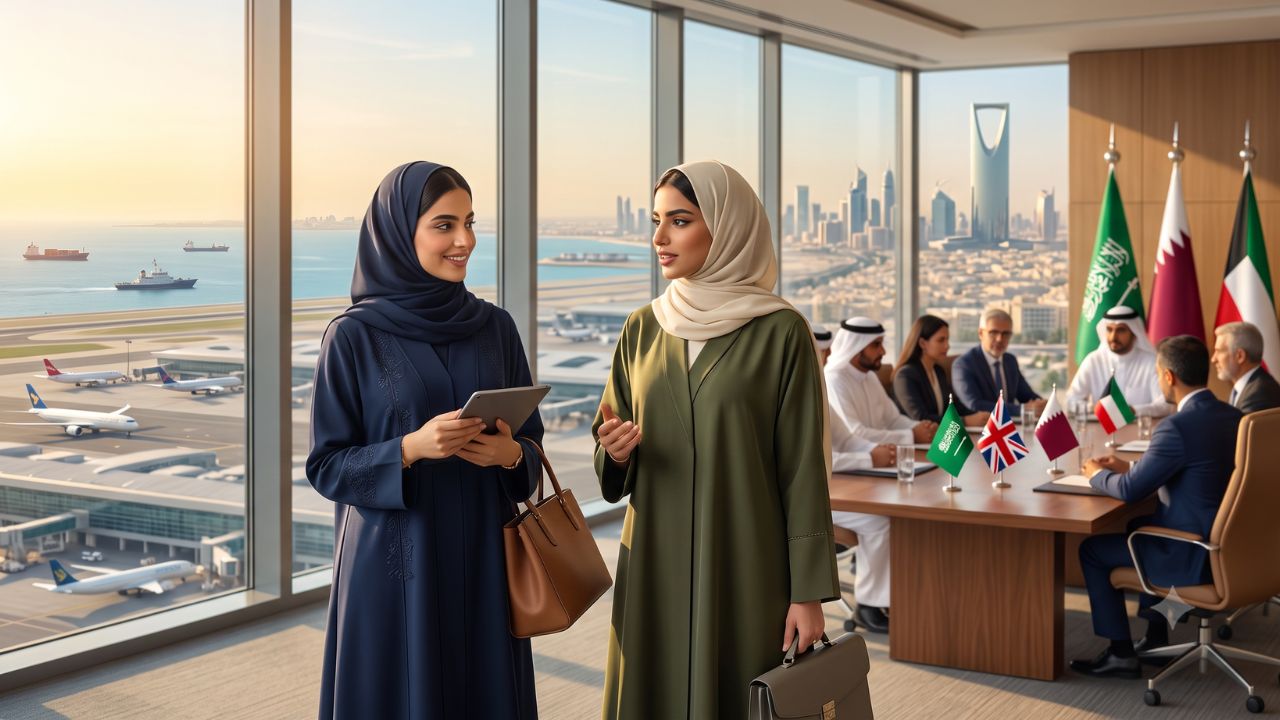
Image generated by AI
Saudi Arabia Teams Up With UK, Qatar, and Kuwait in Security Talks to Safeguard Middle East Aviation Corridors and Tourism in 2026
Headline Options
- Factual/News: Saudi Arabia Teams Up With UK, Qatar, and Kuwait in Security Talks to Safeguard Middle East Aviation Corridors and Tourism in 2026
- Curiosity-Gap (Discover): How Four-Nation Security Talks Are Protecting Middle East Air Corridors and Multi-Billion Tourism Mega-Projects
- Problem-Solving (Search): How Saudi Arabia, Qatar, and Gulf Allies Are Securing Air Travel and Maritime Routes for International Visitors in 2026
SEO Title: Middle East Security Talks 2026: Saudi Arabia, UK, Qatar & Kuwait
Meta Description: Saudi Arabia partners with the UK, Qatar, and Kuwait for regional security talks to defend aviation corridors, maritime routes, and tourism investment in 2026.
Slug: saudi-arabia-uk-qatar-kuwait-middle-east-security-talks-2026
Standfirst: Saudi Arabia has initiated high-level security coordination with the United Kingdom, Qatar, and Kuwait to protect vital aviation corridors, maritime shipping lines, and tourism infrastructure from drone threats and regional risks.
Article
Regional security coordination across the Middle East is rapidly evolving into a essential economic strategy to safeguard international flight routes, maritime cruise corridors, and multi-billion-dollar tourism investments. High-level diplomatic discussions led by Saudi Foreign Minister Prince Faisal bin Farhan have brought together senior representatives from the United Kingdom, Qatar, and Kuwait.
The four-nation alliance focuses on establishing coordinated defensive mechanisms against emerging drone risks, airspace disruptions, and maritime shipping vulnerabilities. As the Middle East accelerates its transition into a global aviation hub connecting Europe, Asia, and Africa, maintaining airspace safety and traveler confidence remains vital for sustained economic growth.
+----------------------------------------------------------------------------------------------------+
|                         MIDDLE EAST DIPLOMATIC & SECURITY ALLIANCE (2026)                          |
+--------------------------+-------------------------------------+-----------------------------------+
| Participating Nation     | Lead Authority / Entity             | Primary Security & Travel Focus   |
+--------------------------+-------------------------------------+-----------------------------------+
| Saudi Arabia             | Foreign Minister Prince Faisal      | Defending airport infrastructure, |
|                          | bin Farhan                          | Red Sea resorts, AlUla & Riyadh   |
+--------------------------+-------------------------------------+-----------------------------------+
| United Kingdom           | Foreign & Commonwealth Office /     | Protecting UK-Gulf flight routes, |
|                          | Defense Partners                    | trade flows & European tourists   |
+--------------------------+-------------------------------------+-----------------------------------+
| Qatar                    | Ministry of Foreign Affairs &       | Securing Doha hub transit flights |
|                          | Civil Aviation Authority            | & global aviation corridors       |
+--------------------------+-------------------------------------+-----------------------------------+
| Kuwait                   | Diplomatic Corps & Gulf Cooperation | Protecting maritime shipping,     |
|                          | Council (GCC) Envoys                | regional borders & air networks   |
+--------------------------+-------------------------------------+-----------------------------------+
Multi-State Security Framework and Economic Growth
Saudi Arabia’s national tourism strategy relies on creating a stable environment for international arrivals, airline partners, and hospitality investors. The Kingdom has funneled massive capital into flagship destinations including Riyadh, Jeddah, AlUla, and the Red Sea project.
Foreign Minister Prince Faisal bin Farhan’s diplomatic initiative reflects a broader understanding that commercial destinations require robust air defense, protected borders, and international security partnerships. Safe airports and uncompromised flight paths are fundamental prerequisites for attracting leisure and corporate travelers.
Regional stability directly influences international flight scheduling, insurance premiums for commercial airlines, and foreign direct investment in hospitality assets across the Gulf region.
UK-Gulf Diplomatic Ties and Transatlantic Air Corridors
The United Kingdom continues to expand its defense, trade, and intelligence collaboration with Saudi Arabia and neighboring Gulf states. British travelers represent one of the primary source markets for Gulf destinations, making flight corridor safety a shared priority for London and Riyadh.
The Middle East serves as an essential flight bridge linking European departure points with major hubs across Asia, Africa, and Australasia. Any security incident along these transit corridors can ripple across international aviation networks, causing reroutings, extended flight times, and increased operational costs.
+----------------------------------------------------------------------------------------------------+
|                      KEY RISKS AND TARGETED PROTECTIVE MEASURES                                    |
+------------------------------------+---------------------------------------------------------------+
| Identified Operational Risk        | Coordinated Diplomatic & Security Defense Action              |
+------------------------------------+---------------------------------------------------------------+
| Unmanned Drone Threats             | Enhanced regional radar sharing & airport perimeter defenses  |
+------------------------------------+---------------------------------------------------------------+
| Maritime Shipping & Cruise Risks   | Joint naval monitoring in Red Sea & Gulf shipping lanes       |
+------------------------------------+---------------------------------------------------------------+
| Airspace Routing Disruption        | Inter-governmental civil aviation coordination & route backup |
+------------------------------------+---------------------------------------------------------------+
Aviation Transit Protection in Qatar and Kuwait
Qatar’s position as a international transit powerhouse makes airspace defense a top national priority. Doha’s airport infrastructure and global carrier networks handle millions of connecting passengers daily, meaning regional security directly dictates global passenger volume.
Kuwait’s active participation reinforces the commitment of Gulf Cooperation Council (GCC) members to present a unified defense posture. Kuwait relies heavily on open maritime lanes and secure transit airspace for trade and regional economic integration.
- Air Corridor Defense: Multi-nation intelligence sharing to prevent airspace closures and flight delays.
- Maritime Line Protection: Joint security oversight for cruise lines and commercial vessels navigating Red Sea and Gulf waters.
- Investor & Traveler Confidence: Statutory stability guarantees supporting international hotel brands, tour operators, and commercial airlines.
Data Table
| Diplomatic & Regional Indicator | Measured Scope & Focus Parameter |
|---|---|
| Lead Diplomatic Envoy | Saudi Foreign Minister Prince Faisal bin Farhan |
| Participating Nations | Saudi Arabia, United Kingdom, Qatar, Kuwait |
| Key Threat Categories Addressed | Drone technologies, maritime shipping risks, regional instability |
| Primary Saudi Destinations Protected | Riyadh, Jeddah, AlUla, Red Sea tourism megaprojects |
| Critical Global Transit Role | Intercontinental air corridor connecting Europe, Asia, and Africa |
| Key Tourism Sectors Covered | Commercial aviation, luxury cruise travel, heritage & religious tourism |
Key Takeaways
- Four-Nation Strategic Alliance: Saudi Arabia, the UK, Qatar, and Kuwait have initiated coordinated security talks to protect Middle East air corridors and maritime routes.
- Defense Against Drone & Maritime Risks: Joint efforts focus on neutralizing drone threats near airports and protecting Red Sea and Gulf shipping lanes for cruise lines.
- Protecting Megaproject Investments: Security coordination provides stability for multi-billion-dollar developments in Riyadh, Jeddah, AlUla, and the Red Sea project.
- Global Aviation Continuity: Protecting Gulf airspace safeguards major transit routes connecting European hubs with destinations across Asia and Africa.
FAQ
Why are Saudi Arabia, the UK, Qatar, and Kuwait holding security talks?
The four nations are coordinating security measures to protect regional air corridors, maritime shipping lines, and tourism infrastructure against drone threats and regional risks.
How do Middle East security talks impact international travelers?
Enhanced regional security ensures safe airspace, reduces flight reroutings, protects commercial airport hubs, and maintains passenger confidence for European and global visitors.
Which Saudi tourism destinations are supported by these security measures?
The security alliance helps protect major national developments, including Riyadh, Jeddah, AlUla, and the Red Sea luxury tourism projects.
Internal Connection
Enhance your regional travel coverage with these related destination and aviation features:
- Middle East Tourism Crisis: UAE, Qatar, and Oman Hotel Occupancy Dynamics
- Saudi Arabia GACA Passenger Rights and Pilgrimage Regulations
- Top 10 Gulf Aviation Hubs for International Travelers
Related Travel Guides
Disclaimer
This article is for informational and educational purposes only. It does not constitute legal, financial, or professional advice. While we strive to provide accurate and up-to-date information, travel policies, regulations, and conditions change rapidly. Always verify information with official sources before making travel decisions. Nomad Lawyer makes no representations about the accuracy, reliability, completeness, or suitability of the information provided. Readers should consult qualified professionals for advice specific to their circumstances. The views expressed in this article are those of the author and do not necessarily reflect the views of Nomad Lawyer.
Kunal K Choudhary
Co-Founder & Contributor
A passionate traveller and tech enthusiast. Kunal contributes to the vision and growth of Nomad Lawyer, bringing fresh perspectives and driving the community forward.
Learn more about our team →