
New Jersey Eco-Tourism Funds Wildlife Restoration Across Urbanized Landscapes

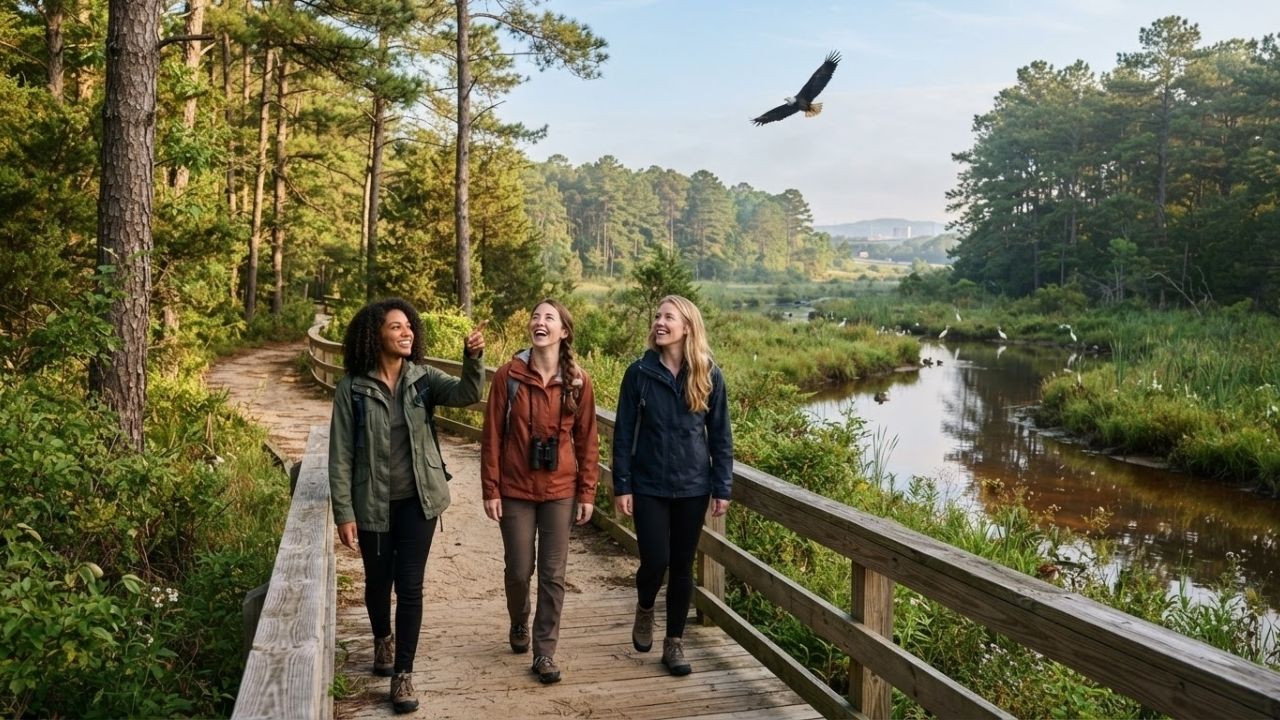
Image generated by AI
Statewide environmental management and public eco-tourism spending have transformed New Jersey's urbanized corridors into active wildlife sanctuaries, funding habitat recovery across 1.1 million acres of protected reserves.
[TRENTON, N.J., Aug. 31, 2026] — Long recognized for dense highway networks and industrial corridors, New Jersey has developed an internationally recognized eco-tourism framework that converts visitor spending directly into wildlife defense. Through integrated land preservation, public license plate conservation schemes, and strategic habitat corridors, state agencies and local communities are restoring endangered species populations across the Pinelands, Delaware Bay, and Northwestern Highlands.
The bio-resilience model proves that high-density human development and ecological preservation can coexist. Official tourism data shows that state outdoor recreation expenditures exceed $6 billion annually, generating revenue that funds environmental monitoring, beach dune restoration, and eco-passages while providing households with an estimated $1,545 in annual tax savings.
Pinelands National Reserve Protects 17-Trillion-Gallon Kirkwood-Cohansey Aquifer
Spanning 1.1 million acres across seven southern counties, the Pinelands National Reserve represents roughly 22% of New Jersey’s total landmass. Established by Congress in 1978 as America’s first National Reserve and recognized as a UNESCO International Biosphere Reserve in 1988, this continuous pine-oak forest sits atop the massive Kirkwood-Cohansey aquifer, which holds an estimated 17 trillion gallons of pure groundwater.
The aquifer's naturally soft, mineral-poor, and acidic water (pH 3.5 to 5.5) creates a specialized wetland environment that harbors over 800 plant and animal species, including 91 state-listed threatened or endangered plant species. Rare fauna such as the Pine Barrens Treefrog (Dryophytes andersonii) and Timber Rattlesnake (Crotalus horridus) thrive within Atlantic white cedar swamps and pitch pine forests.
Controlled eco-tourism activities, including kayaking along the Mullica River and trekking the 50-mile Batona Trail, generate low-impact revenue for historic communities like Batsto Village. State land managers strictly regulate visitor access during breeding seasons, balancing outdoor recreation with the preservation of the region's freshwater supply.
Delaware Bay Corridor Sustains Transcontinental Red Knot Migration
The Delaware Bay and Cape May coastal migration corridor serves as a critical stopover on the Atlantic Flyway. Designated as a Ramsar Wetland of International Importance and part of the Western Hemisphere Shorebird Reserve Network, the bay hosts millions of spawning horseshoe crabs (Limulus polyphemus) each May and June across Cape May and Cumberland counties.
The nutrient-rich horseshoe crab eggs provide vital nourishment for the federally threatened Red Knot (Calidris canutus rufa). During its 9,000-mile (14,500 km) migration from Tierra del Fuego in South America to Arctic nesting grounds, the Red Knot relies on Delaware Bay feeding sites to double its body weight, gaining 4 to 8 grams daily where egg densities reach tens of thousands per square meter.
State wildlife officers enforce seasonal beach closures and horseshoe crab harvest restrictions to protect foraging flocks. Bird-watching and coastal eco-tourism in these counties generate tens of millions of dollars in seasonal economic activity, funding continuous biological monitoring and public viewing platforms.
"Bobcat Alley" Reconnects Mountain Forest Corridors Across Northern New Jersey
In northern New Jersey, the Highlands region encompasses a 32,000-acre forested greenway connecting state parks to the Appalachian range. Protected under the Highlands Water Protection and Planning Act of 2004, this continuous landscape—known as "Bobcat Alley"—serves as a vital movement corridor for the state-endangered Bobcat (Lynx rufus), Indiana Bat (Myotis sodalis), and Wood Turtle (Glyptemys insculpta).
To counter habitat fragmentation caused by dense transport arteries, the Connecting Habitat Across New Jersey (CHANJ) initiative maps critical wildlife movement paths across all 21 counties. State infrastructure planners integrate specialized eco-passages, enlarged culverts, and guide fencing beneath highways, allowing terrestrial predators to migrate safely across the Kittatinny Ridge.
Hikers exploring northern mountain trails support local outdoor outfitters while contributing to trail maintenance and volunteer wildlife tracking programs.
Comprehensive Data Breakdown: Protected Ecosystems and Economic Metrics
The table below outlines New Jersey's primary protected wilderness reserves, target species, and core eco-tourism activities:
| Protected Ecosystem | Total Land / Water Area | Key Species Protected | Core Eco-Tourism & Recreation |
|---|---|---|---|
| Pinelands National Reserve | 1.1 Million Acres (22% of NJ) | Pine Barrens Treefrog, Timber Rattlesnake | Batona Trail hiking, Mullica River kayaking |
| Delaware Bay Coastal Corridor | Cape May & Cumberland Co. | Red Knot, Horseshoe Crab, Piping Plover | Spring bird-watching, eco-tours, viewing decks |
| Highlands "Bobcat Alley" | 32,000 Acres (Kittatinny) | Bobcat, Indiana Bat, Wood Turtle | Appalachian trail hiking, wildlife tracking |
| Engineered Coastal Dunes | Monmouth to Cape May | Piping Plover, Least Tern, Black Skimmer | Controlled beach access, marine bird tours |
The table below details state environmental funding mechanisms, total travel expenditure, and public economic impact figures:
| Metric Category | Statistical Figure / Valuation | Economic & Conservation Impact |
|---|---|---|
| Kirkwood-Cohansey Aquifer Volume | 17 Trillion Gallons | Supplies freshwater & protects 800+ native species |
| State Shore Protection Fund | $1.2 Billion Combined Funding | Dune restoration, storm barriers & bird nesting zones |
| Ecosystem Services Value | $498 Million Annually | Indirect water filtration, flood control & carbon storage |
| Total Tourism Expenditure | $50.6 Billion Historic Record | Overall state economic impact exceeds $80.4 Billion |
| Household Tax Savings | $1,545 Per Household Annually | Fiscal relief generated through state travel revenues |
| Outdoor Recreation Spending | $6+ Billion Annually | Supports 507,000+ jobs (1 in 12 state jobs) |
Bio-Resilience Programs Drive Recovery of Bald Eagles and Peregrine Falcons
Longitudinal monitoring by the New Jersey Department of Environmental Protection (NJDEP) Endangered and Nongame Species Program (ENSP) confirms that habitat defense and pesticide bans have reversed historic population declines among native raptors.
- Bald Eagle (Haliaeetus leucocephalus): Rebounded from a single active nest in Bear Swamp in 1982 to over 150 active nesting pairs statewide, leading to its down-listing to Special Concern.
- Peregrine Falcon: Re-established breeding pairs across urban skyscrapers, suspension bridges, and natural Palisades cliffs through captive release programs and voluntary nest monitoring networks.
- Piping Plover (Charadrius melodus): Protected during summer nesting seasons via temporary enclosure fencing across engineered coastal dunes funded by the state's $1.2 billion shore protection initiative.
Funding for these programs originates largely from voluntary public contributions, including the Conserve Wildlife specialty license plate scheme and state tax check-off donations.
Zoned Recreation Framework Manages 15 Million Annual Park Visitors
Balancing public access with ecological integrity, New Jersey state parks and wildlife management areas absorb over 15 million annual visits, while broader day-trip visitation reaches 69.9 million. Land managers deploy a zoned usage framework that concentrates high-impact sports in multi-use areas while restricting sensitive habitats to low-impact guided hiking and bird-watching.
This managed access model preserves natural storm barriers, protects groundwater filtration capacity, and generates substantial economic activity for local gateway towns without causing soil erosion or wildlife displacement.
Why This Matters: Practical Takeaways for Eco-Travelers and Conservationists
For visitors and outdoor enthusiasts exploring New Jersey's natural reserves, the state's eco-tourism model provides concrete benefits:
- Direct Conservation Impact: Purchasing Conserve Wildlife license plates, paying state park entry fees, or hiring local eco-tour guides directly funds the monitoring of 614 Species of Greatest Conservation Need.
- World-Class Wildlife Spectacles: Guided spring trips along Delaware Bay offer rare opportunities to witness transcontinental shorebird migrations and horseshoe crab spawning in protected marine sanctuaries.
- Accessible Low-Impact Trails: Well-maintained networks like the 50-mile Batona Trail and Kittatinny Ridge routes allow hikers to experience pristine pine barrens and mountain ridges within a two-hour drive of major metropolitan centers.
- Community Economic Support: Spending in gateway villages like Batsto supports local historic preservation, small business employment, and regional agritourism.
Frequently Asked Questions
What is the Kirkwood-Cohansey aquifer and why is it ecologically important?
The Kirkwood-Cohansey aquifer is a shallow groundwater reservoir beneath the Pinelands containing 17 trillion gallons of pure, acidic water that feeds Atlantic white cedar swamps and supports over 800 native species.
How does eco-tourism in New Jersey directly fund endangered species protection?
Revenue generated from specialty Conserve Wildlife license plates, state tax check-off programs, and park fees directly finances the NJDEP Endangered and Nongame Species Program (ENSP).
What species benefit from the "Bobcat Alley" corridor in northern New Jersey?
The continuous 32,000-acre Highlands forest corridor protects habitat for the state-endangered Bobcat, Indiana Bat, Wood Turtle, and wide-ranging terrestrial mammals.
When is the best time to observe the Red Knot shorebird migration along Delaware Bay?
The peak viewing window occurs during May and June, when millions of horseshoe crabs spawn along intertidal beaches in Cape May and Cumberland counties.
Related Travel Guides
Disclaimer
This article is for informational and educational purposes only. It does not constitute legal, financial, or professional advice. While we strive to provide accurate and up-to-date information, travel policies, regulations, and conditions change rapidly. Always verify information with official sources before making travel decisions. Nomad Lawyer makes no representations about the accuracy, reliability, completeness, or suitability of the information provided. Readers should consult qualified professionals for advice specific to their circumstances. The views expressed in this article are those of the author and do not necessarily reflect the views of Nomad Lawyer.
Raushan Kumar
Founder & Lead Developer
Full-stack developer with 11+ years of experience and a passionate traveller. Raushan built Nomad Lawyer from the ground up with a vision to create the best travel and law experience on the web.
Learn more about our team →