
Saudi Arabia UAE and GCC Nations Project $254.7 Billion Tourism Economic Impact in 2025
The GCC region is transforming its economic engine, with tourism projected to generate $254.7 billion in 2025 across Saudi Arabia, UAE, Qatar, Oman, Bahrain, and Kuwait.

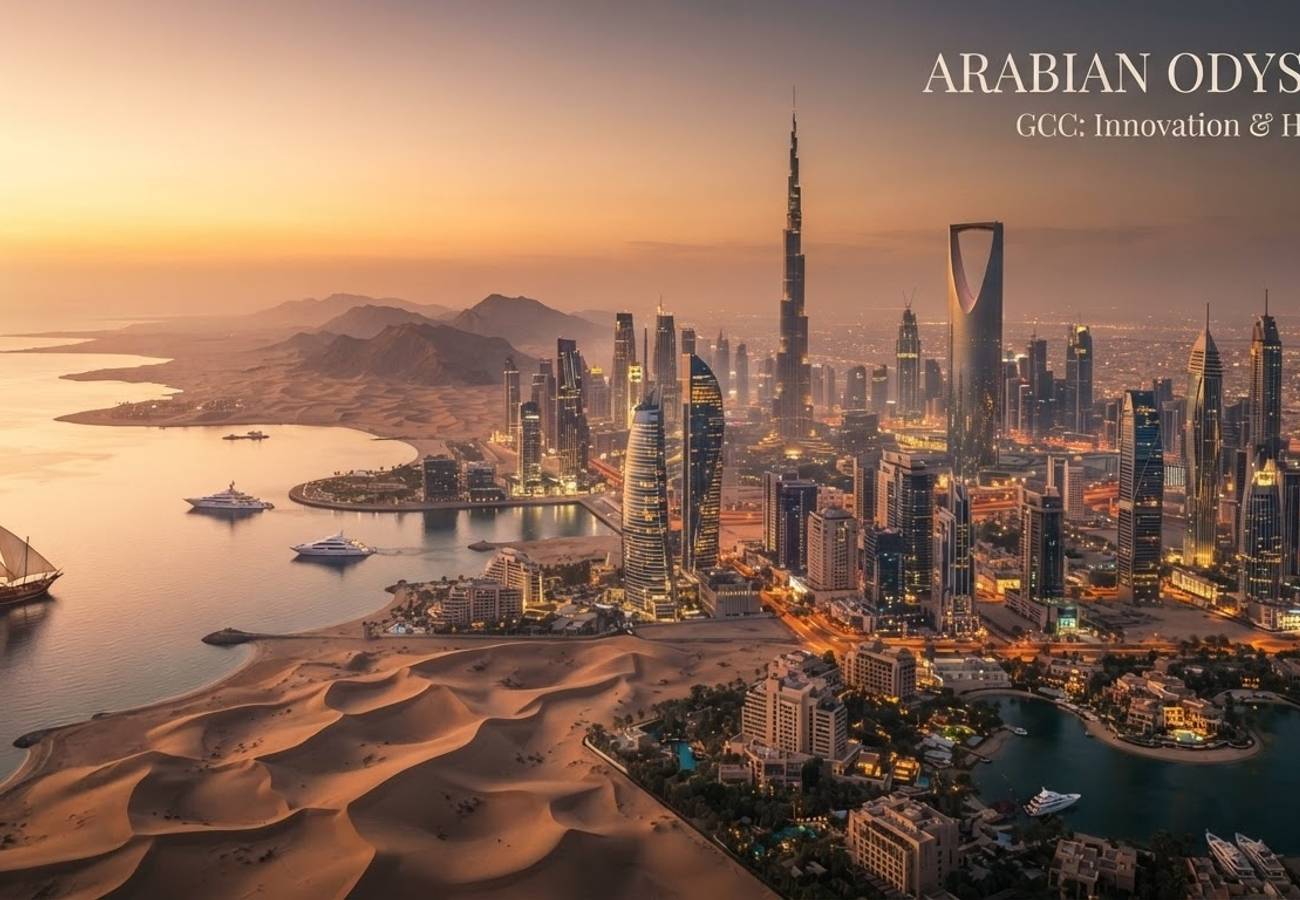
Image generated by AI
Tourism in the Gulf Cooperation Council (GCC) countries is projected to generate a total of $254.7 billion in 2025. This surge is driven by a strategic pivot toward high-value travel across Saudi Arabia, the UAE, Qatar, Oman, Bahrain, and Kuwait.
The shift in the Gulf is no longer just about luxury hotels and aviation hubs; it is a systemic rewrite of regional economics. Between 2019 and 2025, the economic contribution of tourism across the GCC grew at an average annual rate of 7.3%, notably outpacing the global tourism growth rate of 6.7%.
Data from the Gulf Council Countries Statistical Center reveals that the region hosted 75.7 million visitors, resulting in approximately $131.9 billion in direct spending. This trajectory underscores a deliberate move to reduce reliance on traditional hydrocarbon sectors by positioning the six member states as a unified, yet diverse, global travel destination.
The Regional Shift: From Oil to Experiences
The current growth is the result of aggressive, national-level strategies. Saudi Arabia is leveraging its Vision 2030 program to open heritage sites and massive entertainment complexes to the world, while simultaneously maintaining its status as a global leader in religious tourism. The UAE continues to refine its role as a connectivity powerhouse, with Dubai and Abu Dhabi serving as the primary gateways for luxury and business travel.
Other member states are carving out specific niches to avoid redundancy:
- Qatar: Specializing in event-driven tourism, utilizing world-class sporting and business infrastructure.
- Oman: Focusing on eco-tourism, natural landscapes, and adventure travel.
- Bahrain: Prioritizing cultural leisure and heritage offerings.
- Kuwait: Investing heavily in new visitor infrastructure and urban leisure experiences.
This coordinated approach has allowed the GCC to capture approximately 5% of all international tourist movements worldwide in 2025 and roughly 6.9% of global tourism receipts.
Data-Driven Governance and Infrastructure
The scale of this expansion was a primary focus at the eighth Regional Workshop on Innovation in Tourism Statistics held in Muscat, Oman. The event, themed “Innovation in Tourism Statistics: Data Integration and Trend Analysis,” brought together officials and 30 specialists to move beyond basic visitor counts.
The region is now implementing advanced data integration to track visitor behavior across aviation, retail, and digital platforms. By utilizing data exchange systems and calibration processes, GCC governments are shifting toward "precision tourism"—using real-time spending patterns and movement data to guide infrastructure investment.
The Gulf Tourism Strategy has seen a 73.8% implementation progress rate through 2025. This progress is visible in the rapid expansion of cruise facilities, simplified visa procedures, and enhanced cross-border transport networks that allow travelers to visit multiple GCC states in a single itinerary.
Cultural & Environmental Value
For the visitor, the real impact of this growth is the accessibility of previously closed cultural treasures. The transition toward sustainable tourism is particularly evident in Oman and Saudi Arabia, where there is a growing emphasis on preserving natural landscapes and historical sites against the pressures of mass tourism.
By integrating local heritage into the economic model, these nations are ensuring that tourism supports regional identity rather than erasing it. The investment in "high-value" travelers—those who stay longer and engage more deeply with local culture—is a deliberate move to ensure environmental sustainability and community support.
Visitor Insider Tips
To navigate the GCC's evolving tourism landscape, travelers should consider these local insights:
- The "Shoulder Season" Window: While winter is the peak, the window between late March and May offers a balance of manageable temperatures and lower hotel rates before the extreme summer heat.
- Cultural Etiquette: When visiting heritage sites in Saudi Arabia or Oman, dressing modestly is not just a suggestion but a sign of respect that often opens doors to more authentic local interactions.
- Regional Passports: Keep an eye on the evolving unified GCC visa options, which are designed to make hopping between the six nations as seamless as traveling within the Schengen Area.
- Dining Beyond the Mall: In cities like Dubai or Doha, seek out "hidden" culinary spots in older districts (like Al Fahidi in Dubai) to experience traditional Gulf flavors away from the luxury hotel circuits.
Tourism Outlook
The long-term trajectory for the GCC is a move toward a "unified destination" identity. By coordinating their statistics and strategies, Saudi Arabia, the UAE, and their neighbors are positioning the Gulf as a comprehensive travel ecosystem. The record $254.7 billion impact is not a ceiling but a benchmark for a future where tourism is a primary engine of employment and GDP growth.
The Gulf is no longer just a stopover; it is the destination.
Related Travel Guides
Disclaimer
This article is for informational and educational purposes only. It does not constitute legal, financial, or professional advice. While we strive to provide accurate and up-to-date information, travel policies, regulations, and conditions change rapidly. Always verify information with official sources before making travel decisions. Nomad Lawyer makes no representations about the accuracy, reliability, completeness, or suitability of the information provided. Readers should consult qualified professionals for advice specific to their circumstances. The views expressed in this article are those of the author and do not necessarily reflect the views of Nomad Lawyer.
Raushan Kumar
Founder & Lead Developer
Full-stack developer with 11+ years of experience and a passionate traveller. Raushan built Nomad Lawyer from the ground up with a vision to create the best travel and law experience on the web.
Learn more about our team →