
Bahrain Spearheads GCC Regional Tourism Integration as Cultural Heritage and Luxury Retail Drive Global Visitor Growth Across the Gulf

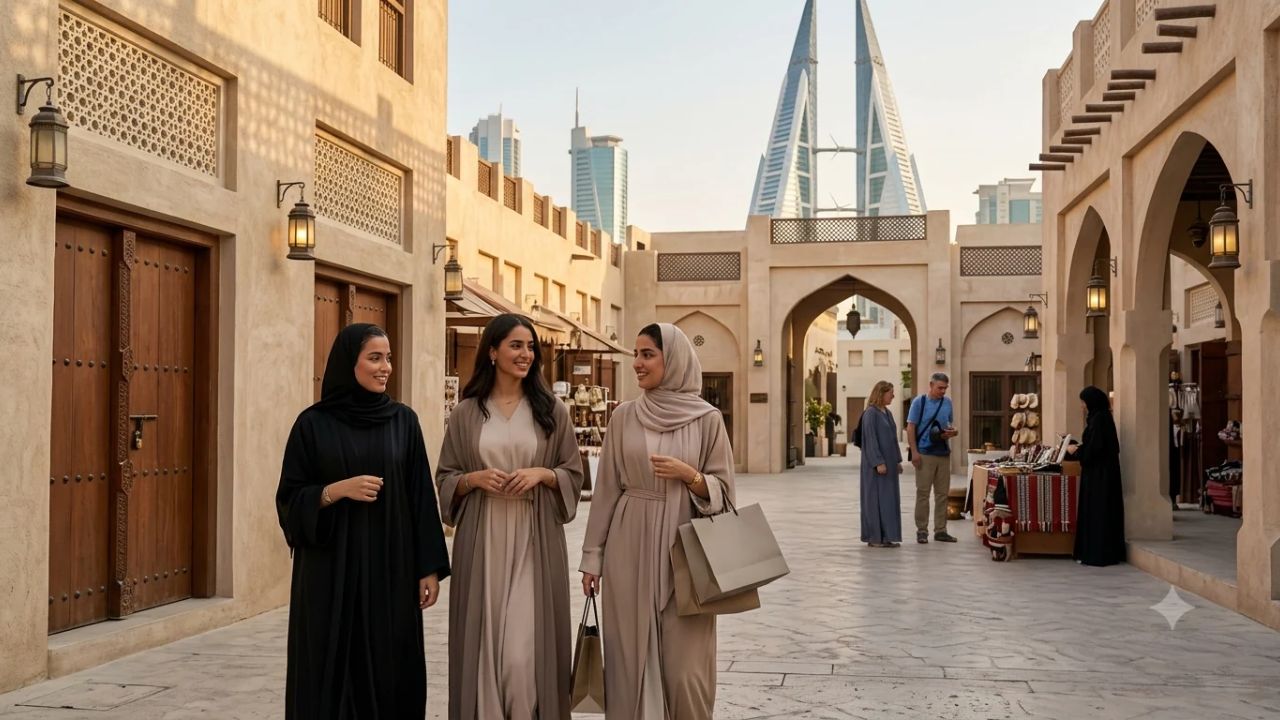
Bahrain is accelerating regional tourism collaboration across the Gulf Cooperation Council under its Tourism Strategy 2022–2026, leveraging landmark cultural heritage sites, high-end retail, and cross-border connectivity following the 10th Meeting of GCC Tourism Ministers in Manama.
The Kingdom’s coordinated tourism strategy unfolds amidst unprecedented international interest in the Arabian Gulf as a multifaceted destination for cultural exploration, high-end shopping, international business congresses, and global sporting events. By integrating its domestic attractions with broader regional travel itineraries, Bahrain is positioning the six-nation Gulf bloc as an interconnected travel corridor capable of attracting high-yield visitors from Europe, Asia, and North America.
Manama Ministerial Summit: Forging a Unified GCC Tourism Vision
A landmark development in regional integration occurred in September 2026, when Bahrain hosted the 10th Meeting of GCC Tourism Ministers in Manama. Gathering leadership from Saudi Arabia, the United Arab Emirates, Qatar, Oman, and Kuwait, the conference formalized a collective roadmap aimed at elevating the Gulf’s global market share.
Ministers reviewed performance data showing that the GCC welcomed more than 75 million international tourist arrivals in 2025, generating over US$131 billion in direct visitor expenditure. To sustain this momentum, the council approved a joint recovery framework emphasizing standardized hospitality certifications, coordinated overseas marketing, unified statistical monitoring, and collaborative regional holiday circuits.
| Tourism Performance Indicator | GCC Regional Total (2025 Baseline) | Economic Significance & Growth Rate |
|---|---|---|
| International Tourist Arrivals | More than 75 million | 4.8% year-on-year expansion |
| Total Tourism Expenditure | Over US$131 billion | Direct spending across lodging, retail, dining, and transit |
| Intra-GCC Traveler Volume | More than 20 million | 3.6% annual increase in cross-border regional journeys |
| Regional GDP Contribution | Approximately US$254 billion | Accounts for an estimated 11.4% share of total GCC GDP |
Cross-Border Artery: The King Fahd Causeway and Saudi Visitor Traffic
A fundamental pillar of Bahrain's visitor economy is its terrestrial connectivity with the Kingdom of Saudi Arabia via the King Fahd Causeway. The 25-kilometer marine bridge serves as a vital artery for family holidays, weekend retail excursions, and corporate travel between Saudi Arabia's Eastern Province and Manama.
Data from an official Bahrain government offering circular published in June 2026 revealed that the Kingdom recorded approximately 3.42 million visitor entries during the first quarter of the year. Of this total, around 2.88 million entries crossed via the Saudi Causeway. This land link anchors sustained occupancy for Bahrain’s luxury hotel stock, waterfront dining districts, and premier retail complexes.
| Strategic Domain | Operational Focus in Bahrain | Primary Target Markets | Regional Integration Linkage |
|---|---|---|---|
| Cultural Heritage | 3 UNESCO World Heritage Sites & historic souqs | UK, Germany, China, India | Multi-destination packages linking Dilmun with AlUla and Muscat |
| Luxury Shopping & Retail | Modern lifestyle malls & traditional gold markets | Saudi Arabia, Kuwait, UAE | Causeway weekend travel promotions and tax-free shopping |
| Regional Connectivity | King Fahd Causeway & expanded Gulf Air network | Intra-GCC travelers | Proposed Unified GCC Tourist Visa and joint airline ticketing |
| MICE & Exhibitions | Exhibition World Bahrain & international pavilions | Worldwide corporate travelers | Collaboration with Arabian Travel Market and WTTC Global Summit |
Cultural Heritage Anchors Bahrain's Tourism Identity
At the core of Bahrain’s Tourism Strategy 2022–2026 is the preservation and promotion of its deep historical identity. The archipelago features three recognized UNESCO World Heritage Sites that document thousands of years of commerce and coastal civilization:
- Qal’at al-Bahrain (Bahrain Fort): An ancient military and commercial harbor capital that served as the focal point of the Dilmun civilization.
- Pearling, Testimony of an Island Economy: A historic architectural route spanning Muharraq that preserves the legacy of the Arabian Gulf’s traditional pearl diving trade.
- Dilmun Burial Mounds: A vast prehistoric cemetery landscape spanning 21 archaeological sites across the western part of the island.
These historical assets provide international travelers with cultural depth that complements the Kingdom’s traditional retail alleys at Bab Al Bahrain and the vibrant artisanal shops of the Manama Souq.
Diversified Global Source Markets: Europe, South Asia, and East Asia
Bahrain’s overseas promotional campaigns focus on established international travel corridors that generate demand across hospitality, retail, and heritage tourism.
United Kingdom and Western Europe
The United Kingdom remains one of the Gulf’s most reliable long-haul source markets. British holidaymakers actively seek winter sun, five-star beach resorts, and cultural itineraries across Bahrain, Dubai, Doha, and Muscat. In Dubai, official tourism statistics for January to August 2026 identified Western Europe as its largest regional source market, representing approximately 20% of all international overnight visitors. For Bahrain, British visitors contribute substantially to heritage tourism, fine dining, and annual sporting events.
India and South Asia
India represents a primary demographic driver for travel across the GCC, underpinned by extensive air links, corporate trade, destination weddings, and family ties. Reflecting this regional demand, official visitor statistics for Oman recorded approximately 382,015 arrivals from India during the first six months of 2026, making it the Sultanate's single largest international source market. In Bahrain, Indian leisure travelers support luxury shopping, urban entertainment, and heritage tours.
China, Germany, and Eastern Europe
China continues to expand as a high-spending retail and cultural travel demographic, with Gulf authorities coordinating marketing campaigns to attract Chinese group tours and independent travelers. Germany maintains a strong presence in heritage and eco-tourism, with Oman recording 68,771 German visitors between January and June 2026. In addition, Eastern Europe and the Commonwealth of Independent States (CIS) accounted for approximately 14% of Dubai's international overnight visitors from January to August 2026, demonstrating strong appetite for Gulf beach resorts and luxury amenities.
Bilateral Cooperation and the Unified GCC Tourist Visa
Bahrain has coupled multilateral ministerial meetings with active bilateral outreach. In September 2026, Bahrain’s Tourism Minister Fatima bint Jaafar Al Sairafi held high-level discussions with UAE Minister of Economy and Tourism Abdulla bin Touq Al Marri on the sidelines of Arabian Travel Market in Dubai. The ministers aligned on developing joint travel itineraries, sharing predictive travel data, and coordinating promotional roadshows in European and Asian capitals.
A major focus of these deliberations is the proposed unified GCC tourist visa. Modeled on Europe’s Schengen arrangement, the unified visa concept aims to permit international tourists to travel freely across Bahrain, Saudi Arabia, the UAE, Qatar, Oman, and Kuwait on a single permit. While member states affirmed continued technical preparation during the Manama summit, the visa remains an active policy development rather than a finalized, fully operational reality.
International Investment Roadshows and Seasonal Campaigns
To accelerate private sector participation, the Bahrain Tourism and Exhibitions Authority (BTEA) staged a major 420-square-meter pavilion at Arabian Travel Market 2026, hosting 28 public and private entities including national carrier Gulf Air and Exhibition World Bahrain.
The Kingdom extended its global investor engagement during the World Travel & Tourism Council (WTTC) Global Summit in Malta in October 2026, conducting high-level discussions with international hospitality and travel conglomerates including Trip.com Group, IHG Hotels & Resorts, Shun Tak Holdings, and Value Retail.
Domestically, seasonal promotional initiatives—such as the May 2026 regional entertainment campaigns and the Eid Al Adha "We Miss You" campaign—have driven strong intra-GCC family travel. By integrating world-class retail destinations, deep Dilmun archaeology, and cross-border causeway transit, Bahrain continues to reinforce its role as a key catalyst for Gulf tourism growth.
Frequently Asked Questions
What was the outcome of the 10th Meeting of GCC Tourism Ministers in Manama?
Hosted by Bahrain in September 2026, ministers approved a joint recovery plan focusing on unified marketing, shared tourism data, common standards, and coordinated regional packages.
How many visitor entries did Bahrain record via the King Fahd Causeway in Q1 2026?
According to official June 2026 figures, Bahrain logged approximately 2.88 million visitor entries across the Saudi Causeway out of 3.42 million total entries in the first quarter of 2026.
What are Bahrain’s three UNESCO World Heritage Sites?
Bahrain’s UNESCO World Heritage Sites are Qal’at al-Bahrain (Bahrain Fort), the Pearling Path in Muharraq, and the prehistoric Dilmun Burial Mounds.
Is the unified GCC tourist visa already operational across all Gulf countries?
No. While GCC ministers strongly reaffirmed their commitment to the unified tourist visa during the September 2026 Manama summit, the initiative remains in active technical development.
Related Travel Guides
- American Airlines Expands Caribbean Winter 2026 Network with Up to Eight Daily Miami Flights to San Juan and Six to Tortola
- Estonia Gears Up for Winter Tourism Surge as Jet2 Expands UK Flights and Tallinn’s Historic Christmas Market Returns for 2026
- Philippines Ranks Seventh Globally in Tourism Development as Cultural Heritage Surge Propels Nation to 57th in World Economic Forum Index
Disclaimer
This article is for informational and educational purposes only. It does not constitute legal, financial, or professional advice. While we strive to provide accurate and up-to-date information, travel policies, regulations, and conditions change rapidly. Always verify information with official sources before making travel decisions. Nomad Lawyer makes no representations about the accuracy, reliability, completeness, or suitability of the information provided. Readers should consult qualified professionals for advice specific to their circumstances. The views expressed in this article are those of the author and do not necessarily reflect the views of Nomad Lawyer.
Naina Thakur
Contributor & Travel Specialist
Travel enthusiast and legal writer covering visa regulations, responsible tourism, and cultural journeys across global destinations.
Learn more about our team →