
Saudi Arabia and UAE Corporate Travel: Integrating Heritage and Dining in Riyadh and Dubai 2026
Discover how business travelers in Saudi Arabia and the UAE are utilizing short evening windows to experience authentic Emirati and Najdi culture through curated dining and heritage site visits.

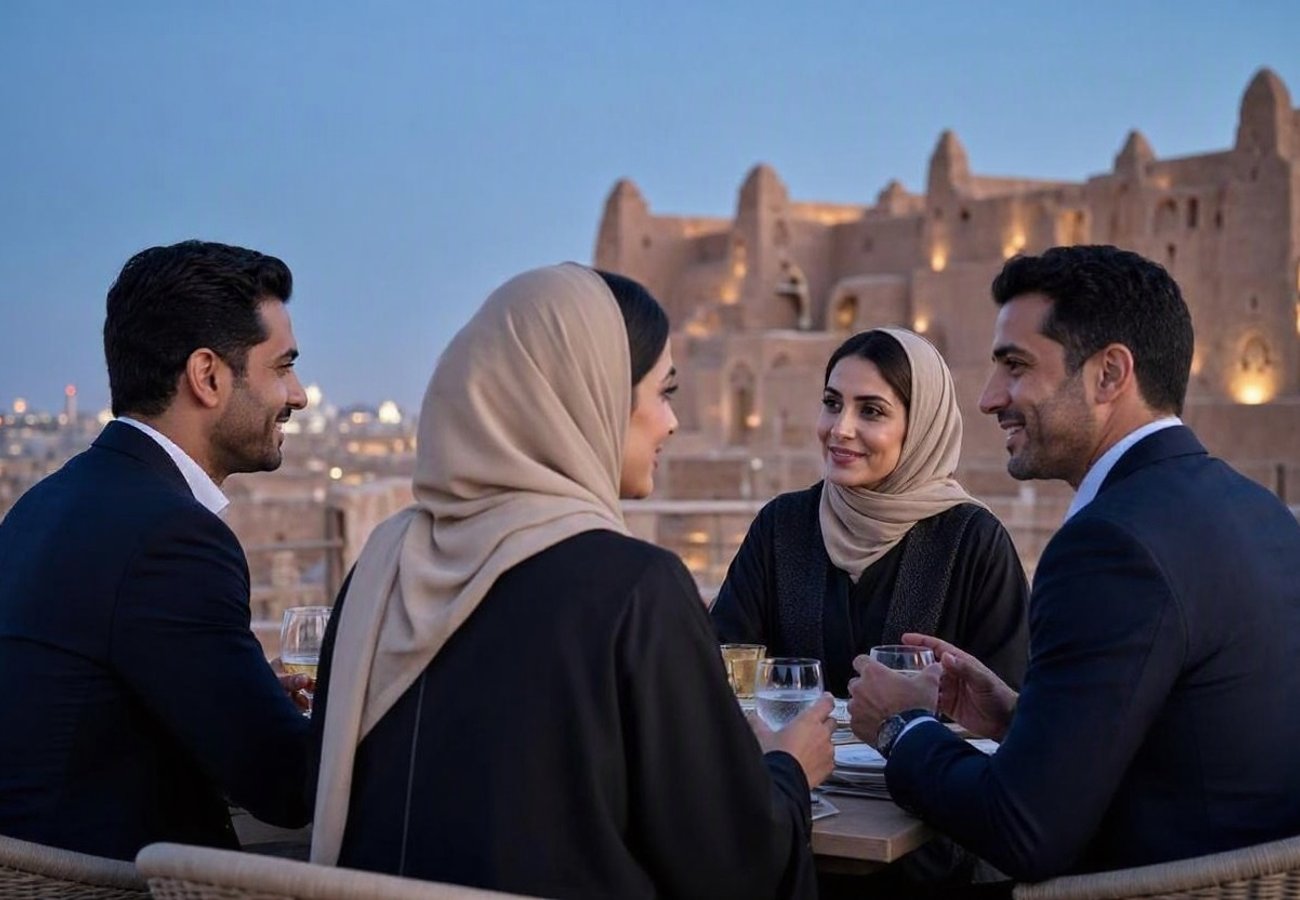
Image generated by AI
A 90-minute dinner in Dubai can provide more cultural insight than a week of generic sightseeing, provided you know exactly which door to knock on. For the corporate traveler landing in the Gulf, the challenge isn't a lack of attractions, but a lack of time. In 2026, the trend has shifted toward "micro-experiences"—high-impact cultural encounters that fit between a final board meeting and a 10 PM bedtime.
The Rise of the "After-Hours" Cultural Circuit
For those navigating the high-pressure environments of Riyadh and Dubai, the traditional tourist itinerary is a liability. The modern business visitor doesn't have days to spare; they have windows. We are seeing a move toward integrated experiences where heritage and dining occupy the same physical space, removing the friction of multiple transfers across congested cities.
In Saudi Arabia, this is manifesting in the development of zones that blend historical preservation with luxury hospitality. In the UAE, the focus is on structured, time-bound interactions that offer a genuine dialogue with locals rather than a staged performance. This isn't part of a formal government campaign for business travelers, but rather a practical evolution of how the region's infrastructure is being used.
What Makes the Gulf Corporate Experience Different
The distinction here is the "boundary." A leisure traveler wanders; a business traveler schedules. The most successful outings in the region right now are those with a definitive start and end time.
In Riyadh, the focus is on the UNESCO World Heritage site of At-Turaif. By pairing a visit to this ancestral home of the Saudi state with a meal at Bujairi Terrace, visitors bypass the need for two separate excursions. It transforms a standard dinner into a historical immersion.
Dubai takes a more conversational approach. Instead of just visiting a museum, the trend is toward "cultural dining," where the meal is the medium for learning about Emirati customs. This allows a professional to gain a nuanced understanding of the local business etiquette and social fabric in a fraction of the time.
Logistics for the Time-Pressed Traveler
When planning these outings, the most common mistake is ignoring the "transit tax." A 90-minute experience actually requires three hours of your evening when accounting for Riyadh or Dubai traffic.
Evening Cultural Options Comparison
| Experience | Key Highlight | Schedule/Price | Critical Requirement |
|---|---|---|---|
| Diriyah (Riyadh) | At-Turaif Heritage & Bujairi Terrace | Evening access (Check current hours) | Separate dining reservations |
| Cultural Dinner (Dubai) | Dinner Under the Stars (Al Fahidi) | Tuesdays, 6:30 PM – 8:00 PM; AED 160 | Advance booking mandatory |
Visitor Insider Tips
Having spent significant time navigating these cities, here is how to actually execute these visits without risking your next morning's presentation:
- The Dubai Timing Hack: The "Dinner Under the Stars" at the Sheikh Mohammed bin Rashid Al Maktoum Centre for Cultural Understanding is strictly timed. If you are staying in Downtown Dubai or DIFC, leave your hotel at least 45 minutes early. The Al Fahidi district's narrow lanes are not designed for quick drop-offs.
- The Diriyah Verification: Do not rely on a single website for At-Turaif visiting hours. There are often discrepancies between the main landing pages and the FAQ sections. Always have your hotel concierge call the Diriyah Company directly to confirm evening access for your specific date.
- Dining Etiquette: In both regions, if you are invited to a meal with a local host, remember that the pace is slower. While your schedule is tight, rushing a conversation is seen as a lack of respect. Build in a 30-minute "buffer" for social grace.
- Transport: Use ride-sharing apps but set your destination to the specific gate or terrace entrance rather than the general district name to avoid wandering through large complexes.
Cultural and Environmental Context
The scale of tourism in the region is staggering. According to the Dubai Department of Economy and Tourism, the city saw 19.59 million international overnight visitors in 2025, a 5% increase over 2024. However, this volume creates a tension between mass tourism and heritage preservation.
In Saudi Arabia, the Vision 2030 framework is rapidly transforming heritage sites into economic drivers. While this brings necessary funding for preservation, the challenge remains in ensuring that these sites don't become "museumified" versions of themselves. For the visitor, the most authentic experiences are found in the dialogue—asking the guides about the transition from nomadic life to the modern metropolis—rather than just photographing the mud-brick walls.
FAQ: Visiting Saudi Arabia and UAE 2026
Can I visit the Dubai cultural dinner as a walk-in? No. The Dinner Under the Stars program requires advance booking. You should verify availability via their official portal before arranging your transport to Al Fahidi.
Is At-Turaif in Diriyah open every night? Generally, evening access is available, but hours fluctuate. Direct confirmation with the site operators is essential to avoid arriving after closure.
How does Ramadan affect these cultural experiences? Significantly. In Dubai, the standard dinner program is typically replaced by Iftar (the meal to break the fast) at sunset. Always check the lunar calendar before booking.
Is it safe for solo business travelers to explore these areas at night? Yes, both Diriyah and the Al Fahidi district are highly secure and well-lit, making them ideal for solo visitors.
The secret to the Gulf is knowing that the most valuable conversations happen after the slides are closed.
Related Travel Guides
Disclaimer
This article is for informational and educational purposes only. It does not constitute legal, financial, or professional advice. While we strive to provide accurate and up-to-date information, travel policies, regulations, and conditions change rapidly. Always verify information with official sources before making travel decisions. Nomad Lawyer makes no representations about the accuracy, reliability, completeness, or suitability of the information provided. Readers should consult qualified professionals for advice specific to their circumstances. The views expressed in this article are those of the author and do not necessarily reflect the views of Nomad Lawyer.
Naina Thakur
Contributor & Travel Specialist
Travel enthusiast and legal writer covering visa regulations, responsible tourism, and cultural journeys across global destinations.
Learn more about our team →