
Saudi Arabia Implements Salmani Architecture to Transform Heritage Tourism and Retail in 2026
Saudi Arabia is replacing generic shopping malls with Neo-Vernacular Najdi designs under the King Salman Charter, integrating passive cooling and earth-based masonry to drive heritage tourism.
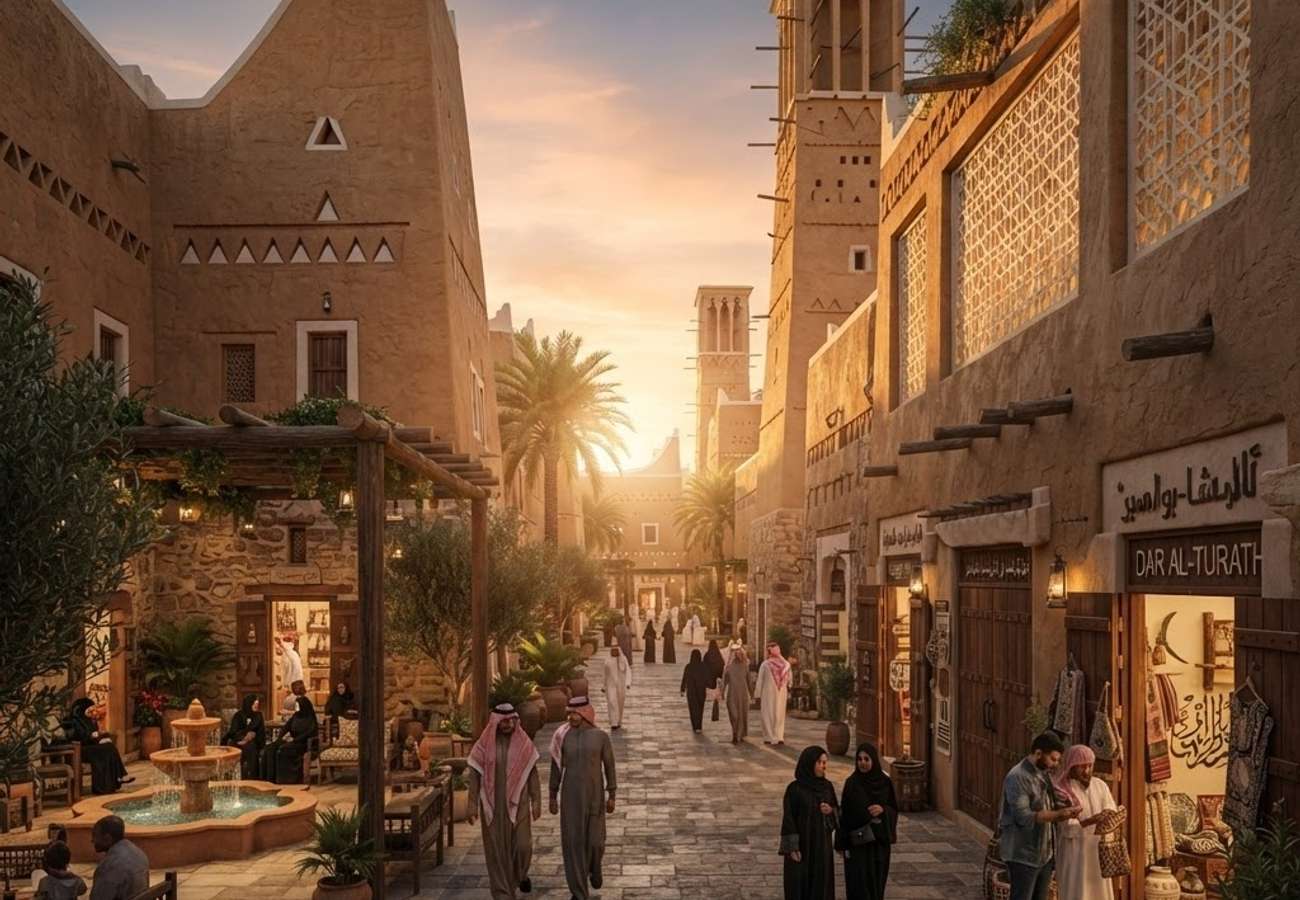
Image generated by AI
Saudi Arabia is abandoning the "generic glass box" model of commercial development in favor of Salmani architecture, a neo-vernacular movement integrating ancient Najdi thermal logic into modern retail hubs to increase visitor dwell time and cultural authenticity.
The Middle East is witnessing a systemic shift in leisure development. Moving away from the bland, air-conditioned shopping malls that dominated the late 20th century, Saudi Arabia is now prioritizing regional identity through Najdi-inspired design. This transition replaces concrete plazas with high-heritage experiences featuring compressed earth, geometric ventilators, and courtyard-centric layouts. By pivoting toward "critical regionalism," urban planners are transforming commercial real estate into cultural destinations, ensuring that economic growth is tethered to national identity.
The King Salman Charter and Regulatory Framework
The shift is not merely aesthetic but regulatory. Under the Saudi Architecture and Design Commission—one of 33 mandates of Saudi Vision 2030—the King Salman Charter for Architecture and Urbanism has codified the "Salmani" style. This framework formalizes the principles observed during King Salman bin Abdulaziz Al Saud’s tenure as Governor of Riyadh, harmonizing historic building traditions with modern engineering.
The Charter mandates six core values for all public and private developments: Authenticity, Continuity, Human-centricity, Livability, Innovation, and Sustainability. This approach moves beyond using heritage as a decorative ornament; it requires developers to analyze the spatial logic and material performance of historic settlements.
Key projects already implementing these standards include:
- The Al-Hukm Palace District
- The King Abdulaziz Historical Center
- The Diplomatic Quarter
- The Ministry of Foreign Affairs building
- ROSHN’s SEDRA community (integrating Salmani design across 30,000 households)
Technical Specifications of Neo-Vernacular Design
The architectural rebirth centers on the "Earth Envelope," utilizing the Al-Madmakh wall profile. These are tapered earth masonry walls built on stone footings. The trapezoidal geometry is not for show; it distributes load stresses across earthen materials and provides a massive thermal barrier.
Traditional earth walls often exceed 600 millimeters in thickness, creating a thermal lag of 10 to 12 hours. This delays the transfer of peak daytime heat into the interior until the evening, when natural radiant cooling occurs. These walls are finished with qasab, a hand-troweled mud-and-straw plaster that enhances insulation and weather protection.
To manage light and airflow, designers are deploying Al-Manqour geometric perforations and triangular openings called furuh or furjat. These screens admit indirect light while blocking harsh solar rays, eliminating interior glare and reducing the energy load required for cooling.
Micro-Climatic Cooling Systems
The transition from enclosed malls to open-air pedestrian villages relies on passive cooling dynamics. By utilizing specific urban ratios and airflow structures, these developments maintain human comfort in hyper-arid environments.
| Passive Cooling Element | Technical Function & Specification | Impact on Environment |
|---|---|---|
| Malqaf Wind Towers | Captures high-velocity air above the boundary layer; channels air via vertical shafts. | Evaporative cooling via clay vessels or underground water. |
| Sikka Alleyway Grid | Height-to-width aspect ratios of 1.5:1 to 2.5:1. | Continuous self-shading; encourages convective airflow. |
| Fana Courtyard Sinks | Central private courtyards designed to collect cool night air. | Stores thermal inertia; releases cool air into commercial corridors. |
Traveler Logistics Guide: Navigating the New Heritage Districts
From a ground-level perspective, the shift from mega-malls to "pedestrian villages" changes how visitors should plan their trips. The new Salmani districts are designed for walking, not driving.
Optimal Exploration Timing Because these districts utilize thermal lag and passive cooling, the interior of the buildings remains coolest in the late afternoon. However, the Sikka (shaded alleyways) are most comfortable during the mid-morning. Avoid peak solar hours (12:00 PM to 3:00 PM) unless you are inside a heavy-envelope Al-Madmakh structure.
Navigation and Connectivity Unlike the singular entrance/exit points of traditional malls, Salmani districts are organic grids. Travelers should utilize digital maps but expect "discovery-based" navigation. For those visiting the SEDRA community or the Diplomatic Quarter, ride-sharing drop-offs are typically located at the perimeter of the district to preserve the pedestrian nature of the core.
Digital Transit Integration Visitors should ensure their digital travel credentials are up to date. While the architectural experience is ancient, the management is high-tech. Expect integrated QR-based navigation and payment systems throughout these new retail destinations.
Infrastructure and Regional Impact
The adoption of critical regionalism over international homogenization represents a strategic move to increase the "Information Gain" of the Saudi tourist experience. By replacing generic steel-and-glass structures with authentic spatial narratives, the Kingdom is positioning its built environment as a primary tourist attraction rather than just a backdrop for shopping. This shift is expected to increase dwell times and boost the valuation of commercial real estate by creating "destination" value that cannot be replicated in other global cities.
The era of the generic mall is ending; the era of the living museum begins.
Related Travel Guides
Disclaimer
This article is for informational and educational purposes only. It does not constitute legal, financial, or professional advice. While we strive to provide accurate and up-to-date information, travel policies, regulations, and conditions change rapidly. Always verify information with official sources before making travel decisions. Nomad Lawyer makes no representations about the accuracy, reliability, completeness, or suitability of the information provided. Readers should consult qualified professionals for advice specific to their circumstances. The views expressed in this article are those of the author and do not necessarily reflect the views of Nomad Lawyer.