Saudi Arabia, Jordan, Egypt, Oman, and UAE Drive Middle East Heritage Tourism Pivot Beyond Luxury Resorts into Ancient Civilizations

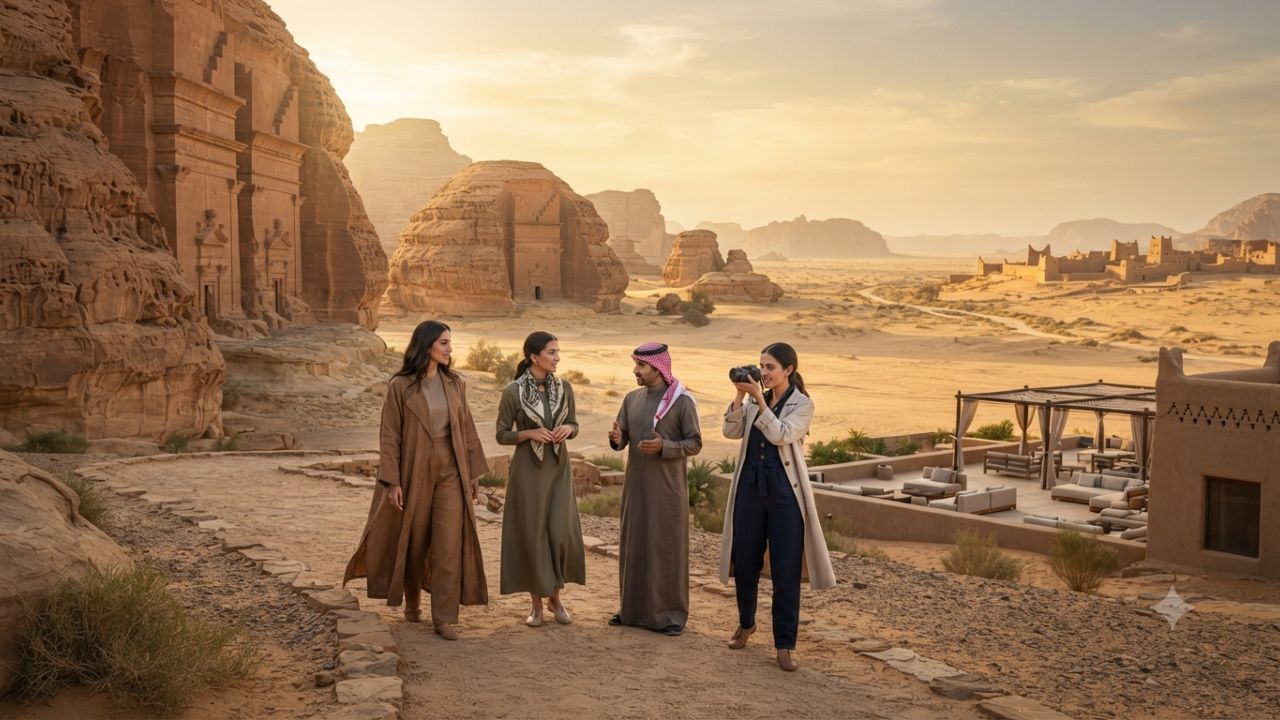
Image generated by AI
Saudi Arabia, Jordan, Egypt, Oman, and the United Arab Emirates are orchestrating a major strategic shift in Middle Eastern tourism, transitioning from ultra-modern luxury and shopping destinations into high-yield, heritage-driven travel hubs. By reinterpreting ancient trade networks, UNESCO World Heritage sites, and desert archaeology, these five nations are creating a distinct category of experiential travel that merges millennia of human history with modern hospitality infrastructure.
RIYADH, Saudi Arabia — Destination management data across the Middle East confirms that international travelers are increasingly seeking deep historical immersion over conventional resort stays. Rather than relying solely on high-rise skylines and five-star beach resorts, regional tourism ministries are investing heavily in multi-century archaeological corridors, desert caravan routes, and cultural preservation ecosystems.
From Saudi Arabia's Nabataean tombs at Hegra and Diriyah to Jordan's Petra, Egypt's Nile Valley monuments, Oman's frankincense trails, and the UAE's Al Ain oasis landscape, history has emerged as the region's core economic asset.
Middle East Heritage Tourism Landscape and Strategic Framework
The table below outlines the core heritage assets, transformation strategies, and primary cultural hubs for each of the five leading Middle Eastern markets.
| Country & Market | Primary UNESCO & Heritage Attractions | Destination Transformation Strategy | Core Historical & Cultural Focus |
|---|---|---|---|
| Saudi Arabia | AlUla, Hegra, Diriyah, Historic Jeddah | Developing ancient Arabian civilisations into luxury cultural ecosystems | Dadanite, Lihyanite, & Nabataean heritage |
| Jordan | Petra, Wadi Rum, Jerash Roman Ruins | Expanding itineraries beyond single-day Petra visits into multi-region stays | Nabataean trade networks & Roman archaeology |
| Egypt | Pyramids of Giza, Luxor, Karnak, Nile Valley | Shifting from isolated monument tours to multi-day immersive civilisation journeys | Pharaonic history & 7 UNESCO World Heritage Sites |
| Oman | Nizwa Fort, Frankincense Trail (Salalah), Bahla | Building authentic, slow-travel experiences around mountain villages & fortresses | Maritime trade routes & traditional Arabian culture |
| United Arab Emirates | Al Ain Cultural Sites, Dubai Creek Heritage, Mleiha | Blending modern luxury with preserved Emirati desert & oasis heritage | Oasis agriculture & ancient Bronze Age settlements |
Reinterpreting Ancient Incense Routes for Modern Travelers
Historically, the Arabian Peninsula, Levant, and North Africa were bound together by ancient trade networks—most notably the Incense Route, caravan paths, and Red Sea maritime corridors. Tourism authorities are now re-engineering these historic connections into multi-destination travel circuits:
Saudi Arabia's efforts to boost heritage tourism are being led by the Saudi Tourism Authority, which aims to increase the number of tourists visiting the country's ancient sites, such as Diriyah and Al-Ula. The authority has launched several initiatives to promote these sites, including guided tours and cultural events. This move is expected to contribute significantly to the country's economic diversification efforts.
1. Saudi Arabia: AlUla and Hegra as a Luxury Cultural Blueprint
Through the Royal Commission for AlUla, Saudi Arabia has established a model for heritage-led luxury. Anchored by Hegra (Saudi Arabia's first UNESCO World Heritage Site), AlUla integrates archaeological excavation with high-end desert resorts, wellness retreats, and digital visitor management systems via Experience AlUla.
2. Jordan: Expanding Beyond Petra
Jordan is incentivizing longer visitor stays by connecting Petra with Wadi Rum's Nabataean inscriptions, Jerash's Roman colonnades, and eastern desert castles, offering integrated itineraries that highlight regional trade connectivity.
3. Egypt: Immersive Pharaonic Journeys
Egypt's Tourism Authority is moving beyond brief monument visits by promoting curated Nile River cruises between Luxor and Aswan, alongside archaeological circuits connecting Cairo's Grand Egyptian Museum with desert oasis sites.
For travelers planning to visit Jordan, the Jordan Tourism Board provides valuable information on the country's heritage sites, including Petra and Wadi Rum. The board also offers tips on how to get around the country, including details on transportation options from Queen Alia International Airport. By planning ahead, visitors can make the most of their trip to Jordan and experience the country's rich history and culture.
4. Oman: Authentic Heritage and Trade Trails
Oman emphasizes authenticity over large-scale construction, attracting high-spending cultural travelers to the Frankincense Trail in Dhofar, restored clay fortresses in Nizwa, and terraced mountain villages in Jebel Akhdar.
5. UAE: Preserving Oasis Identity
The UAE complements its urban luxury with heritage preservation, highlighting Al Ain's 4,000-year-old falaj irrigation systems and Bronze Age tombs alongside cultural hubs like Louvre Abu Dhabi and Dubai Creek.
Sector-by-Sector Impact Across the Travel Ecosystem
The regional pivot toward heritage travel generates commercial opportunities across multiple travel industry verticals:
In the UAE, the Department of Culture and Tourism - Abu Dhabi is working to promote the country's heritage tourism sector, with a focus on sites such as the Sheikh Zayed Mosque and the Louvre Abu Dhabi. For those traveling to the UAE, Emirates Airlines offers a range of flights and travel packages, making it easy to plan a trip to the country. By visiting the UAE's heritage sites, tourists can gain a deeper understanding of the country's history and culture, and experience its unique blend of traditional and modern attractions.
- Airlines: Increased demand for regional point-to-point routes connecting cultural hubs (e.g., AlUla to Amman, Cairo to Muscat).
- Hospitality: Growth of luxury heritage lodges, converted historical properties, and boutique desert camps.
- Tour Operators: Rising demand for multi-country Middle Eastern itineraries that trace ancient trade corridors.
- Cruise Lines: Expansion of Red Sea and Persian Gulf cultural cruise itineraries featuring shore excursions to archaeological sites.
Traveler Logistics Guide: Multi-Country Middle East Heritage Itineraries
Travelers planning a multi-destination heritage journey across the Middle East can streamline transit and border entry using these operational strategies.
1. Visa Access and Border Protocols
- GCC Unified Tourist Visa / eVisas: Take advantage of streamlined eVisa portals for Saudi Arabia, Oman, and the UAE. GCC residents and multi-entry visa holders benefit from simplified visa-on-arrival policies across neighboring states.
- Jordan Pass & Egypt eVisa: Purchase the Jordan Pass online prior to arrival to combine entry fees for over 40 historic sites (including Petra) with waived tourist visa fees. Apply for Egypt's official eVisa at least 7 days before departure.
2. Optimal Seasonal Timing and Climate Strategy
- Best Travel Window (October to April): Desert temperatures across AlUla, Petra, Luxor, and Salalah are mildest during winter months, with daytime temperatures ranging between 18°C and 28°C.
- Shoulder Season Exploration: Early autumn (September–October) and late spring (April–May) offer fewer crowds at major archaeological monuments.
3. Multi-Country Heritage Circuit Routing
- 10-Day Ancient Trade Route Circuit: Fly into Riyadh (visit Diriyah) $\rightarrow$ Domestic flight to AlUla (Hegra & Dadan) $\rightarrow$ Direct flight to Amman (Petra & Jerash) $\rightarrow$ Departure from Queen Alia International Airport.
- 14-Day Civilizations Trail: Start in Cairo (Pyramids & Luxor Nile Cruise) $\rightarrow$ Flight to Muscat (Nizwa Forts & Salalah Frankincense Trail) $\rightarrow$ Flight to Abu Dhabi/Dubai (Al Ain Oasis & Louvre Abu Dhabi).
Frequently Asked Questions
Why are Middle Eastern countries shifting focus toward heritage tourism?
Nations across the Middle East are expanding beyond traditional luxury and shopping travel to capture growing global demand for experiential, cultural, and historical tourism that generates longer visitor stays and higher spend.
Which countries are leading the Middle East heritage travel boom?
Saudi Arabia, Jordan, Egypt, Oman, and the United Arab Emirates are the primary drivers of regional heritage tourism development.
What is the significance of Hegra and AlUla in Saudi Arabia?
Hegra is Saudi Arabia's first UNESCO World Heritage Site, featuring over 100 well-preserved Nabataean rock-cut tombs. AlUla serves as Saudi Arabia's flagship luxury cultural destination, combining ancient history with high-end hospitality.
How can travelers connect multiple Middle Eastern heritage sites in one trip?
Travelers can utilize expanding regional flight networks connecting hubs like Riyadh, AlUla, Amman, Cairo, and Muscat, combined with electronic visas and multi-country tour packages.
Related Travel Guides
This article is for informational purposes. Flight routes, passenger regulations, visa rules, and transit advisories are subject to change by airlines and aviation authorities. Readers are advised to verify schedules and travel documentation with relevant carriers and border agencies before departure.
Related Stories

Doha and AlUla Redefine Middle East Winter Tourism: Formula 1, Desert Safaris, Hegra Hot Air Balloons, and Extreme Endurance in 2026–2027
Jordan Tourism Revenue Reaches $6.3 Billion as Petra Faces 17.8% Foreign Visitor Slump Amid Fragmented Middle East Travel Recovery