Saudi Arabia Leisure Travel Surges: 93% Overnight Growth by 2030

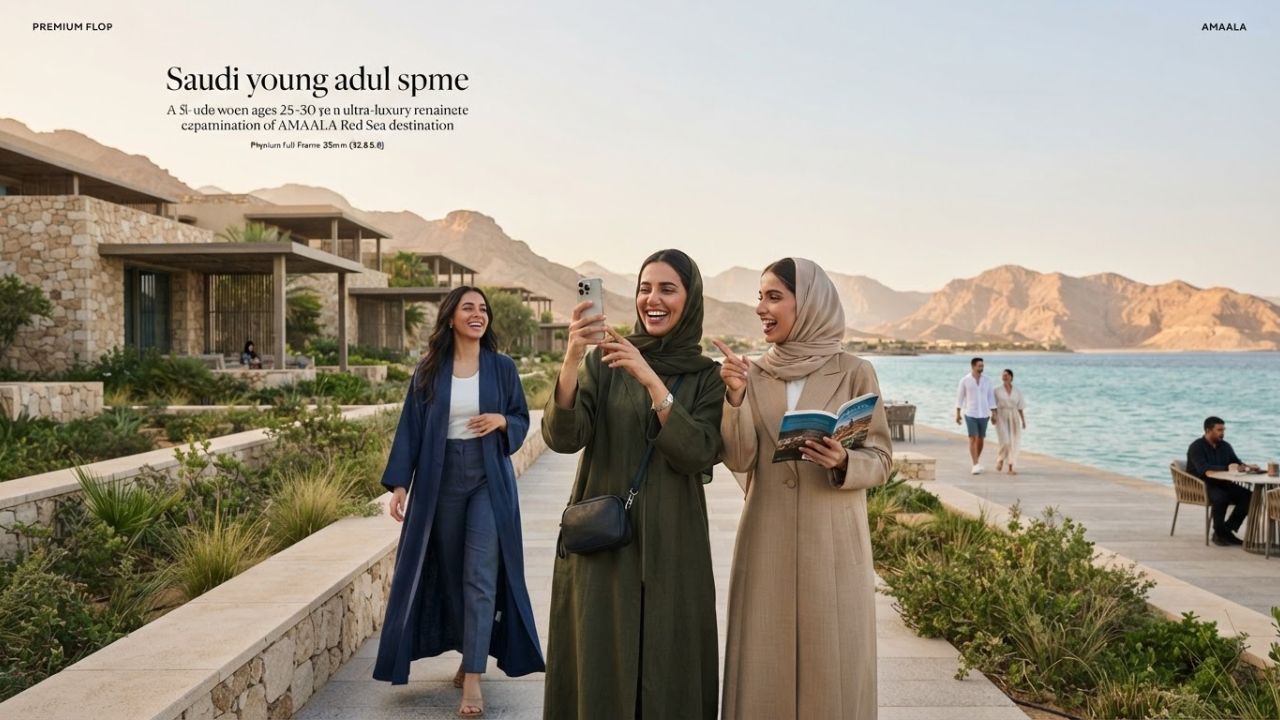
Propelled by record visitor spending of SAR 304 billion and an influx of 123 million total tourists, Saudi Arabia is projected to achieve a 93% surge in international overnight leisure travel by 2030. According to Oxford Economics data presented at WTM Spotlight Riyadh, the Kingdom has generated three-quarters of the Middle East’s post-pandemic travel growth, rapidly transforming ancient desert valleys and pristine Red Sea coral reefs into the world’s premier regenerative tourism frontier.
A profound economic restructuring is redefining the tourism map of the Middle East. Data published by Tourism Economics, a division of Oxford Economics, projects that global leisure voyagers will expand international overnight travel to Saudi Arabia by 93% heading toward 2030. Between 2019 and 2025, international arrivals into the Kingdom surged by 67%—eclipsing the broader Middle East's 20% regional increase and dwarfing the modest 5% global recovery rate recorded across the same timeframe.
This sustained acceleration positions Saudi Arabia as the central engine of the worldwide visitor economy. Since 2019, the Kingdom has generated approximately 75% of the Middle East’s net international travel growth and contributed roughly 15% of all global travel growth. With international visitors now accounting for nearly half of all overnight stays, Saudi Arabia is successfully transitioning beyond religious pilgrimage corridors toward a multi-faceted tourism ecosystem anchored in ancient archaeology, coastal luxury, and high-tech urban recreation.
| Saudi Tourism Economic Metric | Official Indicator / Forecast | Historical Baseline & Comparative Context |
|---|---|---|
| Projected 2030 Growth | 93% increase in international overnight leisure travel | Driven by luxury hospitality and giga-project openings |
| 2019–2025 Growth Pace | 67% international travel expansion | Outperformed Middle East (+20%) and Global (+5%) averages |
| Regional Impact Share | ~75% (three-quarters) of all Middle East growth | Dominant contributor to post-pandemic regional expansion |
| Global Travel Share | ~15% of total worldwide travel growth | Measured from 2019 baseline across international markets |
| Total Tourists (2025) | 123 million domestic and international visitors | +6% year-on-year increase over previous year |
| Total Tourism Spending | Record SAR 304 billion (~US$81 billion) | Comprehensive economic output from travel sectors |
| Inbound Tourism Revenue | SAR 176.6 billion from 29.3 million international arrivals | Leisure travelers generated 7 million arrivals (24.1%) |
| Leisure Share of Spending | 28% in 2025; projected 31% by 2030 | Rose from a baseline of just 9% in 2019 |
The Leisure Transformation: Shifting from Mass Pilgrimage to Regenerative Luxury
The defining characteristic of the Kingdom’s tourism shift is the rapid rise of secular leisure travel. In 2019, leisure travelers accounted for a modest 9% of total international visitor spending. By 2025, that proportion climbed to 28%, with official forecasts projecting a rise to 31% by 2030. Of the 29.3 million international arrivals recorded in 2025, leisure travelers represented 7 million visitors (24.1%), generating the bulk of the SAR 176.6 billion inbound revenue.
To sustain this upward trajectory, the Saudi Tourism Authority and regional development authorities are targeting high-value, extended-stay voyagers through four integrated geographic hubs:
- The Red Sea Destination: An archipelago of more than 90 pristine islands powered entirely by off-grid solar energy and battery storage, setting global benchmarks in regenerative luxury.
- AlUla: A living museum of 200,000 years of human history, integrating ancient Nabataean civilizations with luxury eco-resorts.
- Riyadh: The Kingdom's political and commercial capital, combining cultural preservation at UNESCO-inscribed At-Turaif in Diriyah with premier international entertainment and conference hosting.
- Jeddah: The historical maritime gateway to the Red Sea, uniting the coral-stone architecture of Al-Balad with contemporary waterfront promenades and marina facilities.
The hospitality sector reflects this rising demand. In Riyadh, hotel Revenue Per Available Room (RevPAR) is projected to climb 18.6% in 2027, driven by recovering corporate travel and high-profile international conferences. Simultaneously, coastal Jeddah is preparing for sustained arrival growth with more than 2,300 new hotel rooms entering the market in 2027 to accommodate leisure tourists, cruise passengers, and Umrah pilgrims.
The China Travel Vector: High-Net-Worth Voyagers Seek Authentic Terrain
A primary catalyst for future visitor growth centers on East Asia. Industry research unveiled at WTM Spotlight Riyadh reveals that 52% of surveyed Chinese travel agents already feature Saudi Arabia within their destination portfolios, with 32% identifying the Kingdom as holding the highest expansion potential in the Middle East.
The demographic driving this interest is distinctly upscale:
- 42% of surveyed agents identified high-net-worth and luxury travelers as the demographic with the greatest potential for long-term growth.
- 54% of respondents cited pristine desert topography, mountain sceneries, and natural formations as the primary draw.
- 45% of respondents prioritized adventure travel and outdoor excursions, including canyon trekking, desert stargazing, and deep-sea diving along untouched coral reefs.
Cultural & Environmental Value: Regenerative Stewardship in Ancient Arabian Terrains
For discerning international voyagers, the real value of the Kingdom’s tourism renaissance lies in experiencing how large-scale investment is paired with ecological restoration and indigenous cultural preservation. Rather than replicating mass-market entertainment enclaves, regional development authorities are establishing conservation frameworks that protect delicate desert and marine ecosystems.
Key cultural and environmental initiatives include:
- Regenerative Marine Conservation at Red Sea Global: The Red Sea destination operates under a legally binding commitment to achieve a 30% net conservation benefit across its 28,000-square-kilometer project area by 2040. The development relies on 100% renewable solar energy, enforces zero single-use plastics across all island resorts, and maintains extensive mangrove nursery restoration projects to enhance marine biodiversity.
- Preserving Living Heritage at AlUla: Supervised by the Royal Commission for AlUla (RCU), the preservation of Hegra—Saudi Arabia’s first UNESCO World Heritage Site—protects over 110 monumental tomb facades carved directly into sandstone cliffs by Nabataean artisans in the 1st century BCE. The RCU’s Madrasat Addeera initiative trains local artisans in palm-leaf weaving, traditional pottery, stone-masonry, and natural dye textile production, ensuring economic benefits flow directly to native Oasis communities.
- Architectural Restoration in Historic Al-Balad (Jeddah): The ongoing restoration of historic Jeddah breathes life into 500-year-old multi-story coral-stone merchant towers. Intricately carved wooden bay windows (roshan) provide natural passive ventilation, reflecting ancient bioclimatic architectural wisdom that modern green builders study today.
Destination Specialist Insider Tips for Saudi Arabia Voyagers
Travelers planning an expedition to Saudi Arabia in 2026 can maximize their journey through these curated specialist recommendations:
- The Optimal Seasonal Window: Visit between November and March. Daytime temperatures across Riyadh, AlUla, and Diriyah hover between 18°C and 25°C, providing ideal conditions for outdoor exploration and open-air events like the Winter at Tantora festival. While coastal Jeddah remains warm year-round, coastal breezes during winter offer comfortable conditions for maritime diving and walking historical quarters.
- Navigating Domestic Distances via Rail and Air: While major intercontinental flights touch down at King Khalid International Airport (RUH) in Riyadh and King Abdulaziz International Airport (JED) in Jeddah, avoid lengthy desert road journeys. Book the high-speed Haramain High-Speed Railway to travel between Jeddah, Mecca, and Medina at 300 km/h, and utilize domestic flights via Saudia or flynas to access AlUla (ULH) and Red Sea International Airport (RSI).
- Cultural Etiquette and Public Decorum: The Kingdom has modernized significantly, eliminating mandatory abayas for foreign female travelers. However, respectful, modest dress remains essential: ensure shoulders and knees are covered in public spaces, and carry a light pashmina or linen jacket. When offered Arabic cardamom coffee (qahwa) and fresh dates in a hotel lobby or private majlis, always accept with your right hand. When you have finished drinking, gently shake the small porcelain cup (finjan) from side to side before handing it back to indicate you are satisfied.
- Authentic Regional Gastronomy Beyond Resort Dining:
- In Riyadh: Dine at traditional Najdi restaurants to savor Kabsa—fragrant long-grain basmati rice cooked with whole cardamom, dried black limes (loomi), cloves, and fork-tender spiced lamb, topped with toasted pine nuts and golden raisins.
- In Jeddah: Sample Saleeg, a comfort dish from the Hejaz region made with rice simmered in rich bone broth and fresh milk until creamy, served beneath roasted crisp-skinned chicken and spicy tomato-coriander salsa (duggus).
- Date Tastings: Sample prized local varieties such as soft, amber Sukari dates from Al Qassim and dark, mineral-rich Ajwa dates from Medina.
- Under-the-Radar Heritage Sanctuaries:
- At-Turaif in Diriyah: Located on the western outskirts of Riyadh, this UNESCO-inscribed mud-brick citadel was the original home of the Saudi royal family. Explore its narrow alleys at twilight when subtle architectural illumination highlights the hand-formed adobe bricks.
- Dadan and Jabal Ikmah (AlUla): Often overshadowed by Hegra, this open-air canyon library features hundreds of rock inscriptions carved in Dadanitic, Lihyanite, and early Arabic scripts dating back to the 9th century BCE, offering a direct window into ancient trans-Arabian caravan trade.
Tourism Outlook: Reshaping the Global Travel Map Toward 2030
The forecast of a 93% surge in international leisure travel represents a watershed transformation for Saudi Arabia. By anchoring tourism expansion in sustainable giga-projects, cultural authenticity, and diversified infrastructure, the Kingdom is moving from an emerging market into a cornerstone of the global luxury and experiential travel network.
As air connectivity broadens, visa-on-arrival frameworks streamline access, and regional cultural sites achieve global prominence, Saudi Arabia provides travelers with a rare encounter: the chance to witness an ancient civilization actively building a forward-looking, sustainable heritage for the 21st century.
Related Travel Guides
This article is for informational purposes. Flight routes, passenger regulations, visa rules, and transit advisories are subject to change by airlines and aviation authorities. Readers are advised to verify schedules and travel documentation with relevant carriers and border agencies before departure.
Related Stories

Qatar Inbound Tourism Climbs to 2.95 Million Visitors in 2026 Led by GCC Influx and Autumn Seasonal Surge
WTTC Membership Surges in 2026: Meliá, Barceló, and Uber Return as Global Travel Forecast Hits $11.9 Trillion