
Saudi Arabia Flight Disruption: Geopolitical Threats Cause 363 Delays & Cancellations
Saudi Arabia's air networks face severe disruptions as drone and missile threats trigger 185 flight cancellations and 178 delays across major hubs.

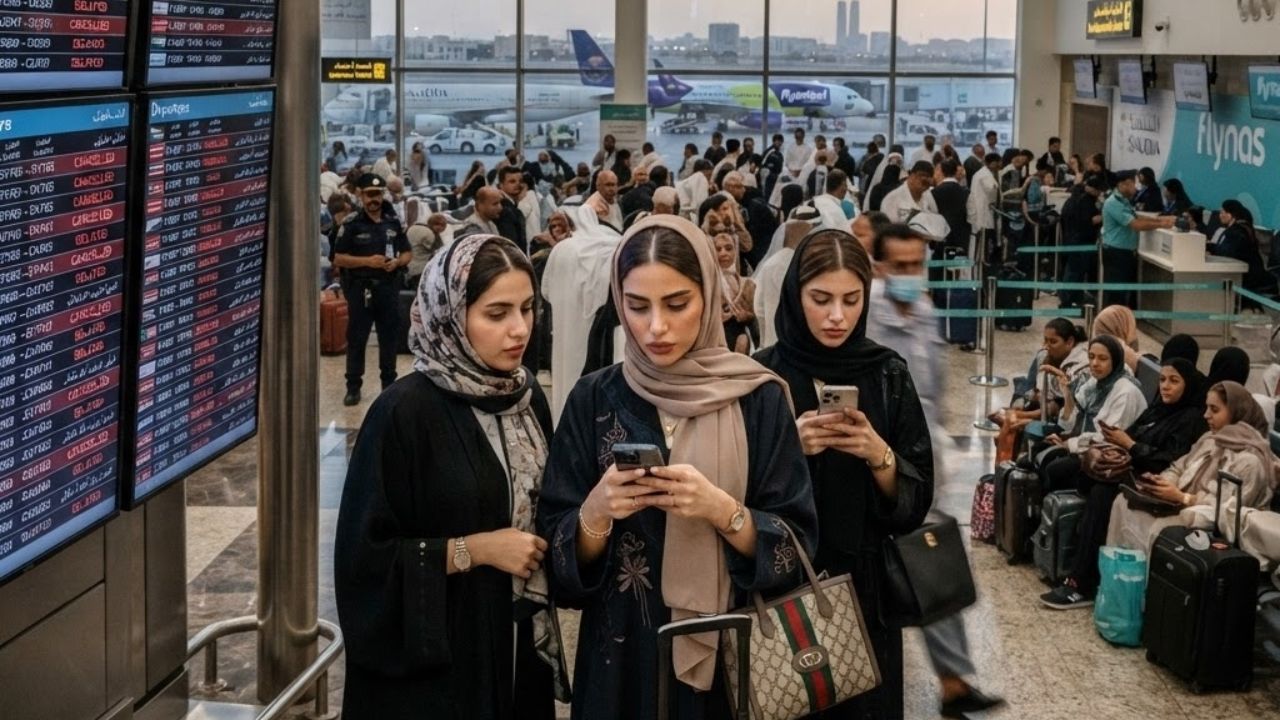
Image generated by AI
Saudi Arabia Flight Disruption: Geopolitical Threats Cause 363 Delays & Cancellations
SEO Title: Saudi Arabia Flight Disruption: Security Threats Cause Cancellations 2026
Meta Description: Drone and missile alerts trigger 185 cancellations and 178 delays across Saudi Arabian airports, affecting Saudia, flyadeal, and Flynas schedules.
Slug: saudi-arabia-flight-disruption-drone-missile-threats-2026
Standfirst: Riyadh, July 28, 2026 — Security updates confirm that drone and missile alerts have caused significant schedule changes across Saudi Arabia's air network, resulting in 185 cancellations and 178 delays.
Three Headlines
Factual / News Headline
- Security threats disrupt air traffic across Saudi Arabia as airlines manage 185 flight cancellations and 178 delays amid rising regional tensions.
Curiosity-Gap (Discover) Headline
- The escalating regional airspace alerts that are forcing Saudi Arabian carriers to ground flights and rewrite transit schedules.
Problem-Solving (Search) Headline
- How to navigate the ongoing aviation disruptions in Saudi Arabia following drone alerts and widespread scheduling adjustments.
Riyadh, July 28, 2026 — A total of 185 flight cancellations and 178 delays have hit Saudi Arabia's major aviation corridors following drone and missile alerts near energy infrastructure. These widespread Saudi Arabia flight disruptions and cancellations are impacting operations at critical hubs in Riyadh and Jeddah. Aviation officials indicate that airlines are adjusting flight schedules to maintain passenger safety as geopolitical tensions rise.
Drone and Missile Alerts Compromise Saudi Arabian Airspaces
The escalation of regional security incidents has introduced significant operational hurdles for the Middle Eastern aviation grid. According to statement logs from the Saudi Foreign Ministry, authorities recently intercepted multiple unmanned aerial vehicles (UAVs) and missile projectiles targeting municipal and energy infrastructure. The ministry indicated that these threats are linked to armed groups operating regionally, prompting a rapid expansion of airspace monitoring procedures.
Separately, rebel factions based in Yemen claimed responsibility for launching strikes aimed at oil transport networks in Yanbu and Jizan. These security developments follow a period of heightened tensions near the Red Sea, where threats to maritime shipping corridors near the Bab el-Mandeb Strait have already reshaped regional cargo logistics. The expansion of these conflicts into airspace zones has forced civil aviation regulators to issue precautionary warnings to commercial carriers.
To ensure safety, airspace coordinates are being monitored continuously, with flights rerouted around potential threat zones. Although airports remain structurally secure, the additional safety margins required for routing have reduced overall arrival and departure slot capacity. As a result, carriers must choose between letting delays accumulate or proactively canceling regional routes to stabilize schedules.
Evaluating the Operational Impact on Jeddah and Riyadh Gateways
The largest operational disruptions are concentrated at the kingdom's primary international gateways, which handle the majority of global and regional passenger traffic. King Abdulaziz International Airport in Jeddah recorded the highest level of disruption, with 90 delayed flights and 51 cancellations. As the primary hub for religious transit and western commercial flights, the congestion in Jeddah has created a backlog of passengers waiting for international connections.
King Khalid International Airport in Riyadh has also experienced substantial schedule changes, reporting 86 delays and 42 cancellations. As the gateway serving the capital city, the airport is a critical hub for corporate travel, meaning the delays are impacting business transit between Gulf states. The simultaneous disruption at these two major hubs suggests that carriers are adjusting rotations across their entire domestic network.
Regional facilities are experiencing even more severe cancellation rates relative to their total daily schedules. Abha Regional Airport registered two delays and 44 cancellations, while Gizan Regional Airport reported 31 cancellations with no delays. Najran Domestic Airport also reported 17 cancellations. The high rate of cancellations at regional fields indicates that airlines are prioritizing major international trunk routes while suspending regional feeder flights.
Saudi Arabia Airport Delays and Cancellations Statistics
The scale of the disruptions across key airports is detailed in the table below, compiled from tracking reports:
Flight Disruption Statistics by Saudi Airport
| Airport | Total Delays Today | Total Cancellations Today | Primary Location Served |
|---|---|---|---|
| King Abdulaziz International Airport | 90 | 51 | Jeddah |
| King Khalid International Airport | 86 | 42 | Riyadh |
| Abha Regional Airport | 2 | 44 | Abha |
| Gizan Regional Airport | 0 | 31 | Jizan |
| Najran Domestic Airport | 0 | 17 | Najran |
Data aggregated from FlightAware as of 5:27 pm ET on July 27, 2026 (corresponding to 1:42 am GST on July 28, 2026) indicates a total impact of 178 delays and 185 cancellations across the listed facilities, with schedules remaining subject to further change.
Saudia and Regional Airlines Absorb Widespread Schedule Reductions
The flight cancellations are placing significant pressure on domestic carriers, which must manage crew logistics, passenger rebooking requests, and aircraft parking space. Saudia, the national flag carrier, has reported the largest operational impact, with 128 cancellations and 96 delays. The airline's extensive network means that cancellations at regional airports are disrupting onward connections for international travelers at its Jeddah and Riyadh hubs.
Low-cost carriers are also experiencing significant challenges. Flyadeal has reported 33 cancellations and 59 delays, while Flynas has registered nine cancellations and 36 delays. Because these carriers rely on high aircraft utilization to maintain low fares, schedule delays rapidly reduce their operational profitability.
Airlines are working to communicate with affected passengers and arrange alternative transit where possible. However, because subsequent flights are running at high capacity, finding empty seats for thousands of displaced travelers remains a complex task for customer service teams.
Airline Flight Disruption Statistics in the Middle East
To illustrate the impact on individual carriers, the table below summarizes the delayed and cancelled flight statistics for the primary airlines operating in the region:
Flight Disruption Statistics by Airline
| Airline | Cancelled Flights | Delayed Flights | Carrier Type |
|---|---|---|---|
| Saudia | 128 | 96 | Flag Carrier |
| flyadeal | 33 | 59 | Low-Cost Carrier |
| Flynas | 9 | 36 | Low-Cost Carrier |
What Passengers Receive Under Elevated Security Conditions
Under standard aviation protocols supported by the International Air Transport Association (IATA), passengers affected by flight disruptions are entitled to specific services. While airlines are generally exempt from paying financial compensation for disruptions caused by geopolitical events or security alerts, they must still fulfill their duty of care.
Key passenger services during security-related flight changes include:
- Complimentary Rebooking Support: Airlines must offer passengers seats on the next available flights to their destinations without charging change fees or fare differences.
- Meals and Refreshment Vouchers: If a flight is delayed by more than three hours, carriers should provide vouchers for food and drinks at the airport.
- Overnight Hotel Accommodations: If a flight cancellation forces an overnight wait, airlines are expected to arrange hotel lodging and transport to and from the terminal.
- Full Refunds for Cancelled Flights: Passengers who choose to cancel their travel plans entirely after a flight cancellation are entitled to a full refund to their original payment method.
Actionable Steps for Travelers Navigating Middle Eastern Hubs
For passengers currently traveling through Saudi Arabia, managing travel plans requires constant monitoring of flight status. Before departing for the airport, travelers should confirm that their flights are scheduled to operate by checking airline mobile apps or online flight boards. Because security requirements can change quickly, checking your flight status early in the day is essential.
Additionally, passengers connecting through Jeddah or Riyadh should allow extra connection time. When flights experience delays, short connection windows can lead to missed flights. Opting for layovers of at least three hours provides a buffer to accommodate minor scheduling adjustments.
Finally, passengers whose flights are cancelled should contact their airline's telephone customer service or use online booking tools to arrange rebooking. Waiting in lines at airport service desks is often slower, as agents must handle large groups of displaced travelers simultaneously. Keeping essential travel documents, medication, and electronic chargers in your carry-on bag is also recommended.
From a Logistical Standpoint: Why Airspaces Require Rapid Restructuring
From a logistical standpoint, managing airspace during security alerts represents a complex task for air traffic control authorities. When drone or missile threats are active, large sectors of airspace must be closed to civilian traffic immediately. This forces controllers to route multiple flights through narrow corridors, creating instant traffic congestion and delays.
Additionally, flight rerouting increases the distance and time required to reach destinations, which increases fuel consumption for airlines. On long-haul routes, these detours can force aircraft to land at alternate airports for refueling, causing further delays. The coordination between military authorities and civil aviation agencies is essential to ensure that commercial corridors remain safe and operational.
For the traveler, this means that regional conflicts have a direct impact on travel times and routing. While airlines and airports work to minimize disruptions, prioritizing safety means that delays and cancellations are necessary precautions during periods of elevated threat. Understanding the operational reasons behind these decisions helps passengers navigate schedule changes with greater patience.
FAQ: Saudi Arabia Flight Disruptions and Cancellations 2026
Q1: What is the main cause of the current flight delays and cancellations in Saudi Arabia?
A1: The disruptions are caused by security concerns and airspace monitoring following drone and missile threats targeting Saudi energy and municipal infrastructure.
Q2: Which airports and airlines are experiencing the highest number of cancellations?
A2: King Abdulaziz International Airport in Jeddah and King Khalid International Airport in Riyadh have recorded the most delays, while Saudia has reported the highest number of cancellations.
Q3: Are passengers entitled to cash compensation if their flight is cancelled due to security alerts?
A3: No, airlines are not required to pay cash compensation for disruptions caused by security threats, but they must provide rebooking options, meals, and hotel accommodation.
Related Travel Guides
- Asia Flight Disruption: 3555 Delays and 293 Cancellations Reported
- China Flight Disruption: Weather Causes 4133 Delays and 133 Cancellations
- LATAM Airlines São Paulo New York Route Reaches 87% Occupancy
Meta Description: Saudi Arabia flight disruptions and cancellations affect major hubs as drone and missile alerts trigger 185 cancellations and 178 delays across key airports.
Disclaimer
This article is for informational and educational purposes only. It does not constitute legal, financial, or professional advice. While we strive to provide accurate and up-to-date information, travel policies, regulations, and conditions change rapidly. Always verify information with official sources before making travel decisions. Nomad Lawyer makes no representations about the accuracy, reliability, completeness, or suitability of the information provided. Readers should consult qualified professionals for advice specific to their circumstances. The views expressed in this article are those of the author and do not necessarily reflect the views of Nomad Lawyer.
Kunal K Choudhary
Co-Founder & Contributor
A passionate traveller and tech enthusiast. Kunal contributes to the vision and growth of Nomad Lawyer, bringing fresh perspectives and driving the community forward.
Learn more about our team →