
Severe Travel Chaos Engulfs San Francisco as Massive 214-Flight Disruption Wave Strands United, SkyWest, and Transpacific Passengers: Latest Airline News
The critical West Coast aviation corridor has buckled under intense operational pressure, with San Francisco International Airport suffering 210 delays and 4 cancellations that are severing global connectivity.

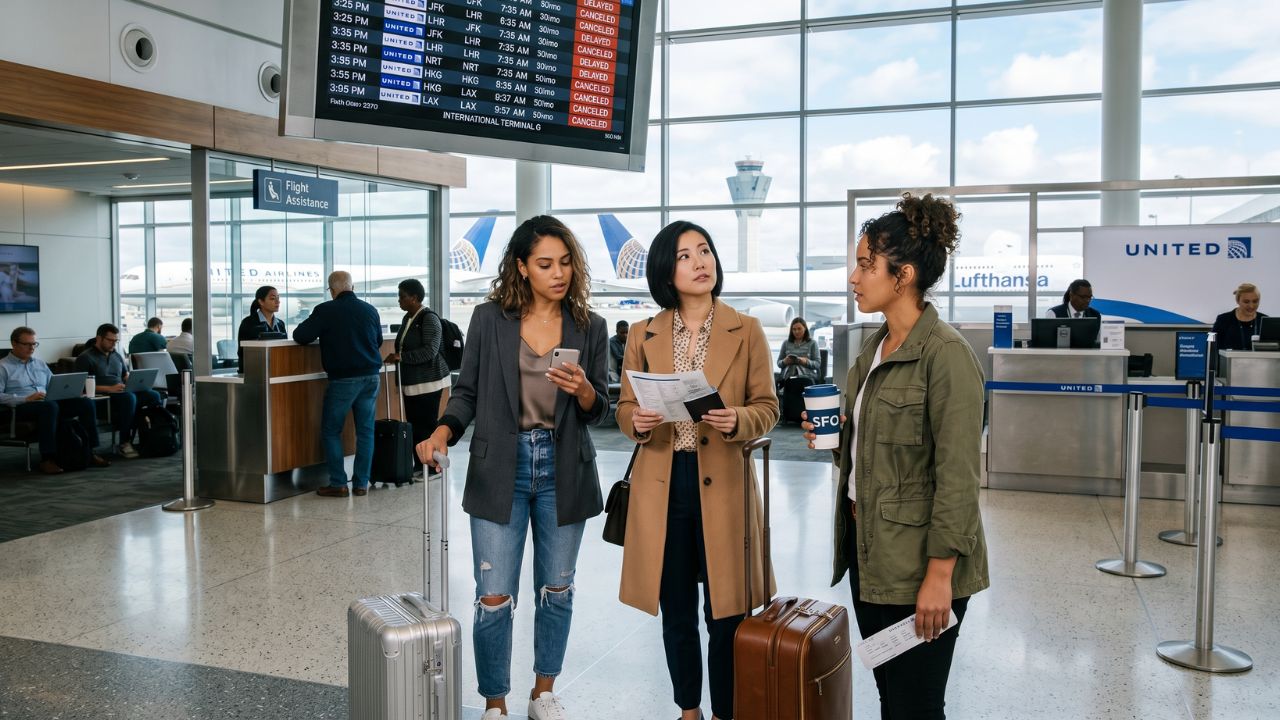
Image generated by AI
In a highly destructive operational breakdown that is currently tearing through the absolute core of the West Coast aviation infrastructure, thousands of global and domestic passengers have been completely stranded following a catastrophic wave of airport disruptions at San Francisco International Airport (SFO). According to official flight data for the June 16, 2026 reporting period, this premier international gateway has buckled under extreme logistical pressure, officially recording a staggering 210 flight delays and 4 outright cancellations. As airlines desperately scramble to reset their transpacific and domestic routing, severe travel chaos is ravaging the schedules of major legacy carriers, specifically crippling the operations of United Airlines, SkyWest Airlines, Southwest, American Airlines, and Air India. With critical routes bound across the United States, Europe, and Asia suffering massive cascading interruptions, this systemic capacity failure represents the premier headline in today's breaking airline news and critical global aviation updates.
By introducing direct passenger coordination and dynamic scheduling backups, the regional aviation hubs target growing passenger demand across vital commerce sectors. The choice to coordinate flight departures in phases helps to manage gate capacity, supporting the country's broader regional transportation network.
Context: The Collapse of the West Coast Gateway
For many international passengers, what was expected to be a highly efficient, routine journey through California’s premier hub has degenerated into a brutal waiting game defined by schedule changes and absolute uncertainty.
The latest operational figures highlight precisely how rapidly disruptions ripple through an interconnected aviation network. While airports routinely manage fluctuating traffic volumes, the sheer scale of a 210-flight delay wave indicates a severe structural strain on the facility. Although delayed departures significantly outnumber the hard cancellations, these delays possess the massive potential to entirely destroy connecting services. San Francisco functions as a key entry and exit point for international tourism and commerce; therefore, when SkyWest and United suffer massive scheduling failures, it leads to devastating cascading effects as aircraft rotations, crew schedules, and international passenger connections are forcibly adjusted throughout the day.
To view live flight schedules, real-time terminal maps, or specific delay protocols for the West Coast network, travelers must consult the official SFO airport directories. For direct booking access, specific baggage rules, and rebooking options, passengers should check the official United Airlines portal or their respective operating carrier. To explore live flight tracking and monitor the exact severity of the California airspace closures, passengers can consult the official FlightAware tracking service.
Section-Wise Breakdown of the Hub Meltdown
SkyWest and United: The Anchor Carriers Paralyzed
The disruption has been heavily concentrated on the airport's anchor carriers. United Airlines, which operates a massive international base at SFO, suffered 54 delayed flights and 1 cancellation, entirely destabilizing its transpacific and transatlantic long-haul operations. Similarly, SkyWest Airlines—operating critical regional feeder routes that deliver passengers to United's larger aircraft—recorded 45 delayed flights and 2 cancellations, acting as the primary catalyst for missed domestic connections.
Transpacific and Transatlantic Corridors Destroyed
The flight delay matrix reveals that the disruption instantly spread beyond domestic borders. Long-haul international operators absorbed severe friction. Flights bound for Paris, Rome, London, and Amsterdam were caught in the holding patterns, severely inconveniencing European tourists. Simultaneously, crucial transpacific routes heading to Tokyo (Narita), Hong Kong, Singapore, Beijing, and Incheon suffered heavy delays, completely undermining SFO’s reputation as a reliable gateway to Asia.
Domestic Network Cascading Failures
The domestic impact was equally devastating. Major operators including Southwest (36 delays), American Airlines (15 delays), Delta (15 delays), and Alaska Airlines (9 delays) were trapped in the operational gridlock. High-frequency routes connecting San Francisco to crucial business and leisure hubs such as Washington DC, Denver, Los Angeles, Seattle, Dallas-Fort Worth, and Las Vegas experienced rolling delays, forcing business travelers to abandon meetings across the country.
Technical Roster: San Francisco Disruption Matrix
To ensure absolute factual accuracy regarding the sheer scale of this domestic and international aviation failure, the following table details the core operational metrics and the specific carrier impacts generated by the SFO breakdown:
| Airline | Cancelled | Cancelled (%) | Delayed | Delayed (%) |
|---|---|---|---|---|
| SkyWest | 2 | 1% | 45 | 26% |
| United | 1 | 0% | 54 | 11% |
| Air India | 1 | 33% | 0 | 0% |
| Air Canada | 0 | 0% | 2 | 12% |
| Air France | 0 | 0% | 1 | 25% |
| All Nippon | 0 | 0% | 2 | 40% |
| Alaska Airlines | 0 | 0% | 9 | 15% |
| British Airways | 0 | 0% | 1 | 25% |
| China Airlines | 0 | 0% | 1 | 50% |
| Cathay Pacific | 0 | 0% | 2 | 50% |
| China Southern | 0 | 0% | 1 | 50% |
| Delta Air Lines | 0 | 0% | 15 | 18% |
| Frontier | 0 | 0% | 3 | 13% |
| ITA Airways | 0 | 0% | 1 | 50% |
| Japan Airlines | 0 | 0% | 4 | 100% |
| JetBlue | 0 | 0% | 2 | 6% |
| Breeze Airways | 0 | 0% | 1 | 50% |
| Philippine Airlines | 0 | 0% | 1 | 50% |
| Qatar Airways | 0 | 0% | 2 | 100% |
| Horizon (Alaska) | 0 | 0% | 3 | 30% |
| Air Canada Rouge | 0 | 0% | 1 | 50% |
| Sun Country | 0 | 0% | 1 | 25% |
| Starlux | 0 | 0% | 1 | 50% |
| Southwest | 0 | 0% | 36 | 56% |
| TAP Air Portugal | 0 | 0% | 1 | 50% |
| ZIPAIR | 0 | 0% | 1 | 50% |
| Virgin Atlantic | 0 | 0% | 1 | 25% |
| WestJet | 0 | 0% | 3 | 50% |
| American Airlines | 0 | 0% | 15 | 20% |
Passenger Impact: Stranded at the West Coast Gateway
For the everyday passengers currently trapped inside SFO, the logistical reality is rapidly deteriorating.
Because San Francisco is heavily utilized as an inbound and outbound transit point for massive international hubs, a mere 45-minute delay on an inbound regional flight from Fresno or Sacramento frequently results in a passenger missing a highly lucrative, multi-thousand-dollar transpacific flight to Tokyo or Singapore. Passengers whose flights are among the 4 outright cancellations—specifically those bound for Washington DC or Incheon via Air India—are now facing a brutal reality: they must navigate the complex process of demanding airline compensation while fighting thousands of other travelers for the few remaining hotel rooms near the San Francisco Bay Area. The emotional stress of missed reunions and ruined corporate itineraries is compounded by the grueling wait times for airline customer service assistance.
Industry Analysis: The Fragility of Mega-Hub Operations
Aviation industry analysts view the 214-flight disruption wave at SFO as a textbook symptom of the extreme structural vulnerability inherent in major coastal mega-hubs.
While no single long-term structural conclusion can be drawn from a single day’s operational disruption, analysts note that the West Coast corridor is currently operating at maximum capacity. When carriers like United and SkyWest experience a sudden operational hiccup—whether driven by marine layer fog, air traffic control restrictions, or sudden mechanical issues—there is virtually zero buffer left in the schedule to absorb the blow. This results in a massive 210-flight delay wave that bleeds outward, impacting incoming flights from Toronto, Calgary, Cancun, and Doha. Analysts warn that repeated delays of this magnitude will inevitably force international tour operators to consider alternative routing (such as routing through Seattle or Los Angeles) or mandate massive buffer times when scheduling flights through Northern California.
Actionable Advice for Surviving SFO Disruptions
If you are a traveler relying on United, SkyWest, Southwest, or international operators through SFO during this massive disruption wave, execute this extreme survival checklist immediately:
- Pad Your Connecting Flights: If you are flying inbound to San Francisco to catch an international long-haul flight to Europe or Asia, always assume standard SFO flight friction. Build a minimum 4-hour buffer into your layover to absorb inevitable airspace delays so you do not miss your transoceanic departure.
- Monitor Official Carrier Apps: Do not rely solely on the physical departure boards inside the terminal. In a 210-flight delay scenario, gate changes happen constantly. You must aggressively monitor your specific airline’s mobile notifications for the absolute latest routing updates.
- Aggressive Pre-Emptive Rebooking: If your Air India or SkyWest flight is officially listed among the cancellations, do not stand in the physical customer service line. Immediately contact your airline via phone to secure alternative travel arrangements before the remaining commercial inventory vanishes.
- Understand U.S. Compensation Laws: Unlike the European Union, the United States has extremely limited federal mandates regarding passenger compensation for delayed flights. Assistance heavily depends on the specific airline’s contract of carriage. Demand hotel vouchers explicitly from the operating carrier if the delay is deemed within their control.
FAQ: San Francisco Airport Flight Disruptions 2026
How severe is the current operational breakdown at San Francisco International Airport?
SFO is buckling under massive operational strain, officially recording a highly disruptive 210 flight delays and 4 outright cancellations within a single operational day.
Which major international airlines are most affected by this travel chaos?
The disruption wave is causing severe cascading effects for major operators, heavily impacting SkyWest (45 delays), United Airlines (54 delays), Southwest (36 delays), and grounding flights for Air India.
What international routes are suffering from these San Francisco delays?
The massive delay wave has completely destabilized global corridors, severely delaying long-haul flights bound for Paris, Rome, Tokyo (Narita), Hong Kong, Singapore, and canceling routes to Incheon.
The Breaking Point of the Pacific Gateway
The catastrophic wave of 214 flight disruptions ravaging San Francisco International Airport proves definitively that the U.S. West Coast aviation infrastructure is currently operating on a razor's edge in 2026. By entirely devastating the highly scheduled, interconnected operations of United, SkyWest, and Southwest, this operational meltdown has ruthlessly exposed the deep logistical fragility of America's premier gateway to Asia and the Pacific. As airlines desperately attempt to reposition their fleets, activate flexible rebooking policies, and clear the massive backlog of stranded passengers, travelers and policymakers must accept a brutal reality: navigating SFO during peak periods requires extreme flexibility, aggressive contingency planning, and the absolute understanding that a localized delay can instantly paralyze a global itinerary.
Key Takeaways
- Massive 214-Flight Breakdown: San Francisco International Airport (SFO) has been paralyzed by a severe operational collapse, recording 210 rolling flight delays and 4 outright cancellations.
- United and SkyWest Crippled: The disruption wave heavily impacted the airport's anchor carriers, with United logging 54 delays and SkyWest suffering 45 delays and 2 cancellations.
- Transpacific Corridors Paralyzed: Critical long-haul routes connecting the U.S. to major Asian hubs—including Tokyo, Singapore, Hong Kong, and Incheon—suffered devastating logistical friction.
- Domestic Network Gridlock: Major domestic operators, including Southwest (36 delays), American (15 delays), and Delta (15 delays), were trapped in the rolling West Coast congestion.
- Rebooking Urgency: Stranded travelers are urged to aggressively monitor real-time flight information on carrier apps and immediately contact airlines to demand rebooking options before inventory vanishes.
Related Travel Guides
Severe Travel Chaos Paralyzes Zurich Airport Across Major Airlines
Severe Travel Chaos Paralyzes Los Angeles Across Major Airlines
San Francisco Airport Disruption and Rebooking Strategies Discussion on Reddit
Disclaimer
This article is for informational and educational purposes only. It does not constitute legal, financial, or professional advice. While we strive to provide accurate and up-to-date information, travel policies, regulations, and conditions change rapidly. Always verify information with official sources before making travel decisions. Nomad Lawyer makes no representations about the accuracy, reliability, completeness, or suitability of the information provided. Readers should consult qualified professionals for advice specific to their circumstances. The views expressed in this article are those of the author and do not necessarily reflect the views of Nomad Lawyer.
Kunal K Choudhary
Co-Founder & Contributor
A passionate traveller and tech enthusiast. Kunal contributes to the vision and growth of Nomad Lawyer, bringing fresh perspectives and driving the community forward.
Learn more about our team →