
Boeing 747-8 'Doomsday Plane' Enters Critical Testing Phase Ahead of U.S. Air Force Delivery
Breaking airline news and aviation industry updates for 2026.

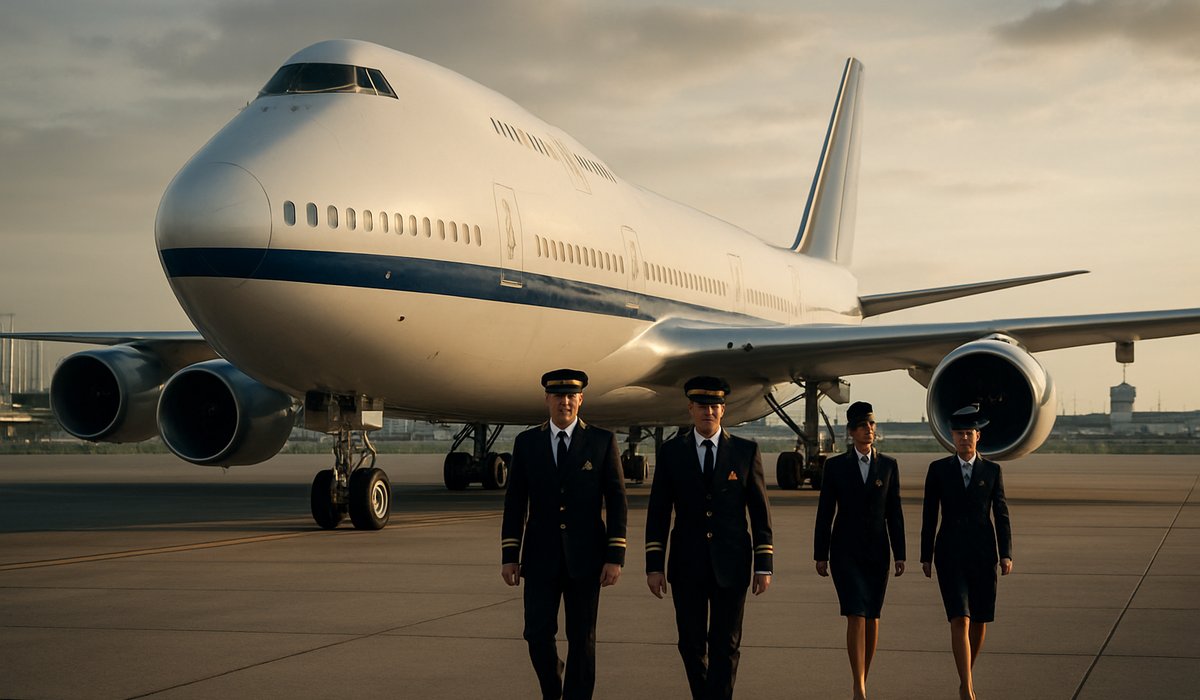
Image generated by AI
Boeing 747-8 'Doomsday Plane' Enters Critical Testing Phase Ahead of U.S. Air Force Delivery
Survivable Airborne Operations Center undergoes intensive flight trials to ensure operational readiness for presidential command missions
Breaking Development in U.S. Defense Aviation
Boeing's next-generation Survivable Airborne Operations Center (SAOC)—the successor to the iconic E-4B "doomsday plane"—has commenced comprehensive flight and ground testing operations, marking a pivotal milestone in one of the Pentagon's most sensitive aerospace programs. The aircraft, a converted Boeing 747-8, is undergoing rigorous risk-mitigation trials to guarantee timely handover to the United States Air Force, according to defense officials familiar with the initiative.
What is the Doomsday Plane?
The SAOC represents a generational leap in airborne command infrastructure. Designed to maintain continuity of government during catastrophic national emergencies, this flying command center serves as a mobile headquarters for the President, senior military commanders, and national security leadership when ground-based operations become compromised or destroyed. The platform epitomizes the aviation industry's intersection with geopolitical security—a sector where reliability and redundancy override commercial cost considerations.
Testing Regime Underway
The current evaluation phase encompasses both in-flight performance assessments and stationary systems validation. Engineers are stress-testing the aircraft's advanced communications systems, nuclear-hardened electronics, and survivability features designed to withstand electromagnetic pulse (EMP) events and nuclear radiation exposure. These comprehensive trials are essential to de-risk the program and prevent delays that could impact Air Force operational capability timelines.
Strategic Implications for Defense Aviation
The SAOC program underscores the aviation industry's critical role in national security infrastructure—a domain where commercial suppliers like Boeing serve defense objectives requiring unprecedented performance standards. Unlike conventional commercial aircraft programs governed by profit margins and market demand, the doomsday plane represents mission-critical infrastructure with zero tolerance for failure.
The transition from the current E-4B fleet, which has served since the 1970s, necessitates seamless knowledge transfer and rigorous validation. The 747-8 platform provides enhanced range, payload capacity, and modern avionics compared to its predecessor, ensuring the Air Force maintains airborne command capabilities against evolving threats for decades ahead.
Timeline and Operational Impact
Successful completion of testing phases will enable the Air Force to begin operational evaluation and crew training protocols. Industry observers note that defense aviation programs of this magnitude typically require multi-year testing cycles before full deployment authorization.
The program's advancement reflects broader trends in defense modernization, where aging Cold War-era systems are being systematically replaced with contemporary platforms incorporating advanced materials, communications technology, and survivability enhancements.
FAQ: Understanding the SAOC Program
What is the SAOC aircraft used for? The Survivable Airborne Operations Center serves as a flying command post enabling the U.S. President and military leadership to maintain governmental control and military command during national catastrophes, nuclear attacks, or large-scale disasters when ground infrastructure is compromised.
Why is Boeing converting a 747-8 for this mission? The 747-8 offers superior range, payload capacity, and modern avionics compared to the legacy E-4B platform it replaces, ensuring the Air Force maintains advanced airborne command capabilities through the 21st century.
How long does aircraft testing typically take for defense programs? Defense aviation programs generally require 3-5+ years of intensive flight and ground testing before operational deployment authorization, prioritizing safety and mission reliability over rapid market deployment.
What makes the doomsday plane different from commercial aircraft? The SAOC incorporates nuclear-hardened systems, EMP shielding, advanced secure communications, and redundant survivability features absent in commercial aviation, reflecting its critical national security mission profile.
When will the SAOC enter operational service? Timeline specifics remain classified; however, successful testing completion is required before the Air Force can authorize operational evaluation and crew training protocols.
Related Travel Guides
Flight Delay Compensation Guide 2026
Understanding Airline Route Changes
Airport Security Process Updated (2026)
External Resources
Disclaimer
This article is for informational and educational purposes only. It does not constitute legal, financial, or professional advice. While we strive to provide accurate and up-to-date information, travel policies, regulations, and conditions change rapidly. Always verify information with official sources before making travel decisions. Nomad Lawyer makes no representations about the accuracy, reliability, completeness, or suitability of the information provided. Readers should consult qualified professionals for advice specific to their circumstances. The views expressed in this article are those of the author and do not necessarily reflect the views of Nomad Lawyer.
Preeti Gunjan
Contributor & Community Manager
A passionate traveller and community builder. Preeti helps grow the Nomad Lawyer community, fostering engagement and bringing the reader experience to life.
Learn more about our team →