
Breaking Airline News: Severe Travel Chaos Shatters San Francisco Airport as United and Emirates Trigger 337 Massive Flight Delays
Breaking airline news: Terrifying travel chaos sweeps across San Francisco International Airport as severe flight cancellations and massive delays completely shatter transpacific and domestic itineraries.

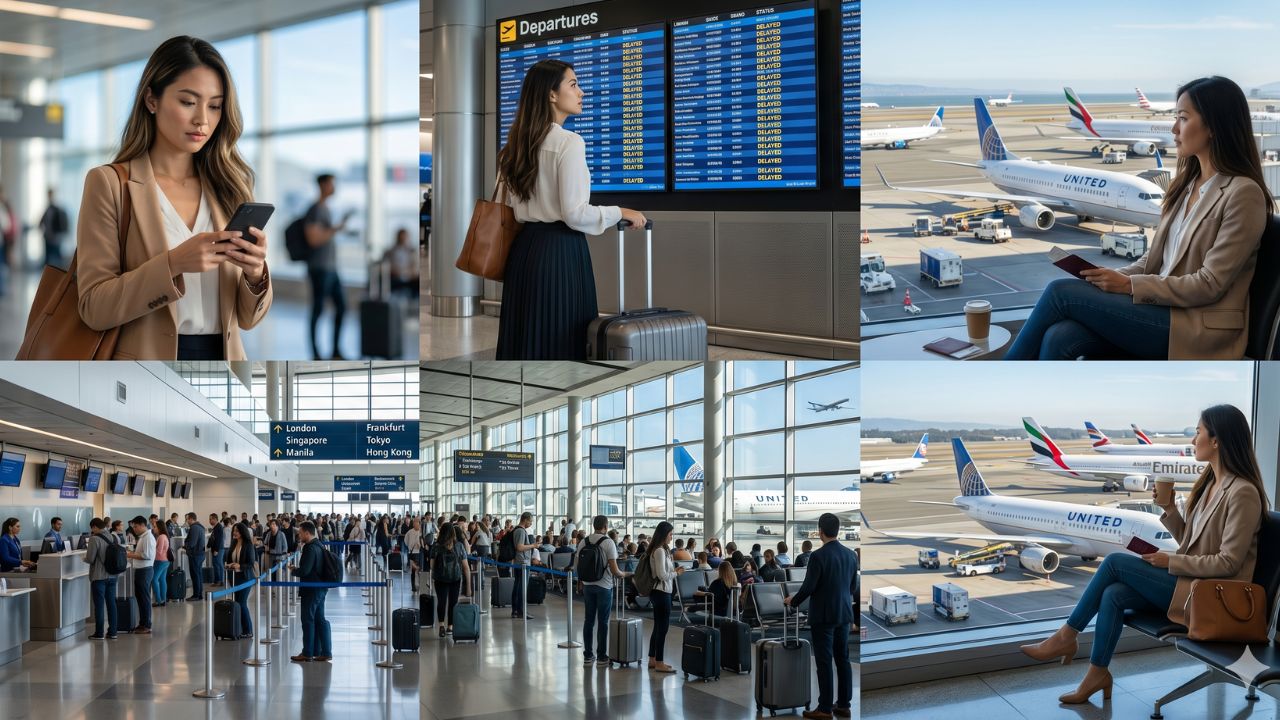
Image representing the severe flight disruptions at San Francisco International Airport.
Breaking Airline News: Severe Travel Chaos Shatters San Francisco Airport as United and Emirates Trigger 337 Massive Flight Delays
A sudden, violent operational meltdown has aggressively plunged San Francisco International Airport into severe terminal gridlock, triggering 5 outright cancellations and a terrifying 337 agonizing delays that completely shattered global itineraries.
In a highly terrifying and completely unexpected display of global network vulnerability, massive operational disruptions have violently swept across the United States West Coast, actively plunging its vital aviation grid into a severe wave of travel chaos. Delivering highly urgent, breaking airline news, official aviation monitoring systems actively confirmed that an unprecedented wave of flight cancellations and agonizing delays aggressively paralyzed aviation networks operating out of San Francisco International Airport (SFO) on June 5, 2026. The incredibly busy international hub, which normally operates as the highly synchronized primary gateway to the Pacific, suffered 5 total flight cancellations and an astonishing 337 massive delays. This catastrophic logistical breakdown has generated incredibly significant challenges for major global carriers, heavily impacting United, British Airways, American Airlines, and Emirates. Innocent passengers traveling through this highly crucial gateway were violently subjected to sudden, terrifying terminal gridlock, absolutely shattering carefully planned travel itineraries and business connections across the United States, Asia, and Europe.
Expanded Overview: The Massive Scale of the SFO Aviation Meltdown
The highly publicized execution of these mass delays serves as an absolutely undeniable example of how rapidly international commercial transit can completely collapse under severe operational strain. San Francisco International operates as an incredibly critical transit hub. However, the sudden, violent logistical nightmare recorded today aggressively focused its devastation on both dominant legacy carriers and massive foreign operators.
While the 5 outright cancellations violently stranded specific passengers, the absolute massive volume of delays—totaling 337—completely shattered the outbound schedules of dozens of international carriers. Travelers frantically navigating the sprawling terminals now face incredibly long waits, completely ruined itineraries, and absolute uncertainty as the deadly combination of severe network congestion and sudden scheduling adjustments forcefully dictates this aviation disaster. Passengers connecting through the U.S., Singapore, Philippines, UAE, Ireland, Denmark, United Kingdom, Japan, Germany, and China are violently facing devastating knock-on delays, permanently impacting both short-haul domestic and massive long-haul transpacific travel.
Section-Wise Breakdown of the Terrifying Airport Disruptions
Major US Domestic Hubs (Los Angeles, Chicago, Phoenix)
Situated precisely at the massive crossroads of domestic travel, SFO's domestic corridors violently buckled. The massive logistical pressure severely compromised operations as flights to Chicago O’Hare (ORD) absorbed 2 terrifying cancellations and 4 massive delays. Furthermore, the ripple effect violently combined with ongoing operational constraints to completely shatter West Coast connectivity. Flights highly bound for Los Angeles (LAX) suffered 14 delays (a 33% delay rate), San Diego (SAN) took 12 delays, and Phoenix Sky Harbor (PHX) suffered a terrifying 76% delay rate (10 flights). Even secondary regional airports like Aspen, Bozeman Yellowstone, and San Bernardino violently suffered 100% delay rates on their inbound flights from San Francisco.
The Asian and Middle Eastern Collapse (Singapore, Manila, Dubai)
The terrifying travel chaos was incredibly merciless, aggressively expanding far beyond the United States to actively sever massive transpacific routes. Flights violently linking SFO to Manila (MNL) suffered 2 outright cancellations and 4 severe delays. The highly vital corporate pipeline into Singapore Changi (SIN) absorbed a terrifying 75% delay rate. Furthermore, long-haul operations into the Middle East were absolutely devastated, with flights aggressively targeted for Dubai International (DXB) suffering a catastrophic 100% delay rate. Massive global titans like Emirates and Singapore Airlines were forcefully dragged into the logistical nightmare.
The European Corridor Gridlock (London, Frankfurt, Dublin)
The severe logistical pressure severely compromised transatlantic continuity across the entire Northern Hemisphere. The terminal suffered absolutely massive logistical strain as European flights were violently grounded. Connections to London Heathrow (LHR) absorbed a 42% delay rate, while Frankfurt (FRA) suffered a massive 50% delay impact. Furthermore, flights departing for Dublin and Copenhagen forcefully recorded terrifying 100% delay rates. British Airways and Air Canada Rouge both reported 100% delays on their respective operations out of the collapsing hub.
Verified Flight Details: Total Disruption Data
To completely comprehend the incredible scale of this violent regional aviation crisis, the following data table accurately reflects the mandatory disruption statistics natively recorded from the airport's operational monitoring systems:
| Affected Entity | Metric | Disruption Value |
|---|---|---|
| United Airlines | Cancellations / Delays | 5 Cancellations / 126 Delays (25%) |
| SkyWest | Delays | 57 Delays (31%) |
| Southwest Airlines | Delays | 45 Delays (62%) |
| American Airlines | Delays | 25 Delays (30%) |
| Delta Air Lines | Delays | 17 Delays (20%) |
| Breeze Airways | Delays | 6 Delays (85%) |
| Los Angeles (LAX) | Delays | 14 Delays (33%) |
| Phoenix (PHX) | Delays | 10 Delays (76%) |
| Chicago O'Hare (ORD) | Cancellations / Delays | 2 Cancellations (9%) / 4 Delays (19%) |
| San Diego (SAN) | Delays | 12 Delays (48%) |
| Manila (MNL) | Cancellations / Delays | 2 Cancellations (33%) / 4 Delays (66%) |
| Singapore (SIN) | Delays | 3 Delays (75%) |
(United Airlines was the absolute most impacted carrier at its own hub, absorbing 126 delays and 5 outright cancellations. Regional carrier SkyWest and domestic giant Southwest also suffered terrifying delay rates over 30% and 60%, respectively.)
Passenger Impact: Surviving the Terrifying Terminal Friction
For the desperate global commuter actively navigating this incredibly hostile environment, the severe passenger impact of this massive logistical failure is absolutely devastating. The 5 cancellations and 337 grounded flights mathematically guarantee profoundly shattered itineraries, violently stranding innocent tourists and highly crucial business travelers inside suffocating, completely overcrowded departure lounges. Passengers on affected flights were violently required to seek alternative travel arrangements, forcefully enduring extended, excruciating wait times. This terrifying scenario inevitably forces severe financial hemorrhaging upon passengers who miss incredibly sensitive, high-value international connections in Asia and Europe, forcing them to absorb exorbitant last-minute hotel accommodations out of pocket.
Industry Analysis: What Triggered the Aviation Meltdown?
While official sources prioritize safety and regulatory compliance above all else, industry experts point to a terrifying matrix of highly complex, intersecting external factors. Severe multi-airline collapses of this specific magnitude across incredibly dense hubs like San Francisco are frequently linked to violent regional airspace congestion, severe localized Pacific weather patterns (such as heavy marine layer fog), or sudden air traffic control limitations that violently force airlines to temporarily halt massive scheduled blocks. This deadly combination of sudden meteorological shifts and terrifying domestic network constraints violently combined to plunge the major airport into complete travel chaos.
Conclusion: A Highly Disruptive Industrial Evolution
The massive, highly publicized SFO travel disruption actively acts as an absolutely terrifying wake-up call regarding the incredible physical fragility of the West Coast commercial aviation sector. The massive delay volume heavily suffered by major carriers like United and Emirates violently exposes the extreme vulnerability of peak transpacific operations. To aggressively protect future global connectivity and safeguard its reputation as a premier destination, regional authorities and airline partners must fiercely restore consistent operational reliability to prevent future paralyzation.
What Guests Get: Immediate Passenger Ramifications
- Massive Carrier Delays: United Airlines violently absorbed 126 delays and 5 cancellations, completely shattering domestic and transpacific connectivity.
- European Route Collapse: Vital flights connecting SFO to Dublin, Copenhagen, and London suffered terrifying delay rates, severing transatlantic transit.
- Asian Hub Gridlock: Massive routes to Manila, Singapore, Dubai, and Kansai were violently impacted, ensuring severe international delays.
- Extensive Financial Losses: Stranded tourists and massive corporate groups face exorbitant, unexpected financial strain as carefully planned itineraries are violently shattered.
What This Means for Travelers: Navigating the Travel Chaos
If you are actively scheduled to travel through San Francisco International Airport, you must incredibly urgently prepare for severe operational disaster. Passengers are strongly advised to aggressively monitor their flight status digitally via official airline applications continuously, bypassing physical check-in desks completely. If your flight is delayed or cancelled, aggressively demand alternative routing from the operating carrier. Detailed documentation of all itineraries must be meticulously preserved to aggressively secure mandatory hotel accommodations for overnight delays or formal financial compensation.
FAQ: San Francisco Airport Travel Disruptions 2026
Why did San Francisco International Airport suffer massive flight delays? The severe travel chaos was violently fueled by a terrifying, abrupt surge in scheduling issues linked to severe regional airspace congestion and highly complex weather factors affecting runway capacity.
Which airlines were most affected at SFO today? United Airlines violently absorbed 126 delays, while Southwest suffered 45 delays. International carriers like British Airways and Emirates reported terrifying 100% delay rates.
Which international destinations experienced the highest impact? Outbound flights aggressively directed towards major hubs like Dubai (DXB), Kansai (KIX), Dublin (DUB), and Copenhagen (CPH) suffered an absolutely catastrophic 100% delay rate.
Related Travel Guides
Disclaimer
This article is for informational and educational purposes only. It does not constitute legal, financial, or professional advice. While we strive to provide accurate and up-to-date information, travel policies, regulations, and conditions change rapidly. Always verify information with official sources before making travel decisions. Nomad Lawyer makes no representations about the accuracy, reliability, completeness, or suitability of the information provided. Readers should consult qualified professionals for advice specific to their circumstances. The views expressed in this article are those of the author and do not necessarily reflect the views of Nomad Lawyer.
Kunal K Choudhary
Co-Founder & Contributor
A passionate traveller and tech enthusiast. Kunal contributes to the vision and growth of Nomad Lawyer, bringing fresh perspectives and driving the community forward.
Learn more about our team →