
Boeing 747 Replacement: Why No Single Aircraft Can Match the Icon
The Boeing 747's retirement has fragmented the aircraft market in 2026. Airlines now deploy multiple wide-body aircraft to replace its unique 400+ passenger capacity, 120-tonne cargo payload, and 7,000+ nautical mile range.

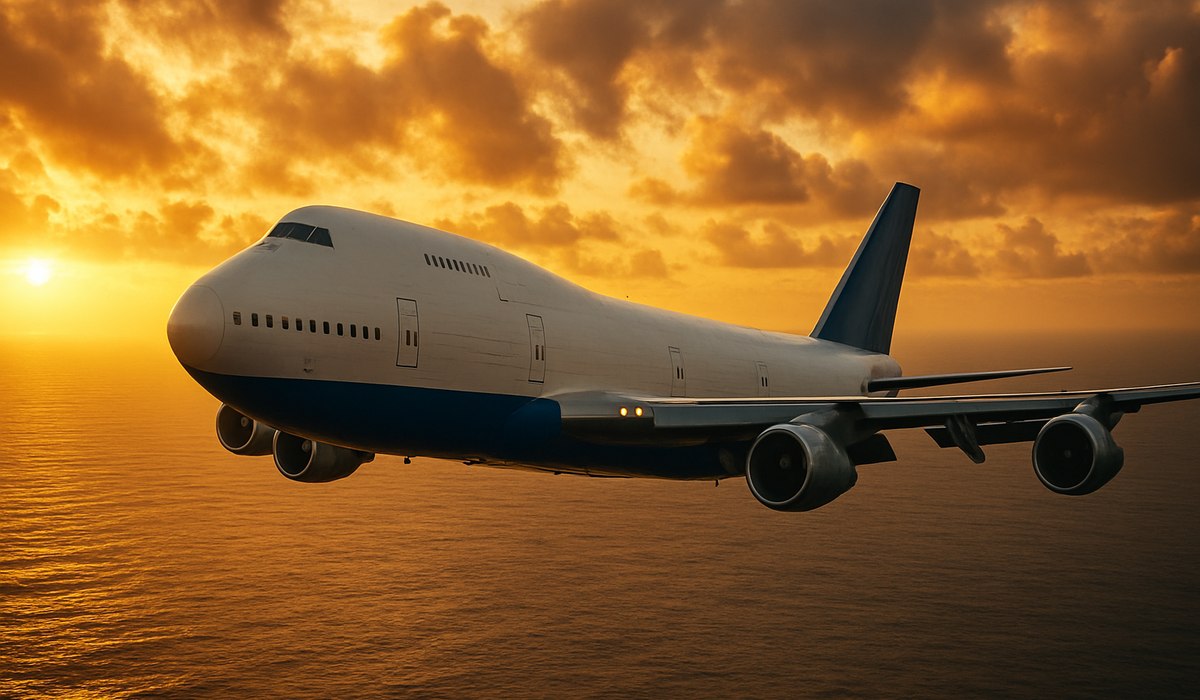
Image generated by AI
The Boeing 747's Irreplaceable Legacy in Modern Aviation
The Boeing 747 retirement has created an unexpected challenge for global carriers: no single modern wide-body aircraft can replicate the jumbo jet's extraordinary combination of performance metrics. With over 400-passenger capacity, 120+ tonnes of cargo payload, nose-loading accessibility, and range exceeding 7,000 nautical miles, the iconic quad-jet has proven far more versatile than aviation analysts anticipated. Rather than a straightforward one-to-one replacement, airlines and freight operators across North America, Europe, and Asia-Pacific regions are deploying multiple aircraft types simultaneously, fundamentally reshaping long-haul aviation strategy throughout 2026.
This fragmentation reveals a deeper truth: the 747's design specifications were deliberately engineered for a unique market position that no competitor currently occupies. Airlines now face a portfolio approach to fleet modernization, selecting from the Boeing 787 Dreamliner, Airbus A350-900, and enhanced Boeing 777 variants depending on mission requirements. Cargo operators, in particular, face unprecedented scheduling complexity as they balance passenger conversions, specialized freighter platforms, and regional hub-and-spoke networks.
Why the 747 Remains Irreplaceable
The 747's competitive advantages stemmed from design priorities established in the 1960s. The aircraft was engineered as a dual-purpose platform: delivering premium passenger experiences on long-haul routes while maintaining exceptional freight-handling flexibility. Its distinctive hump fuselage and nose-door loading system enabled rapid cargo operations without specialized ground infrastructure. Modern aircraft prioritize fuel efficiency and maintenance costs over raw capacity, a philosophical difference that explains why manufacturers never designed a direct successor.
Contemporary wide-body jets achieve superior fuel economy through advanced engines, composite materials, and aerodynamic refinements. The Boeing 787 burns approximately 20-25% less fuel than the 747 while carrying 242-330 passengers. The Airbus A350-900 delivers similar efficiency advantages with 325-440 seat configurations. However, both aircraft sacrifice the 747's cargo volume and unique nose-loading capability. Airlines operating premium international routes (London-Singapore, Tokyo-New York, Dubai-Los Angeles) now typically deploy 787s and A350s for passengers, relegating the 747 to dedicated freight operations or terminal retirement.
For detailed specifications on modern wide-body aircraft, consult the FAA's aircraft certification database.
The Multi-Aircraft Solution Airlines Are Adopting
Major global carriers have already implemented hybrid fleet strategies to compensate for 747 retirement. Lufthansa, British Airways, and Japan Airlines operate combinations of 777X, 787, and A350 aircraft across long-haul networks. This approach optimizes route profitability: the ultra-efficient 787 handles moderate-capacity transcontinental routes, while 777 variants serve high-demand corridors requiring 350-400 passenger capacity.
Cargo operators face steeper challenges. FedEx and UPS historically relied on 747 freighters for their highest-volume lanes. With new 747F production ending, these companies are transitioning to Airbus A380F conversions, Boeing 777F dedicated freighters, and expanding regional feeder networks with smaller wide-body cargo variants. The transition requires capital investments in new sorting equipment, crew training, and route optimization that will extend throughout 2026 and beyond.
Regional carriers and charter operators operating seasonal capacity have discovered that no affordable replacement exists for the 747's specific role. Some airlines are extending 747 service life through re-engining programs or purchasing used aircraft from retirement inventories, effectively competing against fleet modernization initiatives elsewhere in the industry.
Impact on Cargo and Long-Haul Operations
The aircraft retirement of the 747 fleet has created immediate capacity constraints in premium international cargo markets. Peak-season freight rates (November-December) have increased 15-22% on transatlantic and transpacific routes as carriers deploy smaller aircraft to replace retired jumbo freighters. Shippers of time-sensitive freight now negotiate higher fees or accept longer transit times via secondary hub connections.
Passenger airlines converting dedicated cargo-only aircraft have discovered operational friction. The 777F and A330F freighters require different ground-handling equipment and crew procedures than passenger variants. Loading systems optimized for palletized freight don't accommodate the mixed cargo profiles that airlines historically managed with 747F flexibility. This efficiency loss translates to reduced utilization rates and higher per-unit operating costs.
Long-haul route networks are becoming increasingly selective. Airlines now retire smaller wide-body aircraft (A300, older 777-200ER models) to preserve 747 capacity on ultra-long routes where competitive advantages justify continued operation. Cities dependent on 747 frequency—Hong Kong, Bangkok, Singapore—have experienced modest passenger connection delays as carriers optimize schedules around revised aircraft assignments.
For real-time cargo tracking and route information, visit FlightAware's freight tracking system.
The Future of Wide-Body Aircraft Strategy
Looking ahead to 2027-2030, aircraft manufacturers are unlikely to develop a direct 747 replacement. Market analysis suggests that demand fragmentation works in favor of specialized platforms: ultra-efficient twins (787, A350) for frequency-based networks, high-capacity variants (777-9, A380) for hub consolidation, and dedicated freighters (777F, A330F) for cargo optimization.
The Boeing 777X program and Airbus A350XWB enhancements represent the industry's answer to 747 retirement—not through one revolutionary aircraft, but through incremental improvements to proven platforms. These developments reflect changing airline priorities: carbon efficiency, maintenance predictability, and crew commonality now matter more than absolute capacity per flight.
Emerging markets in Southeast Asia and the Middle East maintain stronger demand for large-capacity aircraft, potentially sustaining 747 conversions and specialized freighter programs through 2030. Conversely, North Atlantic and domestic long-haul operations are shifting decisively toward smaller, more frequent departures using modern twin-engine jets.
Key Data Table: Aircraft Comparison and Replacement Metrics
| Specification | Boeing 747-8 | Boeing 787-10 | Airbus A350-900 | Boeing 777-300ER |
|---|---|---|---|---|
| Maximum Passengers | 440+ | 330 | 325 | 396 |
| Cargo Capacity (tonnes) | 140+ | 40 | 42 | 61 |
| Range (nautical miles) | 8,000 | 7,285 | 7,450 | 7,725 |
| Fuel Efficiency vs. 747 | Baseline | +23% | +21% | +8% |
| Nose-Loading Capability | Yes | No | No | No |
| Production Status (2026) | Ended 2023 | Active | Active | Active |
What This Means for Travelers
The Boeing 747 replacement strategy directly impacts air travelers' experiences on long-haul flights. Route frequency, aircraft comfort, and ticket pricing are all shifting as airlines reconfigure their fleet compositions.
Traveler Action Checklist:
-
Verify aircraft type before booking. Use airline websites or FlightAware to identify aircraft assigned to specific long-haul routes. Prefer 787 or A350 aircraft for superior cabin pressure, humidity management, and sleep quality on flights exceeding 8 hours.
-
Book connections strategically. Routes currently served by transitional aircraft (aging 777-200, A330) may be downgraded before 2027. Premium long-haul routes typically receive newer aircraft first; book earlier departures for newer fleet assignments.
-
Check baggage policies for changing aircraft. Different aircraft have slightly different cargo hold configurations
Disclaimer
This article is for informational and educational purposes only. It does not constitute legal, financial, or professional advice. While we strive to provide accurate and up-to-date information, travel policies, regulations, and conditions change rapidly. Always verify information with official sources before making travel decisions. Nomad Lawyer makes no representations about the accuracy, reliability, completeness, or suitability of the information provided. Readers should consult qualified professionals for advice specific to their circumstances. The views expressed in this article are those of the author and do not necessarily reflect the views of Nomad Lawyer.
Raushan Kumar
Founder & Lead Developer
Full-stack developer with 11+ years of experience and a passionate traveller. Raushan built Nomad Lawyer from the ground up with a vision to create the best travel and law experience on the web.
Learn more about our team →