
Austria Advances Car-Free Tourism Across Salzburg with Free Visitor Transit Passes, Setting Benchmarks for European Multimodal Travel Integration
Austria's province of Salzburg provides all overnight guests with a comprehensive public transit pass covering buses and trains. Explore how multimodal feeder networks in Germany, Ireland, Italy, Switzerland, and the UAE are transforming car-free travel in 2026.

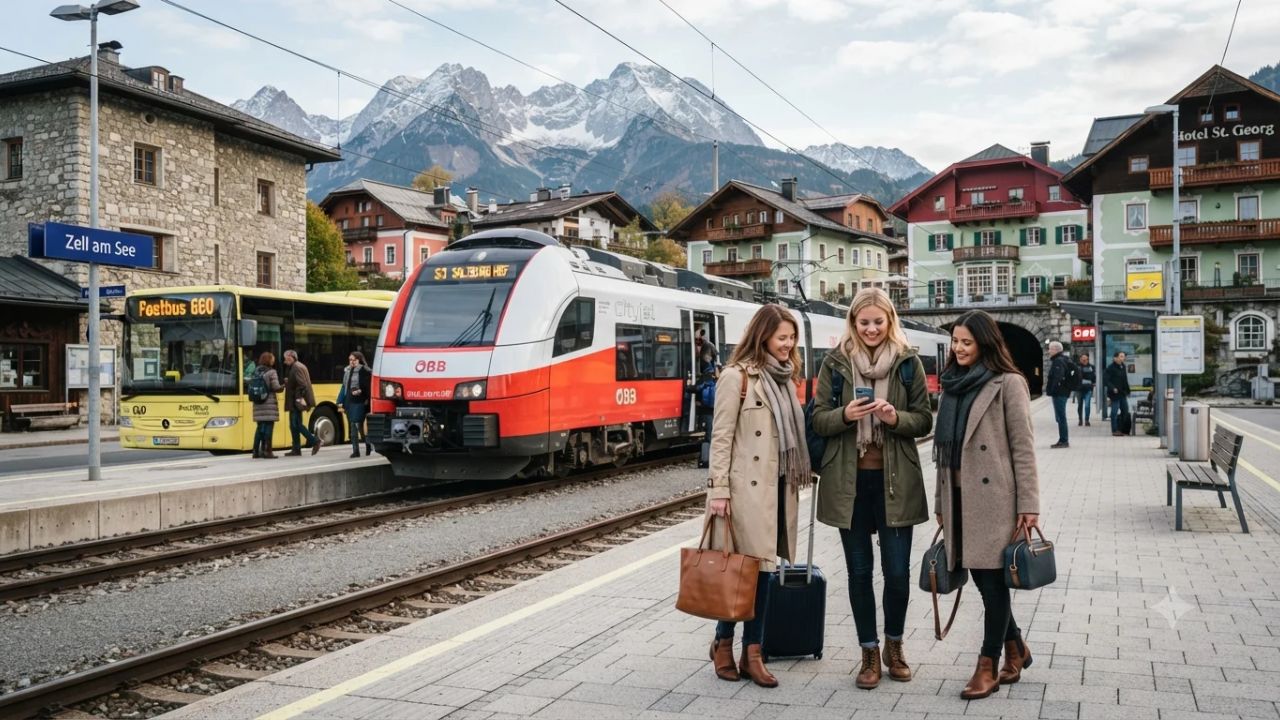
Austria’s province of Salzburg is establishing a new benchmark for car-free European tourism in 2026, issuing comprehensive public transport passes to all registered overnight visitors covering urban buses, regional coaches, suburban S-Bahn lines, and long-distance trains.
Funded through a modest €0.50 nightly mobility contribution added to municipal accommodation taxes, the provincial Guest Mobility Ticket (Gästekarte Mobilität) surpassed 3.9 million issued passes representing roughly 17.4 million validity days by mid-February 2026. By bundling unlimited regional transit directly into hotel and guesthouse bookings, the initiative eliminates the traditional last-mile friction of rail travel, inspiring complementary multimodal feeder networks and transit integration models across Germany, Ireland, Italy, Switzerland, Spain, and the United Arab Emirates.
            THE MULTIMODAL FIRST-AND-LAST-MILE ECOSYSTEM
            ============================================

         [ INTERCITY / LONG-DISTANCE RAIL ] ──► Regional Rail Hub / Terminal
                                                       │
                                                       ▼
         [ FIRST- AND LAST-MILE FEEDERS ]   ──► Synchronized Local Buses
                                                • Guaranteed <15 Min Transfers
                                                • Electric Shuttles & Town Loops
                                                       │
                                                       ▼
         [ DESTINATION ACCESS & HOSPITALITY ] ──► Hotel-Embedded Guest Passes
                                                • Unlimited Provincial Transit
                                                • Micro-Mobility & Trailheads
The "Last-Mile" Tourism Barrier: Why Railway Stations Require Coordinated Feeders
A modern high-speed or intercity train can transport hundreds of travelers swiftly from a metropolitan airport or capital into a regional railway station. However, the train cannot independently deliver visitors to rural alpine valleys, lakeside boutique guesthouses, historic hill forts, or secluded hiking trailheads.
Buses and light feeder networks exist to bridge this spatial gap. Yet, a bus route marked on a transit map does not inherently guarantee a functional, stress-free passenger journey. For travelers who do not drive, the feasibility of a car-free holiday depends on practical operational factors:
- Timetable Synchronization: Do regional feeder buses align with arriving trains, or are passengers stranded on exposed station platforms for 45 minutes?
- Physical Interchange Proximity: Is the connecting bus bay positioned immediately adjacent to the rail platform, or does transferring require navigating busy vehicular roads and flight-of-stair obstacles with heavy luggage?
- Ticketing Cohesion: Can a visitor board the feeder bus using their existing rail pass or digital accommodation voucher, or must they download a separate regional application, decipher local fare zones, and carry exact coins?
- Operating Spans: Does the feeder bus operate into the late evening, allowing holidaymakers to dine in a historic town centre and return safely to their countryside hotel?
When these variables align, car-free travel becomes an effortless pleasure; when they fail, visitors quickly revert to highway car rentals or costly private taxis.
Austria’s Salzburg Model: The Hotel-Embedded Guest Mobility Ticket
Salzburg province (SalzburgerLand) has resolved the ticketing and payment barrier by embedding public transport directly into the guest registration process.
Under the Guest Mobility Ticket scheme, every visitor who registers an overnight stay in participating municipalities across the province receives a digital public transport pass. The pass is issued directly by accommodation providers—ranging from five-star alpine resorts to modest farm-stay guesthouses—delivered as a digital smartphone pass or printable PDF document prior to or upon arrival.
                  SALZBURG GUEST MOBILITY PASS STRUCTURE
                  ======================================

      FUNDING MECHANISM:              €0.50 per eligible guest per night
                                      Added to standard municipal lodging tax
                                              │
                                              ▼
      NETWORK COVERAGE:               • All Salzburg City buses & trolleybuses
                                      • Regional Postbus network across valleys
                                      • Suburban S-Bahn commuter rail network
                                      • Regional commuter trains (Regionalzug)
                                      • Long-distance trains within the province
                                              │
                                              ▼
      VERIFIED ADOPTION SCALE:        • >3.9 Million tickets issued by Feb 2026
                                      • ~17.4 Million total validity days
Comprehensive Provincial Coverage
Unlike municipal transit cards that confine visitors to city limits, the Salzburg ticket covers the entire public transport network throughout the federal province:
- All urban bus routes and electric trolleybuses in the City of Salzburg.
- All regional Postbus routes serving mountain valleys, hiking trailheads, and lakeside villages.
- The Salzburg S-Bahn commuter rail network.
- Regional trains and qualifying long-distance passenger services (including ÖBB Railjet and InterCity services) for travel between stations located inside provincial borders.
Sustainable Funding Through Micro-Levies
The initiative is funded by an earmarked mobility fee of €0.50 per eligible person per night, collected by accommodation hosts alongside the statutory municipal lodging tax.
By distributing the cost universally across millions of guest nights, the province generates a stable funding stream that compensates municipal and private transport operators without creating financial barriers for individual riders. Official tourism statistics confirm that by mid-February 2026, over 3.9 million passes had been generated, representing approximately 17.4 million validity days. While this volume demonstrates widespread institutional distribution, transport authorities focus on ensuring that local bus frequencies expand to match this elevated visitor demand.
Global Feeder Integration: Case Studies Across Six Jurisdictions
Across Europe and the Middle East, transport authorities are experimenting with diverse models to solve the feeder connection challenge:
| Jurisdiction & Operator | Integration Initiative | Transport Modes & Routes | Operational Standards & Rules |
|---|---|---|---|
| Salzburg, Austria Salzburger Verkehrsverbund |
Guest Mobility Ticket (Gästekarte Mobilität) |
City buses, regional Postbuses, S-Bahn, and domestic trains across province | Included with overnight stays; funded by €0.50/night fee; >3.9M passes issued |
| Brandenburg, Germany VBB Transport Association |
PlusBus Network | Rural and inter-district regional bus routes connecting to rail | Strict service standard: hourly weekday departures; guaranteed ≤15 min rail transfer |
| Ennis, Ireland National Transport Authority |
Town Bus Network (Routes NS1 & NS2) |
Municipal town buses linking rail/coach station, hospital, and suburbs | Launched 18 Oct 2026; 90-minute free transfer window using TFI Leap Card |
| Assisi, Italy Busitalia & Trenitalia |
Assisi Link | Dedicated railway station feeder to historic hill town & Basilica | High-frequency service (every 15–20 mins, 8am–8pm) during 800th Franciscan anniversary |
| Sharjah, UAE Roads & Transport Authority |
Etihad Rail Feeder Network (Routes ER1, ER2, ER3) |
Municipal buses linking Sharjah City, Al Madam, and Al Sajaa to rail | Launched 14 Oct 2026; direct feeder conduits to new Al Dhaid passenger railway station |
| Peak District, UK East Midlands Combined Auth. |
Hope Valley "Mini Switzerland" (Planned Pilot) |
Coordinated rural bus network meeting trains at selected hubs | Planned rollout by June 2027; designed to alleviate rural vehicular parking gridlock |
1. Sharjah (UAE): Launching Dedicated Feeders for Etihad Rail
In the Middle East, the rapid rollout of the UAE’s passenger railway has driven immediate multimodal bus planning. On 14 October 2026, Sharjah’s Roads and Transport Authority launched three dedicated feeder routes connecting the emirate’s suburban and desert communities to Etihad Rail’s new station in Al Dhaid:
- Route ER1: Connects Al Madam directly with Al Dhaid rail station.
- Route ER2: Links the industrial and commercial zone of Al Sajaa with the station.
- Route ER3: Operates from central Sharjah City to the rail hub.
This strategic deployment demonstrates how transport planners are coordinating road transit concurrently with rail infrastructure, ensuring passenger trains have immediate catchment networks upon launching commercial service.
2. Ennis (Ireland): Extending the Rail Journey into the Town Core
In County Clare, Ireland, the National Transport Authority introduced two dedicated municipal bus routes on 18 October 2026, centered around the Ennis Bus and Rail Station:
- Route NS1: Connects Ballymaley and Clarecastle via Ennis town centre, Ennis Hospital, and the rail station.
- Route NS2: Operates between Shanaway Road and Tulla Road, traversing Kilrush Road, the commercial core, and the transit hub.
Passengers utilizing Ireland's contactless TFI Leap Card benefit from a 90-minute transfer window, allowing free transfers between routes NS1 and NS2. While this policy does not yet integrate railway fares into a single ticket, it significantly improves mobility for rail passengers arriving in Ennis who need to reach regional hospitals, business parks, or hotel accommodation without hailing private taxis.
3. Brandenburg (Germany): The PlusBus 15-Minute Connection Standard
In Germany, the Berlin-Brandenburg Transport Association (VBB) has established clear operational criteria under its PlusBus brand.
To carry the PlusBus seal, a regional bus line must fulfill strict performance benchmarks:
- Regular hourly departures throughout weekdays.
- A coordinated schedule that guarantees a transfer window of no more than 15 minutes at designated railway interchanges.
- Weekend service availability connecting rural communities to regional rail corridors.
By setting an explicit 15-minute transfer target, Brandenburg provides passengers with confidence that arriving trains will reliably connect with departing buses, eliminating prolonged platform waits in rural districts.
4. Assisi (Italy): High-Frequency Feeders for Cultural Pilgrimages
In Italy, regional operator Busitalia operates the Assisi Link, a specialized transit connector shuttling visitors between Assisi Railway Station (located in the valley at Santa Maria degli Angeli) and the elevated medieval historic centre anchored by the Basilica of Saint Francis.
To accommodate elevated visitor traffic surrounding the 800th anniversary of the death of Saint Francis, Busitalia enacted a high-frequency service increase running from 21 February through 31 December 2026:
- Departures every 20 minutes on weekdays.
- Departures every 15 minutes on Saturdays, Sundays, and public holidays.
- Operating span from 8:00 AM to 8:00 PM daily.
While this high daytime frequency serves day-trippers effectively, travelers planning late evening dinners in the upper historic town must verify return bus schedules, as services taper off after 8:00 PM.
                    FEEDER BUS FREQUENCY COMPARISON
                    ===============================

    DESTINATION        CORE SERVICE INTERVAL      OPERATING WINDOW
    ───────────        ─────────────────────      ────────────────
    Assisi Link        Every 15–20 Minutes        8:00 AM – 8:00 PM
    Brandenburg PlusBus Regular Hourly Standard   Full Weekday Span
    Salzburg Postbus   Clock-Face Valley Routes   Morning to Late Evening
    Sharjah ER Routes  Coordinated with Rail      Aligned with Train Timetables
5. Switzerland: Nationwide Multimodal Data and Accessibility Mapping
Switzerland’s national railway, SBB (Schweizerische Bundesbahnen), remains the global pioneer in timetable coordination (Taktfahrplan). SBB’s centralized digital journey planner integrates real-time telemetry from hundreds of independent train, funicular, lake steamer, and postal bus operators across the country.
A notable feature is its integrated accessibility mapping:
- Travelers can filter journeys for barrier-free connections that require no advance notice or physical assistance.
- The system displays the exact walking distance, platform elevators, and pedestrian crossing times between railway tracks and connecting PostAuto bus stands.
- Live platform alterations and delays are pushed instantly to mobile devices, preventing travelers from missing tight rural connections.
6. Peak District (UK): The Hope Valley "Mini Switzerland" Project
In the United Kingdom, the East Midlands Combined County Authority is designing a rural multimodal pilot program in the Peak District’s Hope Valley, informally titled "Mini Switzerland."
Scheduled to introduce its initial service improvements by June 2027, the project seeks to align bus routes with trains stopping at rural rail stations along the Hope Valley Line between Sheffield and Manchester. By coordinating bus arrivals with rail timetables and introducing unified ticketing, authorities aim to reduce traffic congestion and illegal verge parking across national park villages like Castleton, Edale, and Hathersage.
Subsidized National Travel Passes: Price Versus Regional Eligibility
Alongside local guest passes, several European nations have introduced heavily subsidized national public transport cards. However, international travelers must recognize distinct coverage limits and eligibility restrictions:
                    SUBSIDIZED EUROPEAN TRAVEL PASSES
                    =================================

         GERMANY: DEUTSCHLANDTICKET          SPAIN: ABONO ÚNICO
         ──────────────────────────          ──────────────────
         • €63 Per Month (2026 Tariff)       • €60 for 30 Consecutive Days
         • Regional & Local Transit Only     • Commuter & Regional Rail + Buses
         • ICE / IC / EC Trains EXCLUDED     • Requires Spanish DNI or NIE
         • Digital Subscription Format       • Domestic Identification Mandate
Germany’s Deutschlandticket (€63 Monthly in 2026)
Priced at €63 per month in 2026, the Deutschlandticket provides unlimited travel on participating city buses, trams, U-Bahn subways, and regional trains (Regional-Express and Regionalbahn) nationwide.
However, its scope carries vital boundaries for tourists:
- Exclusion of High-Speed Rail: It does not cover long-distance commercial trains, such as Deutsche Bahn’s ICE (Intercity Express), IC (Intercity), or EC (Eurocity) services, nor private operators like Flixtrain.
- Subscription Nature: It is structured as an automatically renewing monthly subscription, requiring cancellation before monthly cut-off dates to avoid unexpected secondary charges.
Spain’s Abono Único (€60 for 30 Days)
In Spain, the Ministry of Transport recorded 4.5 million passenger journeys under its Abono Único by 24 August 2026. Priced at a flat €60 for 30 days of unlimited travel, the pass encompasses Renfe Cercanías commuter rail, regional rail services, and state-subsidized interregional coach networks.
Despite its outstanding economic value, foreign tourists face administrative hurdles:
- Identification Mandate: Purchasing the pass requires entering an official Spanish national identity number (DNI) or foreign resident registration number (NIE), alongside a verified mobile telephone number and email address. Short-stay international visitors lacking Spanish residency documentation cannot purchase the pass through standard automated portals.
| Pass Name | Operating Territory | 2026 Price & Validity | Covered Transport Modes | Significant Travel Restrictions |
|---|---|---|---|---|
| Guest Mobility Ticket | Salzburg Province, Austria | Included with lodging (€0.50/night fee) | City buses, regional Postbuses, S-Bahn, and domestic trains | Valid only during registered overnight stay within Salzburg province |
| Deutschlandticket | Nationwide Germany | €63 per calendar month | All municipal transit and regional trains (RE, RB, S-Bahn) | Strictly excludes long-distance high-speed trains (ICE, IC, EC) |
| Abono Único | Nationwide Spain | €60 for 30 consecutive days | Cercanías commuter rail, regional trains, interregional coaches | Requires Spanish residency ID (DNI/NIE); restricted to residents |
| TFI Leap Card | Dublin & regional towns (Ennis) | Pay-as-you-go contactless card | City buses, DART, Luas, and Ennis local town bus routes | 90-minute free transfer applies between town buses, not rail tickets |
The Legal Trap: Combined Tickets Versus Separate Transport Contracts
A widespread misconception among international holidaymakers is that buying a combined train-and-bus journey under a single booking confirmation establishes a single, protected transport contract.
In reality, many European passenger operators sell combined tickets that remain legally segmented:
                    THE MULTIMODAL LIABILITY REALITY
                    ================================

      COMBINED PURCHASE DISPLAY               LEGAL CONTRACT STRUCTURE
      ─────────────────────────               ────────────────────────
      Single booking confirmation             [ CONTRACT A: Rail Carrier ]
      Single checkout price payment              • Governed by Rail Passenger Rights
      One itinerary QR code / PDF                      │ (Transfer Gap)
                                                       ▼
                                              [ CONTRACT B: Bus Operator ]
                                                 • Governed by Local Bus Regulations
                                                 • No Cross-Carrier Missed Connection Liability
The Trenitalia Assisi Link Precedent
When a passenger purchases an Assisi Link ticket on Trenitalia’s booking portal, the itinerary seamlessly combines an intercity train to Assisi Station with a connecting Busitalia coach to the historic centre.
However, the published conditions of carriage explicitly state that the rail journey and the bus journey constitute separate transport contracts. If an incoming train experiences a 30-minute delay causing the passenger to miss a reserved connecting coach, or if a road traffic jam delays the bus causing a traveler to miss an expensive high-speed Frecciarossa train, the operating carriers bear no statutory liability to compensate the traveler for the missed connection.
Proposed European Union Multimodal Reforms
To address this passenger protection gap, the European Commission has proposed legislative revisions to the multimodal passenger rights framework. The proposed directives seek to:
- Mandate transparent through-ticketing standards across independent transport operators.
- Establish clear legal liability and right-to-reroute protections when a delay on one transport mode causes a missed connection on another under a single commercial transaction.
However, transport analysts emphasize that these proposals remain under review within the EU’s formal legislative process and are not yet legally enacted. In late 2026, travelers must continue to build generous transfer buffers between trains and connecting buses.
Why This Matters (Information Gain): Solving Tourism's First-and-Last-Mile Challenge
The success of Salzburg’s Guest Mobility Ticket underscores a broader realization across the international travel sector: the passenger rail revolution cannot succeed in isolation.
Investing billions of euros in high-speed lines—such as Austria’s Koralm Railway or the UAE’s Etihad Rail—delivers diminishing returns if tourists arrive at rural stations only to find absent connecting transport, confusing local fare zones, or expensive taxi cartels.
Key Takeaways for Travel Professionals and Consumers
- Leverage Hotel-Embedded Transit: When booking holidays in Central Europe, evaluate destinations (like Salzburg, the Black Forest with its KONUS card, or Swiss cantons with Ticino and Geneva transport cards) that include universal transit in lodging fees. This saves €15 to €30 per person daily in incidental transit costs.
- Scrutinize Last-Mile Schedules: Before committing to a countryside hotel or rural attraction, verify the connecting bus timetable. Check specific weekend frequencies and confirm the departure time of the final evening bus.
- Build Ample Connection Buffers: Because rail and bus segments are legally distinct contracts under current European transport laws, maintain at least a 20- to 30-minute buffer when connecting from regional buses to long-distance trains.
- Distinguish Between Resident Passes and Tourist Fares: Avoid structuring travel budgets around subsidized passes like Spain’s Abono Único or Portugal’s Green Rail Pass without confirming foreign national ID eligibility.
Frequently Asked Questions
What is the Salzburg Guest Mobility Ticket, and who is eligible?
The Guest Mobility Ticket (Gästekarte Mobilität) is a digital or printable public transport pass provided to all registered overnight guests staying in participating accommodations across Austria's province of Salzburg. It grants unlimited travel on all city buses, regional Postbuses, suburban S-Bahn trains, and domestic long-distance trains within provincial boundaries.
How is the Salzburg visitor transit pass funded?
The ticket is financed through an earmarked mobility fee of €0.50 per eligible guest per night, collected by hotels and guesthouses alongside the standard municipal lodging tax. More than 3.9 million passes representing 17.4 million validity days were issued by mid-February 2026.
Does Germany's €63 Deutschlandticket cover high-speed ICE trains?
No. The Deutschlandticket covers only local and regional public transport, including city buses, trams, U-Bahn subways, S-Bahn commuter trains, and regional trains (RE and RB). High-speed and long-distance commercial services—such as Deutsche Bahn's ICE, IC, and EC trains—are strictly excluded.
Can international short-stay tourists purchase Spain's €60 Abono Único?
No. Spain's 30-day Abono Único requires a verified Spanish national identity number (DNI) or foreign resident identification number (NIE), alongside a Spanish mobile phone number, making it inaccessible to standard short-stay international tourists.
If a train delay causes a passenger to miss a connecting bus on a combined ticket, does the operator provide compensation?
Generally, no. Under current transport regulations (such as Italy's Assisi Link), rail and bus segments purchased together typically constitute separate transport contracts. Unless covered by a specific through-ticketing guarantee, operators do not accept liability for missed cross-modal connections, though the European Commission is currently considering legislative reforms to address this gap.
Related Travel Guides
- Hafeet Rail Pioneers Arabian Peninsula Cross-Border Travel: 238-Km UAE–Oman High-Speed Line to Link Sohar and Al Ain in 47 Minutes
- Austria’s Koralm Railway Transforms Alpine Tourism: Graz to Klagenfurt in 41 Minutes with Faster Southern Line Connections and €9.90 Fares in 2026
- The Global Rail Ticket Puzzle: How Hidden Ancillary Fees, Restrictive Booking Rules, and Timetable Overhauls Reshape Travel Across Australia, Germany, France, Austria, and Portugal
Disclaimer
This article is for informational and educational purposes only. It does not constitute legal, financial, or professional advice. While we strive to provide accurate and up-to-date information, travel policies, regulations, and conditions change rapidly. Always verify information with official sources before making travel decisions. Nomad Lawyer makes no representations about the accuracy, reliability, completeness, or suitability of the information provided. Readers should consult qualified professionals for advice specific to their circumstances. The views expressed in this article are those of the author and do not necessarily reflect the views of Nomad Lawyer.
Kunal K Choudhary
Co-Founder & Contributor
A passionate traveller and tech enthusiast. Kunal contributes to the vision and growth of Nomad Lawyer, bringing fresh perspectives and driving the community forward.
Learn more about our team →