
The Global Rail Ticket Puzzle: How Hidden Ancillary Fees, Restrictive Booking Rules, and Timetable Overhauls Reshape Travel Across Australia, Germany, France, Austria, and Portugal
Behind advertised low-cost train fares in Australia, Germany, France, Austria, and Portugal lie complex booking deadlines, mandatory seat reservations, luggage surcharges, and non-refundable tickets. Discover the true cost of global rail travel in late 2026.

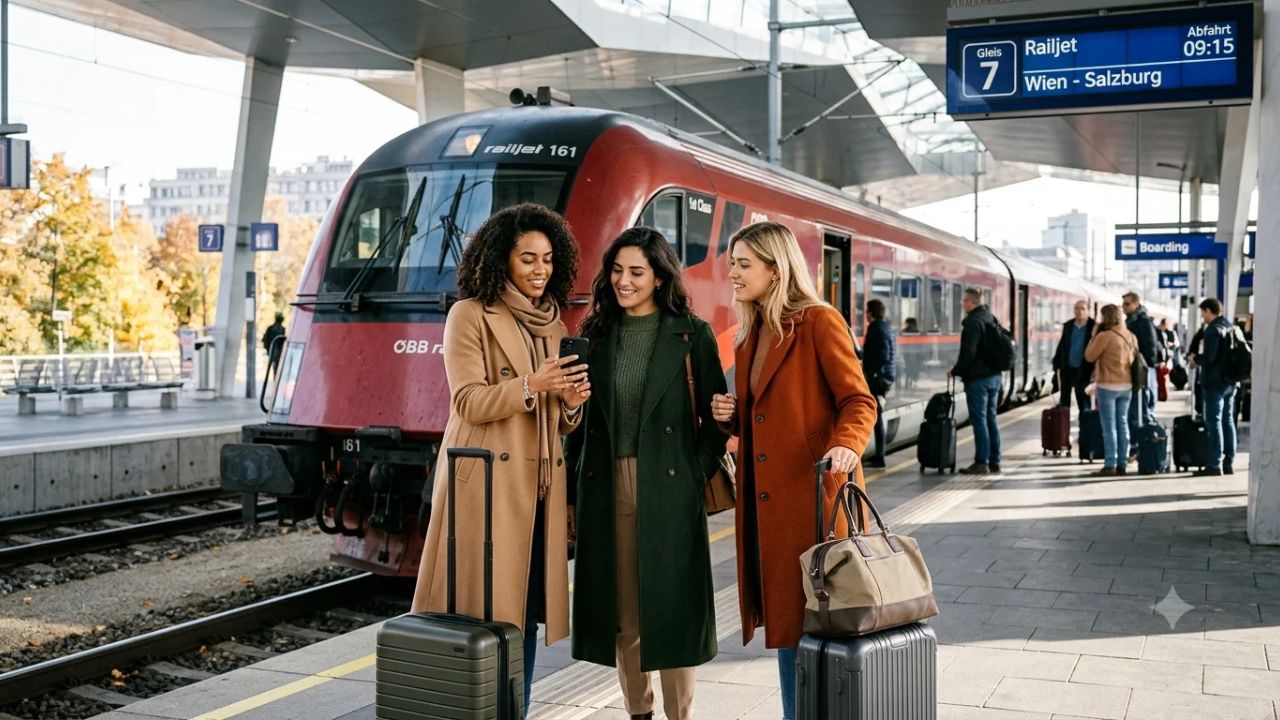
Rail travellers across Australia, Germany, France, Austria, and Portugal are encountering sharply diverging conditions behind heavily advertised low-cost train tickets in late 2026, as operators increasingly adopt unbundled airline-style pricing models that decouple baseline fares from essential travel amenities.
Official operator tariff schedules reveal eye-catching headline offers—such as German Deutsche Bahn tickets from €6.99, French SNCF OUIGO seats from €10, Austrian ÖBB Sparschiene fares from €9.90, Portuguese CP discounts reaching 65%, and Australian NSW TrainLink regional reductions of up to 35%. However, a rigorous examination of published booking terms indicates that strict advance-purchase deadlines, paid seat reservations, luggage penalties, non-refundable terms, and seasonal service modifications significantly alter the final payable checkout price. Rather than a coordinated intergovernmental policy, these conditions reflect independent commercial strategies deployed by national rail operators managing record passenger volumes amid tightening operating budgets.
          THE GLOBAL LOW-COST RAIL CHECKOUT REALITY (LATE 2026)
          =====================================================

   OPERATOR / REGION       ADVERTISED BASE      ANCILLARY / BOOKING ADD-ON    REAL CHECKOUT TOTAL
   ─────────────────       ───────────────      ──────────────────────────    ───────────────────
   Germany (DB)            €6.99 Super Saver    + €5.50 Seat Reservation      = €12.49 (+78.7%)
   France (SNCF OUIGO)     €10.00 Base Seat     + €5.00 Pre-booked Luggage    = €15.00 (+50.0%)
   Austria (ÖBB)           €9.90 Sparschiene    Non-refundable / Fixed Train  = Variable by route
   Portugal (CP)           Up to 65% Off        8+ Days Advance / Quota Seat  = Dynamic allocation
   Australia (NSW Rail)    From A$17 (Local)    Coach Substitution Check      = Route dependent
The Shift Toward Unbundled Rail Tariffs
The primary financial challenge facing modern railway passengers is the widening gap between an operator’s advertised promotional entry fare and the final cost of a completed, practical itinerary. Historically, passenger railway tickets functioned as comprehensive travel documents: purchasing a passage guaranteed a seat, generous luggage allowances, and reasonable flexibility to change travel dates.
Over the past decade, national rail operators have progressively adopted the dynamic revenue management techniques pioneered by low-cost commercial airlines. In this unbundled environment, a low headline price covers only a basic seat on a specific, non-flexible departure. Travellers needing a confirmed window seat, family seating groupings, an additional suitcase, or the freedom to reschedule if a flight is delayed face an escalating ladder of ancillary surcharges.
Understanding these mechanisms requires analyzing each railway system’s published commercial framework, inventory allocation rules, and forthcoming December 2026 timetable adjustments.
Published Entry Offers and Practical Booking Realities
To compare rail travel affordability across diverse currency regimes and operational structures, analysts must contrast entry-level promotions against mandatory booking qualifications:
| Country & Operator | Published Entry Offer | Booking & Inventory Conditions | Practical Traveler Comparison |
|---|---|---|---|
| Australia — NSW TrainLink | Up to 35% discount; Sydney–Broadmeadow from A$17 | Online-only sales; selected off-peak departures; strictly quota-controlled | Check specific departures; verify whether individual legs are rail or regional motor coach |
| Germany — Deutsche Bahn (DB) | Super Saver (Super Sparpreis) from €6.99 | Train-specific; strictly non-refundable; excludes seat reservation | Adding an optional €5.50 2nd-class seat reservation elevates the total ticket to €12.49 |
| France — SNCF OUIGO | Domestic high-speed seats from €10 | Includes 1 personal item + 1 cabin bag; non-refundable ticket | Extra or oversized bag costs €5 in advance, jumping to €20 if purchased at the station |
| Austria — ÖBB | Domestic Sparschiene from €9.90 | Capacity-controlled; train-bound; strictly non-refundable | Travellers needing cancellation flexibility must upgrade to standard or Komfort fares |
| Portugal — Comboios de Portugal (CP) | Up to 65% off Alfa Pendular & Intercidades | Requires booking 8+ days ahead; non-refundable; exchange penalties | Promotional quotas sell out rapidly; walk-up passengers pay full standard tariffs |
Note: The illustrative totals above represent arithmetic calculations of published tariffs and mandatory fee structures, not an observed live-booking price index.
Australia: NSW TrainLink Fare Structures and Modal Distinctions
In Australia, the regional passenger rail network operated by Transport for NSW features an Online Saver promotion providing discounts of up to 35% across selected regional departures scheduled between 12 October and 14 December 2026.
Published adult economy one-way fares under this programme include:
- Sydney to Broadmeadow (Newcastle): From A$17
- Sydney to Dubbo: From A$44
- Sydney to Coffs Harbour: From A$53
- Sydney to Brisbane (Interstate): From A$73
While these price points offer substantial savings for regional travelers, several operating conditions dictate their actual value:
- Coach Versus Rail Substitution: Transport for NSW operates a combined regional network serving more than 365 destinations. A significant proportion of regional routes utilize road motor coaches rather than passenger trains. Passengers booking promotional tickets must inspect whether their chosen itinerary is operated entirely by rail or involves long highway bus transfers.
- Mandatory Seat Reservations: All regional journeys require pre-booked seat allocations. Passengers cannot simply board a train with a general transit card.
- Cancellation Penalties: Voluntary cancellations made within seven days of scheduled departure incur a standard administrative fee of A$5.50, unless covered by specific promotional exemptions.
- Seasonal Price Shifts: The 12 October to 14 December window represents the operator's standard fare season. Peak seasonal pricing begins on 15 December 2026, dramatically reducing the availability of discounted seats during the summer school holiday rush. Separately, previously planned revisions to the Sydney metropolitan rail timetable scheduled for 15 November were formally abandoned by transport authorities and will not proceed.
Germany: Deutsche Bahn Combines €6.99 Entry Fares with New Family Passes
In Germany, national carrier Deutsche Bahn (DB) markets its lowest long-distance fare through the Super Saver (Super Sparpreis), with entry pricing starting at €6.99 on short intercity segments.
However, the ticket comes with stringent legal terms:
- It is tied exclusively to the specific train (Zugbindung) printed on the confirmation.
- It cannot be exchanged or refunded under any circumstances once booked.
- It excludes a seat reservation. A standard second-class seat reservation costs €5.50, meaning a customer securing a €6.99 fare who wishes to guarantee a seat pays €12.49—representing a 78.7% ancillary markup over the base ticket.
For travellers requiring moderate flexibility, the regular Saver (Sparpreis) ticket allows cancellation prior to the first day of validity for a €10 administrative fee, with the remaining balance returned as a DB travel voucher rather than a cash refund.
                    DEUTSCHE BAHN FARE TIER ARCHITECTURE
                    ====================================

      SUPER SPARPREIS (FROM €6.99)        SPARPREIS (REGULAR SAVER)
      ────────────────────────────        ─────────────────────────
      • Specific train bound (Zugbindung) • Specific train bound (Zugbindung)
      • 100% Non-refundable               • Cancellation allowed before Day 1
      • Zero exchange rights              • €10 administrative cancellation fee
      • Seat reservation NOT included     • Refund issued via voucher only
      • Optional reservation: + €5.50     • Optional reservation: + €5.50
The €99.99 Nationwide Family Ticket Initiative
To address family affordability, Deutsche Bahn introduced a commercial initiative open for booking from 26 October 2026 for travel commencing 1 November 2026. The Family Ticket is priced at a flat €99.99 return for long-distance domestic travel.
The conditions of this pass include:
- Valid for up to five travellers traveling together.
- Must include at least one child (under 15 years old).
- Maximum of two passengers aged 15 or older.
- Seat reservations for all participants are included at no additional charge.
For families traveling across Germany, this single bundled ticket frequently undercuts purchasing individual promotional fares, while eliminating the separate €5.50 reservation surcharge per person per direction.
Timetable Overhaul Commencing 13 December 2026
Deutsche Bahn’s annual timetable revision, taking effect on 13 December 2026, expands high-speed operations. The carrier is introducing three daily ICE Sprinter services per direction linking Hamburg and Munich, achieving an optimized transit time of 5 hours and 20 minutes.
On the international front, DB plans to operate more than 320 cross-border services daily, connecting German hubs with over 200 cities across 14 European nations. However, transport analysts emphasize that adding service frequency does not automatically expand the quota of €6.99 Super Saver seats, which remain strictly yield-managed.
France: SNCF OUIGO’s Low-Cost Model and Baggage Penalties
In France, national railway operator SNCF Voyageurs operates its low-cost high-speed subsidiary, OUIGO, offering domestic tickets from €10. Modeled directly on budget airline economics, OUIGO achieves low baseline tariffs by operating high-density double-decker TGV trainsets without first-class cars, bar buffets, or complimentary power sockets.
The Luggage Escalator
The €10 baseline fare includes only one small personal handbag (max 36 x 27 x 15 cm) and one piece of cabin baggage (max 55 x 35 x 25 cm). Any additional piece of luggage, or an oversized suitcase up to two metres in dimension, is subject to fees:
- Pre-booked Online: Costs €5 per bag, turning a €10 ticket into a €15 total fare (a 50% price uplift).
- Purchased at the Station Gate: Costs €20 per bag, resulting in a 200% penalty on top of the original ticket.
Flexibility and the OUIGO FLEX Add-On
Standard OUIGO tickets are non-refundable. Without purchasing optional flexibility coverage, exchanging a ticket to a different departure incurs a fee of up to €19 per passenger per journey, plus any fare difference between the original and new ticket.
To mitigate this risk, SNCF markets OUIGO FLEX for €9 per adult, which eliminates the €19 administrative penalty for schedule modifications, although customers remain liable for any difference in ticket price.
Winter 2026 Network Expansion
SNCF Voyageurs opened reservations in September for travel extending from 13 December 2026. On peak holiday travel dates, selected OUIGO services are priced starting from €19 rather than the baseline €10 minimum.
Simultaneously, the carrier is expanding its classic and high-speed network to include direct stops in Nancy, Colmar, Mulhouse, and Dijon. Passengers booking these new routes cannot assume €10 inventory will be available, as introductory seat quotas are restricted.
Austria: ÖBB Implements 3.5% Fare Increase Alongside Route Upgrades
In Austria, federal railway operator ÖBB announced that standard passenger rail tariffs and Vorteilscard discount subscriptions will increase by an average of 3.5% on 13 December 2026.
While the carrier’s entry-level promotional Sparschiene fares will remain pegged at their starting baseline of €9.90, standard walk-up and flexible tickets will reflect the price adjustment:
- Vienna to St. Veit an der Glan: A standard one-way ticket purchased online on the day of departure will rise from €62.30 to €64.50.
- Advance Purchase Discounting: Purchasing the same ticket 15 days in advance is illustrated at €60.70, yielding a modest saving of €3.80 against the new departure-day walk-up price.
ÖBB’s Sparschiene tickets are capacity-controlled, tied to a specific train, and strictly non-refundable. Passengers requiring refundable privileges must purchase the higher-tier Sparschiene Komfort product or standard full-fare tickets.
                      ÖBB AUSTRIA TARIFF ADJUSTMENTS
                      ==============================

         STANDARD TICKET FARE RISE          SPARSCHIENE PROMOTIONAL TIER
         ─────────────────────────          ────────────────────────────
         • Average +3.5% increase           • Entry price pegged at €9.90
         • Affects standard tickets         • Capacity-controlled quotas
         • Affects Vorteilscard passes      • Strictly non-refundable
         • Takes effect 13 December 2026    • Upgrade to Komfort for flexibility
Infrastructure Expansions and Engineering Bottlenecks
The 13 December timetable brings notable service enhancements:
- Vienna to Nuremberg: Upgraded to ten daily ICE connections, cementing cross-border links with Germany.
- Koralm Railway Integration: Additional high-speed departures will operate along the Graz–Villach corridor, utilizing newly completed sections of the Koralm Railway.
However, ongoing track infrastructure renewals continue to restrict network capacity. Through 12 December 2026, major engineering works along the primary Linz–Salzburg corridor require the full or partial daily cancellation of 18 long-distance services, though ÖBB maintains half-hourly connections through diverted and replacement operations.
Portugal: Comboios de Portugal Discounts Versus Resident-Only Rail Passes
In Portugal, national railway operator Comboios de Portugal (CP) offers deep promotional discounts through its Bilhete Promo scheme across flagship Alfa Pendular (tilting high-speed) and Intercidades (intercity) services:
- 5 to 7 Days Advance Booking: Discounts of up to 56% off standard fares.
- 8 or More Days Advance Booking: Maximum discounts reaching 65% off standard fares.
- Booking Window: Tickets can be purchased up to 60 days prior to departure.
Since 10 August 2026, CP has distributed Bilhete Promo fares exclusively through digital channels (website and smartphone app) and automated station ticket vending machines, removing manual ticket counter processing. Promotional allocations are quota-restricted; once sold out, fares revert to full price. Promo tickets can be exchanged upon payment of fare differences, but are entirely non-refundable.
The €20 Green Rail Pass: Exclusive to Residents
Portugal attracted worldwide attention with the launch of its Green Rail Pass (Passe Ferroviário Verde), priced at an exceptionally low €20 for 30 consecutive days.
However, international tourists cannot use this pass. Key statutory limitations include:
- Strict Residency Requirement: The pass is legally restricted to citizens and legal foreign residents holding a Portuguese citizen card or valid residency permit (Título de Residência).
- Exclusion of High-Speed Trains: The pass covers regional services, inter-regional trains, and second-class Intercidades (with compulsory free seat booking), but strictly excludes high-speed Alfa Pendular services.
- Urban Expansion: On 27 September 2026, the government expanded pass validity to include qualifying suburban rail routes across Lisbon and Porto.
International visitors must rely on point-to-point Bilhete Promo tickets or standard adult fares. Operationally, CP demonstrated robust volume growth, carrying 208.2 million passengers in 2025, representing a 10.6% increase over 2024.
Late-2026 Operating Positions Across Five Rail Markets
The table below summarizes the operational landscape across all five jurisdictions heading into late 2026:
| Country | Verified Late-2026 Operating Position | Direct Traveler Implication |
|---|---|---|
| Australia | Proposed 15 November Sydney metropolitan timetable revisions officially withdrawn | Passengers must not plan travel around abandoned timetable alterations; verify coach vs. train links |
| Germany | New timetable commences 13 December; Hamburg–Munich ICE Sprinter runs 3x daily per direction | Compare faster direct travel times against actual Super Saver ticket availability |
| France | Winter OUIGO bookings active; new direct service to Nancy, Colmar, Mulhouse, and Dijon from 13 Dec | Verify whether specific route uses €10 promotional inventory or €19 seasonal minimum |
| Austria | 13 December timetable enacts +3.5% fare hike; 10 daily Vienna–Nuremberg ICE services | Recheck connection buffers and factor in price increases for flexible tickets |
| Portugal | Bilhete Promo active up to 65% off; €20 Green Rail Pass remains restricted to residents | International visitors must book 8+ days early to access promotional quotas on CP trains |
The Mechanics of Deceptive Low-Cost Train Pricing
An independent examination of rail pricing models indicates why comparing headline promotional fares without context misleads consumers.
The financial outcome of any rail booking depends on three primary variables:
1. The Ancillary Surcharge Ratio
In low-cost aviation, ancillary fees (seat selection, cabin bags, priority boarding) often double the baseline ticket price. Passenger railways are now exhibiting identical financial dynamics:
- On a €10 OUIGO ticket, adding one pre-booked extra bag for €5 creates an immediate 50% markup. If that same bag is paid for at the station boarding gate for €20, the fee is double the ticket itself.
- On a €6.99 Deutsche Bahn Super Saver, purchasing a separate second-class seat reservation for €5.50 represents a 78.7% price uplift, bringing the real cost to €12.49.
2. The Cost of Itinerary Flexibility
Promotional rail fares enforce strict non-refundable clauses. For an independent traveller with a rigid schedule, a non-refundable ticket provides undeniable savings. However, for travellers connecting from long-haul flights subject to delays, or families coordinating complex multi-city schedules, booking non-refundable seats creates major financial exposure. Replacing a missed promotional train typically requires purchasing an undiscounted walk-up ticket on departure day.
3. Traveling in Groups Versus Traveling Solo
Promotional pricing structures differ drastically when applied to families or small travel parties. Booking five individual discounted tickets on Deutsche Bahn at €6.99 plus five seat reservations at €5.50 equals €62.45 one way, or €124.90 return.
By contrast, booking Germany’s newly launched €99.99 return Family Ticket saves €24.91, guarantees adjacent seating, and includes child passengers under a single booking record.
Why This Matters (Information Gain): Systemic Challenges in Rail Distribution
The proliferation of unbundled rail fares and complex booking restrictions highlights an urgent structural challenge in global passenger rail distribution.
While Deutsche Bahn and its European railway partners have integrated digital ticketing interfaces to sell journeys across more than 10,000 European destinations, digital integration has not harmonized fare rules, passenger rights, or baggage allowances.
                      THE THROUGH-TICKETING REGULATORY GAP
                      ====================================

      SINGLE THROUGH-TICKET                   SEPARATELY BOOKED SEGMENTS
      ─────────────────────                   ──────────────────────────
      • Full EU Regulation 2021/782 protection• Legally independent contracts
      • Free re-routing on missed connection  • Missed connection = Abandoned seat
      • Hotel accommodation during delays     • Passenger pays full new walk-up fare
      • Clear compensation claims             • Zero compensation across operators
The Through-Ticketing Protection Gap
Under the revised European Rail Passenger Rights Regulation (EU 2021/782), passengers traveling on a single, continuous through-ticket are entitled to free re-routing, meal vouchers, and overnight accommodation if a delay causes a missed railway connection.
However, when consumers or independent travel agencies purchase separate point-to-point promotional tickets—for instance, combining a French OUIGO segment with a German ICE departure—the journeys are treated as legally distinct contracts. If an inbound OUIGO train is delayed, the passenger forfeits their non-refundable Deutsche Bahn Super Saver ticket and must buy a new departure-day ticket at full walk-up pricing.
Strategic Priorities for Travel Advisors and Tour Operators
Travel professionals booking international rail itineraries must navigate these regulatory and pricing complexities:
- Calculate the Complete Basket Total: Never quote rail transportation based on advertised starting tariffs. Sum the base ticket, mandatory seat reservations, luggage surcharges, and inter-station transfer costs before presenting pricing to clients.
- Verify Passenger Eligibility Criteria: Review residency requirements, age limits, and child quotas. International tourists cannot utilize domestic subsidy passes like Portugal’s €20 Green Rail Pass.
- Assess Exchange and Cancellation Risk: Explicitly inform clients when tickets are non-refundable. For high-stakes itineraries, quote flexible products (such as ÖBB Komfort or regular DB Saver) or ensure comprehensive travel insurance coverage.
- Scrutinize Transport Modes in Australia: When booking NSW TrainLink routes, clearly identify which itinerary segments are operated by passenger trains and which require highway motor coaches.
- Recheck Timetables Ahead of December Overhauls: With major schedule revisions taking effect on 13 December 2026 across Germany, Austria, and France, travel dates immediately surrounding the transition require careful verification of departure times and track engineering diversions.
Frequently Asked Questions
Are Australia, Germany, France, Austria, and Portugal running a joint rail affordability trial?
No. The fare structures, discounts, and booking rules discussed represent independent commercial and operational decisions by each nation's respective rail authority. There is no coordinated five-country intergovernmental rail pricing scheme.
Is the €6.99 German train ticket guaranteed to be the final checkout price?
No. The €6.99 Super Saver (Super Sparpreis) is a capacity-restricted base fare that excludes a seat reservation. A reserved second-class seat costs an additional €5.50, bringing the practical checkout total to €12.49.
How can passengers avoid surprise luggage fees on French OUIGO trains?
Passengers should evaluate their baggage requirements before booking. OUIGO permits one small personal item and one cabin bag free. Additional or oversized bags cost €5 if booked in advance online, but escalate to €20 per bag if paid at the station boarding gate.
Why are Austrian standard train fares rising in December 2026?
ÖBB is adjusting standard passenger tickets and Vorteilscard discount subscriptions upward by an average of 3.5% on 13 December 2026 to reflect broader inflation and operating expenditures. Entry-level promotional Sparschiene fares remain pegged at €9.90.
Can tourists visiting Portugal buy the €20 Green Rail Pass?
No. Comboios de Portugal restricts the €20 30-day Green Rail Pass (Passe Ferroviário Verde) to verified Portuguese citizens and legal foreign residents. International short-stay tourists can access discounts of up to 65% through the publicly available Bilhete Promo advance-booking scheme.
Related Travel Guides
- Iceland Tourism Report 2026: 93 Visa-Free Nations, Keflavík Arrivals, Economic Projections, and Key Travel Infrastructure
- Taphophilia Travel: Exploring Europe’s Grandest Historic Cemeteries and Open-Air Necropolises for Autumn 2026
- Stratford, Ontario Unveils Its Quiet Season: How November Reinvents Cultural Tourism with Riverside Trails, Heritage Museums, and Culinary Adventures
Disclaimer
This article is for informational and educational purposes only. It does not constitute legal, financial, or professional advice. While we strive to provide accurate and up-to-date information, travel policies, regulations, and conditions change rapidly. Always verify information with official sources before making travel decisions. Nomad Lawyer makes no representations about the accuracy, reliability, completeness, or suitability of the information provided. Readers should consult qualified professionals for advice specific to their circumstances. The views expressed in this article are those of the author and do not necessarily reflect the views of Nomad Lawyer.
Raushan Kumar
Founder & Lead Developer
Full-stack developer with 11+ years of experience and a passionate traveller. Raushan built Nomad Lawyer from the ground up with a vision to create the best travel and law experience on the web.
Learn more about our team →