Salalah’s Emerald Monsoon Miracle: Oman Air Transports 270,000 Travelers to Khareef

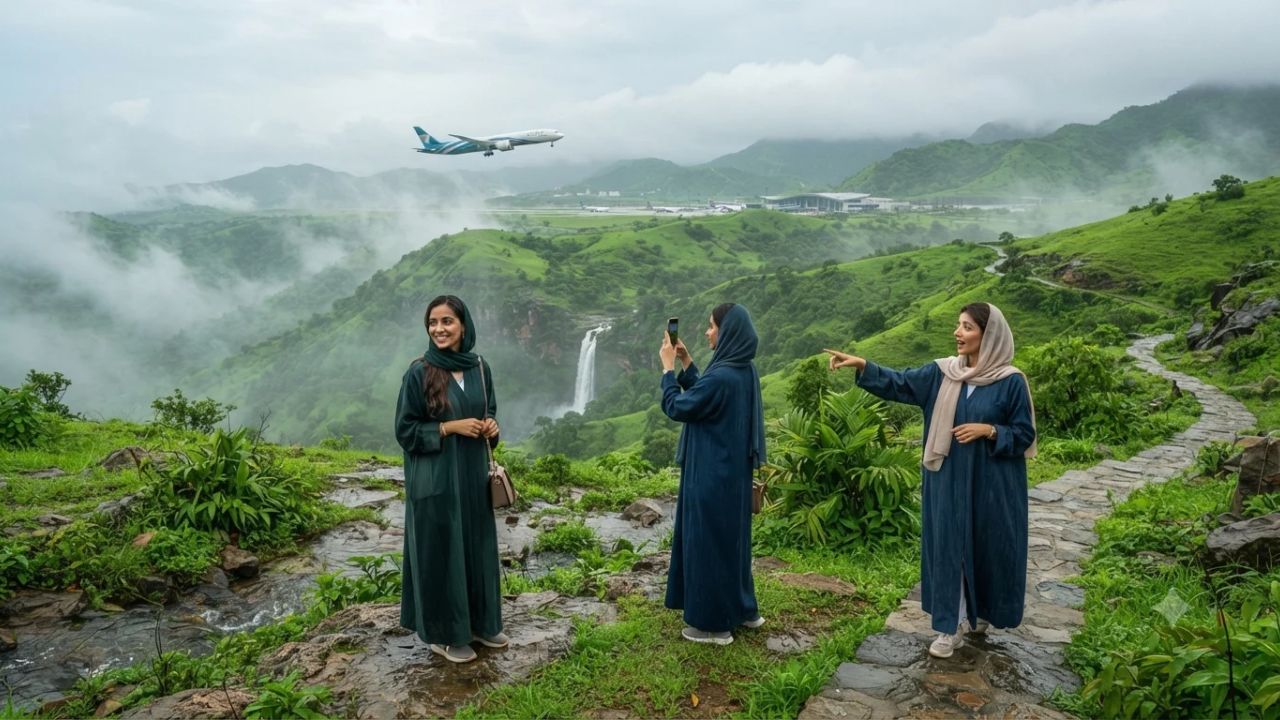
Image generated by AI
While summer temperatures across the Arabian Peninsula regularly soar past 45 degrees Celsius, the southern Omani coastal governorate of Dhofar undergoes a dramatic climatic inversion as the southwest monsoon cloaks Salalah in cool 22-degree drizzle, cascading waterfalls, and emerald mountain pastures. Capitalizing on this remarkable natural phenomenon, national carrier Oman Air transported 270,000 passengers into Salalah between mid-June and mid-September 2026, registering an 8 to 9 percent annual surge. Driven by an early 24 percent spike in June passenger traffic and supported by widebody Boeing 787-9 Dreamliners, this seasonal aviation expansion reflects how southern Oman has evolved into the Gulf’s premier subtropical summer sanctuary.
The Khareef Aviation Surge: Widebody Dreamliners and Expanded Gulf Corridors
To accommodate surging regional demand, Oman Air expanded overall seat capacity to Salalah by 16 percent compared to previous seasons, scaling peak operations up to 15 daily flights in August. For the first time on high-frequency domestic rotations, the airline deployed twin-aisle Boeing 787-9 Dreamliners between Muscat and Salalah International Airport, transporting hundreds of travelers per flight while streamlining airport transit times.
Regional direct international access expanded substantially beyond the domestic capital:
- Dubai to Salalah Direct Corridors: Starting in July, Oman Air introduced three weekly direct non-stop flights from Dubai, injecting more than 4,900 additional seats every month and granting travelers across the United Arab Emirates direct access to Dhofar’s highlands without transiting Muscat.
- Bahrain Seasonal Charters: The carrier scheduled dedicated charter operations linking Manama and Salalah throughout July and August, capturing strong family travel demand from the northern Gulf.
This coordinated aviation strategy aligns directly with Oman Vision 2040, the national economic blueprint aimed at expanding non-oil GDP, promoting sustainable regional employment, and establishing Dhofar as a year-round international leisure destination through initiatives led by Experience Oman.
What Makes Salalah and Dhofar Different: The Khareef Monsoon Miracle
Salalah’s geography is unique in the Middle East. Hemmed between the azure waters of the Arabian Sea and the sheer limestone escarpments of the Dhofar Mountains (Jebel Samhan, Jebel Qara, and Jebel Al Qamar), the region captures moisture-laden winds sweeping across the Indian Ocean from June to September.
This meteorological convergence produces constant fine drizzle, dense mountain fog, and temperature drops that transform arid desert into lush subtropical rainforests. Freshwater springs burst into life at Wadi Darbat, feeding turquoise travertine pools and seasonal waterfalls at Ayn Athum, Ayn Khor, and Ayn Razat.
Along the coastal plain, ancient frankincense groves flourish in the moisture. Salalah is the historic heart of the ancient Frankincense Trail, celebrated across four distinct UNESCO World Heritage sites: the archaeological ruins of Al Baleed and Sumhuram (Khor Rori), the ancient caravan oasis of Shisr (Ubar), and the protected frankincense trees of Wadi Dawkah.
Visitors strolling through the historic Al Haffa neighborhood encounter traditional thatched fruit stalls selling freshly harvested Dhofari coconuts, sweet bananas, and papayas, offering an experiential contrast to the sand dunes found elsewhere in the Arabian desert.
Visitor Insider Tips for Navigating Salalah During the Khareef Monsoon
Experiencing Dhofar during the peak monsoon requires local preparation and specialized driving etiquette:
- Rent a Four-Wheel Drive for Mountain Escarpments: Mountain roads ascending toward Jebel Samhan and the cliffs of Shaat become enveloped in thick fog with visibility dropping below five meters. A 4WD vehicle provides essential traction on wet limestone switchbacks and allows access to off-tarmac scenic viewpoints.
- Visit Waterfalls Early in the Morning: Wadi Darbat and Ayn Athum attract heavy visitor traffic between 2:00 PM and 6:00 PM. Arrive by 7:30 AM to photograph the waterfalls in serene morning mist before regional tour buses arrive.
- Pack Waterproof Footwear with Rugged Grip: Sandstone stairs around natural springs become treacherous when wet. Pack rubber-soled hiking shoes or waterproof trail sandals rather than smooth-soled shoes or flip-flops.
- Sample Local Dhofari Muthbe Cuisine: Dine at traditional open-air restaurants near Ittin to experience authentic muthbe—marinated camel or goat meat slow-cooked over smooth, radiant-hot river stones and served alongside spiced Omani rice and fresh frankincense water.
Cultural, Economic, and Environmental Context of Dhofar’s Frankincense Coast
The seasonal influx of 270,000 air passengers provides a vital economic engine for southern Oman. Revenue generated during the three-month Khareef window sustains thousands of family-owned guest houses, local transport guides, artisanal frankincense distillers, and agricultural producers across the Salalah coastal plain.
However, the rapid growth of seasonal tourism introduces critical environmental stewardship obligations. The delicate ecosystem of the Dhofar cloud forest is fragile; excessive off-road driving can crush endemic ground vegetation, compact soils, and disrupt the natural regeneration of Boswellia sacra (frankincense) trees.
To protect this unique biosphere, local conservation authorities have established designated timber boardwalks around Wadi Darbat, restricted vehicle access on fragile grassy plateaus, and implemented leave-no-trace educational campaigns for visiting campers. Sustainable tourism ensures that Dhofar’s emerald mountains continue to provide a refreshing sanctuary for generations of travelers seeking refuge from the summer heat.
FAQ: Visiting Salalah and Experiencing Khareef in 2026
What are the exact months of the Khareef monsoon season in Salalah?
The Khareef season begins in mid-June, reaches peak greenery and waterfall flow in July and August, and gradually concludes in mid-September as sunny weather returns.
How does Oman Air connect international travelers to Salalah?
Oman Air operates up to 15 daily flights from Muscat during peak August, alongside direct non-stop flights from Dubai offering over 4,900 monthly seats, and seasonal charters from Bahrain.
What is the average temperature in Salalah during the Khareef season?
While the rest of the Arabian Peninsula experiences temperatures above 40°C, Salalah maintains pleasant daytime temperatures between 22°C and 27°C with frequent cooling drizzle and mist.
Do I need a visa to visit Salalah, Oman?
Citizens of over 100 countries are eligible for visa-free entry or straightforward online e-visas for tourist stays up to 14 or 30 days before traveling to Oman.
Related Travel Guides
This article is for informational purposes. Flight routes, passenger regulations, visa rules, and transit advisories are subject to change by airlines and aviation authorities. Readers are advised to verify schedules and travel documentation with relevant carriers and border agencies before departure.
Related Stories

Mount Fuji First Sunrise Flights 2027: Japan Airlines New Year Aerial Guide

Cambodia Beyond Angkor Wat: Etihad Airways and Tourism Board Travel Guide 2026