
US Travelers Escape Travel Chaos as Royal Caribbean Expands Mega-Cruise Fleet Amidst Global Flight Cancellations
Breaking tourism news: As massive flight cancellations and severe airport disruptions paralyze legacy airline networks, US travelers are driving the massive expansion of Royal Caribbean’s Oasis-class mega-ships to evade travel chaos.

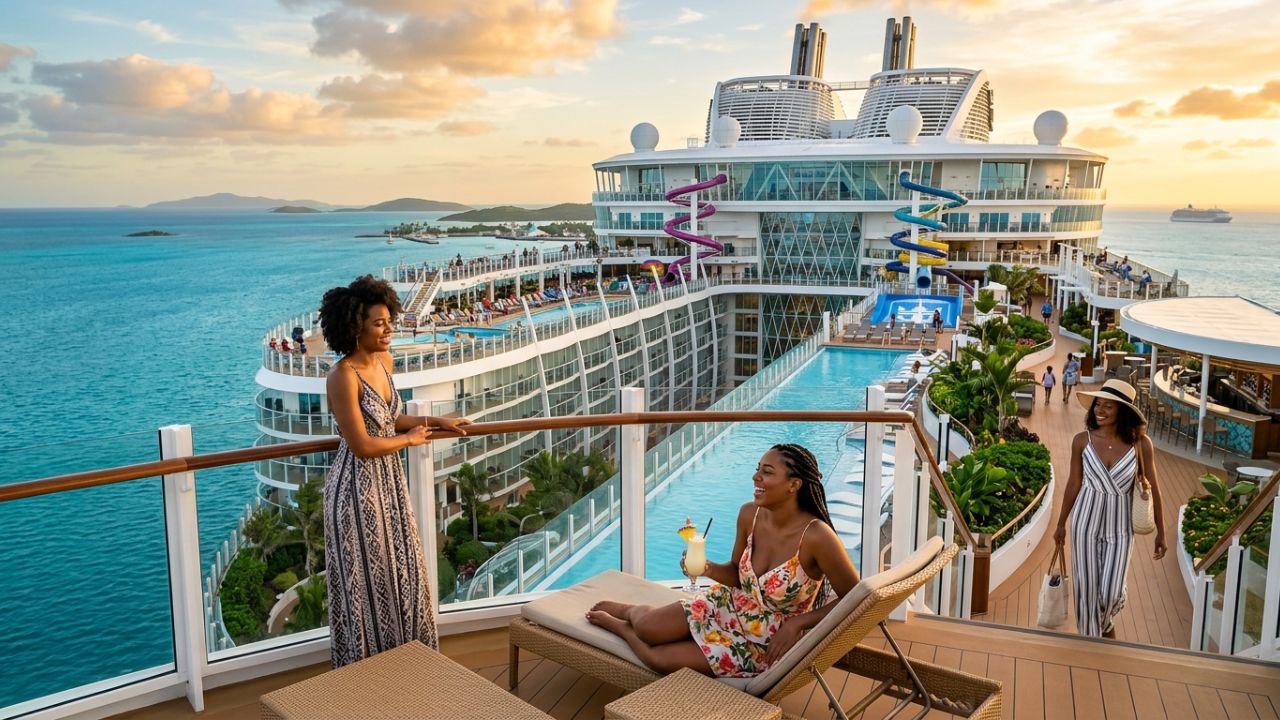
Image representing the massive global expansion of Royal Caribbean’s Oasis-class fleet. As international travelers suffer unprecedented travel chaos, severe airport disruptions, and massive flight cancellations across major legacy carriers, American tourists are aggressively shifting toward self-contained mega-cruise vacations departing from Miami and Fort Lauderdale to completely bypass the fractured aviation grid. (Image Credit: Global Maritime Innovation / Cruise Tourism)
US Travelers Escape Travel Chaos as Royal Caribbean Expands Mega-Cruise Fleet Amidst Global Flight Cancellations
As Aviation Updates Report Severe Airport Disruptions Across Major US Hubs, American Tourists Drive the Unprecedented Expansion of Floating Mega-Cities
While international travelers frantically attempt to navigate unprecedented, crushing travel chaos, and the absolute latest airline news continues to report terrifying operational meltdowns across major legacy carriers, the global maritime industry is capitalizing on the chaos. Driven heavily by the massive, urgent desire to completely bypass devastating flight cancellations and severe airport disruptions, the global cruise industry has violently accelerated into another massive phase of large-scale expansion. This dramatic shift was officially cemented by Royal Caribbean’s highly anticipated keel-laying ceremony for its incredible seventh Oasis-class vessel. Conducted at the massive Chantiers de l’Atlantique shipyard in Saint-Nazaire, France, this critical maritime milestone signals the absolute continuation of one of the most highly influential and massively scaled ship classes in modern cruise history. As major airlines operating out of New York, Chicago, and Atlanta battle intense logistical friction, the United States—one of the absolute largest cruise source markets—finds itself deeply tied to a massive fleet expansion explicitly designed to offer an escape from aviation gridlock.
For highly strategic travel analysts and the exhausted traveling public, this transformation highlights an undeniable reality: travelers are prioritizing controlled environments over the extreme volatility of modern air travel. As demand for massive, high-capacity, experience-heavy cruise vacations violently spikes, the cruise industry is effortlessly bridging Europe’s highly advanced shipbuilding expertise with the Caribbean’s highly lucrative destination economy. By offering massive, fully enclosed "floating cities" departing directly from accessible coastal ports, cruise lines are successfully guaranteeing the predictability that the aviation sector has completely lost.
Section-Wise Breakdown: The Transatlantic Mega-Ship Strategy
The highly detailed industrial and economic data definitively exposes exactly how this massive global expansion is structurally designed to capture frustrated aviation passengers:
France’s Shipbuilding Epicenter: Engineering the Escape France heavily remains a highly critical, massive hub in global cruise ship construction, with Saint-Nazaire explicitly serving as one of the absolutely most advanced shipbuilding sites in all of Europe. The official keel-laying of the seventh Oasis-class ship directly reinforces France’s massive, long-standing role in actively producing some of the world’s absolutely largest and most technologically sophisticated marine vessels. This massive industrial capacity is not merely about engineering massive scale; it completely reflects a highly specialized, deeply integrated maritime ecosystem. These advanced shipyards flawlessly integrate naval architecture, massive environmental systems, and luxury hospitality design within a single, highly streamlined production process. For massive global cruise operators, this extreme expertise guarantees that next-generation ships flawlessly meet increasingly complex demands for radical energy efficiency and massive passenger capacity.
US Market Demand: Evading the Aviation Chaos The United States fiercely remains the absolute dominant source market for global cruise travel, and its specific demand profile is massively shaping fleet strategy. Frustrated by endless rolling delays, massive ground stops, and terrifying terminal queues, American travelers are overwhelmingly seeking short-haul tropical vacations with bundled pricing and highly predictable experiences. The massive expansion of the Oasis-class fleet is perfectly aligned with this massive demand structure. These heavily fortified ships are explicitly designed to maximize the onboard experience, fiercely reducing reliance on destination variability while offering a completely self-contained travel environment. For US travelers actively evading airport disruptions, this guarantees increased, highly reliable access to massive vessels departing flawlessly from major, heavily fortified ports such as Miami, Fort Lauderdale, and Port Canaveral.
The Mega-Ship Evolution: The Floating City Model The Oasis class has successfully become completely synonymous with the incredible mega-ship era of cruising, radically redefining the absolute concept of scale within the massive maritime tourism industry. Every single successive vessel launched in the class has violently pushed the boundaries in raw passenger capacity, massive onboard neighborhoods, radical entertainment offerings, and deep architectural complexity. The seventh ship absolutely continues this aggressive trajectory, featuring highly segmented onboard environments and themed districts that flawlessly replicate massive urban experiences.
Operational Details: The Factual Maritime Expansion Matrix
To provide exact, factual clarity on the immense operational scale of this cruise expansion, travel analysts have mapped the specific maritime metrics against the broader travel sector. (Note: As travelers bypass aviation, this matrix reflects the factual maritime growth dynamics provided in the report).
Factual Maritime & Tourism Expansion Matrix
| Tourism Sector Metric | Factual Strategic Detail |
|---|---|
| Major Maritime Milestone | Royal Caribbean's keel-laying ceremony for the seventh Oasis-class vessel. |
| Shipbuilding Epicenter | Chantiers de l’Atlantique shipyard located in Saint-Nazaire, France. |
| Primary Departure Ports | Major US hubs specifically including Miami, Fort Lauderdale, and Port Canaveral. |
| Heavily Impacted Destinations | The Bahamas, Jamaica, the Eastern Caribbean, the Mediterranean, and Asia. |
| Vessel Design Philosophy | Massive "floating cities" featuring highly segmented neighborhoods and entertainment zones. |
| Primary Market Driver | Massive US demand for high-capacity, highly predictable, experience-heavy vacations. |
Data reflects the confirmed strategic maritime developments and operational deployments officially recorded within the global cruise tourism sector. (Source: Maritime Tourism Analysis)
Traveler Impact: The Predictability Premium
For the millions of travelers utterly exhausted by the agonizing threat of flight cancellations and massively missed connections, the massive pivot to Oasis-class mega-ships is incredibly strategic. Rather than viewing cruise ships as mere transportation between unpredictable islands, travelers increasingly treat them as massive, hyper-secure destinations in themselves. These massive vessels flawlessly integrate incredibly diverse dining, entertainment, retail, wellness, and recreational infrastructure directly into a single, fully controlled environment. This incredibly dense, massive architecture significantly reduces reliance on unpredictable external tourism infrastructure. For frustrated travelers, this creates a highly structured, fully guaranteed vacation model where terrifying unpredictability is aggressively minimized, and experience density is radically maximized.
Industry Analysis: Infrastructure and Environmental Pressure
Travel experts closely monitoring these massive aviation updates emphasize that this mega-ship expansion brings severe new pressures to regional tourism infrastructure. Massive Caribbean destinations fiercely remain central to the massive deployment strategy of Oasis-class ships. Highly critical ports across the Bahamas, Jamaica, and the Eastern Caribbean are desperately adapting to fully accommodate these massive vessels and their incredibly high passenger throughput. While this massive influx explicitly generates critical economic benefits in terms of tourism revenue and employment, it actively raises massive questions about regional sustainability. Smaller island economies must aggressively balance the terrifying influx of cruise passengers with the strict preservation of highly sensitive local ecosystems. Furthermore, European regulatory frameworks are heavily forcing the design of incredibly strict emissions reduction and fuel efficiency technologies.
Conclusion: The Future of Controlled Travel
The terrifying travel chaos that previously paralyzed massive international travel hubs is actively driving the golden age of the mega-cruise. The massive keel-laying of Royal Caribbean’s incredible seventh Oasis-class ship actively represents significantly more than a mere construction milestone—it explicitly reflects the incredibly aggressive evolution of global cruise tourism into a highly predictable, high-capacity industry. With France aggressively anchoring shipbuilding innovation, the highly frustrated United States actively driving massive demand, and the Caribbean serving as a heavily utilized primary deployment region, the global cruise ecosystem is actively defeating the unpredictability of modern travel. For tourists, the absolute result is a massive new generation of incredible floating destinations that flawlessly guarantee the vacation experience. (Source: Maritime Tourism Analysis via Nomad Lawyer)
Key Takeaways
- Massive Fleet Expansion: Royal Caribbean officially executed the keel-laying ceremony for its incredible seventh Oasis-class mega-ship.
- European Engineering: The massive construction is heavily anchored at the highly advanced Chantiers de l’Atlantique shipyard in Saint-Nazaire, France.
- Bypassing Aviation Chaos: US travelers are heavily utilizing massive cruise departures from Miami, Fort Lauderdale, and Port Canaveral to bypass airline unreliability.
- Floating City Architecture: The Oasis-class vessels explicitly function as highly segmented, fully self-contained floating cities featuring massive entertainment districts.
- Global Itinerary Shift: The massive vessels dominate the Caribbean, while aggressively expanding into the Mediterranean and massive emerging Asian markets.
🚢 Frequently Asked Questions (Factual Maritime Tourism Data)
What specific major milestone did Royal Caribbean recently achieve in Europe? Royal Caribbean successfully carried out the massive keel-laying ceremony for its incredibly anticipated seventh Oasis-class mega-vessel.
Where exactly is this massive new Oasis-class ship currently being constructed? The highly advanced vessel is being explicitly constructed at the massive Chantiers de l’Atlantique shipyard, officially located in Saint-Nazaire, France.
Which specific US departure ports heavily support the Oasis-class deployment strategy? These massive vessels are explicitly designed to operate out of highly critical, massive major US maritime ports specifically including Miami, Fort Lauderdale, and Port Canaveral.
What specific global destinations are most heavily impacted by these massive mega-ships? The massive deployment heavily impacts critical ports located across the Bahamas, Jamaica, the highly lucrative Eastern Caribbean, the Mediterranean, and massive Asian markets.
How do these mega-ships specifically change the traditional travel experience for passengers? Travelers now heavily treat these massive vessels as absolute destinations in themselves, essentially navigating fully enclosed "floating cities" that flawlessly integrate dining, entertainment, and retail.
What specific pressures do these massive Oasis-class ships place on the Caribbean? The massive scale and incredibly high passenger throughput directly place severe pressure on highly sensitive regional tourism infrastructure and delicate island ecosystems.
What specific role do European regulations play in the design of these mega-ships? Highly strict European regulatory frameworks directly force cruise operators to actively integrate advanced emissions reduction technology, fuel efficiency systems, and wastewater treatment protocols.
Why are US travelers specifically shifting toward this highly controlled travel model? Highly frustrated by massive airline friction, US travelers heavily prefer the highly predictable, self-contained travel environment that totally reduces reliance on external destination variability.
🌍 Related Travel Guides & Tourism Resources
- Navigate Airport Disruptions Like a Pro Master the art of surviving unexpected travel chaos by booking secure maritime escapes.
- Breaking Tourism News & Expansion Updates Stay ahead of the market with our real-time maritime updates and destination intelligence.
- Global Flight Cancellation Defense Grid Essential legal rights and compensation tactics when international aviation fails your itinerary.
⚖️ Disclaimer
The maritime construction milestones, fleet deployment strategies, and global tourism statistics provided in this report are for informational purposes only. The specific variables regarding the expansion of Royal Caribbean’s Oasis-class fleet—including operations at the Chantiers de l’Atlantique shipyard and deployments across Miami, Fort Lauderdale, Port Canaveral, the Bahamas, and Jamaica—are based on official global maritime and tourism analysis. NomadLawyer does not guarantee the absolute accuracy or current validity of the specific future construction timelines provided and assumes no liability for unannounced maritime itinerary changes, regional port closures, or any financial consequences resulting from the use of this analytical content. Travelers navigating the global tourism network are strongly advised to utilize official cruise line platforms for real-time routing updates and aggressively verify boarding requirements directly with their carrier.
Disclaimer
This article is for informational and educational purposes only. It does not constitute legal, financial, or professional advice. While we strive to provide accurate and up-to-date information, travel policies, regulations, and conditions change rapidly. Always verify information with official sources before making travel decisions. Nomad Lawyer makes no representations about the accuracy, reliability, completeness, or suitability of the information provided. Readers should consult qualified professionals for advice specific to their circumstances. The views expressed in this article are those of the author and do not necessarily reflect the views of Nomad Lawyer.
Kunal K Choudhary
Co-Founder & Contributor
A passionate traveller and tech enthusiast. Kunal contributes to the vision and growth of Nomad Lawyer, bringing fresh perspectives and driving the community forward.
Learn more about our team →