
Royal Caribbean vs. MSC vs. Disney Cruise Line: Baby Care Infrastructure and Logistics Analysis 2026
A comparative analysis of baby-centric amenities and childcare regulations across Royal Caribbean, MSC, and Disney Cruise Line reveals divergent strategies in medical support, laundry logistics, and nursery accessibility for parents traveling with infants.

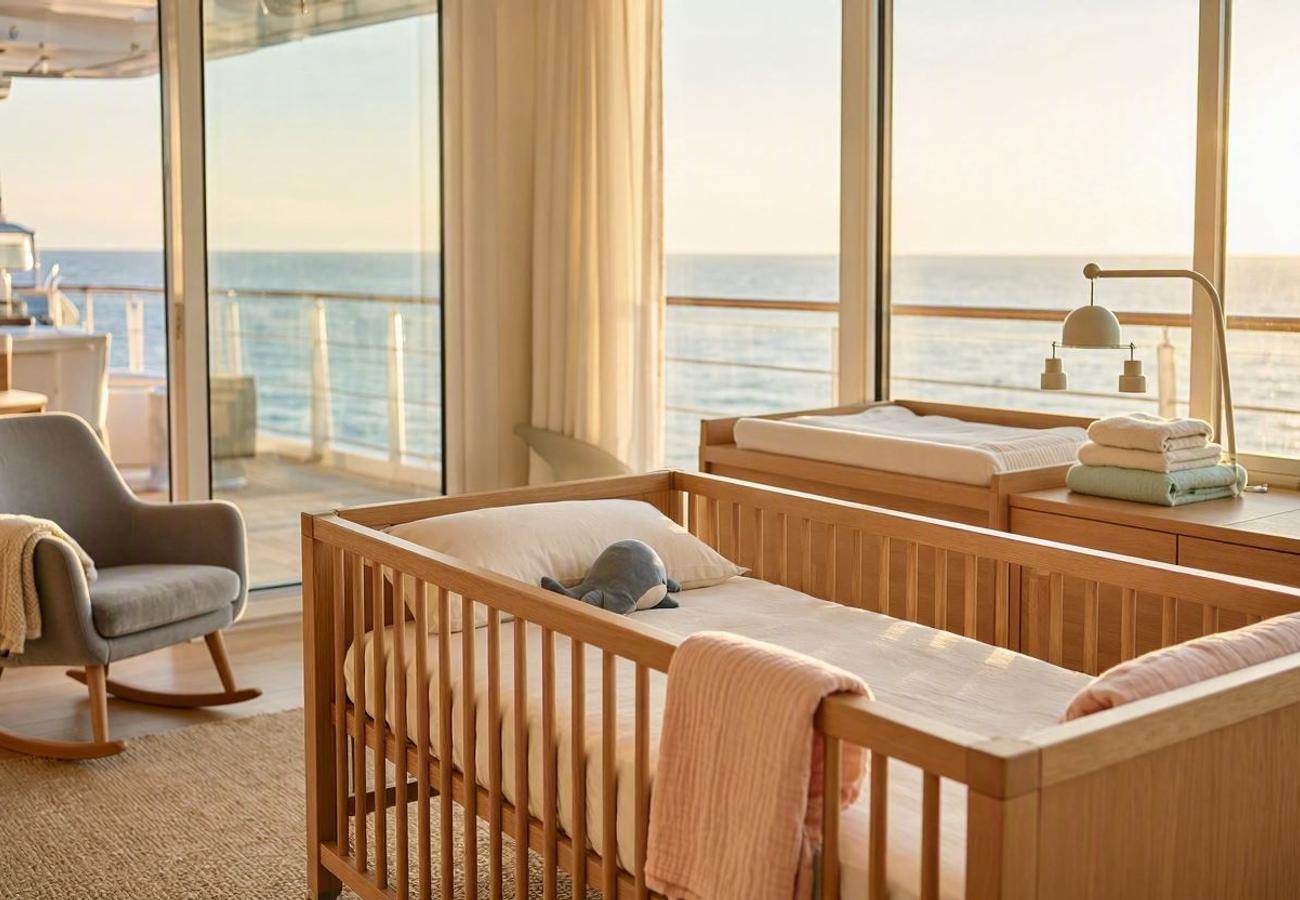
Image generated by AI
6 to 36 months is the critical window where cruise childcare transitions from complimentary youth clubs to high-cost, specialized nursery services with strict staff-to-infant ratios. While the cruise industry has historically focused on the 3-17 age bracket, the current operational shift toward capturing the "future cruiser" demographic has led to a sophisticated arms race in infant infrastructure. For the modern nomadic parent, the choice between major lines is no longer about the destination, but about the specific logistical support—ranging from telemedicine to specialized laundry—available on board.
The Infrastructure of Infant Care: Three Divergent Models
The approach to infant care varies significantly across the three dominant family-oriented lines. While all offer some form of supervised care, the operational execution differs in terms of partnership, accessibility, and facility design.
Royal Caribbean utilizes the "Royal Babies & Tots Nursery," which serves as the entry point for children who are too young for the standard Adventure Ocean programs. Their model emphasizes developmental play, utilizing tactile elements and designated napping zones. Operationally, Royal Caribbean allows parents to secure childcare slots on the first day of the voyage, though subsequent availability shifts to a first-come, first-served basis.
MSC Cruises has opted for a strategic partnership with Chicco, a global leader in baby care. This collaboration ensures that the "Baby Club" is equipped with brand-specific developmental toys. Unlike some competitors, MSC caps its drop-off childcare at 15 children per session to maintain safety and quality. Their facilities are often architectural highlights, featuring floor-to-ceiling glass walls to provide natural light—a rarity in the windowless interior corridors of most cruise ships.
Disney Cruise Line leverages its brand equity through the "It's a Small World Nursery." Their model is built around the "Disney Standard" of immersive environments, combining themed play areas with dimly lit "cozy zones" specifically for rockers and cribs. Their childcare is strictly fee-based and hourly, targeting children under 3 years old.
Logistics, Amenities, and Hardware Comparison
Beyond the nurseries, the "invisible" logistics of baby travel—feeding, hygiene, and medical emergencies—determine the actual stress level of the journey.
| Feature | Royal Caribbean | MSC Cruises | Disney Cruise Line |
|---|---|---|---|
| Medical Support | Standard Ship Medical | 24/7 Pediatric Telemedicine | Standard Ship Medical |
| Laundry | Standard Ship Service | Dedicated Baby-Safe Laundry | Standard Ship Service |
| Stateroom Gear | Cribs (under 30lbs/35in) | Standard Cribs | Pack 'n Plays, Sterilizers, Disposal Units |
| Feeding Support | Distilled/Hot Water via Room Service | Standard Dining | Pureed Veg/Unseasoned Proteins |
| Private Island Gear | Graco Beach Strollers (CocoCay) | Standard | Wagons & Sand Strollers |
The hardware provided in staterooms reveals a clear hierarchy. Disney provides the most comprehensive "kit," including bottle warmers and diaper disposal units, which reduces the packing burden for parents. Royal Caribbean focuses on specific physical constraints, offering cribs only for infants under 30 pounds and 35 inches in height.
MSC Cruises distinguishes itself through two high-utility services: a dedicated baby laundry system and remote medical access. The laundry service is particularly notable for its operational separation; children's clothes (6 months to 6 years) are processed in separate machines using low-temperature cycles and baby-safe detergents, avoiding the cross-contamination and harsh chemicals of adult laundry.
Expert Analysis: The Hidden Costs of "Family Friendly"
For travelers booking these routes, the direct consequence of these differing models is a shift in both budget and mental load. When analyzing the data, it becomes clear that Disney and MSC are selling "convenience as a service," whereas Royal Caribbean provides "infrastructure as a utility."
The pricing pressure created by hourly nursery fees (Disney) and session-based fees (MSC) means that parents must budget for childcare as a primary expense, rather than a complimentary amenity. However, the trade-off is the reduction of "parental friction." For example, MSC's 24/7 telemedicine support is a strategic move to prevent the ship's general medical center from becoming overwhelmed with non-emergency pediatric queries. For a parent, this means the difference between a 2-hour wait in a clinic and a 10-minute video call from the stateroom.
Furthermore, the restriction of swim diapers to specific "Splash Zones" (such as the Baby Splash Zone in Splashaway Bay on Royal Caribbean or Nemo's Reef on Disney) is a regulatory necessity for health and safety, as mandated by International Air Transport Association (IATA) and maritime health guidelines. The availability of specialized beach strollers on private islands like CocoCay or Castaway Cay is not merely a perk; it is a logistical necessity for managing nap schedules in high-heat environments.
The most significant differentiator is the "medical fridge" option on Royal Caribbean, which allows breastfeeding mothers to store expressed milk. This small logistical detail removes a major barrier for parents who wish to utilize ship activities without compromising feeding schedules.
Key Takeaways
- Medical Advantage: MSC Cruises is the only line offering 24/7 dedicated pediatric telemedicine, reducing the need for physical medical center visits.
- Gear Provision: Disney Cruise Line offers the most comprehensive complimentary hardware, including bottle sterilizers and diaper disposal units.
- Hygiene Logistics: MSC provides a specialized, separate laundry stream for infants (6 months to 6 years) using baby-safe detergents.
- Booking Urgency: Royal Caribbean nursery slots should be reserved on Day One to avoid the uncertainty of first-come, first-served availability.
- Physical Constraints: Royal Caribbean cribs are limited to infants under 30 lbs and 35 inches; verify your child's measurements before booking.
FAQ: Baby Cruising 2026
Can I bring my own stroller on a cruise? Yes, strollers are permitted in all public areas across Royal Caribbean, MSC, and Disney. On Royal Caribbean ships, many strollers can be stored under the main bed in the stateroom.
Are swim diapers allowed in the main pools? No. For hygiene reasons, swim diapers are restricted to designated areas like the Baby Splash Zone (Royal Caribbean) or the Toy Story/Nemo's Reef Splash Zones (Disney).
Do I need to pack baby formula? Yes, parents must pack their own formula. However, Royal Caribbean provides distilled water, hot water, and milk via room service to assist with preparation.
How do I handle baby laundry on a ship? While most lines offer standard laundry, MSC Cruises provides a specialized baby laundry service for children 6 months to 6 years using separate machines and gentle detergents.
The luxury of a cruise is only as good as the childcare supporting it.
Related Travel Guides
Disclaimer
This article is for informational and educational purposes only. It does not constitute legal, financial, or professional advice. While we strive to provide accurate and up-to-date information, travel policies, regulations, and conditions change rapidly. Always verify information with official sources before making travel decisions. Nomad Lawyer makes no representations about the accuracy, reliability, completeness, or suitability of the information provided. Readers should consult qualified professionals for advice specific to their circumstances. The views expressed in this article are those of the author and do not necessarily reflect the views of Nomad Lawyer.
Kunal K Choudhary
Co-Founder & Contributor
A passionate traveller and tech enthusiast. Kunal contributes to the vision and growth of Nomad Lawyer, bringing fresh perspectives and driving the community forward.
Learn more about our team →