
Cold Chain: Royal Caribbean Legend of the Seas Completes Cooling Systems
Royal Caribbean has completed its advanced refrigeration systems for the new 250,800 gross tonne Legend of the Seas, preparing the ship for its debut.

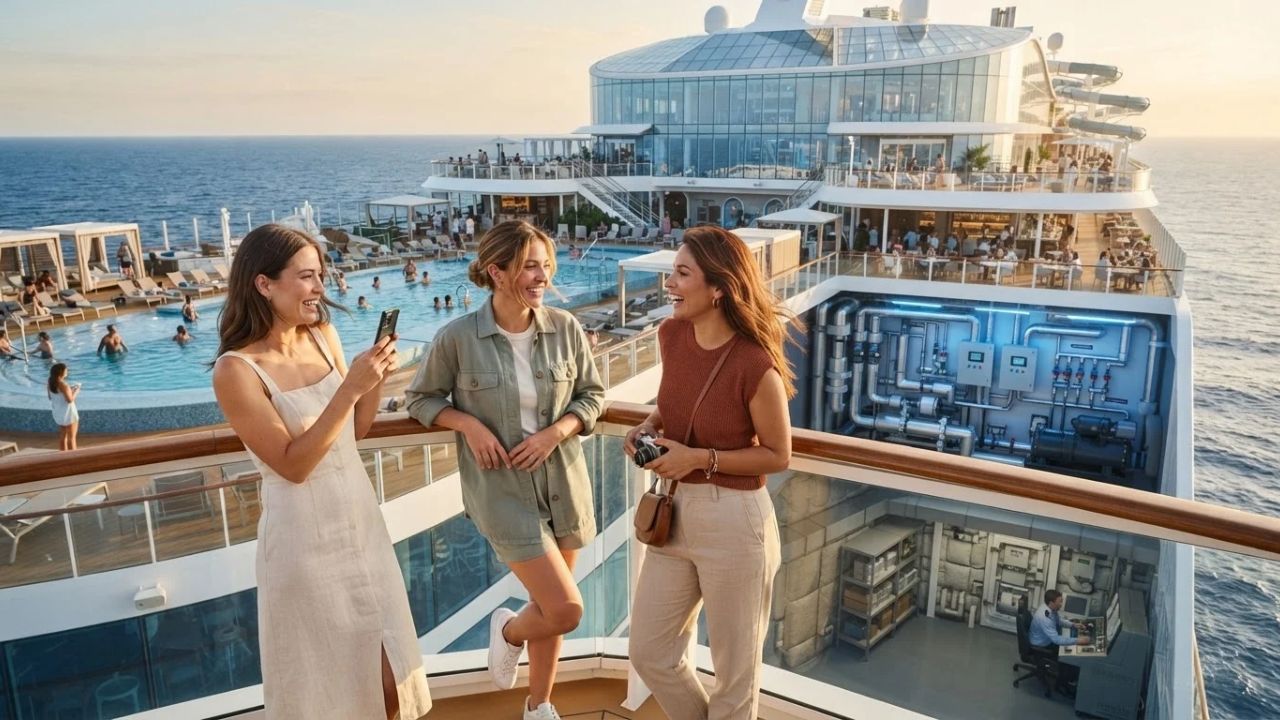
Image generated by AI
Royal Caribbean has completed its advanced refrigeration systems for the new 250,800 gross tonne Legend of the Seas, preparing the ship for its Mediterranean and Caribbean itineraries. Handed over in June 2026, the LNG-powered vessel accommodates 5,610 passengers and features more than 28 dining options.
Thermodynamic Efficiency and Marine Food Preservation
A significant trend in modern shipbuilding is the integration of advanced refrigeration and cooling systems from the initial design phase. Rather than adding standard cooling units after construction, cruise lines are investing in integrated cooling networks that support catering, food storage, and passenger spaces. By utilizing colder HVAC cooling water to reduce compressor energy requirements, developers improve shipboard energy efficiency.
This technology supports the large-scale food preservation needed for mega-resorts, aligning passenger comfort with environmental targets.
Legend of the Seas Handover and Dimensions
The handover of Legend of the Seas marked the completion of the third Icon Class vessel constructed at the Finnish shipyard:
- Vessel Dimensions: List the ship at approximately 250,800 gross tonnes, with a length of 365 meters.
- Passenger Capacity: The vessel is designed to accommodate 5,610 passengers.
- Eco-Friendly Fuel: The ship is powered by liquefied natural gas (LNG).
- Handover Event: Handed over in June 2026 at MEYER TURKU in Turku, Finland, with over 1,200 crew members and partners participating.
- Sea Trials: Over 2,000 engineers and specialists participated in tests, traveling approximately 2,400 nautical miles to assess systems.
- Leisure Features: Equipped with 7 swimming pools, 6 waterslides, 10 whirlpools, and more than 28 dining options.
These engineering achievements ensure the ship operates reliably across global routes.
Western Mediterranean and Caribbean Travel Schedules
Legend of the Seas is scheduled to operate across two main seasonal corridors:
- Western Mediterranean Program: Debuts in July 2026 with seven-night cruises departing from Barcelona, Spain, and Rome's Civitavecchia port in Italy. The route covers Naples, Palma de Mallorca, and Marseille.
- Caribbean Program: Shifts to Fort Lauderdale, Florida, in November 2026 to operate six-night Western and eight-night Southern Caribbean cruises. Destinations include Oranjestad in Aruba, Willemstad in Curaçao, and Perfect Day at CocoCay in The Bahamas.
These schedules allow travelers to combine historical city tours with tropical beach resorts.
Behind-the-Scenes Cooling Systems Across Cruise Lines
Integrated cooling technology projects are active across several major cruise brands and shipyards:
- Icon Class Predecessors: Similar systems were installed on Icon of the Seas (NB1401) and Star of the Seas (NB1400) at MEYER TURKU, including ice-rink cooling and food storage.
- Norwegian Cruise Line:
- Norwegian Prima: Constructed at Fincantieri Marghera near Venice (contract 2018), featuring a 320-kilowatt brine chiller, two 125-kilowatt direct-expansion units, and a 10-kilowatt unit.
- Norwegian Viva: Visual turnkey cooling project completed in August 2023.
- Newbuild Orders: Fincantieri announced a February 2026 order for three next-generation ships for NCL, Oceania, and Regent Seven Seas.
- Norwegian Luna: Delivered in March 2026, measuring 156,000 gross tonnes and 321 meters long with over 3,550 berths.
- Norwegian Aura: Launched in April 2026 for a scheduled delivery in spring 2027.
- MSC Cruises: Integrated systems installed on Leonardo Class newbuilds (including project NB6313 at Fincantieri) and laundry infrastructure on MSC World Europa.
- Celebrity Cruises: Celebrity Edge received customized food storage and refrigeration systems at Chantiers de l'Atlantique.
- Disney Cruise Line: Disney Wish had its cooling machinery commissioned in June 2022 at MEYER WERFT.
These installations demonstrate the importance of cooling machinery in managing shipboard hotel services.
Cruise Line Refrigeration Systems and Shipyard Handovers
The table below breaks down the vessel names, gross tonnages, shipyards, handover dates, and cooling capacities established across major lines:
| Cruise Carrier Brand | Vessel or Project Name | Gross Tonnage Metric | Shipyard Location | Handover or Trial Window | Cooling Plant Specs |
|---|---|---|---|---|---|
| Royal Caribbean | Legend of the Seas | ~250,800 gross tonnes | MEYER TURKU (Finland) | Handed over June 2026 | Ice-rink and food storage |
| Norwegian Cruise Line | Norwegian Prima | Prima Class vessel | Fincantieri (Venice) | Contract signed 2018 | 320-kW brine chiller |
| Norwegian Cruise Line | Norwegian Luna | 156,000 gross tonnes | Fincantieri (Italy) | Delivered March 2026 | Upgraded provision storage |
| Disney Cruise Line | Disney Wish | Family-focused cruise | MEYER WERFT (Germany) | Commissioned June 2022 | Unified hotel cooling |
| Celebrity Cruises | Celebrity Edge | Edge Class vessel | Chantiers de l'Atlantique | Completed project | Premium catering refrigeration |
These coordinates outline the tonnages, builders, and schedules established for cruise vessel networks.
Resource Stewardship and Environmental Optimization
For the traveler, the benefit of choosing LNG-powered ships like Legend of the Seas is the reduction in sulfur and particulate emissions. Operating modern marine propulsion systems lowers the carbon footprint per passenger compared to older oil-fueled fleets.
Additionally, advanced food preservation systems minimize onboard organic waste, reducing municipal landfill loads at destination ports. Supporting cruise lines that implement HVAC heat-recovery networks helps protect marine environments during long voyages.
For example, you can explore the changing dynamics of Resort Reality: North Korea's Wonsan Kalma Complex Struggles for Tourists to see how coastal resorts develop. For regional tourism, comparing spending patterns matches other destinations, such as the Revenue Rise: Portugal Tourism Generates Billions in Record First Half updates. This trend is similar to the tourism growth seen in other destinations, as detailed in our guide on how Utica, New York Emerges as an Affordable Northeast Tourism Hub.
Visitor Insider Tips: Preparing for a Cruise Vacation
If you are planning to book a cruise on Legend of the Seas or other modern vessels, keep these practical tips in mind:
- Book dining Options Early: With over 28 dining options on Legend of the Seas, reserve specialty restaurants before departure to secure preferred times.
- Coordinate Port Transfers: Use public shuttle buses or shared transit links when departing from Barcelona or Civitavecchia to avoid taxi queues.
- Pack reusable Beverage Cups: Carry insulated reusable cups to use at beverage stations, reducing single-use plastic waste onboard.
- Confirm Perfect Day at CocoCay Plans: Look up shore excursion slots for CocoCay early, as popular waterslides and cabanas book quickly.
- Check Cabin HVAC Settings: Adjust your stateroom thermostat to moderate temperatures when leaving the cabin to help conserve shipboard energy.
Long-Term Outlook for Marine Engineering
The long-term outlook for the cruise sector is focused on expanding LNG bunkering networks, implementing solar-assisted electrical grids onboard, and deploying biodegradable refrigeration fluids. As passenger demand for family cruising remains strong, shipbuilding groups will rely on technical innovations to meet environmental regulations.
By developing efficient hotel systems and maintaining safety protocols, the marine sector aims to build a modern cruise network.
FAQ
What is the size of Royal Caribbean's Legend of the Seas?
The ship is approximately 250,800 gross tonnes and measures 365 meters in length.
Where was the vessel constructed?
Legend of the Seas was built at the MEYER TURKU shipyard in Turku, Finland, and handed over in June 2026.
When will the ship begin its Mediterranean itineraries?
The Mediterranean program debuts in July 2026, offering western cruises from Barcelona and Civitavecchia.
What fuel is used to power the Icon Class ships?
Royal Caribbean's Icon Class vessels utilize liquefied natural gas (LNG) as their primary fuel source.
Stay updated on the vessel developments and cruise itineraries shaping travel.
Related Travel Guides
Disclaimer
This article is for informational and educational purposes only. It does not constitute legal, financial, or professional advice. While we strive to provide accurate and up-to-date information, travel policies, regulations, and conditions change rapidly. Always verify information with official sources before making travel decisions. Nomad Lawyer makes no representations about the accuracy, reliability, completeness, or suitability of the information provided. Readers should consult qualified professionals for advice specific to their circumstances. The views expressed in this article are those of the author and do not necessarily reflect the views of Nomad Lawyer.
Raushan Kumar
Founder & Lead Developer
Full-stack developer with 11+ years of experience and a passionate traveller. Raushan built Nomad Lawyer from the ground up with a vision to create the best travel and law experience on the web.
Learn more about our team →