Ronda Day Trip vs Overnight Stay: 2026 Logistics and Transport Data from Málaga and Seville

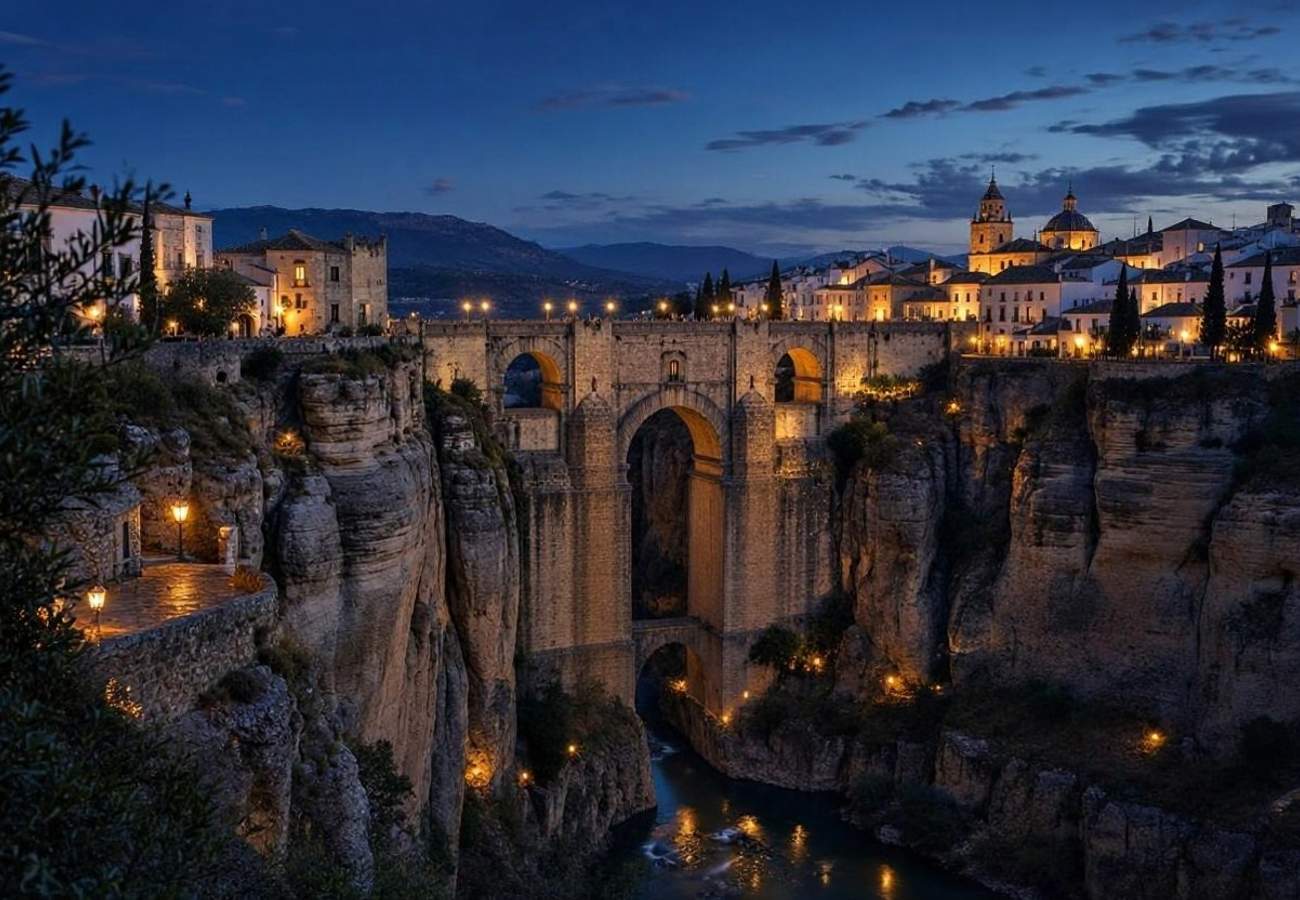
Image generated by AI
Traveler density at Ronda's Puente Nuevo peaks between 11:00 and 16:00, creating a stark contrast with the near-empty streets experienced by overnight guests. This shift in visitor distribution signals a broader movement toward "slow travel" in Andalusia, where the value proposition has moved from checklist sightseeing to experiential immersion. For the modern traveler, the decision between a day trip and an overnight stay is no longer just about preference, but about navigating a fragmented transport network and avoiding peak-hour congestion.
The Ronda Logistics Gap in Numbers
The current accessibility of Ronda is defined by a significant infrastructure void. As of September 2026, passenger rail services to the town have ceased entirely, with a projected recovery date not expected until autumn 2027. This has forced a total reliance on road transport, altering the time-cost analysis for visitors arriving from the region's two primary hubs.
From Málaga, the transit window is relatively tight. Direct coaches operated by Avanza and Damas maintain a 2 to 2.5-hour transit time. A typical 08:00 departure arrives after 11:00, placing the traveler exactly at the start of the peak congestion window. Conversely, the journey from Seville is significantly more taxing. While regional trains previously offered a 2.5 to 3-hour connection, 2026 itineraries involving Renfe replacement buses can stretch to 5 hours. Direct bus alternatives via Comes or Interbus have reduced this to roughly 3 hours, yet the total "door-to-door" time remains a deterrent for single-day itineraries.
Comparative Transport Analysis: 2026 Benchmarks
The transition from rail to road has created a disparity in travel efficiency. The following table compares the current 2026 transit options for the two primary entry points to Ronda.
| Metric | From Málaga (Bus/Car) | From Seville (Bus/Car) | Rail Status (2026) |
|---|---|---|---|
| Average Transit Time | 2.0 — 2.5 Hours | 3.0 — 5.0 Hours | Suspended |
| Primary Operators | Avanza, Damas | Comes, Interbus | Renfe (Replacement only) |
| Typical Fare Range | €12 — €18 | Variable (Market Rate) | Limited Replacement |
| Peak Arrival Window | 10:30 — 11:30 | 11:00 — 13:00 | N/A |
| Transit Complexity | Low (Direct) | Medium (Direct/Mixed) | High (Multi-modal) |
This data suggests that Seville-based travelers face a 50% higher time investment than those in Málaga, making an overnight stay almost a logistical necessity rather than a luxury. For real-time updates on Spanish rail disruptions, travelers should monitor Renfe's official portal or check broader European transit trends via OAG.
What This Means for Travelers
The 2026 data indicates that the "standard" day trip is becoming increasingly inefficient. If you are planning a visit, apply these data-driven strategies:
For Málaga-based travelers: A day trip remains viable but requires a strict 08:00 departure to maximize the window before the 11:00 congestion peak. If you intend to visit the Desfiladero del Tajo walkway, booking the earliest possible slot is essential to avoid the mid-day crush.
For Seville-based travelers: Avoid the day trip. The 3-to-5-hour transit time, combined with the 15-20 minute walk from the Ronda station to the center, consumes nearly 7 hours of your day in transit alone. A minimum one-night stay is recommended to justify the travel expenditure.
For Photographers and High-Season Visitors: The "Blue Hour" and sunset windows at Puente Nuevo are only accessible to those staying overnight. Since tour buses typically exit the city by 16:00, the window between 17:00 and 20:00 offers a 70-80% reduction in pedestrian traffic at major viewpoints like Mirador de Aldehuela.
Forward Projection: The "Stay-Over" Economy
Ronda is currently pivoting its economic model. The recent investment in the Desfiladero del Tajo walkway is a strategic move to increase the "Average Length of Stay" (ALOS). By aligning time slots and attractions with overnight guest schedules, the local government is attempting to decouple the city's economy from the volatile day-trip market.
We expect to see a rise in boutique hospitality offerings in the old town as the city moves away from being a "stopover" and toward becoming a destination. This mirrors trends seen in other UNWTO reported European heritage sites, where "overtourism" is mitigated by incentivizing longer stays over high-volume, short-duration visits.
FAQ: Ronda Travel 2026
Can I still take the train to Ronda in 2026? No. Passenger rail services were suspended in September 2026 and are not expected to return until autumn 2027. You must use direct buses or rental cars.
Is a day trip from Seville worth it? Logistically, no. With transit times reaching up to 5 hours and a 3-hour minimum via direct bus, you spend more time traveling than sightseeing. An overnight stay is highly recommended.
What is the best time to visit the bridge to avoid crowds? Avoid the 11:00 to 16:00 window when tour groups peak. The best times are before 10:00 or after 17:00, which generally requires an overnight stay.
How do I get from the Ronda bus station to the center? It is a 15-20 minute walk along level streets. Taxis are available for those with heavy luggage, as station storage is limited.
The data is clear: the era of the rushed Ronda day trip is ending, replaced by a more intentional, overnight experience.
Related Travel Guides
This article is for informational purposes. Flight routes, passenger regulations, visa rules, and transit advisories are subject to change by airlines and aviation authorities. Readers are advised to verify schedules and travel documentation with relevant carriers and border agencies before departure.
Related Stories

Hungary Travel Shift: How Smart Travelers Avoid Crowds and High Prices in Budapest, Gyula, Pécs, and Szeged

Top Asian Destinations for Sibling Travel and Raksha Bandhan Getaways in 2026