
Rising Jet Fuel Prices Push Airlines to Rethink Flight Schedules, Putting Travelers on Alert
Rising Jet Fuel Prices Push Airlines to Rethink Flight Schedules, Putting Travelers on Alert

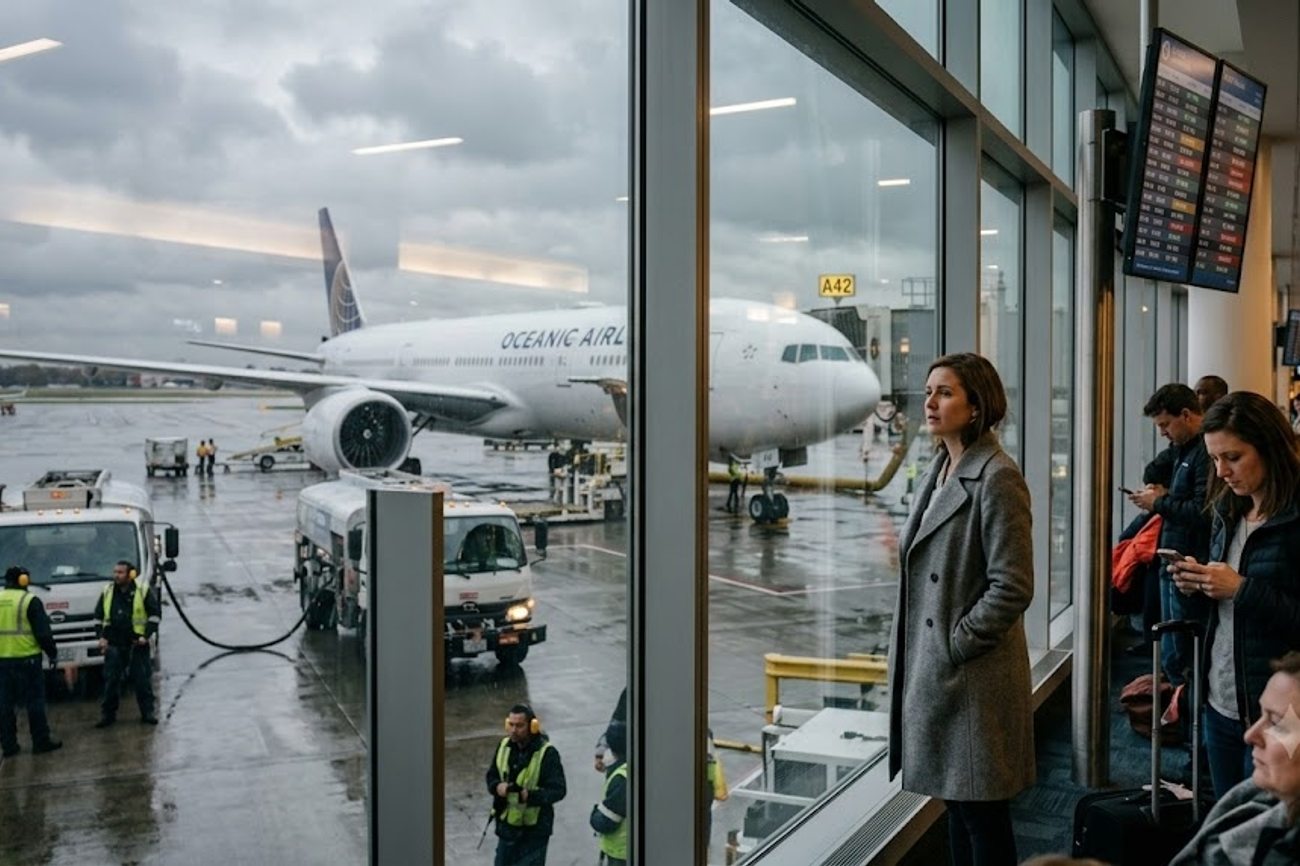
Image generated by AI
[New York, September 2024] — Major global carriers are aggressively slashing flight capacity and revising winter schedules as a sudden spike in jet-fuel prices threatens airline profitability. American Airlines, United Airlines, and Southwest Airlines are leading a shift in capacity management that will impact travel through the end of 2026 and into 2027, specifically targeting high-traffic corridors between New York, Chicago, and Delhi.
The volatility is driven by a sharp climb in aviation fuel costs linked to geopolitical instability. According to the International Air Transport Association (IATA), the global average price for jet fuel hit $181.46 per barrel, marking a 6.1% increase in a single week. This trend is mirrored in Europe, where EUROCONTROL reports that jet-fuel prices averaged $4.58 per gallon on September 11, an 18% surge over a two-week window.
The Fuel Price Catalyst
The current aviation crisis is rooted in the rapid escalation of energy costs. For airlines, fuel is one of the most volatile operating expenses, and the recent jump is pushing many routes toward the brink of commercial unviability. When fuel prices rise, the "break-even" point for a flight shifts; a route that was profitable at $150 per barrel may become a loss-leader at $181.46.
This is not a localized issue but a systemic global shock. In the European market, the price surge is approaching peaks seen earlier this year, forcing carriers to manage complex operating conditions. In India, the impact is already ingrained in the pricing structure. Air India has previously noted that Aviation Turbine Fuel (ATF) accounts for nearly 40% of its total operating costs, leading to the implementation of aggressive fuel surcharges to offset market volatility.
Impacted Markets and Carriers
The capacity reductions are not uniform but are targeting specific regions and timeframes. The primary focus is on the final quarter of 2026 and the start of 2027.
| Carrier | Action Taken / Planned | Primary Impact Period |
|---|---|---|
| American Airlines | Reassessing late-2026 flight schedules | Late 2026 |
| United Airlines | Canceled select December services; further cuts pending | December 2024 / 2026 |
| Southwest Airlines | Reduced projected capacity growth for 2026 | Full Year 2026 |
| Air India | Modified Delhi–Paris, Delhi–Sydney, and Delhi–Melbourne routes | June – August (Recurring) |
| European Carriers | 1.7% capacity decline among top 10 busiest airlines | September 7–13 |
The European sector is seeing a tangible dip in activity, with an average of 35,893 flights per day recorded between September 7 and 13. While seasonal demand and air-traffic-control constraints play a role, the fuel spike is a primary driver for the 1.7% capacity drop among the region's largest operators.
Practical Traveler Advisory and Strategic Insights
For the average passenger, these corporate adjustments do not necessarily mean a total disappearance of flights, but rather a degradation of convenience and affordability.
1. Reduced Frequency and Flexibility Instead of outright cancellations, airlines are "trimming" schedules. This means a route that previously offered four flights a day may drop to two. For travelers, this removes the "safety net" of alternative flight times if a delay occurs.
2. Pricing Pressure While fuel costs do not always lead to a 1:1 increase in ticket prices, reduced capacity often triggers higher fares. When airlines consolidate three flights into two, the remaining seats become more valuable, allowing carriers to raise prices due to limited supply, even if demand remains steady.
3. The "Surcharge" Model Travelers should expect more "fuel surcharges" similar to the Air India model. In India, domestic surcharges have fluctuated between ₹299 and ₹899 per passenger per sector. This allows airlines to adjust prices in real-time without changing the base fare of the ticket.
Airlines are optimizing routes and reducing low-demand frequencies to offset volatile operating costs. Travelers should monitor their bookings via the International Air Transport Association (IATA) to stay informed on industry-wide scheduling shifts and fuel surcharge updates.
4. Holiday Volatility The timing is critical for December travelers. Because the end-of-year period is a peak demand window, any reduction in seat availability will be felt more acutely, leading to rapid sell-outs and price spikes for holiday corridors.
The Path Toward 2027
The aviation industry is now in a holding pattern, waiting to see if fuel prices stabilize or continue their ascent. The immediate strategy for carriers is "network stability"—reducing flights on marginal routes to ensure that core hubs remain operational without incurring massive losses.
Air India’s recent strategy of temporary suspensions on routes like Delhi–Melbourne and Delhi–Sydney serves as a blueprint for other carriers. By pausing services during peak fuel price windows, airlines can protect their balance sheets without permanently abandoning a market.
Looking forward, the industry's ability to weather this storm depends on fuel hedging—the practice of buying fuel at a fixed price for the future. Airlines with robust hedges will be less likely to cut flights or raise fares in the short term, while those exposed to the "spot market" will be forced to make rapid schedule changes.
FAQ: Aviation Fuel Impact 2024-2027
Will my flight be canceled because of fuel prices? Outright cancellations are less likely than "schedule optimizations." You are more likely to see your flight time change or your preferred frequency disappear than to have a route completely eliminated, though some low-demand international routes remain at risk.
Why are ticket prices rising if demand is the same? When airlines reduce the number of flights (capacity) but the number of people wanting to fly (demand) stays the same, the price per seat increases. This is basic supply-and-demand economics triggered by higher operating costs.
How do fuel surcharges work? A fuel surcharge is an additional fee added to the base fare to cover the rising cost of jet fuel. Unlike the base fare, these charges can be adjusted quickly by the airline as fuel prices fluctuate on the global market.
What should I do when booking a flight for late 2026? Prioritize routes with high daily frequencies. If a route only has one flight per week, you have zero flexibility if the airline trims capacity. Check your flight status more frequently as your departure date approaches.
The aviation industry is flying into a high-cost storm, and passengers will be the ones paying for the turbulence.
#AmericanAirlines #UnitedAirlines #AirIndia #IATA #JetFuelPrices #DEL-NYC-ORD-2026
Related Travel Guides
- Why Great Britain’s Coventry Is Experiencing a Massive Tourism Surge Right Now
- Nepal’s Sa Paru Festival Turns Remembrance Into a Vibrant Cultural Journey of Music, Dance and Heritage: All You Need to Know
- India Startup Ecosystem Powers Tourism Growth As Emerging Regions Become New Travel Innovation Hubs
Disclaimer
This article is for informational and educational purposes only. It does not constitute legal, financial, or professional advice. While we strive to provide accurate and up-to-date information, travel policies, regulations, and conditions change rapidly. Always verify information with official sources before making travel decisions. Nomad Lawyer makes no representations about the accuracy, reliability, completeness, or suitability of the information provided. Readers should consult qualified professionals for advice specific to their circumstances. The views expressed in this article are those of the author and do not necessarily reflect the views of Nomad Lawyer.
Naina Thakur
Contributor & Travel Specialist
Travel enthusiast and legal writer covering visa regulations, responsible tourism, and cultural journeys across global destinations.
Learn more about our team →