
Nepal’s Sa Paru Festival Turns Remembrance Into a Vibrant Cultural Journey of Music, Dance and Heritage: All You Need to Know
Nepal’s Sa Paru Festival Turns Remembrance Into a Vibrant Cultural Journey of Music, Dance and Heritage: All You Need to Know

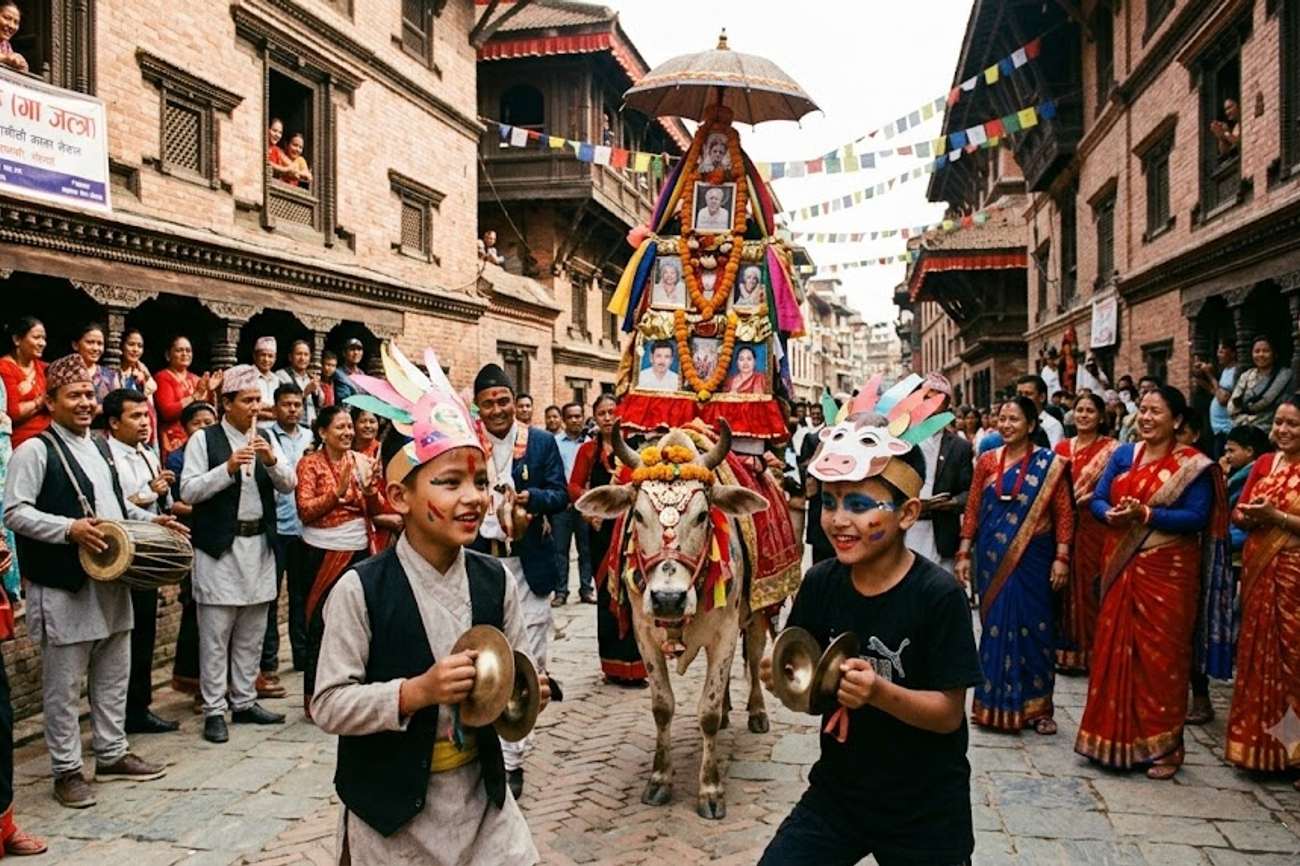
Image generated by AI
City: Bhaktapur Date: August 2024 Category: Cultural Tourism / Aviation & Travel Priority: High
[Bhaktapur, August 2024] — The Newar community of Nepal is launching the Sa Paru festival, a massive public celebration in the Kathmandu Valley that transforms the mourning of deceased loved ones into a vibrant display of music, dance, and communal processions.
Known internationally as Gai Jatra, this annual event takes place during August or September, dictated by the lunar calendar. While the festivities span the broader region, the historic city of Bhaktapur serves as the primary hub for the celebrations. The event is designed to help families process grief through public joy and collective support, marking a significant shift in Nepal's tourism appeal from purely adventure-based trekking to deep-heritage cultural immersion.
The Catalyst for Celebration
The Sa Paru festival is rooted in a 17th-century royal decree intended to mitigate the psychological impact of death. Historical records attribute the expansion of the tradition to King Pratap Malla, who encouraged the public celebration of remembrance following the death of his own son. The King's objective was to ensure that no family endured the isolation of grief alone, institutionalizing a system where the community shares the burden of loss.
Centuries later, this royal mandate has evolved into a complex socio-religious event. It blends spiritual reflection with satirical performances and artistic expression. The festival operates on the belief that death is an inevitable part of the human cycle and should be accepted with a combination of spirituality and humor. This philosophy is manifested in the creation of "taha: sa," which are elaborate bamboo structures decorated with symbolic imagery and representations of cows. These structures are paraded through the streets to guide the souls of the departed and provide a visible tribute to those who passed away during the previous year.
Regional Impact and Participation
While the festival is a valley-wide event, the experience varies significantly depending on the specific municipality. The Government of Nepal and local heritage boards oversee the coordination of these events to ensure the preservation of Newar culture.
| Destination | Primary Festival Experience | Focus Area |
|---|---|---|
| Bhaktapur | Traditional processions and community dances | Medieval architecture and Newar heritage |
| Kathmandu | Large-scale public performances | Urban cultural displays |
| Lalitpur | Local rituals and heritage events | Traditional Newar customs |
| Kathmandu Valley | Regional coordination | Broad community participation |
The physical manifestation of the festival is most intense in Bhaktapur, where the city's medieval layout provides a natural stage for the processions. The streets are filled with traditional drums and bells, creating an acoustic environment that signals the start of the remembrance period. A central feature of these movements is the Ghintang Ghisi dance, a rhythmic performance involving sticks that draws thousands of spectators into the narrow alleyways of the historic center.
Practical Traveler Advisory and Strategic Insights
For the international traveler, the Sa Paru festival represents a departure from the standard "Everest-centric" itinerary. It signals a shift toward "slow travel" and heritage tourism. However, attending a festival of this scale requires specific logistical considerations.
Logistics and Access: Travelers typically enter the region via Tribhuvan International Airport (KTM), the primary gateway to the capital. From there, transit to Bhaktapur is conducted via local transport. Because the festival dates shift annually based on the lunar calendar, booking flights and hotels requires flexibility and early verification of the specific festival window in August or September.
Cultural Etiquette: This is not a staged performance but a living ritual. Travelers must adhere to strict codes of conduct:
- Photography: Permission is mandatory before photographing individuals, particularly those participating in the mourning rituals.
- Dress Code: Respectful, conservative clothing is required when entering temple areas or participating in processions.
- Economic Impact: Visitors are encouraged to engage with local artisan workshops and Newari eateries to ensure the economic benefits of the festival remain within the community.
Experience Value: Beyond the processions, the festival serves as a gateway to exploring Bhaktapur Durbar Square and the city's famous pottery workshops. It transforms the city from a sightseeing stop into an immersive living museum.
Visitors planning to attend the Sa Paru Festival should coordinate their travel through the Nepal Tourism Board to ensure they have the most current cultural guidelines and regional permits. This official resource provides essential insights into sustainable tourism practices and heritage site preservation across the country.
The Shift Toward Heritage Tourism
Nepal is aggressively diversifying its tourism portfolio. While the Himalayas remain the primary draw for adventure seekers, the promotion of Sa Paru highlights a strategic move toward cultural tourism. This trend is driven by a global increase in demand for "authentic" experiences that offer meaningful connections with local populations.
The festival's ability to combine spirituality with satire—including humorous public performances—makes it a unique draw for photography and sociology enthusiasts. By centering the event in Bhaktapur, Nepal is leveraging its preserved medieval architecture to create a high-value destination that encourages longer stays. This reduces the pressure on trekking routes and spreads tourism revenue across the urban heritage sites of the Kathmandu Valley.
FAQ: Sa Paru Festival 2024
When exactly does Sa Paru take place? The festival occurs annually in August or September. Because it follows the lunar calendar, the exact dates change every year. Travelers should check the official Nepalese cultural calendar or consult local authorities in Kathmandu.
Is it appropriate for tourists to join the processions? Yes, visitors are welcome to observe and participate respectfully. However, the "taha: sa" structures are private family tributes; visitors should maintain a respectful distance and avoid obstructing the path of the procession.
What is the best way to get to Bhaktapur for the festival? Most visitors fly into Kathmandu (KTM) and take a taxi or local bus to Bhaktapur. Due to the high volume of people during Sa Paru, it is recommended to arrive early in the morning to avoid traffic congestion.
Are there specific things to see in Bhaktapur besides the festival? Yes. Travelers should visit Bhaktapur Durbar Square, explore the traditional pottery squares, and sample authentic Newari cuisine, which is a central part of the city's identity.
A rare intersection of grief and joy, Sa Paru redefines the travel experience in the heart of the Himalayas.
Related Travel Guides
- India Startup Ecosystem Powers Tourism Growth As Emerging Regions Become New Travel Innovation Hubs
- ANA Advances Sustainable Aviation Fuel Innovation As Green Travel Demand Accelerates Worldwide Aviation Transformation
- Saudi Arabia Riyadh Airport Travel Operations Disrupted After Fuel Tank Fire Near Capital Amid Rising Yemen Tensions
Disclaimer
This article is for informational and educational purposes only. It does not constitute legal, financial, or professional advice. While we strive to provide accurate and up-to-date information, travel policies, regulations, and conditions change rapidly. Always verify information with official sources before making travel decisions. Nomad Lawyer makes no representations about the accuracy, reliability, completeness, or suitability of the information provided. Readers should consult qualified professionals for advice specific to their circumstances. The views expressed in this article are those of the author and do not necessarily reflect the views of Nomad Lawyer.
Preeti Gunjan
Contributor & Community Manager
A passionate traveller and community builder. Preeti helps grow the Nomad Lawyer community, fostering engagement and bringing the reader experience to life.
Learn more about our team →