
Wings Over the Mediterranean: What El Al’s Paris–Tel Aviv Go-Around Reveals About Aviation Safety and Coastal Arrival
When El Al flight LY324 from Paris executed a textbook go-around at 600 feet before touching down safely at Ben Gurion Airport, it showcased the exacting flight deck discipline that protects travelers descending onto Israel’s Mediterranean shores.

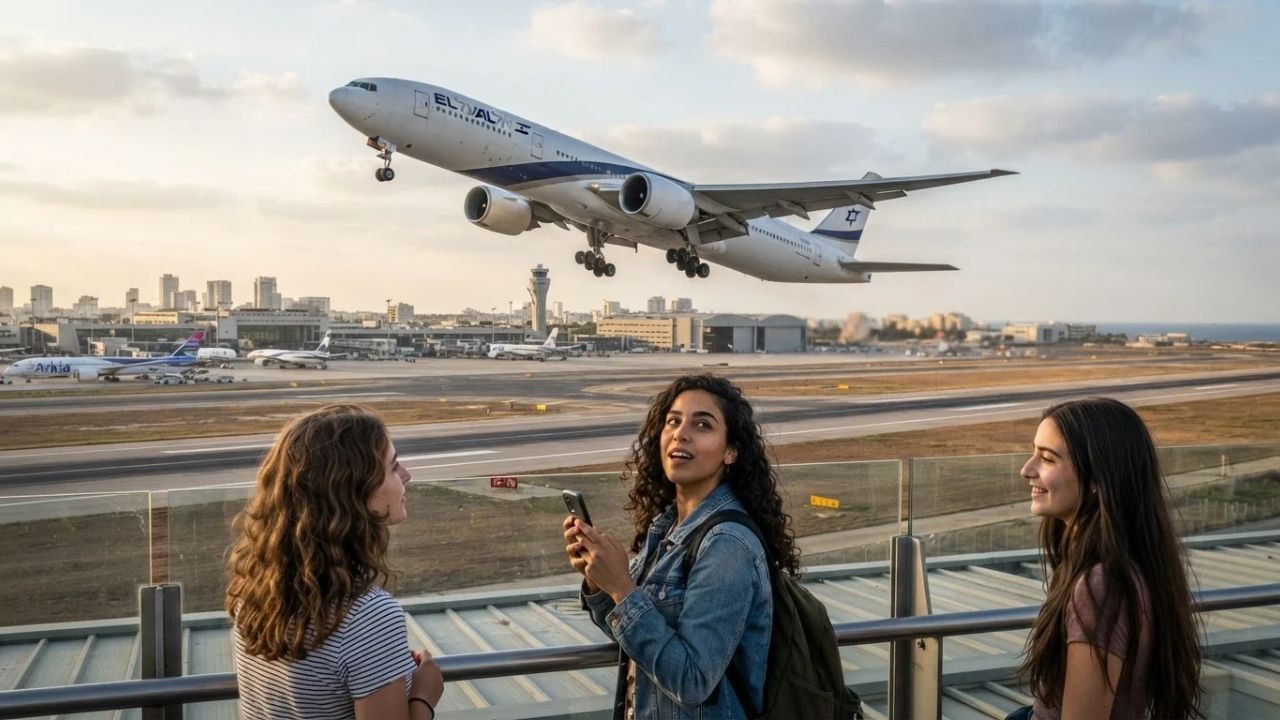
Approaching Ben Gurion Airport from the Mediterranean Sea requires rigorous navigation oversight, ensuring every landing meets international stabilized criteria
At six hundred feet above the orange groves and limestone hills of central Israel, a three-hundred-ton Boeing 777-200ER carrying hundreds of passengers from Paris suddenly spooled up its twin GE90 engines, pitched its nose toward the clouds, and climbed back into the Mediterranean sky. Rather than forcing a misaligned touchdown after tracking approximately one nautical mile north of its intended Runway 30 centerline, the flight crew of El Al flight LY324 executed an immediate go-around at Ben Gurion Airport. Ascending cleanly to 4,000 feet, the wide-body jet repositioned over the coastal plain and touched down smoothly twenty minutes later, providing passengers with a vivid demonstration of why professional aviation treats an abandoned landing not as an emergency, but as the gold standard of passenger safety.
For international travelers flying into Tel Aviv, the visual approach over the eastern Mediterranean is one of the most stunning descents in global travel. Sweeping past ancient port battlements, pristine sand beaches, and the dense modernist towers of the Levant, the arrival demands total technical precision. Understanding how flight crews navigate this bustling aviation corridor sheds light on the unseen operational rigor that safeguards millions of voyagers crossing between Europe and the Middle East each year.
The Science of the Missed Approach: Deconstructing Flight LY324
Operating from Paris Charles de Gaulle Airport to Ben Gurion Airport in Tel Aviv, flight LY324 forms a vital commercial bridge linking two major cosmopolitan centers. The service was operated by a Boeing 777-200ER, registration 4X-ECF, configured in a three-class layout accommodating 313 passengers—comprising 28 business-class suites, 32 premium economy recliners, and 253 standard economy seats. Designed for long-haul intercontinental journeys, the twin-aisle jet represents the heavy backbone of El Al’s wide-body operations.
During its arrival into Israeli airspace, air traffic control cleared the aircraft for a visual approach to Runway 30. A visual approach allows flight crews the flexibility to navigate by direct visual reference to geographic landmarks and the runway environment rather than relying solely on automated instrument flight paths. However, tracking data revealed that the aircraft established an approach profile displaced roughly one nautical mile north of the runway centerline, continuing its descent while remaining laterally offset.
When the aircraft reached approximately 600 feet above ground level, the flight crew correctly assessed that the approach was no longer stabilized. In accordance with guidelines established by the International Civil Aviation Organization (ICAO), an approach must meet strict stabilization criteria—maintaining a constant glidepath angle, steady descent rate, correct landing flap configuration, and precise lateral track. In visual conditions, 500 feet above ground level serves as the mandatory operational gate: if an aircraft is not perfectly aligned, continuing the landing is strictly prohibited. By initiating a go-around, climbing to 4,000 feet, and resetting for a second approach, the pilots prioritized passenger safety above all else, landing safely on Runway 30 roughly twenty minutes later without injury or incident.
What Makes Arriving in Tel Aviv Culturally and Visually Distinct
Touching down at Ben Gurion Airport (IATA: TLV) is an unforgettable sensory prelude to the vibrant Mediterranean life awaiting just fifteen kilometers to the northwest. The descent provides an extraordinary geographic cross-section of the coastal plain, transitioning from the shimmering waters of the Mediterranean past the citrus groves of the Sharon valley to the historic rooftops of Lod and Ramla.
Tel Aviv itself is a city of electric contrasts, famously dubbed "the city that never stops." Founded in 1909 on sand dunes just north of ancient Jaffa, it evolved into an extraordinary architectural canvas during the 1930s and 1940s, when European Jewish architects fleeing Nazi persecution brought modern German Bauhaus design to the Levant. Today, the White City of Tel Aviv comprises over 4,000 pristine modernist buildings characterized by clean horizontal lines, curved balconies, and climate-conscious ribbon windows, recognized globally by the UNESCO World Heritage Centre. Strolling along tree-lined Rothschild Boulevard or Dizengoff Square immerses travelers in a living museum of twentieth-century urbanism.
Immediately to the south lies Old Jaffa (Yafo), one of the oldest continuously inhabited port cities in the world, with archaeological roots dating back more than four millennia. Here, winding stone alleys named after the signs of the zodiac lead down to a historic fishermen's harbor where wooden skiffs bob beside ancient sea walls. The neighborhood thrums with creative vitality: the vibrant Jaffa Flea Market (Shuk HaPishpeshim) features antique vendors, open-air cafes, and independent design ateliers serving steaming glasses of mint tea and fresh shakshuka.
Connecting these heritage districts is a culinary culture deeply anchored in Mediterranean freshness. In the sensory maze of Carmel Market (Shuk HaCarmel) and the historic Levinsky spice market in Florentin, stalls overflow with mountains of sumac, za'atar, dried Persian limes, warm Yemenite flatbreads, and freshly pressed pomegranate juice. Arriving safely at Ben Gurion places this rich cultural mosaic immediately within reach.
Visitor Insider Tips
Navigating arrivals and exploring Tel Aviv with local confidence requires practical know-how:
- The Express Train Transit from Ben Gurion: Avoid high-priced private airport taxis or traffic gridlock along Highway 1 during Sunday mornings and Thursday afternoons. Instead, walk directly from Terminal 3 arrivals to the integrated railway platform and board the Israel Railways express train. For roughly 16 shekels, the modern train whisks you to central Tel Aviv stations (HaShagana, HaShalom, or Savidor Center) in precisely twelve to fourteen minutes.
- Understanding Shabbat Travel Constraints: Remember that public trains and municipal buses cease operations from Friday late afternoon (just before sundown) until Saturday evening after dusk. If landing during Shabbat, pre-book an official shared taxi (sherut) or use licensed ride-hailing apps like Gett to reach your hotel along the beachfront.
- Mastering the Mediterranean Waterfront: Base yourself in the historic neighborhood of Neve Tzedek or along the central seaside promenade. Rent an electric bicycle or hop on a shared scooter along the continuous 14-kilometer seaside boardwalk stretching from the Tel Aviv Port (Namal) in the north down to the ancient cliffs of Jaffa in the south.
- Market Dining Etiquette: When exploring Levinsky Market in South Tel Aviv, visit between 10:00 AM and 2:00 PM from Tuesday through Thursday to avoid peak weekend crowds. Sample warm bourekas filled with salted cheese and spinach at culinary heritage shops, and savor freshly ground tehina drizzled over charred eggplants.
- Airport Departure Timing: When departing from Ben Gurion Airport, the Israel Airports Authority enforces comprehensive security questioning. Always arrive three full hours before scheduled international departures to comfortably clear pre-check security interviews, automated baggage screening, and passport control.
Cultural and Environmental Context
The airspace surrounding Tel Aviv is among the most meticulously monitored in international aviation. Operating within tightly defined flight corridors designed by the Civil Aviation Authority of Israel, commercial flights share skyways with commercial maritime traffic and coastal security operations. This high-density environment requires strict adherence to international safety protocols, ensuring that routine procedures like go-arounds are executed with complete operational discipline.
On the ground, Tel Aviv balances intense urban modernization with ecological and architectural preservation. The municipality enforces strict conservation bylaws across the White City, mandating that historic Bauhaus facades are painstakingly restored using period-accurate mineral plaster rather than modern synthetic paints. This preserves the architectural integrity of the UNESCO zone while allowing interior living spaces to modernize.
Along the coastline, environmental initiatives champion marine sustainability. Grassroots ecological groups and municipal teams actively protect sea turtle nesting sanctuaries on the sandy beaches north of the city and monitor Mediterranean water quality. By welcoming international visitors through efficient, safety-first aviation corridors, Israel continues to foster cultural dialogue, culinary exchange, and architectural appreciation along its sun-drenched coastal threshold.
FAQ: Arriving in Tel Aviv and Ben Gurion Airport 2026
What does a go-around mean when landing at Ben Gurion Airport? A go-around is a standard safety maneuver where pilots discontinue an approach that does not meet strict stabilized landing criteria, climbing away to reset and land safely on a subsequent attempt.
How far is Ben Gurion Airport from central Tel Aviv? Ben Gurion Airport is situated approximately 15 kilometers southeast of central Tel Aviv, reachable in twelve to fifteen minutes via direct Israel Railways express trains from Terminal 3.
Do international tourists need a visa to visit Israel? Citizens of the United States, Canada, the United Kingdom, and the European Union receive a complimentary three-month tourist entry permit upon arrival, provided their passport is valid for at least six months.
What is the best time of year to visit Tel Aviv? Spring (April to May) and autumn (September to November) offer the most pleasant weather, featuring sunny Mediterranean days, warm sea temperatures, and comfortable evening breezes ideal for walking tours.
When flight decks choose patience over haste, the blue waters of the Mediterranean remain a welcoming gateway to ancient shores and endless horizons.
Related Travel Guides
- Skyways Across the Zagros: What the Mashhad–Kermanshah Precautionary Landing Reveals About Travel in Iran
- Gateway to the Zulu Coast: How Ethiopian Airlines’ Daily Durban–Addis Ababa Route Unlocks KwaZulu-Natal
- The Sovereign Runway: How British Airways’ Heathrow Route Unlocks Guernsey’s Secret Maritime Heart
Disclaimer
This article is for informational and educational purposes only. It does not constitute legal, financial, or professional advice. While we strive to provide accurate and up-to-date information, travel policies, regulations, and conditions change rapidly. Always verify information with official sources before making travel decisions. Nomad Lawyer makes no representations about the accuracy, reliability, completeness, or suitability of the information provided. Readers should consult qualified professionals for advice specific to their circumstances. The views expressed in this article are those of the author and do not necessarily reflect the views of Nomad Lawyer.
Raushan Kumar
Founder & Lead Developer
Full-stack developer with 11+ years of experience and a passionate traveller. Raushan built Nomad Lawyer from the ground up with a vision to create the best travel and law experience on the web.
Learn more about our team →