
Spain's Alicante Tourism at a Crossroads: Weak Regulation, 90,000 Holiday Rentals, and the Battle for Local Housing
Generating 30% of provincial GDP and 400,000 jobs, Alicante confronts the double-edged sword of overtourism as nearly 90,000 holiday apartments strain local neighborhoods across the Costa Blanca.

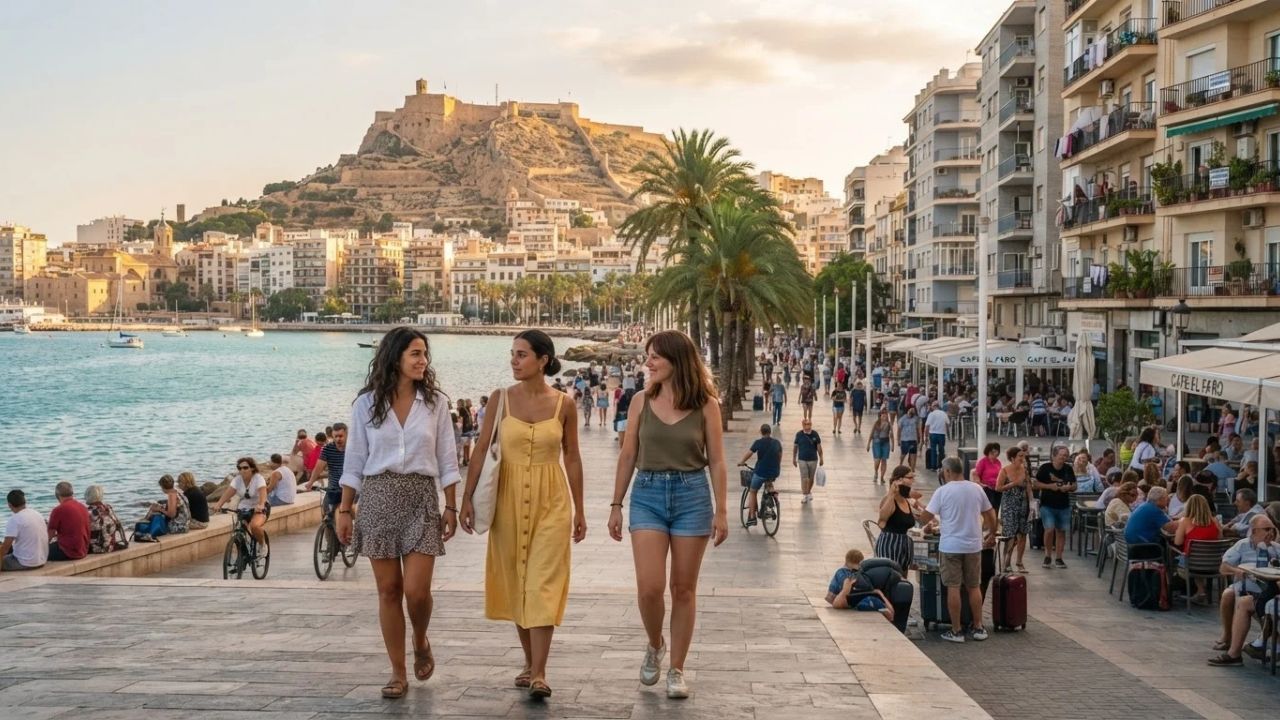
Image generated by AI
While tourism serves as the undisputed economic engine of Alicante province—generating 30 percent of total regional Gross Domestic Product and sustaining approximately 400,000 direct and indirect jobs—an explosive inventory of nearly 90,000 holiday apartments has pushed the province's residential fabric to a precarious breaking point. In Alicante city alone, where the visitor economy accounts for roughly 15 percent of all commercial activity and generates over €1 billion in GDP, the rapid conversion of long-term residential homes into short-term vacation lets has ignited fierce debate. Across the sun-drenched Costa Blanca, from the skyscraper strips of Benidorm to the historic harbors of Dénia and Torrevieja, the region is grappling with how to preserve its legendary Mediterranean hospitality without sacrificing the living communities that give it soul.
The Costa Blanca Dilemma: Record Revenues Meet Housing Strains
The tension unfolding across Alicante is not simply a matter of headcount, but a structural failure of regulatory oversight. Digital accommodation platforms have enabled tens of thousands of private owners to transition residential properties into tourist accommodations, creating hundreds of thousands of visitor beds across the province. Unlike traditional hotels that adhere to rigorous safety codes, staffing minimums, and strict municipal licensing standards, the sheer speed of holiday-rental expansion has overwhelmed local monitoring systems.
The consequences for permanent residents are severe. In working-class barrios and historic city centers, the sudden contraction of long-term rental stock has driven housing prices to record highs, displacing young families, hospitality staff, and public sector workers. Residential tourism—driven by northern European second-home buyers and holiday apartment investors—continues to inject billions of euros annually into construction, legal services, and gastronomy. Yet without comprehensive zoning laws and effective enforcement, this wealth concentration threatens the viability of public infrastructure and basic municipal services.
At the same time, traditional independent businesses face intense transformation. Long-standing neighborhood bakeries, fishmongers, and hardware shops are contending with rising commercial rents driven by visitor gentrification, alongside fierce competition from suburban shopping complexes and multinational digital retailers. Year-round air connectivity through Alicante-Elche Miguel Hernández Airport ensures an uninterrupted flow of international arrivals from across the continent, reinforcing the urgent necessity for modern destination policies highlighted by Spain Info that balance economic vitality with neighborhood stability.
What Makes Alicante Different: Mediterranean Soul Beyond the High-Rise Strip
To understand Alicante beyond the headlines of overtourism, one must look past the package-holiday stereotypes. Benidorm stands as a fascinating case study in extreme tourism adaptation: over half a century, it evolved from a modest fishing hamlet into one of the world’s most recognized skyscraper resort capitals. Yet the total freeze of international aviation during the COVID-19 pandemic laid bare the vulnerability of mono-economies reliant purely on external visitors, prompting a region-wide reevaluation of sustainable tourism.
In contrast to commercial resort towers, Alicante city possesses an ancient Mediterranean rhythm anchored by Mount Benacantil. Crowning its rocky summit at 166 meters, the ninth-century Castillo de Santa Bárbara gazes across the turquoise expanse of Postiguet beach and the Explanada de España, a grand coastal promenade paved with 6.6 million tricolor marble tiles that create a hypnotic wave mosaic beneath towering date palms.
Directly below the fortress walls lies the Barrio de Santa Cruz, a pedestrian labyrinth of steep cobblestone stairways, whitewashed facades, wrought-iron balconies dripping with vibrant bougainvillea, and ceramic tile shrines that feels like an Andalusian village tucked inside a bustling provincial capital. Just twenty kilometers inland lies the historic city of Elche, where the UNESCO World Heritage Centre protects the iconic Palmeral of Elche—an ancient agricultural oasis of over 200,000 date palms that utilizes sophisticated gravity-fed irrigation channels established during Islamic rule in the tenth century.
Offshore, the tiny, car-free island of Tabarca—measuring less than two kilometers in length—preserves fortified eighteenth-century stone ramparts built by King Carlos III to defend against Barbary corsairs. Surrounded by Spain's oldest protected marine reserve, Tabarca’s crystal-clear waters shelter thriving seagrass meadows (Posidonia oceanica) and rich Mediterranean marine life, serving as an enduring reminder of what the Costa Blanca was before mass development.
Visitor Insider Tips: Exploring the Costa Blanca Sustainably and Authentically
Navigating Alicante while minimizing strain on local communities requires thoughtful itinerary choices and authentic local engagements:
- Choose Regulated Lodging: When booking accommodation, deliberately steer clear of unverified short-term holiday flats in residential tenement blocks where permanent neighbors face displacement. Opt instead for registered boutique hotels in historic quarters, eco-certified agritourism fincas in the mountainous interior valleys like Jalón and Guadalest, or established family-operated hotels that provide formal, year-round employment to local workers.
- Ride the Scenic Coastal Tram: Avoid renting a car and dealing with severe urban parking shortages by taking the TRAM Metropolitano de Alicante. Line L1 connects downtown Alicante directly to Benidorm in 70 minutes, while Line L9 continues northward along rugged cliffside tracks through Altea and Calpe to Dénia, offering spectacular coastal vistas for a fraction of the cost of highway tolls and car rentals.
- Time Your Cultural Visits: Beat the mid-day heat and large tour bus crowds by climbing to the Castillo de Santa Bárbara between 08:30 and 10:00. You will enjoy tranquil stone ramparts, sweeping coastal views, and soft morning lighting. For visiting Tabarca Island, catch the first 10:00 morning catamaran from Alicante Marina on a Tuesday or Wednesday to explore the fortified village before midday day-trippers arrive.
- Patronize Historic Neighborhood Markets: Support regional agriculture by shopping at the Mercado Central de Alicante, an imposing 1921 modernist market hall. Here, two levels of local grocers, butchers, cheese artisans, and fishmongers supply residents directly, offering an authentic cross-section of daily community life away from multinational supermarket chains.
- Taste Authentic Rice Heritage: Avoid seaside establishments displaying laminated picture menus offering generic yellow paella. Alicante's genuine culinary pride centers on arroz a banda—thin layers of rice simmered in concentrated rockfish stock, served alongside a side of fresh garlicky allioli—and arroz con costra, a traditional baked rice dish finished under an egg crust. Accompany your meal with a glass of Fondillón, an ancient, naturally sweet red wine made from overripe Monastrell grapes that has been cultivated across Alicante for more than five centuries.
Cultural and Environmental Context: Community Resistance, Water Realities, and Balanced Growth
The housing crisis across Alicante has catalyzed grassroots community action. Resident associations in Santa Cruz and traditional seafaring districts are organizing neighborhood assemblies, calling for a freeze on new short-term holiday licenses, stringent inspection regimes, and dedicated municipal housing subsidies. These civic movements emphasize that a city without permanent residents loses the intangible cultural heritage, neighborly security, and authentic traditions that attracted visitors in the first place.
Ecological limitations add another layer of urgency. The Costa Blanca is situated in one of the most water-stressed regions in Western Europe, receiving less than 300 millimeters of rainfall annually. Summer visitor surges place immense pressure on municipal desalination infrastructure and deplete fragile coastal aquifers.
Interestingly, urban planners point out that Benidorm's dense, high-rise vertical footprint actually consumes significantly less land and utilizes water and energy far more efficiently per tourist than sprawling suburban villa developments around Torrevieja. By moving away from unmanaged apartment deregulation and investing in regenerative tourism that funds municipal housing, water conservation, and heritage restoration, Alicante can safeguard its 400,000 tourism-dependent livelihoods without hollowing out the civic heart of its towns.
FAQ: Visiting Alicante in 2026
What is the best time of year to visit Alicante to avoid extreme crowds?
May through June and late September through October offer ideal Mediterranean temperatures between 23°C and 27°C, warm swimming waters, and significantly lower crowds than peak July and August.
How can travelers travel along the Costa Blanca without renting a car?
The TRAM Metropolitano de Alicante provides an efficient, scenic narrow-gauge rail network linking Alicante city directly to coastal towns including Campello, Villajoyosa, Benidorm, Altea, Calpe, and Dénia.
Are holiday rentals legally regulated in Alicante?
Yes. Regional authorities enforce registration codes for tourist accommodations. Visitors should verify that their rental displays an official Generalitat Valenciana tourist registry number before booking.
What is the authentic local rice dish to order in Alicante?
Seek out arroz a banda, a traditional fisherman’s dish where rice is slow-simmered in intense rockfish stock and served with rich garlic allioli, rather than generic tourist-oriented paellas.
Embracing Alicante through its morning markets, coastal rail lines, and historic stone quarters ensures that the warmth of the Costa Blanca enriches the travelers who visit and the communities who call it home.
Related Travel Guides
Disclaimer
This article is for informational and educational purposes only. It does not constitute legal, financial, or professional advice. While we strive to provide accurate and up-to-date information, travel policies, regulations, and conditions change rapidly. Always verify information with official sources before making travel decisions. Nomad Lawyer makes no representations about the accuracy, reliability, completeness, or suitability of the information provided. Readers should consult qualified professionals for advice specific to their circumstances. The views expressed in this article are those of the author and do not necessarily reflect the views of Nomad Lawyer.
Raushan Kumar
Founder & Lead Developer
Full-stack developer with 11+ years of experience and a passionate traveller. Raushan built Nomad Lawyer from the ground up with a vision to create the best travel and law experience on the web.
Learn more about our team →