
India’s $2B Rishikesh-Karnaprayag Himalayan Railway Corridor Targets 2029 Completion With June 2028 Trials
The 125 km Rishikesh-Karnaprayag railway corridor in Uttarakhand targets full completion by 2029, with June 2028 trial runs on the Shivpuri-Byasi section.

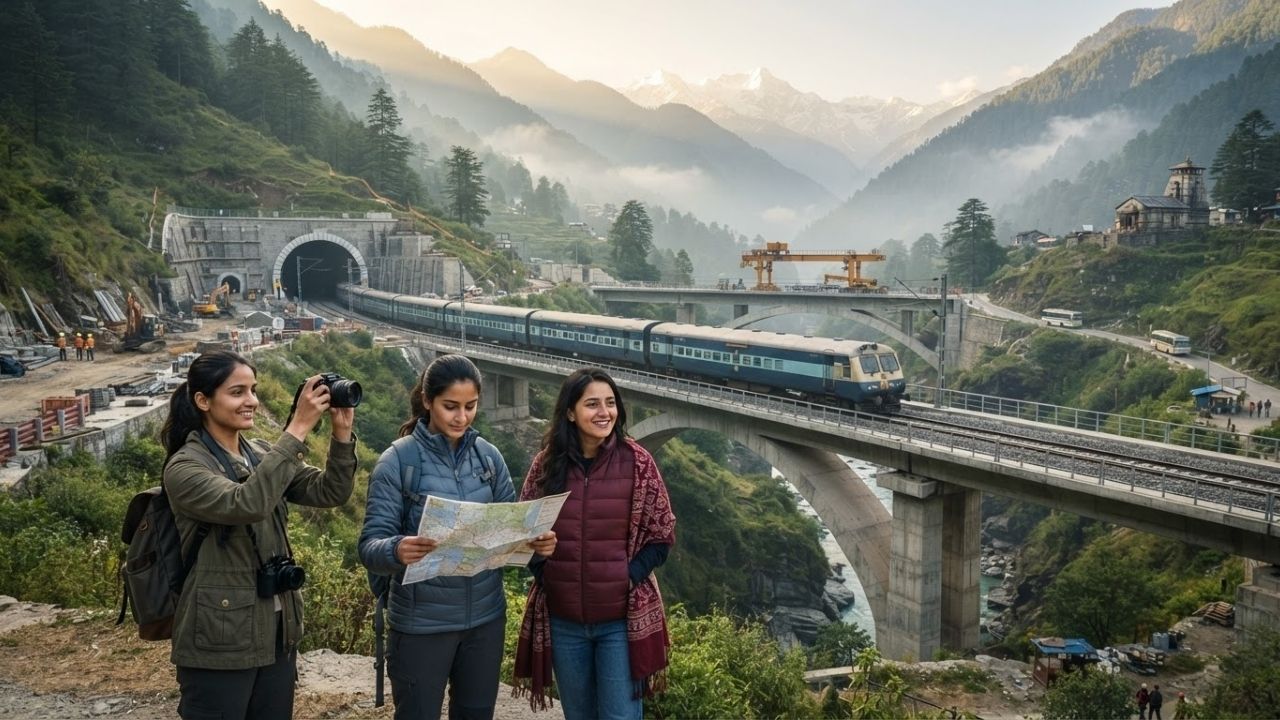
Image generated by AI
The 125-kilometer Rishikesh-Karnaprayag mountain railway line in Uttarakhand will complete initial trial runs on the Shivpuri-Byasi section in June 2028 ahead of full completion in 2029.
[RISHIKESH, India] — Engineering updates from Indian Railways and Northern Railway confirm that construction on the 125-kilometer Rishikesh-Karnaprayag broad-gauge line is advancing toward a full 2029 completion target. Following a 10-year construction effort, trial operations will begin on the Shivpuri-Byasi section in June 2028. Featuring 105 kilometers of underground tunnels and 35 major bridges, the rail corridor reduces travel distance across the Garhwal Himalayas while establishing direct rail access toward Kedarnath, Badrinath, and the India-Tibet-China border.
Engineering Architecture: 105-KM Tunnel Alignment and 35 Mountain Bridges
Building a broad-gauge railway deep into the outer and lesser Himalayas requires extensive underground engineering.
The 125-kilometer rail line bypasses landslide-prone mountain roads, cutting travel distance by 48 kilometers compared to the existing 173-kilometer highway route.
Approximately 85% of the alignment—covering 105 kilometers—runs through 16 underground tunnels and 35 major bridges.
Rishikesh-Karnaprayag Project Technical Baseline:
├── Total Alignment Distance: 125 Kilometers (vs 173 km highway route)
├── Construction Timeline: 10-year project (June 2028 trials ➔ 2029 full opening)
├── Underground Infrastructure: 85% of route (105 km) in 16 tunnels & 35 bridges
└── Longest Single Tunnel: 14.58 Kilometers (Devprayag to Janasu segment)
| Engineering Parameter | Project Metric / Value | Operational Transport Advantage |
|---|---|---|
| Total Railway Length | 125 Kilometers | Bypasses 173 km mountain highway route |
| First Trial Section | Shivpuri to Byasi | Commercial test operations scheduled June 2028 |
| Full Completion Target | 2029 | Full broad-gauge passenger & freight launch |
| Underground Alignment | 85% (105 Kilometers) | Shields tracks from monsoon landslides |
| Tunnel Count | 16 Tunnels | Continuous subterranean mountain transit |
| Longest Tunnel Segment | 14.58 Kilometers (Devprayag–Janasu) | India's longest mountain rail tunnels |
| Shortest Tunnel Segment | 200 Meters | Short ridge-cut passage |
| Major Bridges | 35 Railway Bridges | Spans Himalayan rivers & steep gorges |
| New Railway Stations | 12 Stations | Local economic & transport hubs |
Pilgrimage Transit Revolution: Kedarnath, Badrinath, and Char Dham Access
Millions of pilgrims travel annually to the holy Char Dham shrines of Kedarnath and Badrinath in the Garhwal Himalayas.
Presently, travelers depend on lengthy motor vehicle journeys from foothill railheads like Rishikesh, Haridwar, and Dehradun along winding mountain roads.
The 12 new railway stations will transform travel for pilgrims and tourists by providing fast, weather-resilient transport deep into the mountain interior.
Pilgrimage Corridor Infrastructure Transformation:
├── Traditional Gateway: Railheads limited to Rishikesh, Haridwar & Dehradun
├── New High-Speed Rail Corridor: 12 new broad-gauge stations deep in Garhwal
└── Primary Pilgrimage Destinations Served: Kedarnath, Badrinath & Char Dham routes
Strategic Defense Logistics: Border Connectivity Near the India-Tibet Frontier
Beyond tourism and civilian travel, the Rishikesh-Karnaprayag railway fulfills a key defense logistics mandate.
The line provides all-weather heavy rail capacity toward sensitive border regions near the India-Tibet-China frontier.
Direct rail links allow rapid movement of heavy equipment, military personnel, and supplies to forward bases in northern Uttarakhand during winter weather conditions.
Strategic Defense & Frontier Logistics Matrix:
├── Tactical Advantage: Direct heavy-rail transport toward northern border posts
├── All-Weather Operational Capability: Unaffected by monsoon landslides or winter snow
└── Supply Chain Efficiency: Fast transport of equipment & emergency relief supplies
Frequently Asked Questions (FAQ)
Q1: When will trial runs begin on the Rishikesh-Karnaprayag railway line?
A: Trial operations will begin on the Shivpuri-Byasi section in June 2028, with full line completion targeted for 2029.
Q2: How long is the Rishikesh-Karnaprayag rail line compared to the road route?
A: The rail line is 125 kilometers long, compared to the existing 173-kilometer mountain highway route.
Q3: How much of the railway line passes through underground tunnels?
A: Approximately 85% of the route (105 kilometers) passes underground through 16 tunnels, including a 14.58 km longest tunnel between Devprayag and Janasu.
Why This Matters for Pilgrims, Tourists, and Defense Strategists
Analyzing the Rishikesh-Karnaprayag railway project highlights key regional developments:
- For Pilgrims and Tourists: The 125 km railway cuts travel times to Kedarnath and Badrinath while eliminating landslide delays.
- For Mountain Railway Engineers: Constructing 105 km of tunnels across fragile Himalayan geology establishes new tunnel-boring standards.
- For Defense Logistics Strategists: All-weather rail links strengthen heavy supply chains toward the India-Tibet border.
Related Travel Guides
Disclaimer
This article is for informational and educational purposes only. It does not constitute legal, financial, or professional advice. While we strive to provide accurate and up-to-date information, travel policies, regulations, and conditions change rapidly. Always verify information with official sources before making travel decisions. Nomad Lawyer makes no representations about the accuracy, reliability, completeness, or suitability of the information provided. Readers should consult qualified professionals for advice specific to their circumstances. The views expressed in this article are those of the author and do not necessarily reflect the views of Nomad Lawyer.
Raushan Kumar
Founder & Lead Developer
Full-stack developer with 11+ years of experience and a passionate traveller. Raushan built Nomad Lawyer from the ground up with a vision to create the best travel and law experience on the web.
Learn more about our team →