
Reviving the Uva Railway: A New Vision for Sri Lanka’s Iconic Hill Country Train Journey
Reviving the Uva Railway: A New Vision for Sri Lanka’s Iconic Hill Country Train Journey

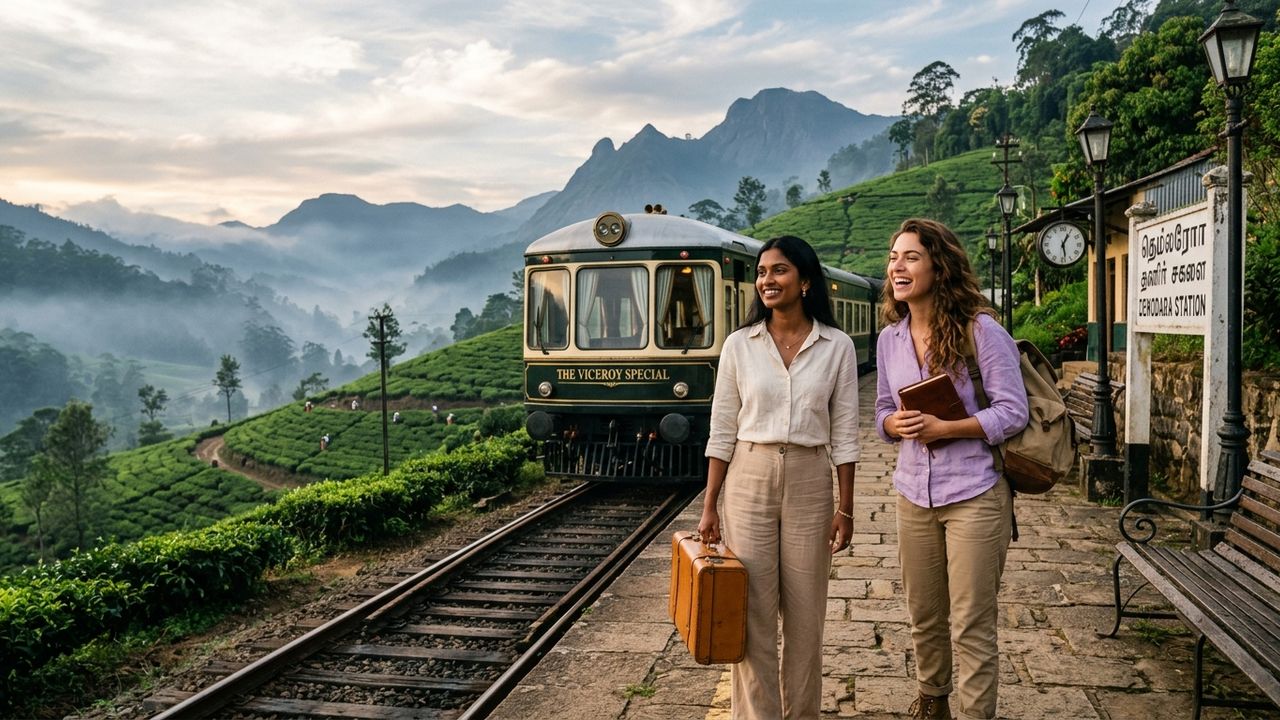
Image generated by AI
Colombo, June 22, 2026 —
Sri Lanka’s Department of Railways is executing a major strategic overhaul of the historic Peradeniya to Badulla corridor, transforming a century-old colonial track into a premium slow-travel destination. Following catastrophic damage from the 2025 Ditwah cyclonic storm, authorities are redirecting hundreds of billions of rupees in restoration funding toward a public-private partnership model that will reposition the Uva Railway as a high-value luxury tourism asset. The initiative aims to preserve vital mountain connectivity while generating sustainable revenue through a network of retrofitted mobile hospitality carriages and scenic evening sidings at Nanu Oya, Ella, and Bandarawela.
Colonial Engineering Constraints and Modern Infrastructure Pressures
The 1924 Uva Railway line was originally engineered by British colonial officials to transport agricultural goods through rugged terrain, prioritizing steep gradient negotiation over transit velocity. Decades of heavy usage have exposed fundamental design limitations, with modern operations capped at an average speed of just 26.5 kilometers per hour. This sluggish pace has severely diminished the route’s competitiveness against Sri Lanka’s rapidly expanding highway network. Compounding the operational inefficiencies, the infrastructure has proven highly vulnerable to climate extremes. The 2025 Ditwah cyclonic storm triggered widespread landslides and severe track subsidence across the central highlands, leaving hundreds of sections requiring intensive stabilization. Industry observers note that the fiscal burden of maintaining century-old track geometry has become unsustainable for a state-run system already operating at a deficit.
Luxury Moving Hotel Concept Redefines Sri Lanka Mountain Transit
To prevent the heritage corridor from facing permanent obsolescence, transportation planners are implementing a radical shift toward experiential slow travel. Drawing operational frameworks from global luxury rail networks and regional inland waterway tourism, the revised strategy envisions the Uva line as a series of mobile hospitality units rather than a conventional commuter route. Rolling stock would undergo extensive retrofitting to create high-end, climate-controlled suites equipped with contemporary amenities that complement the surrounding highland scenery. Service schedules would pivot entirely toward leisure pacing, allowing passengers to traverse the mountain passes at a deliberate, immersive tempo. Evening operations would see trains diverted into secure, picturesque sidings at Nanu Oya, Ella, and Bandarawela, transforming these junctions into protected overnight hubs. Travelers would utilize private transfer services for daytime excursions to local waterfalls, tea processing facilities, and cultural landmarks, returning to stationary carriages for evening dining and lodging. This operational redesign effectively converts the route’s historical speed limitations into a defining feature of an exclusive hospitality product.
Public-Private Partnership Framework Addresses Sri Lanka Railway Funding Gaps
Persistent annual operational deficits within the national railway sector have forced infrastructure officials to explore alternative financing structures. A public-private partnership model has emerged as the most viable mechanism for executing the required upgrades without compromising public access. Under this arrangement, the state would maintain full ownership of the rail corridors and adjacent land parcels, preserving the route as a sovereign transportation asset. Private sector investors would assume responsibility for capital-intensive rolling stock modernization, advanced track maintenance protocols, and international marketing campaigns targeting affluent international visitors. Revenue generated from premium ticket pricing would function as a cross-subsidy mechanism, supporting broader network operations while safeguarding standard-class commuter services. This dual-purpose structure ensures that daily travelers in the Uva and Central provinces retain reliable transportation access while the corridor simultaneously attracts high-yield tourism capital.
Engineering Restoration and Electrification Priorities Shape Uva Railway Future
Post-storm recovery efforts are currently concentrated on the Nanu Oya to Badulla stretch, where engineering crews are conducting essential structural repairs. Government transport authorities are simultaneously evaluating long-term modernization pathways that align with national electrification targets for suburban networks. Highland route rejuvenation remains a separate, specialized track requiring dedicated funding streams that bypass conventional maintenance budgets. Officials emphasize that the Uva line operates beyond standard transit metrics, functioning as a cultural landmark and economic catalyst for mountain communities. Transitioning the corridor into a privately managed luxury experience would convert a persistent financial liability into a globally recognized tourism attraction. This strategic realignment would prevent track abandonment while stimulating regional economic activity across the Uva and Central provinces. Industry analysts project that sustained private investment in highland rail infrastructure could establish a replicable model for heritage corridor revitalization across South Asia.
Economic and Tourism Impact Assessment Drives Regional Development Strategy
The proposed transformation carries significant implications for Sri Lanka’s broader tourism ecosystem. By shifting the Uva Railway from a subsidized commuter utility to a premium hospitality experience, the national economy stands to capture higher per-capita tourism revenue without expanding airport capacity or coastal resort infrastructure. Premium rail tourism typically generates substantial ancillary spending in local economies, including boutique accommodations, guided excursions, regional cuisine, and artisanal retail. The preservation of standard-class services guarantees that rural populations maintain uninterrupted access to medical facilities, educational institutions, and commercial markets in the lowlands. Furthermore, the introduction of private capital for track stabilization reduces direct pressure on government treasury allocations, allowing public funds to be redirected toward critical suburban electrification projects. If executed effectively, the initiative could position Sri Lanka as a leading destination for heritage rail tourism in the Indian Ocean region, attracting visitors who prioritize sustainable, low-impact travel experiences.
The Uva Railway stands at a decisive infrastructure crossroads where historical preservation meets modern economic strategy. Successful implementation of the proposed public-private framework will determine whether the corridor evolves into a globally benchmarked luxury tourism product or faces gradual decommissioning. Engineering crews continue stabilizing weather-damaged sections while transportation planners finalize operational blueprints for the mobile hospitality model. As private investment commitments solidify and regional tourism demand rebounds, the rhythmic transit through Sri Lanka’s central highlands may soon operate under a completely transformed commercial paradigm. The outcome will directly influence regional economic resilience, heritage conservation standards, and the future trajectory of sustainable mountain transit across South Asia.
Sri Lanka pivots the Uva Railway to luxury tourism through a public-private partnership, transforming the historic Peradeniya to Badulla route into a premium slow-travel destination.
Related Travel Guides
Disclaimer
This article is for informational and educational purposes only. It does not constitute legal, financial, or professional advice. While we strive to provide accurate and up-to-date information, travel policies, regulations, and conditions change rapidly. Always verify information with official sources before making travel decisions. Nomad Lawyer makes no representations about the accuracy, reliability, completeness, or suitability of the information provided. Readers should consult qualified professionals for advice specific to their circumstances. The views expressed in this article are those of the author and do not necessarily reflect the views of Nomad Lawyer.
Kunal K Choudhary
Co-Founder & Contributor
A passionate traveller and tech enthusiast. Kunal contributes to the vision and growth of Nomad Lawyer, bringing fresh perspectives and driving the community forward.
Learn more about our team →