
Republic of Congo Tourism Growth 2026: Odzala, Nouabalé-Ndoki and Brazzaville Drive Rainforest Safaris
The Republic of Congo is expanding its high-end ecotourism sector, leveraging the biodiversity of Odzala-Kokoua and Nouabalé-Ndoki to attract specialist wildlife travelers in 2026.

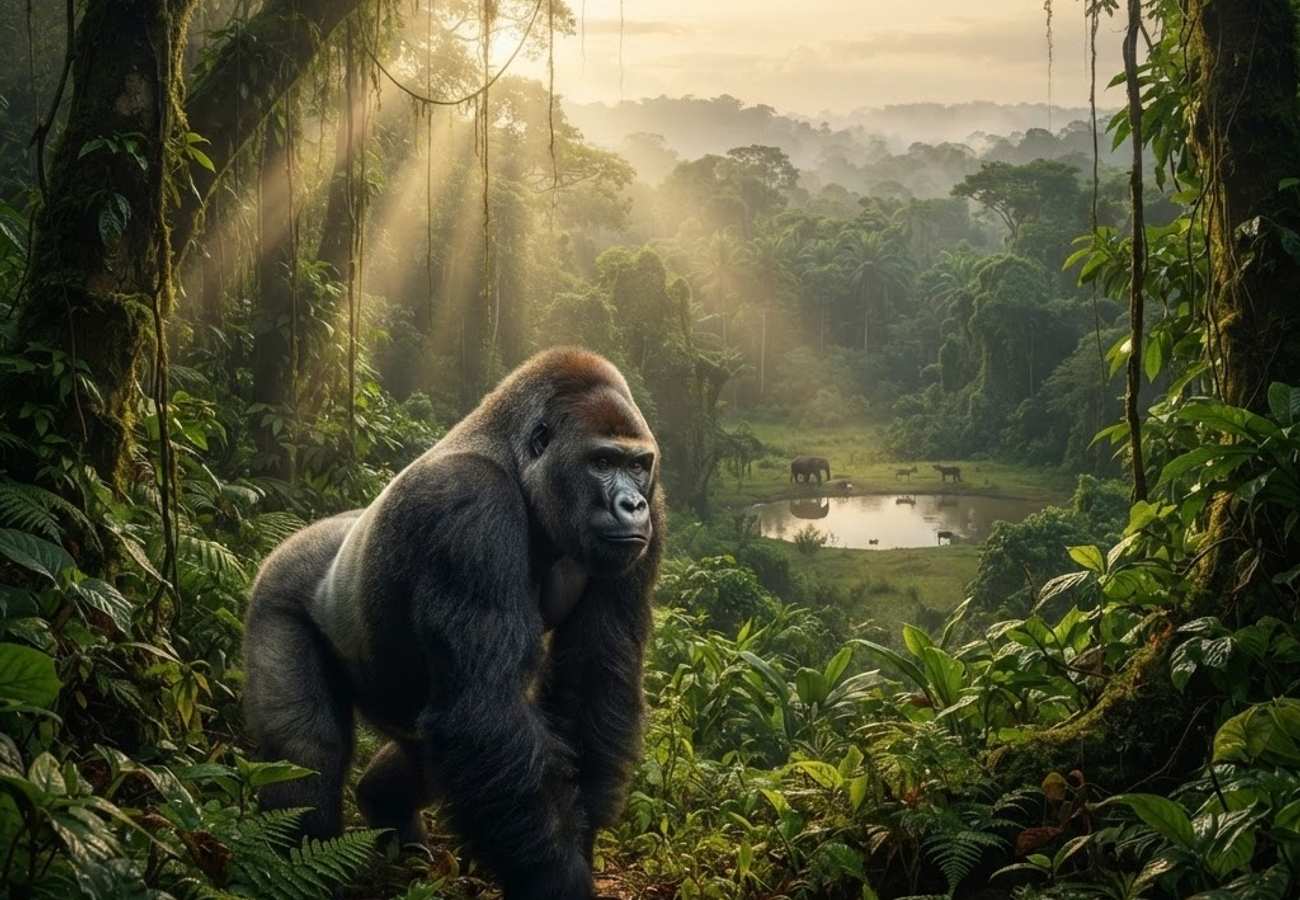
Image generated by AI
The Republic of Congo is aggressively repositioning itself as a premier global destination for rainforest safaris, utilizing the biodiversity of Brazzaville, Odzala-Kokoua, and Nouabalé-Ndoki to attract high-value, low-impact tourism. By focusing on the unique ecosystems of the Congo Basin, the nation is distinguishing its travel product from the traditional grassland savannahs found in East and Southern Africa.
While many African destinations rely on the "Big Five" in open plains, Congo-Brazzaville is capitalizing on its dense tropical rainforests, offering specialized experiences such as western lowland gorilla tracking and river-based expeditions. This strategic shift focuses on three primary hubs: the urban center of Brazzaville and the protected wildernesses of the Sangha region.
Odzala-Kokoua National Park Leads Gorilla Tracking Efforts
Spanning more than 13,000 square kilometres, Odzala-Kokoua National Park has emerged as a cornerstone of Central African rainforest tourism. The park is a complex mosaic of tropical forests, wetlands, and savannahs, providing a critical sanctuary for western lowland gorillas and forest elephants.
Unlike the mountain gorilla trekking common in Rwanda or Uganda, the experience in Odzala-Kokoua is defined by the challenges of the lowland terrain. Tracking western lowland gorillas requires navigating thick vegetation and relying heavily on the expertise of guides to interpret subtle signs in the forest. This creates a more unpredictable and authentic wildlife encounter, appealing to specialist travelers who prioritize patience and ecological interpretation over guaranteed sightings.
Nouabalé-Ndoki and the Significance of Mbeli Bai
Nouabalé-Ndoki National Park serves as a vital pillar of the country's ecotourism framework and is a key component of the Sangha Trinational World Heritage site. The park is globally recognized for its pristine forest cover and the successful long-term monitoring of chimpanzees and forest elephants.
A primary draw for visitors is Mbeli Bai, a natural forest clearing. These "bais" are mineral-rich zones that attract diverse wildlife seeking nutrients not found in the surrounding dense forest. At Mbeli Bai, observers can watch forest elephants and other species from raised platforms, providing a controlled yet intimate view of animal behavior in a habitat where visibility is usually limited.
Integrating the Congo and Sangha Rivers into Travel Itineraries
Waterways are becoming central to the Republic of Congo's tourism logistics. The Congo River and the Sangha River function as natural highways, allowing travelers to access remote areas that would otherwise be unreachable.
River cruises offer a slower, more panoramic perspective of the rainforest, complementing the physical intensity of land-based trekking. The Sangha River is particularly strategic, as it links the protected areas of the Republic of Congo with neighboring Cameroon and the Central African Republic. This connectivity allows for the creation of ambitious, multi-country Congo Basin itineraries, provided travelers secure the necessary cross-border permits and employ specialist operators.
Boutique Expedition Models and Luxury River Travel
Given the remoteness of the interior, the Republic of Congo is avoiding mass tourism in favor of boutique, small-scale expeditions. These tailored journeys integrate high-end accommodation with guided wildlife activities.
One prominent example of this model is the Princesse Ngalessa, an expedition vessel designed for navigating the Congo Basin's waterways. By combining river-based exploration with land excursions, operators can provide a comprehensive experience of the rainforest. This approach is specifically designed for long-haul international visitors who wish to maximize their time in Central Africa by linking the capital city with deep-forest reserves.
Brazzaville as the Strategic Urban Entry Point
Brazzaville functions as the primary gateway for all international arrivals. Rather than being a mere transit point, the capital is being promoted as a cultural destination in its own right. Visitors can explore local markets, museums, and the riverside landscape before venturing into the interior.
This creates a bifurcated travel experience: an initial urban immersion in Brazzaville followed by a transition into the wild landscapes of the Sangha region. This structure allows travelers to understand the cultural context of the nation before engaging with its conservation efforts.
Conservation-Driven Tourism Economics
The tourism model in the Republic of Congo is inextricably linked to environmental preservation. The value of Odzala-Kokoua and Nouabalé-Ndoki is derived entirely from the health of their ecosystems.
Revenue generated from specialist tourism is funneled back into conservation, creating local employment and providing an economic incentive to prevent deforestation. Initiatives like the Congo Basin Forest Fund have been instrumental in strengthening local community participation in wildlife protection. For the visitor, this necessitates a "responsible travel" approach, involving strict adherence to guide protocols and minimal interference with wildlife.
Summary of the Congo-Brazzaville Tourism Network
The current growth of the sector is built upon five complementary pillars:
| Destination/Feature | Primary Travel Experience | Key Wildlife/Attractions |
|---|---|---|
| Brazzaville | Urban & Cultural | Museums, Markets, Congo River views |
| Odzala-Kokoua | Rainforest Trekking | Western Lowland Gorillas, Primates |
| Nouabalé-Ndoki | Biodiversity Observation | Forest Elephants, Mbeli Bai |
| Sangha River | Regional Connectivity | Cross-border exploration, River cruises |
| Congo River | Waterborne Transit | Logistics link between capital and interior |
Why This Matters: The Shift Toward Specialist Ecotourism
For the modern traveler, the rise of the Republic of Congo as a destination represents a shift away from "checklist tourism" toward "experience-driven exploration." From a logistical standpoint, the reliance on boutique operators and river vessels means that travel here is more complex and expensive than a standard safari, but it offers a level of exclusivity and ecological depth that is disappearing in more crowded African parks.
From a legal and conservation perspective, this model proves that high-value tourism can act as a shield for biodiversity. By making a living gorilla or a standing rainforest more valuable than poached meat or timber, the Republic of Congo is using tourism as a primary tool for national preservation.
The Republic of Congo is transforming from a hidden gem into a structured sanctuary for the world's most dedicated wildlife enthusiasts.
Related Travel Guides
Disclaimer
This article is for informational and educational purposes only. It does not constitute legal, financial, or professional advice. While we strive to provide accurate and up-to-date information, travel policies, regulations, and conditions change rapidly. Always verify information with official sources before making travel decisions. Nomad Lawyer makes no representations about the accuracy, reliability, completeness, or suitability of the information provided. Readers should consult qualified professionals for advice specific to their circumstances. The views expressed in this article are those of the author and do not necessarily reflect the views of Nomad Lawyer.
Kunal K Choudhary
Co-Founder & Contributor
A passionate traveller and tech enthusiast. Kunal contributes to the vision and growth of Nomad Lawyer, bringing fresh perspectives and driving the community forward.
Learn more about our team →