
Republic Airways Operated Delta Flight RPA5675 Diverts to Bradley International Airport in 2026
Republic Airways operated Delta Air Lines Flight RPA5675 diverted from John Glenn Columbus to Bradley International Airport on August 5, 2026, highlighting the critical role of regional hubs during operational disruptions.

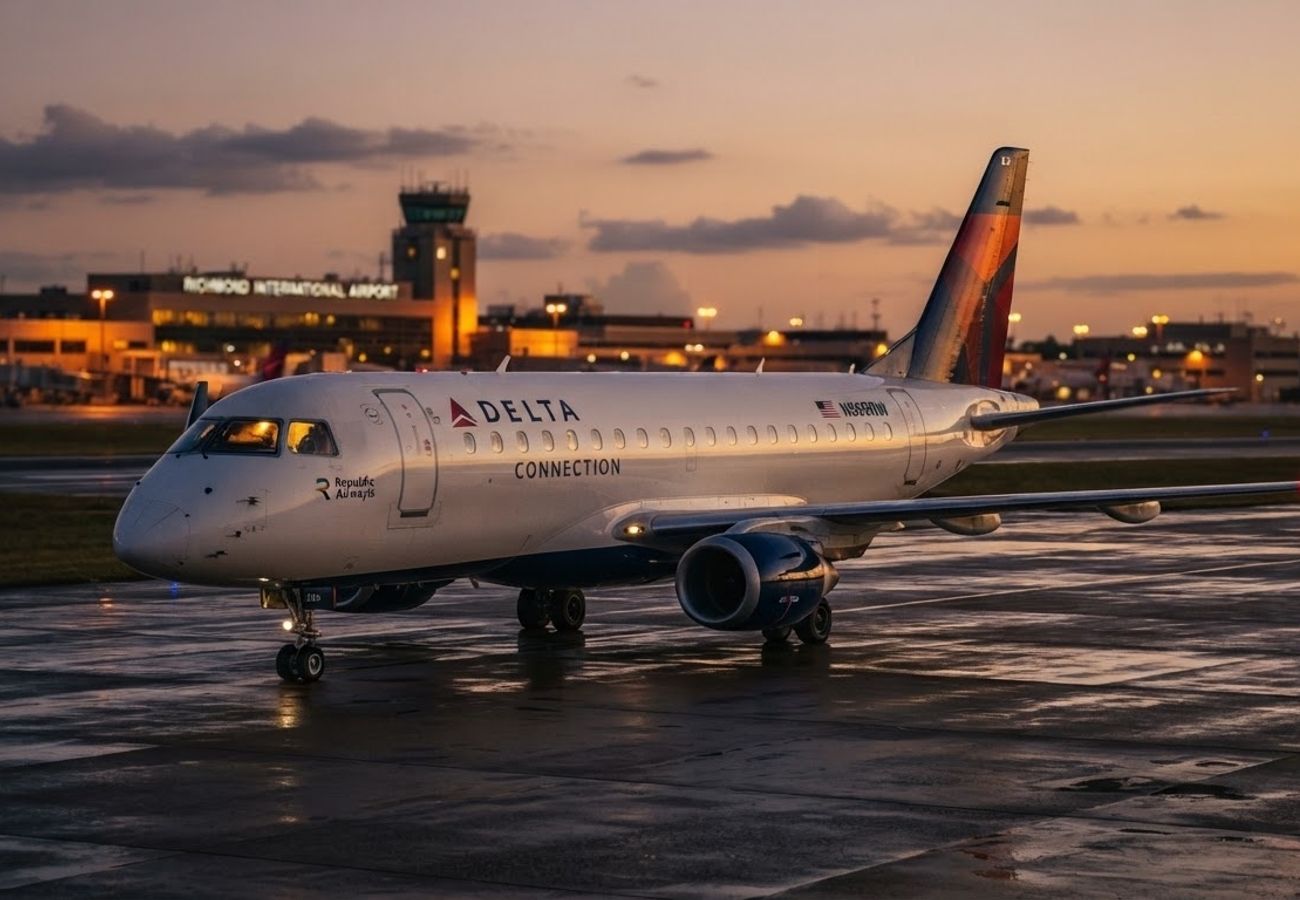
Image generated by AI
A Republic Airways operated Delta Air Lines flight from Columbus to New York diverted to Connecticut on August 5, 2026, due to an unspecified operational disruption.
The flight, designated as RPA5675, was operating an Embraer 170/175 aircraft. Originally scheduled to connect John Glenn Columbus International Airport (CMH) with New York LaGuardia Airport (LGA), the aircraft landed at Bradley International Airport (BDL) in Windsor Locks, Connecticut.
The diversion occurred during the evening hours of August 5. While the aircraft landed safely, the deviation from the planned flight path forced a repositioning of passengers and resources.
Flight Operational Data
The following specifics detail the flight's scheduled versus actual movements:
- Flight Number: RPA5675
- Operator: Republic Airways (for Delta Air Lines)
- Aircraft Type: Embraer 170/175
- Registration: N878RW
- Departure Point: John Glenn Columbus International Airport (CMH)
- Intended Destination: New York LaGuardia Airport (LGA)
- Diversion Point: Bradley International Airport (BDL)
- Scheduled Departure: Approximately 5:30 PM
- Scheduled Arrival (LGA): 9:46 PM
- Actual Landing (BDL): 7:28 PM
Diversion Logistics and Passenger Impact
The exact catalyst for the diversion has not been officially confirmed by Delta Air Lines or Republic Airways. Standard aviation protocols suggest several likely triggers for such a move:
- Medical Emergencies: On-board health crises requiring immediate hospital access.
- Technical Faults: Mechanical issues requiring immediate inspection.
- Weather Constraints: Severe conditions or visibility issues at LaGuardia.
- ATC Restrictions: Air traffic control mandates in the congested New York airspace.
For the passengers on board, the landing at Bradley International Airport meant arriving significantly far from their intended destination in New York City. This typically necessitates airline-coordinated ground transportation or revised ticketing to reach LGA or JFK.
The Strategic Role of Bradley International (BDL)
Bradley International Airport serves as a vital relief valve for the Northeast aviation corridor. Its infrastructure is specifically suited for regional jets like the Embraer E170. By providing a safe landing site outside the immediate congestion of the New York metropolitan area, BDL allows flight crews to address operational issues without blocking runways at primary hubs.
Operational Impact Analysis
| Factor | Impact Level | Detail |
|---|---|---|
| Passenger Schedule | High | Missed connections and required ground transport from CT to NY |
| Aircraft Rotation | Medium | N878RW required repositioning before returning to scheduled service |
| Crew Hours | Medium | Potential for crew duty-time limitations due to diversion delay |
| Network Stability | Low | Handled via standard diversion protocols without systemic failure |
Why This Matters
From a logistical perspective, this incident underscores the fragility of the "spoke-and-hub" model in the Northeast. When a flight like RPA5675 is forced to divert, the impact ripples beyond the passengers on that specific aircraft.
For travelers on this route, the real impact is the reliance on "relief airports." Our analysis of the route map suggests that without high-capacity regional alternatives like Bradley, a technical or weather-related issue at LaGuardia could lead to airborne holding patterns that exhaust fuel reserves and increase risk.
Furthermore, the use of regional partners like Republic Airways to feed Delta's hubs means that any disruption in the regional fleet requires tight coordination between two different corporate entities to manage passenger recovery.
Industry Outlook
Market trends suggest that as New York airspace becomes increasingly congested, we will see a higher frequency of "preemptive diversions" to airports like BDL to avoid the costly delays associated with LGA's limited runway capacity. Airlines are likely to invest more in integrated ground transport partnerships to streamline the passenger experience when these diversions occur.
Safe landings are the priority, but the operational cost of diversion remains a significant challenge for regional carriers.
Related Travel Guides
Disclaimer
This article is for informational and educational purposes only. It does not constitute legal, financial, or professional advice. While we strive to provide accurate and up-to-date information, travel policies, regulations, and conditions change rapidly. Always verify information with official sources before making travel decisions. Nomad Lawyer makes no representations about the accuracy, reliability, completeness, or suitability of the information provided. Readers should consult qualified professionals for advice specific to their circumstances. The views expressed in this article are those of the author and do not necessarily reflect the views of Nomad Lawyer.
Preeti Gunjan
Contributor & Community Manager
A passionate traveller and community builder. Preeti helps grow the Nomad Lawyer community, fostering engagement and bringing the reader experience to life.
Learn more about our team →