
Mountains, Mangroves, and Terracotta Dunes: How Ras Al Khaimah and Emirates Are Opening the UAE’s Northern Frontier

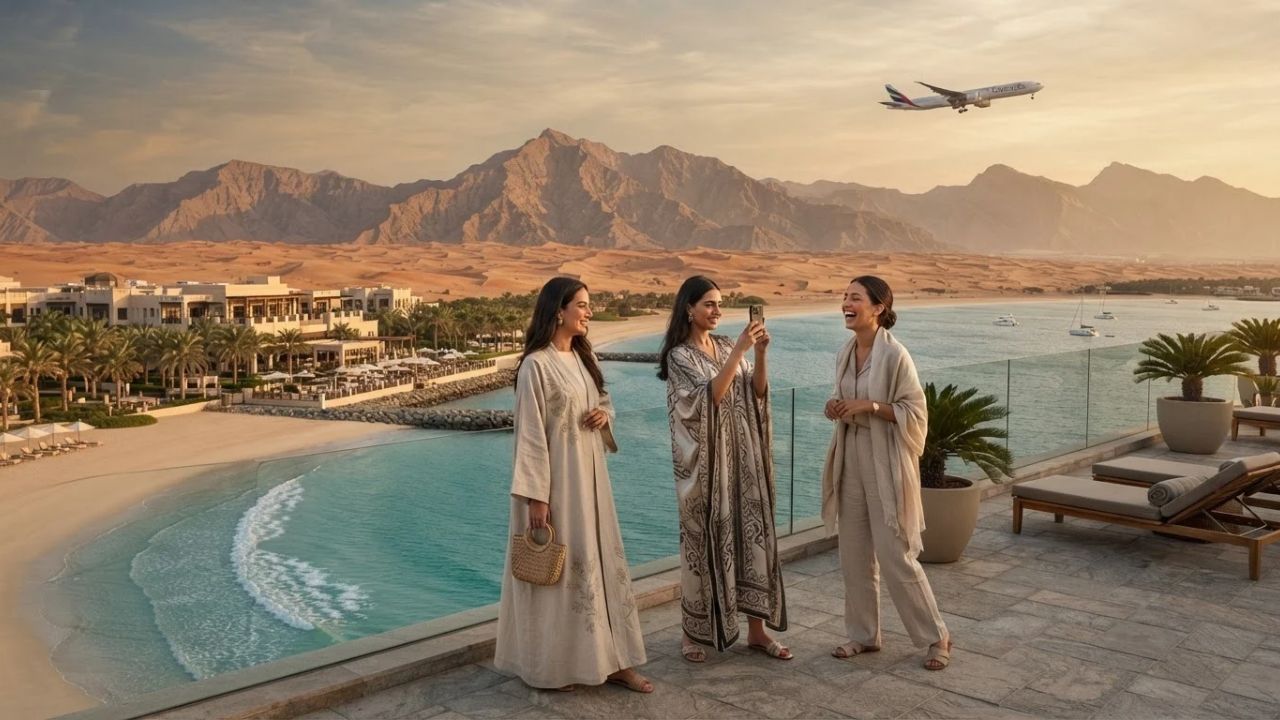
While neighboring Dubai captivates the world with futuristic sky-piercing towers and manufactured islands, the United Arab Emirates' northernmost emirate, Ras Al Khaimah, guards more than 7,000 years of uninterrupted human civilization cradled between the jagged cliffs of the Hajjar Mountains and glowing terracotta desert sands. After achieving its most successful first half in history—welcoming more than 670,000 visitors between January and June 2026 alongside a remarkable 47 per cent year-on-year surge in domestic arrivals—the Ras Al Khaimah Tourism Development Authority has inked a landmark alliance with Emirates airline to channel high-value international travelers directly into its rugged natural sanctuaries.
For decades, international travelers treated Ras Al Khaimah as an afterthought or a brief day-trip add-on to a Dubai stopover. That limited perception is rapidly ending. Driven by record-breaking lodging revenues and an appetite for authentic cultural depth, the emirate is positioning its diverse terrain—ranging from ancient coral-stone ghost villages and mangrove lagoons to alpine mountain peaks—as a premier standalone destination. By leveraging Emirates’ extensive global route network, the northern emirate is shifting from short-term weekend domestic getaways toward sustained, multi-day journeys that celebrate Arabia's untamed spirit.
The Global Pivot: RAKTDA and Emirates Target Long-Haul Travelers
The formal Memorandum of Understanding signed between the Ras Al Khaimah Tourism Development Authority (RAKTDA) and Emirates Airline marks a strategic evolution for the emirate's hospitality sector. The commercial rationale behind the agreement is grounded in empirical economic realities.
During the initial six months of 2026, the emirate’s hospitality sector delivered unprecedented performance, recording over 670,000 arrivals to establish the strongest first half on record. Domestic travel drove significant growth, supported by targeted seasonal initiatives such as the RAK Moments campaign, which single-handedly generated Dh104.4 million in room revenue across 224,000 room nights. In a testament to accelerating momentum, May 2026 initially established an all-time monthly benchmark for visitor footfall, only to be surpassed by an even stronger influx in August 2026.
However, analytical observations revealed a persistent structural limitation: domestic travelers typically stay for brief one- or two-night weekend breaks, generating lower overall revenue per visit compared to long-haul international vacationers. By partnering directly with Emirates, RAKTDA intends to bridge international travelers directly from Europe, the Americas, and Asia into Ras Al Khaimah. Synchronized promotional campaigns and joint air-hotel booking packages will showcase upcoming luxury beachfront resorts, world-class mountain adventure facilities, and archaeological landmarks, encouraging travelers to undertake week-long stays that weave coastal relaxation with desert and mountain expeditions.
What Makes Ras Al Khaimah Unique in the Arabian Peninsula
Ras Al Khaimah presents an environmental and historical identity fundamentally distinct from its metropolitan neighbors. As the northernmost territory of the UAE, the emirate benefits from a dramatic geological convergence where jagged limestone mountains meet coastal mangrove creeks and deep-red sand dunes.
Rising directly behind the coastline are the Hajjar Mountains, an ancient ophiolite mountain chain that forms the spine of the Musandam Peninsula. At its apex sits Jebel Jais, the highest mountain peak in the United Arab Emirates at 1,934 meters above sea level. Here, alpine temperatures consistently hover ten degrees Celsius cooler than the coastal plains, creating a refreshing mountain microclimate where mountain switchbacks twist past sheer canyon walls and wadis.
Culturally, Ras Al Khaimah preserves an unbroken continuum spanning seven millennia. Inscribed on the UNESCO World Heritage Tentative List, the emirate is home to four extraordinary archaeological sites: Julfar, an ancient medieval trading port; Shimal, home to Bronze Age circular tombs; Dhayah Fort, a 19th-century mud-brick hilltop fortress that served as the last line of defense during the 1819 battle against British naval forces; and Al Jazirah Al Hamra, the only surviving pearling town along the Persian Gulf left undisturbed by modern urbanization.
Strolling through Al Jazirah Al Hamra reveals silent stone lanes lined with hundreds of authentic coral-stone residences, windtowers, and merchant courtyards, abandoned during the mid-20th-century oil boom. Contrast this historical weight with the azure waters of the Arabian Gulf, where the Suwaidi Pearl Farm in Al Rams preserves traditional freediving maritime techniques, and Ras Al Khaimah reveals a layered character that modern megacities cannot recreate.
Visitor Insider Tips: Navigating Ras Al Khaimah, Jebel Jais, and Desert Camps
Experiencing Ras Al Khaimah through the eyes of an insider requires understanding local geography, elevation shifts, and cultural traditions. Supported by insights from Visit Ras Al Khaimah, these practical strategies ensure seamless exploration.
- Bypass Regional Airport Transfers via Direct Express Routes: Traveling to Ras Al Khaimah does not require landing at a local regional airfield. Fly into Dubai International Airport (DXB) aboard Emirates and take advantage of direct highway connectivity. Driving north along the smooth E311 (Sheikh Mohammed Bin Zayed Road) or Emirates Road whisks you into downtown Ras Al Khaimah in just 45 to 60 minutes, bypassing urban congestion.
- Ascend Jebel Jais at Sunrise: If you plan to hike the Jebel Jais mountain trails or ride the Jais Flight—recognized as the world's longest zipline, hurtling riders across mountain canyons at speeds exceeding 120 km/h—schedule your arrival for early morning before 8:30 AM. Dawn light illuminates the limestone gorges in iridescent pink and gold hues, and you avoid the midday desert heat and domestic weekend traffic that fills mountain viewing decks on Friday afternoons.
- Base Yourself Between Coastal Sands and Desert Dunes: Maximize your itinerary by splitting your lodging. Spend two nights on the artificial archipelago of Al Marjan Island, relaxing on private white-sand beaches with calm turquoise surf, then transfer inland to the protected desert reserves of Wadi Khadeja. Staying in a luxury Bedouin-style tented villa surrounded by free-roaming Arabian oryx and desert gazelles offers absolute acoustic stillness beneath star-filled night skies.
- Indulge in Authentic Emirati Maritime Flavors: Bypass standardized hotel international buffets and seek out local dining along the Al Rams corniche. Savor traditional Emirati madrooba (slow-cooked chicken mashed with cracked wheat and aromatic Gulf spices), or order freshly caught coastal hamour (grouper) and kingfish grilled over open coals and served with fragrant saffron-spiced rice (machboos).
- Respect Historical and Religious Etiquette in Heritage Quarters: When exploring Al Jazirah Al Hamra or climbing the steep stone steps of Dhayah Fort, dress modestly with shoulders and knees covered out of respect for local community customs. Wear sturdy hiking shoes with solid grip; ancient coral stones and unpaved mountain paths can be jagged and loose underfoot.
Cultural and Environmental Context: Conserving Arabia’s Ecological and Architectural Soul
As Ras Al Khaimah expands its international tourism capacity, municipal leaders face the responsibility of protecting the emirate’s fragile ecosystems and architectural relics. The rapid development of coastal resorts, such as those expanding across Al Marjan Island, is being managed under rigorous environmental standards designed to safeguard coastal mangrove ecosystems that shelter nesting flamingos, herons, and juvenile marine life.
In the mountains, conservation bodies actively protect the Jebel Jais nature reserve, monitoring endangered fauna including the rare Arabian tahr (a wild mountain goat endemic to the Hajjar range), caracals, and desert foxes. Ecotourism infrastructure, including mountain hiking paths and via ferrata climbing routes, is engineered with low-impact materials that prevent topsoil erosion and protect vulnerable cliff-side flora.
Equally vital is the ongoing restoration of cultural monuments. The multi-year conservation of Al Jazirah Al Hamra and Dhayah Fort utilizes traditional coral stone, mud bricks, and palm-wood armatures rather than modern concrete, preserving historical integrity while creating educational spaces for future generations.
By partnering with Emirates to attract mindful global travelers who appreciate heritage, conservation, and outdoor adventure, Ras Al Khaimah is charting an enlightened path forward. The emirate demonstrates that true progress in the Gulf is achieved not by erasing the past, but by holding it up as an enduring compass for the future.
FAQ: Visiting Ras Al Khaimah 2026
How far is Ras Al Khaimah from Dubai International Airport? Ras Al Khaimah is located approximately 85 kilometers north of Dubai International Airport, taking roughly 45 to 60 minutes by highway transfer or private vehicle along the modern E311 highway.
What is the best time of year to visit Ras Al Khaimah? October through April provides ideal weather, with pleasant daytime temperatures around 24°C to 28°C, perfect for beach relaxation, desert safaris, and mountain trekking on Jebel Jais.
What makes Jebel Jais famous for adventure travelers? Jebel Jais is the highest peak in the UAE, featuring the Jais Flight (the world's longest zipline), a scenic mountain coaster, rugged via ferrata climbing routes, and dramatic mountain viewing decks.
Do visitors need a separate visa to visit Ras Al Khaimah from Dubai? No. Ras Al Khaimah is one of the seven emirates of the United Arab Emirates, so a single standard UAE tourist visa covers entry across all emirates without border checkpoints.
Where the limestone peaks kiss the desert dawn, Ras Al Khaimah opens a timeless portal into the ancient, untamed heart of Arabia.
Related Travel Guides
Disclaimer
This article is for informational and educational purposes only. It does not constitute legal, financial, or professional advice. While we strive to provide accurate and up-to-date information, travel policies, regulations, and conditions change rapidly. Always verify information with official sources before making travel decisions. Nomad Lawyer makes no representations about the accuracy, reliability, completeness, or suitability of the information provided. Readers should consult qualified professionals for advice specific to their circumstances. The views expressed in this article are those of the author and do not necessarily reflect the views of Nomad Lawyer.
Raushan Kumar
Founder & Lead Developer
Full-stack developer with 11+ years of experience and a passionate traveller. Raushan built Nomad Lawyer from the ground up with a vision to create the best travel and law experience on the web.
Learn more about our team →