
Best Budget Airlines in the US 2026: Ranking Low-Cost Carriers by Total Value and Hidden Fees
An analysis of the best budget airlines in the US for 2026, evaluating total value beyond base fares to identify the most cost-effective low-cost carriers.

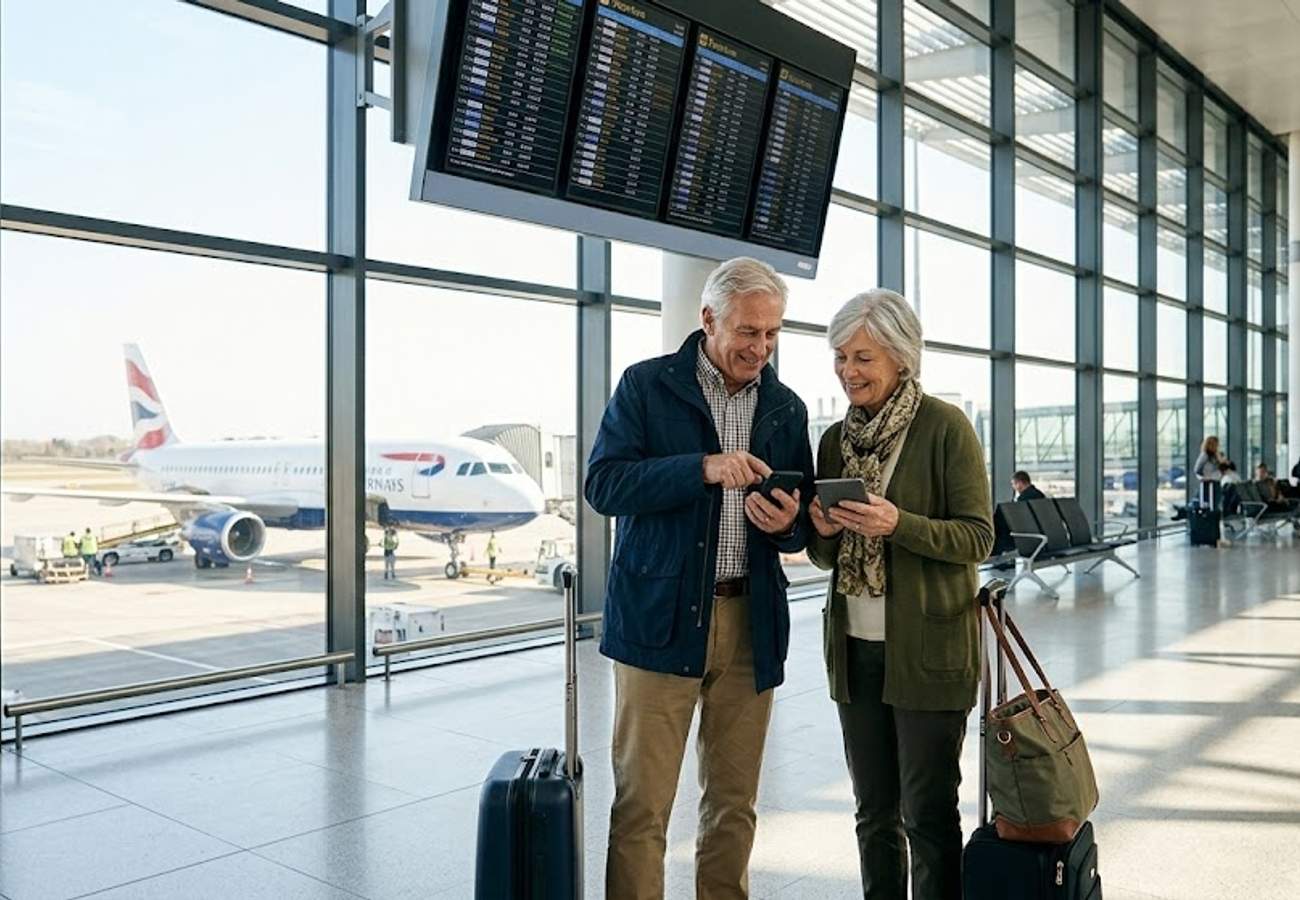
Image generated by AI
[City, Date] — Air travel affordability in the United States is currently defined by a complex "unbundled" pricing war, where the lowest advertised ticket price rarely represents the final cost of a journey. As of 2026, the gap between base fares and total trip expenses has widened, with add-ons for carry-on luggage and seat selection often doubling the initial price.
To determine which carriers actually provide the best value, industry data—including U.S. Department of Transportation customer service metrics, fleet reliability reports, and route network efficiency—has been analyzed. This evaluation moves beyond "sticker price" to identify which budget airlines offer the most transparent pricing and the most efficient connections for modern travelers.
Sun Country Airlines Targets Seasonal Vacationers
Sun Country Airlines has carved out a specific niche as a hybrid budget carrier, focusing heavily on the leisure market. Operating primarily from Terminal 2 at Minneapolis–Saint Paul International Airport (MSP), the airline maintains a network of over 100 destinations across the Caribbean, Central America, Mexico, and the United States.
Unlike legacy carriers that maintain rigid daily schedules, Sun Country dynamically adjusts its route map to align with peak seasonal demand. This strategy allows passengers in smaller Midwestern cities—such as Green Bay, Milwaukee, and Duluth—to access vacation hotspots like Phoenix, Orlando, and Cancún via direct flights, bypassing the congestion of major connecting hubs.
The airline utilizes an all-Boeing 737 fleet. While the pricing is unbundled—meaning seats are the only thing included in the base fare, with bags and seat assignments costing extra—Sun Country distinguishes itself from ultra-low-cost competitors by offering complimentary non-alcoholic beverages, free entertainment streaming to personal devices, and in-seat power outlets on the majority of its aircraft.
Frontier Airlines Dominates Ultra-Low Base Pricing
For travelers who prioritize the absolute lowest entry price and travel with minimal luggage, Frontier Airlines remains a primary choice. Based in Denver, the carrier has expanded its reach by absorbing eight routes previously managed by Spirit Airlines, now serving more than 100 destinations across the U.S., Central America, Mexico, and the Caribbean.
Frontier operates one of the most fuel-efficient and youngest fleets in the domestic market, consisting exclusively of Airbus A321neo and A320neo models. The airline has shifted its pricing strategy toward a tiered bundle system (Basic, Premium, Economy, and Business), which removes change and cancellation fees for direct bookings. High-tier passengers can opt for UpFront Plus, which provides guaranteed empty middle seats and increased legroom.
The base fare is strictly limited to a single personal item that fits under the seat. Fees for overhead bins and checked bags are substantial if not prepaid. However, for the high-frequency traveler, the GoWild! All-You-Can-Fly Pass provides a flat annual fee for unlimited confirmed flights, excluding taxes. User reports suggest that when expectations are managed regarding paid extras, the point-to-point efficiency of Frontier often outperforms larger legacy carriers in terms of cost-to-value ratio.
Breeze Airways Bridges Regional Gaps with Premium Comfort
Launched in 2021 by David Neeleman, Breeze Airways attempts to disrupt the budget sector by combining low costs with a more refined passenger experience. The carrier avoids the "hub-and-spoke" model, instead focusing on direct non-stop routes between mid-sized cities that are often ignored by major airlines.
Breeze focuses its operations in cities like Norfolk, Providence, Hartford, and Charleston. The fleet relies on the Airbus A220-300, a quiet, modern aircraft featuring a 2-3 seating arrangement in economy, which significantly reduces the likelihood of being assigned a middle seat. Every seat is equipped with power outlets and high-speed Viasat Wi-Fi.
Pricing is categorized into four tiers: No Flex Fare, Nice, Nicer, and Nicest. While the base fare is minimal, the "Nicest" bundle allows passengers to access Breeze Ascent, a premium recliner class that includes priority boarding and complimentary drinks and snacks.
Allegiant Air Optimizes Direct Leisure Routes
Allegiant Air employs a unique operational strategy by bypassing major airports entirely to connect small regional communities with top vacation destinations. Headquartered in Las Vegas, the carrier focuses on "sun-and-sand" routes, allowing travelers to avoid the stress of layovers.
The airline operates primarily out of secondary gateways to keep costs low, including:
- Phoenix–Mesa Gateway Airport (AZA)
- Punta Gorda Airport (PGD)
- St. Pete–Clearwater International Airport (PIE)
- Orlando Sanford International Airport (SFB)
Using a fleet of Boeing 737 MAX and Airbus A320 aircraft, Allegiant keeps base fares extremely low by utilizing a strict unbundled model. Only a small personal item (18 x 14 x 8 inches) is included. Because many of their routes only operate two or three times per week, industry observers suggest that booking baggage and seats online well in advance is the only way to maintain the budget advantage.
Avelo Airlines Reduces Secondary Airport Friction
Since its inception in April 2021, Avelo Airlines has focused on removing the "mega-hub" headache from the budget travel experience. By utilizing Boeing 737 aircraft to connect mid-sized communities via direct, nonstop flights, Avelo avoids the congestion associated with the nation's largest airports.
By targeting secondary airports, Avelo reduces ground time and airport stress for passengers, providing a streamlined alternative for those who prefer a quieter boarding process over the chaos of a major international hub.
Total Value Comparison Matrix
| Airline | Primary Focus | Key Aircraft | Best For | Pricing Model |
|---|---|---|---|---|
| Sun Country | Seasonal Leisure | Boeing 737 | Midwestern Vacationers | Hybrid Unbundled |
| Frontier | Ultra-Low Cost | Airbus A320neo/A321neo | Light Travelers | Tiered Bundles |
| Breeze | Regional Direct | Airbus A220-300 | Mid-Sized City Links | Tiered (Nice/Nicest) |
| Allegiant | Point-to-Point | Airbus A320 / B737 MAX | Small Town to Beach | Strict Unbundled |
| Avelo | Secondary Airports | Boeing 737 | Hub-Avoidance | Ultra-Low Cost |
Impact Analysis: The Shift Toward "A La Carte" Aviation
The rise of these carriers has fundamentally changed how passengers purchase air travel. We have moved from an era of "all-inclusive" ticketing to a "supermarket" model where every amenity—from a carry-on bag to a specific seat—is an additional line item.
For the consumer, this means that the "cheapest" flight on a search engine is often a mathematical illusion. When a traveler adds a carry-on bag and a seat assignment to a Frontier or Allegiant ticket, the final price often converges with a legacy carrier's economy fare. However, the benefit remains in the route availability; carriers like Breeze and Allegiant provide direct access to cities that would otherwise require two or three separate flights and multiple layovers.
Why This Matters: Navigating the Budget Landscape
From a logistical standpoint, the choice of a budget airline should no longer be based on the base fare, but on the "total cost of ownership" for that specific trip. For the traveler, this means calculating the weight of their luggage before clicking "purchase."
If you are a "one-bag" traveler, an ultra-low-cost carrier like Frontier provides an unbeatable price point. However, for families or business travelers, the "bundled" approach of Breeze or the hybrid amenities of Sun Country offer a more predictable financial experience. The real victory for the passenger in 2026 is not the lowest fare, but the elimination of the connecting flight. The ability to fly direct from a regional airport to a vacation destination saves not only money but significant time and mental fatigue.
The era of the "free" flight is over, replaced by a transparent, albeit complex, pay-for-what-you-use system.
Related Travel Guides
Disclaimer
This article is for informational and educational purposes only. It does not constitute legal, financial, or professional advice. While we strive to provide accurate and up-to-date information, travel policies, regulations, and conditions change rapidly. Always verify information with official sources before making travel decisions. Nomad Lawyer makes no representations about the accuracy, reliability, completeness, or suitability of the information provided. Readers should consult qualified professionals for advice specific to their circumstances. The views expressed in this article are those of the author and do not necessarily reflect the views of Nomad Lawyer.
Raushan Kumar
Founder & Lead Developer
Full-stack developer with 11+ years of experience and a passionate traveller. Raushan built Nomad Lawyer from the ground up with a vision to create the best travel and law experience on the web.
Learn more about our team →