
Mexico's Air Network Paralyzed: Volaris and VivaAerobus Suffer Massive Fleet Groundings
Hundreds of highly frustrated travelers are fundamentally stranded across Mexico as sudden, massive operational disruptions generate over 180 severe flight delays from Cancun to Monterrey.

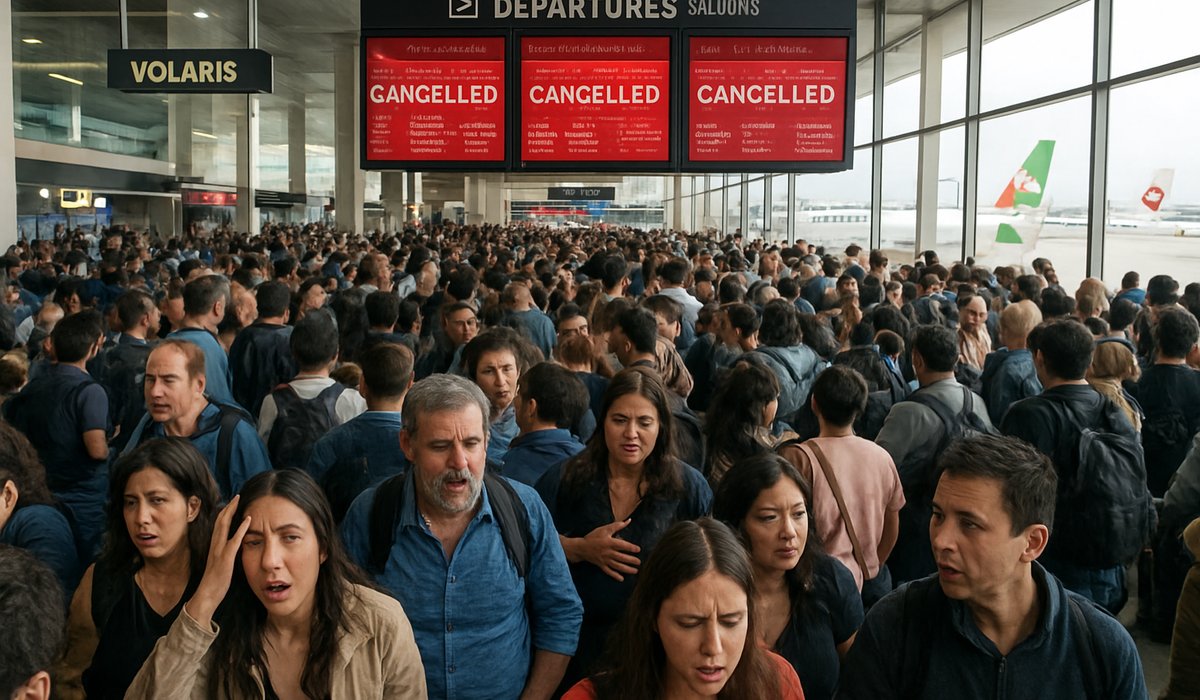
Image generated by AI
Key Latin American Hubs Suffer Relentless Tarmac Friction
Shattering the carefully laid vacation plans of hundreds of international and domestic travelers, the primary commercial aviation network spanning Mexico is currently enduring an intense barrage of simultaneous operational failures, forcing severe delays across Mexico City, Cancun, Guadalajara, and Monterrey. Officially registering at least 24 complete cancellations and a towering 181 massive tarmac delays, the breakdown has heavily crippled the nation's undisputed low-cost titans: Volaris and VivaAerobus.
When the massive Mexican low-cost carrier (LCC) network stumbles, the resulting chaos is immensely difficult to unravel. Because airlines like Volaris operate their fleets on hyper-aggressive, high-frequency "turnaround" schedules to keep ticket prices low, a single 45-minute delay in Monterrey mathematically guarantees that the aircraft will be three hours late by the time it reaches Cancun later that evening. The disruption also heavily caught American legacy carriers specifically executing trans-border hops, dragging United and American Airlines deeply into the logistical mire.
The Vulnerability of Cancun and Mexico City
The true pain of this disruption lies directly in the geographical chokepoints it attacked.
Mexico City International Airport (AICM) operates effectively at its absolute maximum physical capacity every single day. The runway slot laws are incredibly rigid; if a VivaAerobus jet misses its designated takeoff window due to a fleeting mechanical issue or ATC hold, it is forcefully pushed to the very bottom of the departure queue, turning a small delay into a massive three-hour nightmare. Concurrently, Cancun is absorbing the heavy impact directly on the leisure traveler. Tourists attempting to return home to the US or Canada are finding themselves physically locked out of their resort rooms (which they already checked out of) and trapped aimlessly on the incredibly expensive airport concourse.
Decoding the Mexican Disruption
| Airport Under Fire | Primary Carrier Affected | Impact on the Traveler |
|---|---|---|
| Mexico City (MEX) | VivaAerobus / Volaris | Complete logjam of regional domestic transfers |
| Cancun (CUN) | American Airlines / United | Mass stranding of returning international tourists |
| Monterrey (MTY) | Volaris | Essential corporate and industrial commutes severed |
What Guests Get
- Low-Cost Carrier (LCC) Economics — understanding that an incredibly cheap $40 flight on Volaris explicitly means the airline does not possess spare aircraft to rescue you if your plane mathematically breaks down.
- Airport slot mechanics — grasping that highly congested airports like Mexico City legally penalize airlines that miss their runway times, resulting in extreme, cascading delays.
- Disruption psychology — realizing that while a cancelled flight is annoying at home, a canceled international return flight from a resort effectively forces you to scramble for thousands of dollars in emergency hotel costs.
What This Means for Travelers
If you possess an upcoming ticket heavily reliant on Volaris or VivaAerobus: You must maintain extreme digital vigilance. These ultra-low-cost carriers strongly prefer to communicate delays via their centralized mobile apps rather than physical gate agents. Ensure you have roaming data activated on your phone in Mexico, and physically monitor the "Inbound Flight" data on radar apps. If the plane that is supposed to pick you up in Cancun is currently three hours delayed in Guadalajara, do not leave your resort and travel to the airport.
Understand your compensation reality in Mexico: While PROFECO (Mexico's Federal Consumer Protection Agency) does legally mandate specific compensation for heavily delayed flights (ranging from food vouchers to heavy ticket discounts for future travel), securing this compensation requires heavy, aggressive bureaucratic follow-up. Do not expect ground agents to eagerly hand you cash or hotel vouchers at the gate; you must definitively retain every single digital boarding pass and physical receipt to aggressively petition the airline formally after you finally return home.
FAQ: Navigating Mexican Airport Delays
Will a US carrier like United rebook me if my Volaris flight is canceled? Absolutely not. Low-cost carriers do not operate utilizing the massive "interline" ticketing agreements utilized by standard legacy carriers. If Volaris cancels your flight, your only remedy is waiting for the next explicit Volaris flight, not jumping onto a competitor.
Is it safe to sleep inside Mexico City International (MEX) or Cancun? Yes. Both airports operate highly secure, 24/7 terminals explicitly accustomed to heavy overnight layovers. MEX even possesses heavy-tier capsule hotels integrated directly inside the terminals specifically to absorb heavily delayed passengers safely.
Can I legally stay an extra day at my all-inclusive if my flight cancels? It is strictly at the resort's massive discretion. During massive airport delays, local resorts frequently sell out entirely. You must immediately physically negotiate an "extended stay rate" at the lobby; do not simply assume your room is yours past checkout time.
Related Travel Guides
Mastering Ultra-Low-Cost Carriers: How to Survive Volaris and VivaAerobus
Understanding PROFECO: Your Rights as a Tourist in Mexico
Airport Hotels Decoded: The Best Transit Accommodations in Latin America
Disclaimer
This article is for informational and educational purposes only. It does not constitute legal, financial, or professional advice. While we strive to provide accurate and up-to-date information, travel policies, regulations, and conditions change rapidly. Always verify information with official sources before making travel decisions. Nomad Lawyer makes no representations about the accuracy, reliability, completeness, or suitability of the information provided. Readers should consult qualified professionals for advice specific to their circumstances. The views expressed in this article are those of the author and do not necessarily reflect the views of Nomad Lawyer.
Raushan Kumar
Founder & Lead Developer
Full-stack developer with 11+ years of experience and a passionate traveller. Raushan built Nomad Lawyer from the ground up with a vision to create the best travel and law experience on the web.
Learn more about our team →