
Railway 200 Exhibition Reaches Final Destinations—Book Your Last Visit
Railway 200's Inspiration Exhibition Train concludes its tour across North America and Europe in March 2026. Last chance to explore two centuries of rail innovation before final stop.

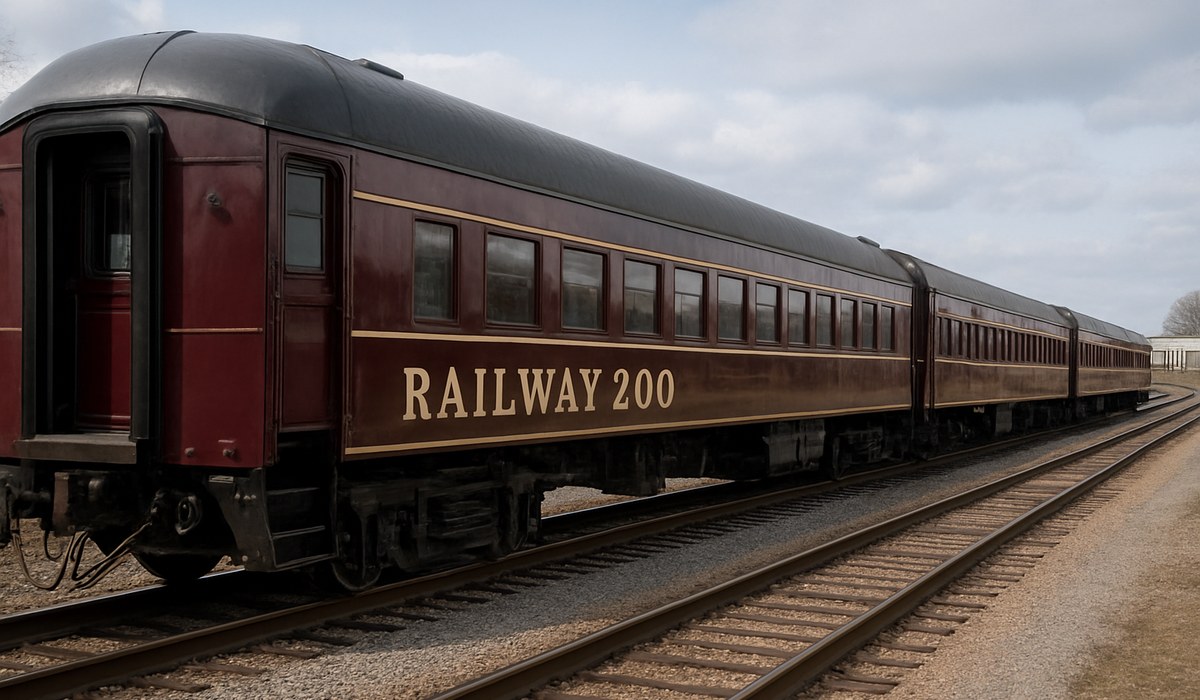
Image generated by AI
**> Quick Summary
- Railway 200's traveling exhibition concludes its two-year journey this month with final stops across North America and Europe
- The interactive exhibition showcases 200 years of railway technology, from 19th-century steam engines to autonomous train prototypes
- Visitors can board the exhibition train at scheduled stations—availability is limited as departure dates approach
- The exhibition bridges heritage conservation with climate-conscious transport advocacy, positioning rail as central to sustainable mobility**
The clock is ticking. Railway 200's mobile exhibition—a fully operational heritage train transformed into a museum on wheels—is entering its final chapter. After traversing dozens of cities across two continents, the Inspiration Exhibition Train will reach its ultimate destination before month's end, marking the close of an ambitious cultural and educational initiative. This may be your only chance to step aboard a moving archive that tells rail's most compelling story: how a 200-year-old technology remains utterly essential to our climate-conscious future.
Railway 200: A 200-Year Journey in Motion
The railway inspiration exhibition began its nationwide tour two years ago with an audacious premise: that passenger rail deserves a celebration matching its historical significance and contemporary relevance. Organizers equipped a vintage passenger consist with state-of-the-art digital displays, tactile artifacts, and immersive installations that chronicle rail's evolution from horse-drawn tramways to electrified express networks.
Each carriage focuses on a distinct era. The first explores the Industrial Revolution's engineering breakthroughs—original blueprints, scale models of Stephenson's Rocket, and engineering tools that enabled the first commercial railway between Liverpool and Manchester in 1830. The second carriage documents rail's golden age during the early 20th century, featuring lavish dining car recreations, period photography, and accounts from passengers who crossed continents aboard legendary services.
"We wanted to show that rail isn't just history," explained Dr. Marcus Chen, the exhibition's lead curator, in recent remarks to transport historians. "It's the infrastructure that built modern society, and it's going to solve our 21st-century mobility challenges." This philosophy drives the exhibition's forward-looking exhibits: the final carriage showcases current prototype autonomous trains, energy-efficient tilting bodies, and hyperloop test components being developed by manufacturers worldwide.
The exhibition's route has included major metropolitan hubs and smaller regional centers deliberately overlooked by typical cultural programming. Over 340,000 visitors have boarded the train since its inception, with visitor surveys showing heightened awareness of rail's environmental advantages and historical contributions to urban development.
What You'll Discover Inside the Exhibition Train
Walking through Railway 200 is a chronological journey that rewards curiosity. The first section, "Iron Roads Rise," displays original engineering schematics, period newspapers announcing railway openings, and reconstructed station master's offices from the 1840s. Visitors handle replica signaling equipment and operate scaled track switches—small interactive moments that demystify the technical complexity underlying rail operations.
The middle carriages transition through the steam era into the diesel age. Here, you'll encounter photographs of legendary trains: the Flying Scotsman, the Orient Express, the Trans-Siberian Railway. Testimonies from retired station workers, conductors, and passengers are presented via audio installations, creating an intimate historical texture. One section examines rail's role in connecting remote communities—a particularly poignant display for Canadian and Australian visitors who learned how rail opened their nations' interiors.
The contemporary section addresses rail's present predicament. Interactive maps show current passenger rail density across the globe, highlighting why countries like Switzerland and France maintain world-leading modal shares for rail travel. Comparison panels illustrate how Amtrak services in North America, while smaller than European networks, continue delivering reliable long-distance connectivity and heritage tourism experiences.
The final carriage, "Tomorrow's Rails," is where technological optimism becomes palpable. Visitors view operating models of maglev trains, examine battery-electric and hydrogen fuel-cell propulsion systems, and interact with virtual-reality simulations of autonomous train operations. A hands-on section allows you to "design" a sustainable railway network using digital tools—making visible the complexity of balancing speed, capacity, accessibility, and environmental impact.
Why Rail's Past Predicts Its Sustainable Future
Transportation analysts increasingly recognize that defeating climate change requires massive shifts toward high-capacity, low-emission mobility. Rail's history—and its technical potential—position it as foundational infrastructure for this transition.
The railway inspiration exhibition connects these threads persuasively. When railways first emerged, they reduced per-passenger emissions compared to stagecoach travel. As technologies improved, rail's efficiency advantage only grew. Modern electric trains operating on renewable energy grids emit virtually nothing at point of use. This performance advantage is quantifiable: rail moves freight at one-third the energy cost of trucking and passengers at one-fifth the per-kilometer energy demand of private automobiles.
Yet rail's future depends on political will and capital investment. The International Union of Railways, which coordinates global rail standards and advocacy, estimates that reaching net-zero transport emissions requires tripling rail's global market share by 2050. This isn't fantasy—it's engineering mathematics. Rail works best for medium and long-distance travel in moderately to densely populated corridors, precisely the routes that will carry the majority of humanity's journeys.
The exhibition illustrates this potential through regional case studies. European integrated rail networks, where cross-border services operate under harmonized standards, move 40% of continental passengers annually. Newer services like Britain's Northern Powerhouse Rail and Germany's €100 billion railway modernization program demonstrate how investment generates connectivity, economic growth, and emissions reductions simultaneously.
Notably, the exhibition frames sustainable transport not as sacrifice but as benefit. Passengers who travel by rail experience superior comfort, productive time (unlike driving), and reliable scheduling. Communities served by quality railways attract businesses and talent. Nations with developed rail networks rank consistently higher on quality-of-life indices than car-dependent peers. The exhibition makes these connections visible, emotional, and intellectually credible.
One section addresses aviation's competition with rail. Short-haul flights—routes under 500 kilometers—generate disproportionate emissions relative to their journey length because takeoff and landing consume enormous fuel. Rail, operating electric systems, can outcompete aviation on this segment entirely. As European governments tighten aviation policy, rail's modal share for these routes increases. The exhibition contextualizes this shift not as rail "winning" but as rational infrastructure evolution responding to climate imperatives. Some visitors may recognize parallels with emerging connectivity initiatives like Vietnam Airlines' UK route expansion, which demonstrates how global carriers are reassessing route networks alongside ground-based alternatives.
Final Stop Schedule and How to Plan Your Visit
The Inspiration Exhibition Train operates on a fixed schedule with departures occurring weekly from designated major terminals. As of March 2026, remaining stops include:
North America: Union Station (Washington, DC) through March 15; Chicago Union Station March 18–22; Denver Union Station March 25–29.
Europe: London Liverpool Street (April 1–5); Paris Gare de Lyon (April 8–12); Amsterdam Centraal (April 15–19)—with the final stop concluding April 20.
Booking is essential. Day passes cost £35–45 and include 90-minute guided or self-guided access to all exhibition carriages plus curated audio content available via mobile app. Evening admission (6:00–8:00 pm) is discounted 20% for advance bookings.
The
Disclaimer
This article is for informational and educational purposes only. It does not constitute legal, financial, or professional advice. While we strive to provide accurate and up-to-date information, travel policies, regulations, and conditions change rapidly. Always verify information with official sources before making travel decisions. Nomad Lawyer makes no representations about the accuracy, reliability, completeness, or suitability of the information provided. Readers should consult qualified professionals for advice specific to their circumstances. The views expressed in this article are those of the author and do not necessarily reflect the views of Nomad Lawyer.
Preeti Gunjan
Contributor & Community Manager
A passionate traveller and community builder. Preeti helps grow the Nomad Lawyer community, fostering engagement and bringing the reader experience to life.
Learn more about our team →