
Quito Airport Wins Third Consecutive ACI Level 5 Award: What Andean Travelers Need to Know
Quito's Mariscal Sucre Airport secures its third consecutive ACI Level 5 accreditation, joining an elite circle of only 12 airports globally with top service ratings.

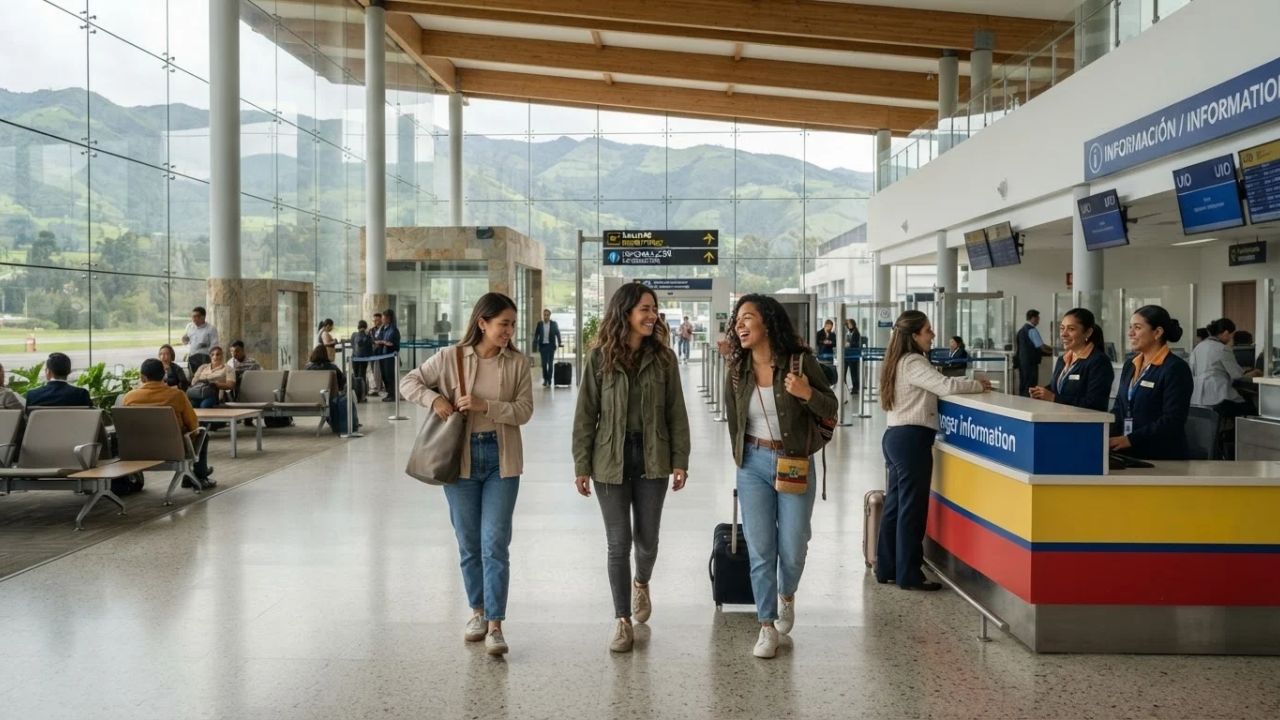
Image generated by AI
Out of thousands of commercial aviation gateways operating across the globe, only twelve airports worldwide have attained Level 5 status—the ultimate tier of customer experience excellence—under the Airports Council International (ACI) Customer Experience Accreditation Programme. Even more remarkably, across the entire American hemisphere from Alaska down to Cape Horn, only two facilities hold this highest distinction, and one of them is perched high upon a mountain plateau outside Ecuador’s historic capital: Mariscal Sucre International Airport in Quito. On September 16, 2026, airport operating concessionaire Corporación Quiport announced its third consecutive Level 5 renewal, cementing Quito’s reputation as an extraordinary Andean gateway that blends modern passenger logistics with genuine mountain hospitality. For global travelers touching down at 2,400 meters above sea level to explore UNESCO-inscribed colonial squares, venture into cloud forests, or catch onward flights to the Galápagos Islands, this operational achievement turns arrival into a reassuring prelude to the Andes.
The Andean Gold Standard: Deconstructing ACI Level 5 Excellence
Achieving Level 5 under the ACI Customer Experience Accreditation Programme requires far more than favorable customer survey scores or clean terminal concourses. As the first global accreditation framework dedicated exclusively to airport service management, Level 5 demands that customer experience is deeply woven into the airport’s long-term business strategy, day-to-day operations, internal human resources, and technological planning. To maintain this status, an airport must demonstrate a permanent capability to gather traveler feedback, analyze operational data in real time, implement immediate service enhancements, and foster collaborative service standards across every tenant agency.
A defining pillar of Quito’s success is the structural connection between frontline employee satisfaction and passenger care. Under the management of Corporación Quiport, the airport prioritizes workforce training, fair working conditions, and an empathetic service culture among thousands of ground handlers, security officers, retail staff, and airline personnel. As Ramón Miró, President and CEO of Corporación Quiport, highlighted: “This third renewal confirms that passenger experience is not an isolated initiative, but a permanent way of managing the airport. The work begins within the organization, with engaged employees and a service-oriented culture, and extends to our passengers. It is also the result of the coordination of everyone who is part of the airport community.”
The operational contrast is especially vivid for travelers who remember Quito’s historic aviation gateway. Until 2013, flights landed at the old Mariscal Sucre airfield situated directly inside a congested residential basin, notorious for hair-raising cliffside approaches and frequent weather diversions. The modern facility on the Tababela plateau provides expansive runway clearance, streamlined biometric boarding gates, accessible terminal facilities, and efficient baggage delivery audited by Airports Council International, establishing a calm, reliable transit environment high above the clouds.
What Makes the Quito Arrival Different: Between High-Altitude Winds and Colonial Splendor
Arriving in Quito is a visceral sensory experience shaped by extreme Andean geography. The airport sits on the arid Tababela plateau at approximately 2,400 meters (7,874 feet) above sea level, surrounded by deep canyons and mountain ravines. As travelers drive westward along the modern highway toward the city center, they ascend into the heart of the capital at 2,850 meters (9,350 feet), nestled in a narrow volcanic valley beneath the active slopes of Pichincha volcano.
Quito’s cultural weight is monumental: in 1978, the city was designated the world’s very first cultural heritage site by the United Nations. The Centro Histórico stands as the largest, least-altered colonial quarter in South America. Walking across the cobblestone expanse of Plaza San Francisco or admiring the dazzling baroque gold leaf covering the interior of the Church of the Society of Jesus (La Compañía) reveals four centuries of Spanish, Moorish, and Indigenous artistry.
The mountain atmosphere is marked by crisp, thin air and rich culinary aromas. Street vendors and neighborhood cafeterias serve steaming bowls of locro de papa—a velvety potato soup enriched with fresh local cheese and ripe avocado—paired with hot canelazo, an ancestral highland beverage brewed from boiling water, cinnamon bark, tart naranjilla fruit juice, and cane aguardiente. Official travel initiatives led by Quito Turismo highlight how the airport’s effortless transit allows travelers to step off a long-haul flight and immediately experience living Ecuadorian traditions without the exhaustion common to disorganized mega-airports.
Visitor Insider Tips: Navigating Quito and High-Altitude Transit
Experiencing Quito and its high-altitude gateway with confidence requires practical preparation, transit savvy, and physiological awareness:
Airport Transportation Tactics: Mariscal Sucre Airport is located roughly 37 kilometers (23 miles) east of central Quito, requiring a 45 to 60-minute road transfer depending on mountain highway traffic. Avoid unauthorized private drivers soliciting rides in the arrivals hall. Instead, book a licensed taxi at the official counter inside the terminal (standard fixed rates into the city center hover around $25 to $30 USD), or utilize the official Aeroservicios shuttle bus, which runs comfortable coaches to northern Quito for roughly $10 USD.
Acclimatization Rules at 2,850 Meters: Take your first day very gently. Upon checking into your hotel, drink plenty of water and request a hot cup of mate de coca (coca leaf tea) or horchata lojana (a soothing pink herbal infusion). Avoid heavy meals, red meat, and alcohol on your first evening. Give your body at least 24 hours to adjust before attempting steep uphill climbs to viewpoints like El Panecillo or the Pichincha Teleférico cable car, which ascends to a breathtaking 3,945 meters (12,943 feet).
Old Town Walking Etiquette: When exploring sacred historic sites in the Centro Histórico, remove hats and maintain respectful silence during active Catholic services. Dress in adaptable layers: equatorial mountain weather can shift from brilliant sunshine (temperatures around 20°C/68°F) to cold afternoon downpours within thirty minutes. Always carry a compact rain shell and UV-blocking sunglasses.
Local Highland Dining Beyond Plaza Cafes: Skip overpriced tourist restaurants directly on Plaza Grande. Walk down to the artisan alley of Calle La Ronda in the evening to sample authentic empanadas de viento—giant fried pastries stuffed with melted cheese and dusted with granulated sugar. For lunch, explore the traditional Mercado Central to savor hornado, succulent whole-roasted pork served with hominy (mote), potato cakes (llapingachos), and tangy pickled onion dressing.
Strategic Neighborhood Bases: If you love historic architecture, courtyard fountains, and bell towers, stay at a restored heritage mansion hotel in the Centro Histórico. If you prefer contemporary art galleries, third-wave coffee roasters, and lively evening bistros, make La Floresta or the upscale González Suárez district your urban base.
Cultural and Environmental Context: Sustainable Tourism on the Equator
Operating an internationally certified airport in Ecuador carries significant ecological responsibility. Ecuador is recognized as one of the most megadiverse countries on earth per square kilometer, home to four distinct natural regions: the Galápagos Islands, the Pacific coastal lowlands, the Andean highlands, and the Amazon rainforest. Mariscal Sucre International Airport functions as the central gateway connecting international visitors with fragile conservation sanctuaries across all four zones.
Quiport has pioneered environmental stewardship by achieving carbon-neutral operational certification, installing comprehensive wastewater treatment plants, and leading reforestation campaigns across the Tababela plateau to safeguard native dry-forest habitats. Preserving Quito’s urban and cultural fabric—celebrated under the UNESCO World Heritage Centre—demands that tourism growth does not overwhelm historic neighborhoods with vehicle congestion or displace resident communities.
Furthermore, tourism dollars funneled through Quito directly sustain rural Indigenous Kichwa communities in the surrounding highlands. Travelers taking day trips to traditional artisan markets in Otavalo or woodworking villages in San Antonio de Ibarra directly support ancestral craft traditions, organic high-altitude agriculture, and community-led reforestation projects, ensuring that tourism acts as an engine for cultural survival and ecological resilience.
FAQ: Navigating Quito and Mariscal Sucre Airport in 2026
What makes Quito Airport's ACI Level 5 award so rare? Only twelve airports worldwide and just two across the entire Americas hold ACI Level 5 accreditation, representing the highest global standard for integrating passenger experience, employee culture, and operational strategy.
How far is Mariscal Sucre Airport from Quito's historic center? The airport is situated 37 kilometers east of the city on the Tababela plateau. Travel by authorized taxi or express shuttle takes between 45 and 60 minutes via modern highways.
What is the best way to handle the high altitude upon arrival? Rest during your first 24 hours, stay hydrated, drink traditional coca leaf tea, eat light meals, and avoid strenuous uphill trekking while your body adapts to Quito’s elevation of 2,850 meters.
Do international travelers need a visa to enter Ecuador? Citizens of the United States, Canada, the European Union, Australia, and many other nations can enter Ecuador visa-free for tourism stays of up to 90 days with a valid passport.
High above the cloudline where the equator meets the Andes, world-class airport hospitality proves that the warmest welcomes begin long before you reach the cobblestones.
Related Travel Guides
Disclaimer
This article is for informational and educational purposes only. It does not constitute legal, financial, or professional advice. While we strive to provide accurate and up-to-date information, travel policies, regulations, and conditions change rapidly. Always verify information with official sources before making travel decisions. Nomad Lawyer makes no representations about the accuracy, reliability, completeness, or suitability of the information provided. Readers should consult qualified professionals for advice specific to their circumstances. The views expressed in this article are those of the author and do not necessarily reflect the views of Nomad Lawyer.
Kunal K Choudhary
Co-Founder & Contributor
A passionate traveller and tech enthusiast. Kunal contributes to the vision and growth of Nomad Lawyer, bringing fresh perspectives and driving the community forward.
Learn more about our team →