
Qatar and UAE Deploy Emergency Relief and Search Teams for Stranded Travellers in Nepal Floods 2026
Qatar and the UAE have launched massive humanitarian missions to Nepal, deploying search and rescue teams and millions in aid to assist flood-affected residents and stranded foreign travellers.
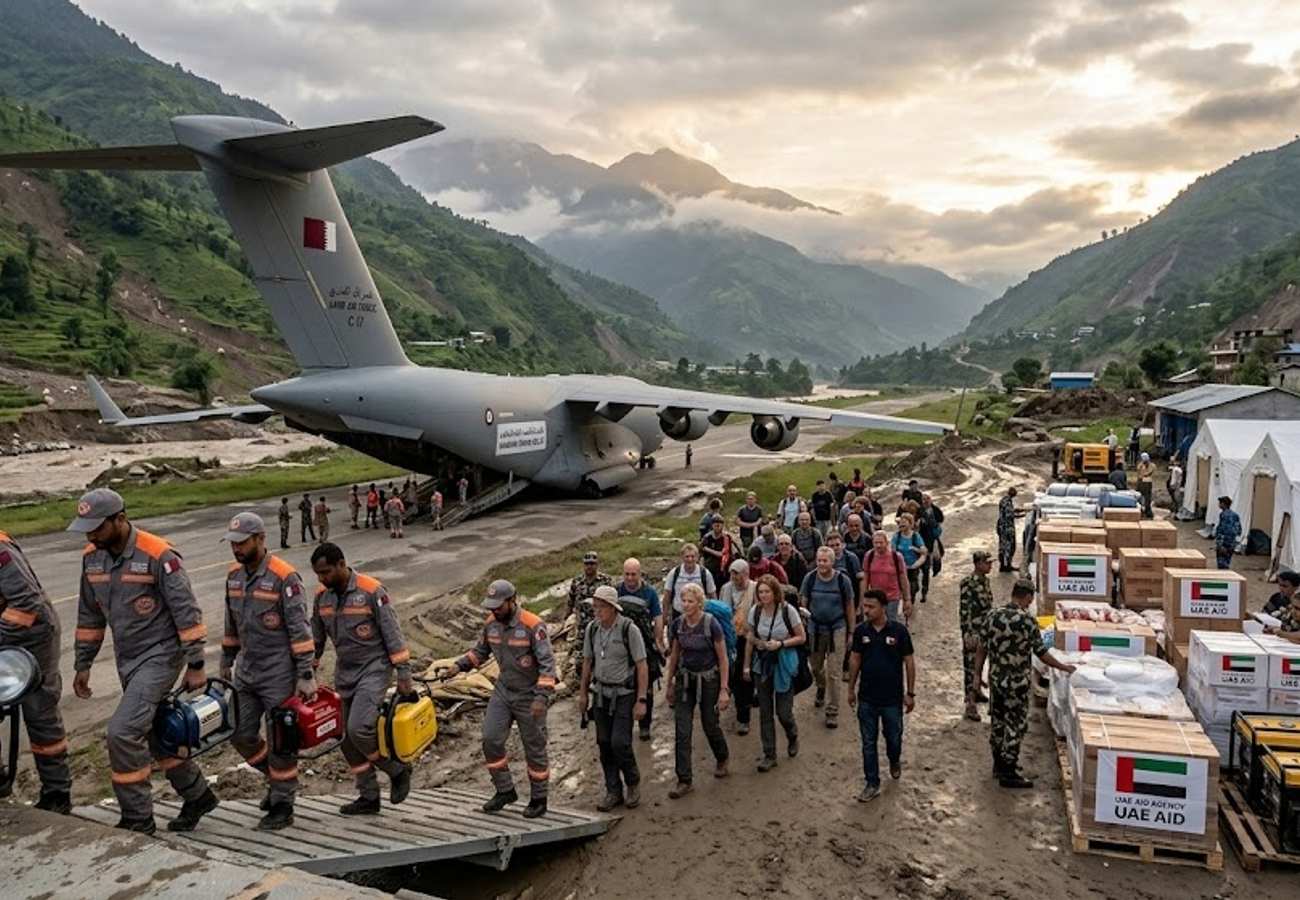
Image generated by AI
International relief operations are currently underway in Nepal as Qatar and the UAE deploy emergency aircraft and search-and-rescue teams to assist flood-affected populations and stranded foreign tourists.
Emergency Response and Infrastructure Collapse
Severe flooding and landslides have devastated Nepal's mountainous regions, causing widespread infrastructure failure. The disaster has washed out critical road networks, isolating remote communities and trapping foreign travellers in trekking and adventure tourism hubs.
The difficult topography of the Himalayas has hindered domestic evacuation efforts, necessitating the intervention of international military and humanitarian assets to restore access to stranded individuals.
Qatar’s Humanitarian Mission and Search Operations
The Qatari government, via the Qatar Fund for Development, has deployed a Qatari Armed Forces aircraft to deliver specialized equipment designed for high-altitude disaster recovery.
Our analysis of the mission indicates a focus on immediate survival and infrastructure stabilization. The Qatari aid package includes:
- Water extraction and pumping equipment to clear flooded zones.
- Emergency lighting supplies for nighttime rescue operations.
- Food assistance and multipurpose tents for temporary shelter.
This specific intervention is projected to benefit approximately 52,000 people. Furthermore, the Qatari International Search and Rescue Group, part of the Internal Security Force (Lekhwiya), is currently active on the ground assisting in the location and evacuation of missing persons and stranded visitors.
UAE Financial and Logistical Support
The United Arab Emirates has committed a US$10 million emergency aid package through the UAE Aid Agency. This funding is earmarked for early recovery efforts and the provision of essential supplies to families and travellers displaced by landslides.
Flight tracking and logistics data confirm two major relief missions:
- First Aircraft: Delivered 83 tonnes of emergency supplies, including food and shelter materials.
- Second Aircraft: Delivered 45 tonnes of materials, specifically focusing on power generators and food supplies.
These operations are being coordinated through the UAE Embassy in Nepal to ensure supplies reach the most isolated mountain districts.
Passenger Rights & Advisory for Stranded Travellers
For foreign nationals currently stranded in Nepal or those with upcoming bookings, this crisis triggers specific legal and logistical protections.
For the affected passenger, this means:
- Evacuation Rights: Travellers should immediately register with their respective embassies. Under international consular norms, governments prioritize the evacuation of citizens during "Force Majeure" events.
- Flight Cancellations: Since floods and landslides are considered "extraordinary circumstances," airlines may not be liable for monetary compensation under frameworks like EU261/2004. However, they are still obligated to provide a "duty of care," including meals, hotel accommodation, and communications.
- Travel Insurance Claims: Most comprehensive policies cover "Natural Disaster" or "Trip Interruption." Passengers should document all delays and keep receipts for emergency lodging and food to ensure successful reimbursement.
- Rebooking: Our analysis of current aviation trends suggests that travellers should push for "Open Tickets" or full refunds if the destination remains inaccessible, as safety mandates often override standard non-refundable fare rules during national emergencies.
Industry Analyst View: Impact on Himalayan Tourism
The timing of these floods poses a significant risk to Nepal's tourism economy, which relies heavily on the perceived safety of its trekking routes. The rapid deployment of Middle Eastern aid is not merely a humanitarian gesture but a critical step in restoring the "safety brand" of the region.
When infrastructure collapses in adventure hubs, the speed of the international response directly correlates with how quickly tourist confidence returns. The inclusion of search-and-rescue specialists from Qatar suggests a high-priority effort to clear the "stranded traveller" backlog, which is essential for maintaining Nepal's status as a global mountaineering destination.
The recovery of Nepal's tourism sector now depends on the transition from emergency relief to long-term infrastructure resilience.
Related Travel Guides
Disclaimer
This article is for informational and educational purposes only. It does not constitute legal, financial, or professional advice. While we strive to provide accurate and up-to-date information, travel policies, regulations, and conditions change rapidly. Always verify information with official sources before making travel decisions. Nomad Lawyer makes no representations about the accuracy, reliability, completeness, or suitability of the information provided. Readers should consult qualified professionals for advice specific to their circumstances. The views expressed in this article are those of the author and do not necessarily reflect the views of Nomad Lawyer.