
Air India and Akasa Air Issue Travel Advisories for Mumbai and Delhi Flights Amid Severe IMD Weather Alerts 2026
Air India and Akasa Air have urged passengers to verify flight statuses as heavy monsoon rains and IMD alerts trigger diversions and delays in Mumbai and Delhi.

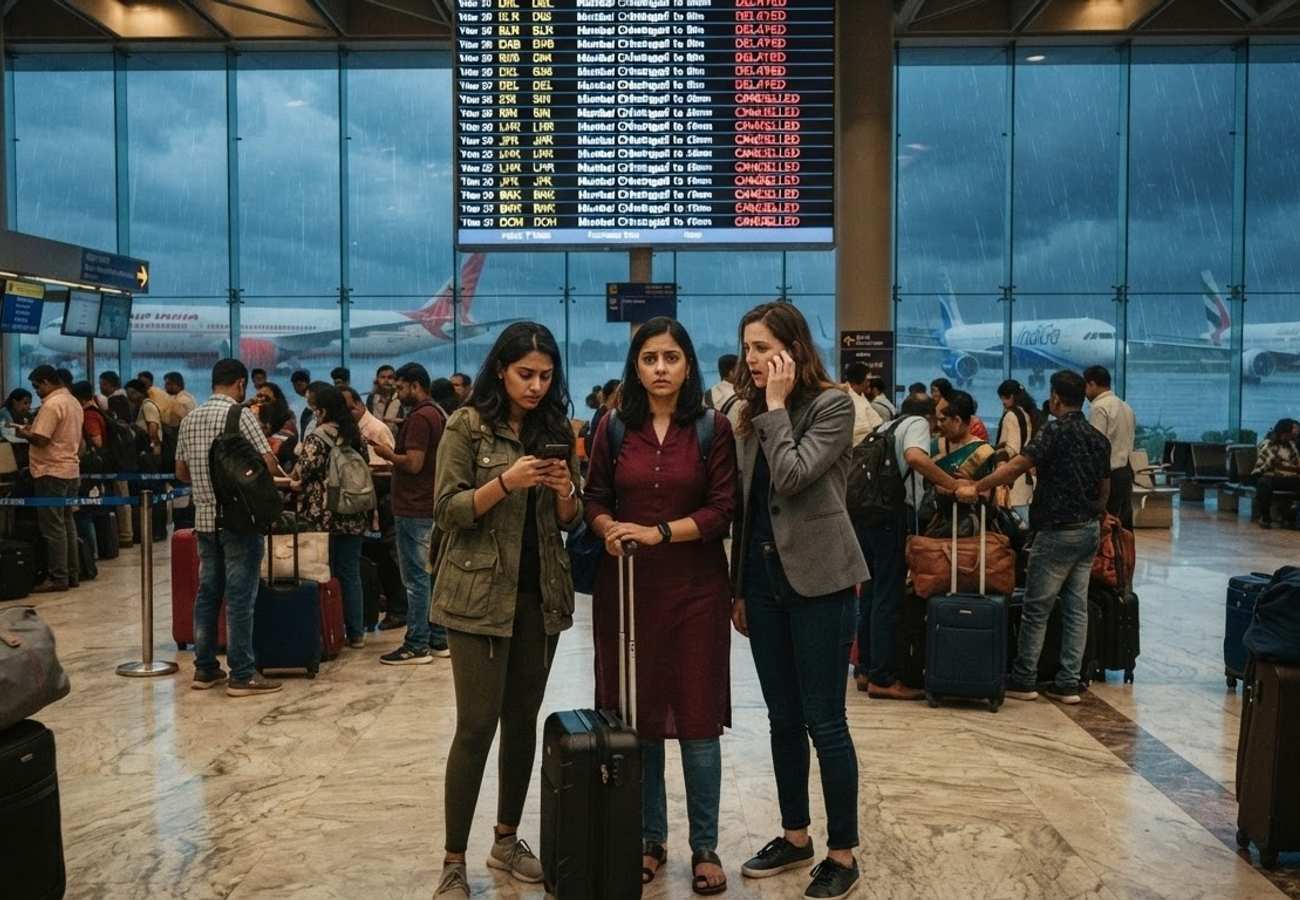
Image generated by AI
[Mumbai/Delhi, July 6, 2026] — Major Indian carriers are warning passengers of significant operational disruptions across the national capital and the financial hub as severe monsoon weather triggers official alerts from the India Meteorological Department (IMD). Air India and Akasa Air have both issued urgent advisories requesting travelers to verify their flight status online before departing for the airport to avoid unnecessary transit delays.
The current weather system has created a volatile environment for aviation in two of India's busiest corridors. While Mumbai is grappling with extreme precipitation and wind, Delhi is facing a combination of thunderstorms and high-velocity gusts, leading to immediate impacts on flight schedules and aircraft routing.
Severe Weather Alerts Impacting Mumbai and Delhi
The India Meteorological Department has implemented a tiered warning system for the two metropolitan areas, reflecting the varying intensity of the monsoon activity. Mumbai is currently under a red alert, the highest level of warning, with forecasts predicting heavy to very heavy rainfall across the city and its surrounding suburbs. Industry observers note that isolated regions are likely to experience extremely heavy showers, which significantly increases the risk of visibility issues for pilots and waterlogging on arterial roads leading to the airport.
Simultaneously, Delhi is operating under a yellow alert. The IMD reports that light to moderate rain is persisting across the capital, accompanied by lightning and thunderstorms. These conditions are exacerbated by gusty winds, which are expected to reach speeds of 30-40 kmph, with peak gusts hitting 50 kmph in specific sectors. Such wind shear and instability often lead to holding patterns for arriving aircraft and delays in departures.
Air India and Akasa Air Operational Responses
Air India has taken a proactive stance via social media and its official digital channels, notifying passengers that select flights across its entire network may be impacted. The airline is specifically urging those flying into or out of Chhatrapati Shivaji Maharaj International Airport (BOM) and Indira Gandhi International Airport (DEL) to utilize the airline's website for real-time updates.
Akasa Air has echoed these warnings, stating that severe weather conditions in Delhi have already begun to affect its flight operations. The carrier clarified that these atmospheric disruptions are beyond the airline's control but emphasized that support teams are stationed to assist passengers facing cancellations or rescheduling.
The volatility of the weather has already resulted in tangible disruptions. According to airport data, 15 flights—consisting of 10 domestic and 5 international services—were forced to divert from Delhi to Jaipur and Lucknow due to the inability to land safely amidst the strong winds and heavy rain.
Flight Diversion and Delay Statistics
The following data summarizes the immediate impact of the weather systems on flight movements at the affected hubs:
| Metric | Delhi (DEL) | Mumbai (BOM) |
|---|---|---|
| IMD Alert Level | Yellow Alert | Red Alert |
| Primary Weather Threat | Thunderstorms & 50kmph Gusts | Extremely Heavy Rain & High Tides |
| Total Diverted Flights | 15 (10 Domestic, 5 International) | Not Specified (General Disruptions) |
| Diversion Destinations | Jaipur, Lucknow | N/A |
| Expected Duration | Until July 9 (per IMD) | Next 24-48 Hours |
Systemic Impact on Aviation Infrastructure
Weather-related disruptions are a recurring challenge during the Indian monsoon, but the current intensity has placed additional strain on ground infrastructure. In Mumbai, the red alert is coupled with warnings of high tides, reaching up to 4.19 meters, which historically leads to severe waterlogging in low-lying areas. This not only affects flight timings but also hinders the ability of passengers to reach the terminal on time.
In Delhi, the widespread nature of the thunderstorms means that multiple arrival and departure runways may face intermittent closures or reduced capacity. The diversion of 15 flights to secondary cities like Jaipur and Lucknow highlights the saturation of the capital's airspace when weather prevents standard landing procedures.
Why This Matters: The Broader Aviation Perspective
The issuance of these advisories represents more than just a routine weather update; it underscores the fragility of high-density aviation hubs during extreme climatic events. When a "Red Alert" is issued for a city like Mumbai, the ripple effect extends far beyond the local airport. Because Mumbai and Delhi serve as primary transit hubs for international connections, a delay in one of these cities can trigger a cascade of missed connections across the global network.
From an industry standpoint, the diversion of international flights to smaller airports like Jaipur or Lucknow creates significant logistical hurdles. These airports are not always equipped to handle the passenger volume or the specific customs and immigration requirements of international arrivals on a mass scale.
Furthermore, the reliance on digital verification—where airlines push passengers to "check status online"—indicates a shift in crisis management. Rather than managing crowds at the terminal, airlines are attempting to throttle the flow of passengers to the airport to prevent terminal congestion during "ground stop" scenarios. For the traveler, this means the window for flexibility has narrowed; the ability to pivot travel plans in real-time is now entirely dependent on the accuracy of airline digital dashboards and IMD forecasting.
Passengers are strongly advised to monitor official airline communications and IMD bulletins before commencing travel to Mumbai or Delhi airports.
Related Travel Guides
Disclaimer
This article is for informational and educational purposes only. It does not constitute legal, financial, or professional advice. While we strive to provide accurate and up-to-date information, travel policies, regulations, and conditions change rapidly. Always verify information with official sources before making travel decisions. Nomad Lawyer makes no representations about the accuracy, reliability, completeness, or suitability of the information provided. Readers should consult qualified professionals for advice specific to their circumstances. The views expressed in this article are those of the author and do not necessarily reflect the views of Nomad Lawyer.
Preeti Gunjan
Contributor & Community Manager
A passionate traveller and community builder. Preeti helps grow the Nomad Lawyer community, fostering engagement and bringing the reader experience to life.
Learn more about our team →