
Qatar Leads GCC Travel Technology Growth with AI Smart Airports and Faster Passenger Journeys
Qatar Leads GCC Travel Technology Growth with AI Smart Airports and Faster Passenger Journeys

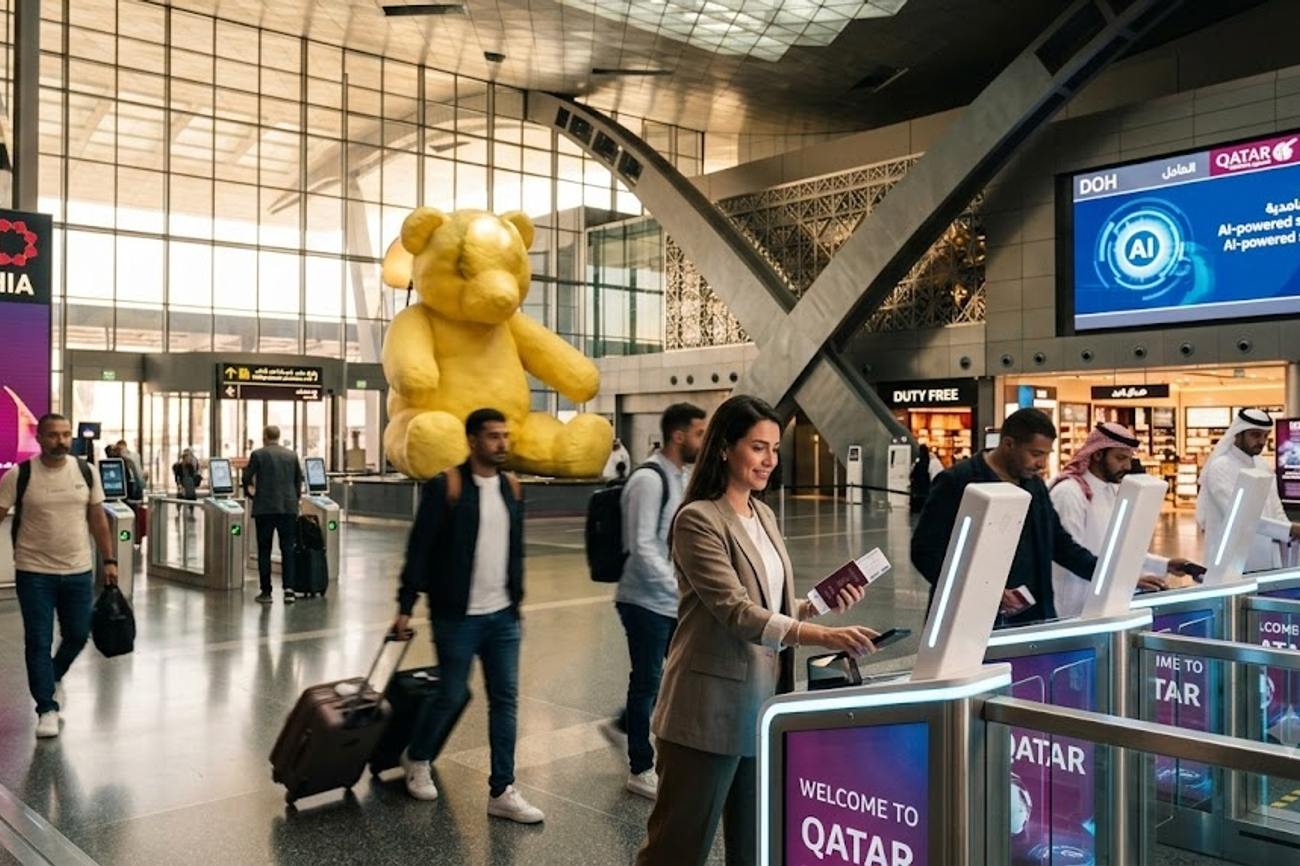
Image generated by AI
While most travelers view the Middle East as a hub of luxury hotels and skyscrapers, the region is currently executing a silent digital revolution where your passport might soon be the least important document you carry. In Dubai alone, the immigration authority recorded over 26 million Smart Gate uses in 2025, signaling a shift toward a frictionless, biometric-led transit experience that removes the traditional queue from the airport arrival process.
The Digital Pivot of the GCC Travel Corridor
The Gulf Cooperation Council (GCC) nations are no longer just competing on the grandeur of their architecture; they are competing on the invisibility of their infrastructure. The current trend is a move toward "hyper-connectivity," where the gap between booking a flight, arriving at the airport, and entering a city is being erased by integrated digital layers.
In Qatar, the focus has shifted toward the onboard experience. As of August 20, 2026, Qatar Airways has equipped 150 widebody aircraft with Starlink connectivity. This isn't just about faster Wi-Fi; it is an attempt to turn the aircraft cabin into a fully functional remote office or living room. Since October 2024, more than 23 million passengers have utilized this service. While the airline aims to complete the rollout across its entire Boeing 787 fleet by the end of 2026, the experience remains aircraft-dependent, meaning the "connected" nature of your journey depends on the specific tail number of the plane you board.
Meanwhile, the UAE is attacking the friction of payment. Starting September 16, 2026, UAE-based customers can use Jaywan, the national card scheme, to settle flight bookings through Emirates retail stores and online platforms. By integrating a domestic payment network into the international travel checkout, the UAE is creating a closed-loop financial ecosystem that simplifies the transaction process for residents.
What Makes the Gulf's Tech Integration Different
Unlike Western markets, where travel tech is often a patchwork of third-party apps, the GCC is building vertically integrated systems. Saudi Arabia is the prime example of this, merging spiritual duty with high-tech logistics. The Nusuk Hajj platform, supporting the 1447 Hajj season (corresponding to 2026), is perhaps the most complex travel orchestrator in the world. It doesn't just sell a ticket; it manages account creation, document verification, e-wallet funding, and the coordination of hotels, catering, and transport for millions of pilgrims.
The region is also redefining how airlines communicate. Qatar Airways has moved beyond static FAQs, introducing "Q Search" at the Web Summit Qatar in February. This natural-language AI tool allows travelers to ask complex questions about services in plain speech. They have even pushed into the metaverse with "QVerse Island" in Fortnite, allowing potential visitors to explore digital recreations of Doha and Hamad International Airport before they ever book a flight.
To understand the scale of these movements, one can look at the UNESCO World Heritage sites in the region, which are increasingly being integrated into these smart tourism frameworks to manage visitor flow and preserve fragile environments from over-tourism.
Visitor Insider Tips
Navigating this high-tech corridor requires a different strategy than traditional travel. To make the most of the current infrastructure, keep these local nuances in mind:
The Biometric Shortcut: If you are transiting through Dubai, prioritize Smart Gate registration. With over 26 million uses in 2025, these gates are the only way to avoid the primary immigration halls during peak transit windows (typically 2:00 AM to 6:00 AM).
Connectivity Hacks: When booking with Qatar Airways, check the aircraft type. The Starlink rollout is focused on widebody aircraft, specifically the Boeing 787-8 and 787-9. If you are a digital nomad needing high-speed access for work, verify the aircraft model during your booking process to ensure you aren't on a legacy-equipped plane.
Payment Strategy: For those residing in or spending significant time in the UAE, the introduction of Jaywan on September 16, 2026, may offer more streamlined domestic payment options. However, be aware that Emirates has indicated that special fares available at retail stores may have different availability timelines than online promotional fares.
The Pilgrimage Path: For those utilizing the Nusuk platform for the 1447 Hajj season, complete your document submission and e-wallet funding well in advance. The system is robust, but eligibility and country coverage vary, and a digital application does not guarantee an automatic visa.
For official entry requirements and updated travel protocols, always consult the Visit Saudi or Visit Qatar official portals.
Cultural and Environmental Context
The push toward "smart" travel is not merely about convenience; it is a strategic response to the massive influx of visitors the region expects over the next decade. By digitizing the pilgrimage journey in Saudi Arabia, the government can manage the environmental footprint of millions of people concentrated in a small geographic area. Digital itinerary checks and e-wallets reduce the physical waste associated with paper ticketing and cash handling.
However, this rapid digitalization creates a tension between heritage and modernity. As Qatar and the UAE push passengers toward AI-driven interfaces and metaverse explorations, there is a concerted effort to ensure that the "human" element of Arabian hospitality—the Majlis culture of greeting and conversation—is not lost to a screen. The integration of ground transport, such as Qatar Airways' partnership allowing Beyond Business members to redeem Qrewards for Uber vouchers, shows a desire to move the traveler quickly from the sterile environment of the airport into the living, breathing city.
Furthermore, the adoption of New Distribution Capability (NDC) through partnerships like the one between Emirates and DERTOUR Group allows for "richer" fare options. This means travelers can customize their journey—choosing specific lounge access or baggage options—which helps airlines optimize load factors and reduce the carbon inefficiency of half-empty flights.
FAQ: Visiting the GCC 2026
What is the best way to handle payments in the UAE and Qatar? In the UAE, the Jaywan national card is becoming a primary tool for domestic travel bookings as of late 2026. In Qatar, look for integrated loyalty rewards like Qrewards, which can now be linked to ground transport services like Uber for a seamless city transition.
Do I need a physical visa for Saudi Arabia? For the 1447 Hajj season, the Nusuk platform manages the majority of the process digitally, including document submission and verification. However, visa issuance still depends on your specific nationality and eligibility criteria.
How do I ensure I have high-speed internet on my flight to Doha? Ensure your flight is operated by a Qatar Airways widebody aircraft, specifically the Boeing 787-8 or 787-9, as these were the primary targets for the Starlink rollout completed by late 2026.
Is it safe for solo travelers to use these digital systems? Yes. The region's investment in smart gates and digital identity verification has significantly increased security and reduced the need for physical document handling, making solo transit through hubs like Hamad International or Dubai International very efficient.
The future of travel in the Gulf is no longer about the destination, but about the disappearance of the friction required to get there.
Tags: QatarAirwaysStarlink, NusukHajj2026, DubaiSmartGates, GCCTravelTech2026, RiyadhAirRXPay
Related Travel Guides
- Texas Steps Up With Florida And More US Places In Becoming Tourist Magnets Through AI Innovations And Smart Hospitality Systems
- Singapore Unleashes Digital Tourism Revolution to Transform Travel Experiences and Local Business Growth
- UAE Ras Al Khaimah Accelerates Flying Vehicle Future With New Advanced Air Mobility Test Zone For Smart Travel
Disclaimer
This article is for informational and educational purposes only. It does not constitute legal, financial, or professional advice. While we strive to provide accurate and up-to-date information, travel policies, regulations, and conditions change rapidly. Always verify information with official sources before making travel decisions. Nomad Lawyer makes no representations about the accuracy, reliability, completeness, or suitability of the information provided. Readers should consult qualified professionals for advice specific to their circumstances. The views expressed in this article are those of the author and do not necessarily reflect the views of Nomad Lawyer.
Naina Thakur
Contributor & Travel Specialist
Travel enthusiast and legal writer covering visa regulations, responsible tourism, and cultural journeys across global destinations.
Learn more about our team →