Middle East Tourism Unites To Win Back Travellers Through New Visa Plans And Mega Events

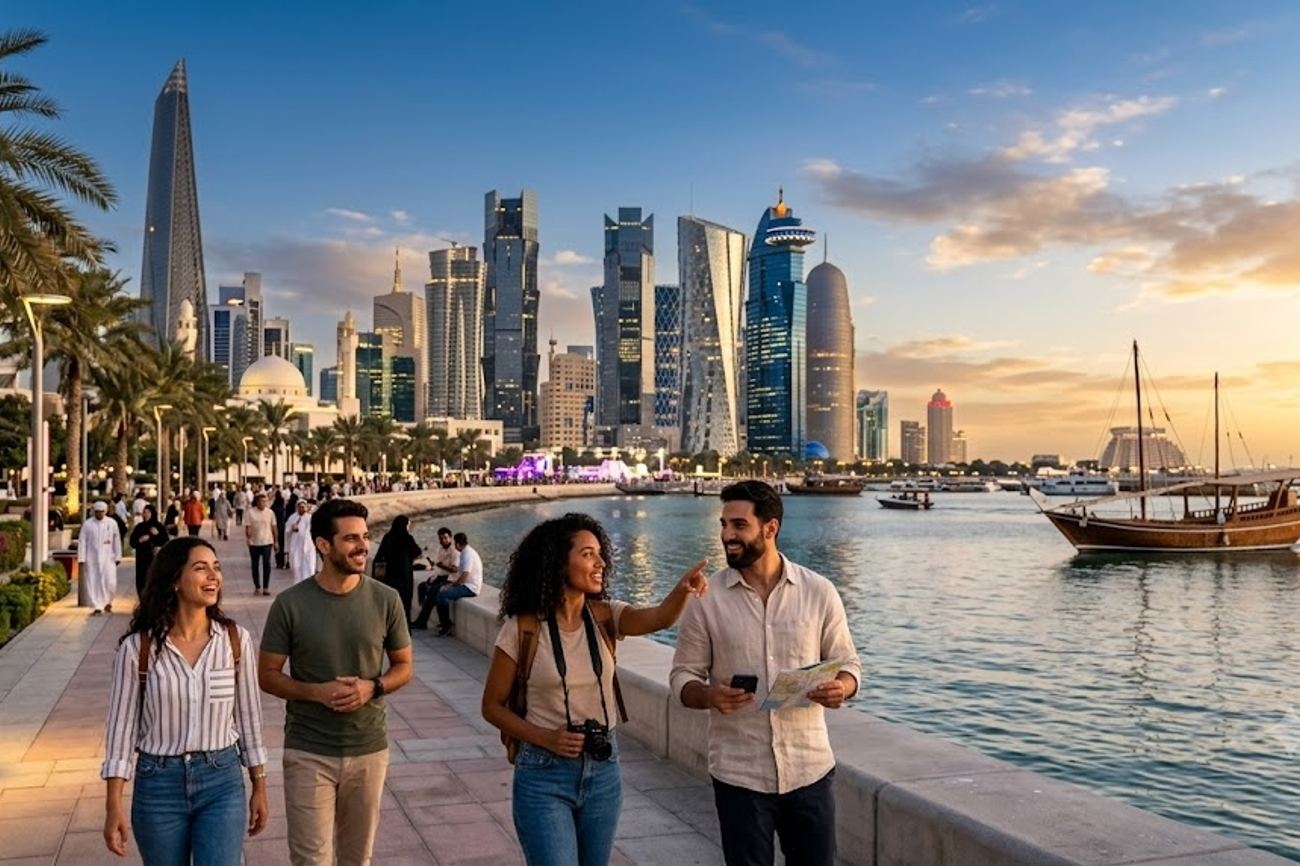
Image generated by AI
Regional tourism event volume in the Middle East has shifted from seasonal spikes to a sustained, year-round model, with Qatar now scheduling over 560 events for its 2026–2027 calendar. This represents a strategic pivot away from the "mega-event" dependency—where tourism peaked during a single tournament or festival—toward a diversified, high-frequency event economy designed to flatten the seasonality curve.
The Event-Driven Economy in Numbers
The Middle East is currently executing a synchronized transition toward "Experience Tourism," where the primary driver of visitation is no longer just the destination's geography, but its calendar. Qatar's commitment to 560+ events for the 2026–2027 period serves as a benchmark for the region. By distributing these events across sports, food, culture, and family activities, the state is attempting to increase the Average Length of Stay (ALOS) by providing continuous incentives for travelers to remain in-country.
Data indicates a clear segmentation of strategy across the Gulf Cooperation Council (GCC) and neighboring markets. While Qatar focuses on a high-density event calendar, Saudi Arabia is leveraging "Giga-projects" like AlUla and the Red Sea developments to capture the luxury and heritage segments. The UAE continues to lead in connectivity and luxury infrastructure, utilizing its aviation hubs to feed these emerging event-based destinations. According to data from the World Travel & Tourism Council (WTTC), the region is increasingly integrating business travel with leisure—a trend known as "bleisure"—which is evident in the UAE's model of combining global exhibitions with premium lifestyle offerings.
Comparative Market Strategies: Middle East 2024-2027
The regional competition for global market share has led to a specialization of "tourism identities." Rather than competing directly on the same offerings, countries are carving out specific niches to avoid market cannibalization. Egypt and Jordan are doubling down on archaeological and heritage tourism, while Oman is positioning itself as the nature and adventure alternative to the urban luxury of Dubai and Doha.
The following table analyzes the strategic divergence across the primary regional players:
| Country | Primary Growth Driver | Key Data Point/Asset | Target Traveler Segment |
|---|---|---|---|
| Qatar | High-Frequency Events | 560+ Events (2026-27) | Sports & Culture Enthusiasts |
| Saudi Arabia | Heritage & Luxury | Riyadh Season / AlUla | High-Net-Worth & Adventure |
| UAE | Connectivity & Luxury | Global Aviation Hubs | Business & Luxury Leisure |
| Egypt | Ancient Heritage | Pyramids / Red Sea | History & Coastal Tourists |
| Oman | Nature/Adventure | Mountain & Desert Terrain | Eco-Tourists & Explorers |
| Jordan | Outdoor Heritage | Petra / Wadi Rum | Adventure & History Seekers |
| Bahrain | Short-Break/Motorsport | Regional Holiday Hubs | Weekend & Event Travelers |
| Türkiye | Diverse Culture | Istanbul / Cappadocia | Mass Market & Culinary |
This diversification is a response to the volatility of global travel. By spreading the "attraction load" across different sectors—such as Qatar's blend of Formula 1, Padel, and basketball—these nations are hedging against the decline of any single tourism driver. As noted by IATA, the increase in regional connectivity is a primary catalyst, allowing travelers to create multi-country itineraries that combine the luxury of the UAE with the heritage of Egypt or the nature of Oman.
Practical Traveler Advisory and Strategic Insights
The shift toward a year-round event calendar fundamentally changes the booking window and the cost structure for visiting the Middle East.
First, the "Seasonality Premium" is evolving. Historically, travel to the Gulf was concentrated in the cooler winter months. However, with the rollout of 560+ events in Qatar and the expansion of indoor entertainment hubs in Saudi Arabia and the UAE, the region is becoming a viable Q2 and Q3 destination. Travelers should now monitor event calendars rather than just weather patterns when selecting dates.
Second, the rise of "Event-Based Pricing" means that hotel rates in Doha or Riyadh will now spike around specific sporting or cultural dates—such as the Formula 1 Qatar Grand Prix—rather than just during the peak winter season. For those planning visits in 2026 or 2027, booking 4-6 months in advance for event-specific dates is now a requirement to avoid extreme price surges.
Third, the integration of digital tourism platforms is reducing the friction of multi-destination trips. Travelers can now more easily link a business trip to Dubai with a cultural excursion to AlUla or a sporting event in Doha, effectively treating the Middle East as a single, interconnected tourism zone.
Trajectory of Regional Tourism Growth
Based on current investment trajectories, the Middle East is moving toward a "Hub-and-Spoke" tourism model. The UAE and Qatar act as the primary hubs (the spokes), providing the aviation infrastructure and luxury entry points, while Saudi Arabia, Oman, and Jordan serve as the experiential destinations.
Qatar has announced new visa plans to attract tourists, aligning with Egypt and other Middle Eastern countries to boost regional tourism. As part of this initiative, passengers can now apply for an electronic visa through the Qatar Ministry of Interior website for a hassle-free travel experience. This move is expected to increase tourist arrivals and enhance the overall travel experience in the region.
We are seeing a clear movement toward "Digitalization of the Journey." Qatar's investment in digital tourism platforms to organize itineraries suggests that the future of regional travel will be algorithm-driven, where travelers are pushed toward events based on their specific interests (e.g., a food lover being alerted to the Qatar International Food Festival).
Furthermore, the expansion into "Secondary Destinations"—such as Al Shamal and Brouq in Qatar—indicates a desire to decentralize tourism away from capital cities. This will likely lead to the development of new boutique hospitality clusters and a rise in domestic tourism within the GCC, as residents of one country travel to another for short-break events.
FAQ: Middle East Tourism Trends 2026-2027
Will travel costs increase due to these new events? Expect volatility. While general flight capacity is increasing, hotel prices will spike sharply during the 560+ scheduled events in Qatar and Riyadh Season in Saudi Arabia. Booking early is the only way to mitigate these event-driven premiums.
Is it better to visit the region in winter or summer now? While winter remains most comfortable, the push for "year-round" tourism means more indoor attractions and events are available in summer. If your trip is centered on a specific event, the date of the event should override the season.
Which countries are easiest to visit together? The UAE, Qatar, and Saudi Arabia are becoming increasingly integrated. Due to strong aviation links and new visa strategies, these three are the most efficient to combine into a single itinerary.
Are luxury resorts the only option in the new Middle East strategy? No. While luxury is a pillar for the UAE and Saudi Arabia, Oman and Jordan are focusing on nature and adventure, and Qatar is diversifying into food and family-centric cultural tourism.
The Middle East is no longer just a transit point between East and West; it is aggressively engineering itself into a primary global destination.
Related Travel Guides
This article is for informational purposes. Flight routes, passenger regulations, visa rules, and transit advisories are subject to change by airlines and aviation authorities. Readers are advised to verify schedules and travel documentation with relevant carriers and border agencies before departure.
Related Stories

European Mass Protests Disrupt Travel Across France, Italy, Belgium, and Turkey in 2026
The Best Things to Do in Vero Beach with Family: A Local Parent & Traveler's Guide