
Bypassing Travel Chaos: Qatar Airways, flydubai, and Oman Air Launch Massive Asian Expansion to Shield Passengers from Northern Middle East Gridlock: Airline News
To combat severe travel chaos and massive 5-hour detours, Gulf megacarriers are utilizing secure southern corridors to rapidly restore uninterrupted Asian connectivity.

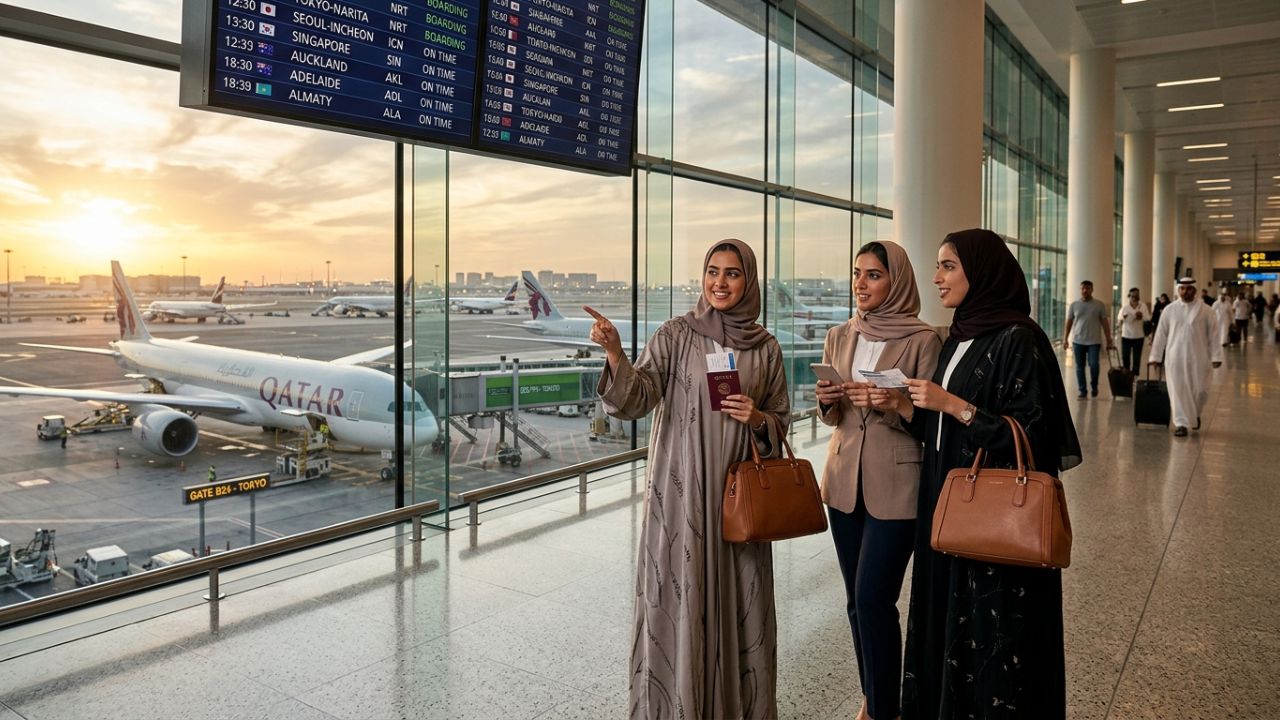
Image generated by AI
In a massive strategic realignment designed to permanently bypass the severe travel chaos paralyzing the fragile Northern Middle East airspace, Gulf megacarriers have officially executed a historic network expansion. Reported on June 20, 2026, as exhausted long-haul passengers frantically monitor the latest airline news for an escape from sudden flight cancellations and agonizing Europe-to-Asia detours, Qatar Airways, flydubai, and Oman Air are rapidly rebuilding their intercontinental connectivity. This massive fleet redirection is actively eliminating the catastrophic airport disruptions caused by closures over Iran, Iraq, and Syria. By aggressively shifting traffic flows toward secure southern corridors over the Arabian Sea, these Gulf giants are guaranteeing highly reliable, uninterrupted access to massive Asian markets, cementing this route recalibration as today's most crucial headline in breaking aviation updates.
By introducing direct passenger coordination and dynamic scheduling backups, the regional aviation hubs target growing passenger demand across vital commerce sectors. The choice to coordinate flight departures in phases helps to manage gate capacity, supporting the country's broader regional transportation network.
Context: Eradicating the Northern Airspace Nightmare
For the modern traveler relying on traditional Europe–Asia corridors, the ongoing geopolitical instability across the Northern Middle East is the absolute ultimate exposure to structural transit failure and catastrophic delays.
Historically, closures over Iran, Iraq, and Syria forced global airlines into massive, highly inefficient rerouting protocols. These enforced diversions directly triggered immense travel chaos, forcing European legacy carriers to adopt extended flight paths that added two to five hours of agonizing detour time per flight. This crippling inefficiency destroyed passenger connections, decimated airline fuel budgets, and created cascading airport disruptions. However, the geographic positioning of Qatar Airways, flydubai, and Oman Air has completely dismantled this logistical nightmare. By exploiting secure southern corridors, these carriers bypass the volatility entirely. This structural advantage allows Gulf airlines to maintain incredibly efficient, direct routing into Asia, effectively absorbing redirected global passenger demand while shielding intercontinental tourists and corporate executives from the extreme fatigue and unreliability of fragile northern transit zones.
To view live flight schedules, verify the active deployment of these secure southern air corridors, or to track potential route restorations prior to heading to the airport, travelers must consult official aviation directories. For direct updates regarding how this massive Gulf realignment might shield you from current flight cancellations out of Europe, travelers should aggressively utilize the official digital portals of Qatar Airways, flydubai, or Oman Air. To explore live flight tracking and monitor the exact severity of the cascading bottlenecks paralyzing alternative northern airspace, passengers can consult the official FlightAware tracking service.
Section-Wise Breakdown: The Southern Corridor Strategy
Qatar Airways: Massive Network Reinstatement
A massive operational recovery phase has been fully executed by Qatar Airways, scaling its Summer 2026 schedule to an imposing 160 destinations. To shield long-haul connectivity from northern gridlock, the airline has successfully restored high-demand Asian lifelines, including Osaka (KIX), Tokyo Haneda, Adelaide, and Auckland. Furthermore, strategic expansion into Central Asia via Almaty, Baku, and Tashkent has established alternative, secure routing corridors. By reactivating stored widebody aircraft and upgrading the premium passenger experience—deploying Starlink high-speed Wi-Fi on over 140 aircraft—Qatar Airways is completely monopolizing the chaos-averse business travel segment.
flydubai: The High-Capacity Feeder Fortress
Operating in lethal coordination with Emirates, flydubai has successfully recovered approximately 75% of its pre-crisis operational capacity out of Dubai International Airport (DXB). Recognizing the vulnerabilities of northern routes, flydubai has intensified its focus on short-to-medium-haul Asian feeder markets. By increasing frequency on secure, high-demand routes, flydubai effectively acts as a massive funnel for Gulf long-haul traffic. This strategy guarantees that passengers can seamlessly bypass congested corridors, ensuring sustained traffic absorption and absolute transit efficiency through the DXB mega-hub.
Oman Air: Tactical Central Asian Penetration
Oman Air has aggressively leveraged its extreme southern geographic advantage to execute a targeted route development strategy out of Muscat. Highlighting this expansion is the newly launched direct service to Tashkent (TAS) in June 2026, designed explicitly to enhance Central Asian access while completely bypassing the unstable northern corridors. Following severe cancellations earlier in the year, Oman Air has successfully utilized the secure airspace over the Arabian Sea to recalibrate its network, safely restoring critical routes across the Indian subcontinent and fortifying its operational stability.
Technical Roster: Official Gulf Aviation Routing & Network Expansion Matrix
To ensure absolute factual accuracy regarding the exact sovereign fleet deployments, specific aircraft upgrades, and strategic hub operations defining this massive Asian aviation expansion, the following matrix details the strictly verified data:
Official Gulf Aviation Routing & Network Expansion Matrix
| Carrier & Hub | Key Asian Targets & Corridors | Verified Operational Upgrades |
|---|---|---|
| Qatar Airways (Doha) | Osaka (KIX), Tokyo Haneda, Adelaide, Auckland, Almaty, Baku, Tashkent | Scaled to >160 destinations; Starlink Wi-Fi deployed on >140 aircraft; widebody fleet reactivated. |
| flydubai (Dubai - DXB) | Asian regional feeder markets; Southern corridor integration | Recovered ~75% pre-crisis capacity; deeply coordinated hub scheduling with Emirates. |
| Oman Air (Muscat) | Tashkent (TAS), Indian Subcontinent, Central Asia | Launched new direct Muscat-Tashkent service (June 2026); heavy reliance on secure Arabian Sea routing. |
| European Legacy Competitors | Blocked Northern Middle East Airspace (Iran, Iraq, Syria) | Suffering catastrophic 2 to 5 hour detours; escalating fuel costs and cascading delays. |
Data accurately reflects the verified destination targets, strategic routing protocols, and operational recovery metrics driving the Gulf aviation realignment as of June 2026.
Industry Analysis: The Economic Destruction of Northern Corridors
Aviation analysts monitoring the intensely competitive Europe-Asia transit market note that this massive Gulf realignment is a highly tactical strike designed to bankrupt airlines reliant on fragile northern corridors.
Analysts emphasize that the ongoing airspace closures over Iran, Iraq, and Syria have fundamentally destroyed the routing economics of European legacy carriers. A two-to-five hour detour is not merely an inconvenience; it destroys crew scheduling limits, decimates fuel margins, and obliterates the viability of connecting flights at the destination. In stark contrast, Qatar Airways, flydubai, and Oman Air possess the geographical immunity to operate via the southern Arabian Sea corridors. This allows Gulf carriers to maintain direct, highly efficient flight paths. Passengers and corporate travel departments are overwhelmingly shifting their bookings to Doha, Dubai, and Muscat to bypass these agonizing detours, proving that geographical stability is now the ultimate competitive weapon in global aviation.
Actionable Advice for Intercontinental Travelers
Because the collapse of the northern corridors fundamentally alters the logistics of reaching Asia, international tourists and business executives must execute this strategic booking checklist immediately:
- Abandon European Legacy Hubs for Asian Transit: If you are flying from Europe to Asia or Oceania, immediately stop booking direct European carriers that are forced to navigate the massive 5-hour detours around the Middle East. Book your tickets exclusively through Qatar Airways, flydubai, or Oman Air to utilize the secure southern corridors and completely eliminate agonizing transit delays.
- Exploit the New Central Asian Corridors: If your final destination is within Central Asia, completely avoid utilizing fragmented local airlines. Utilize the new, secure lifelines provided by Qatar Airways (Almaty, Baku) or Oman Air (Tashkent) to guarantee highly reliable, scheduled connectivity that bypasses localized travel chaos.
- Demand Premium Connectivity: Because you are leveraging Gulf megahubs to bypass global gridlock, ensure you exploit their operational upgrades. When booking Qatar Airways, specifically verify that your widebody aircraft is equipped with the newly deployed Starlink Wi-Fi (available on >140 aircraft) to maintain absolute productivity while traversing the secure southern corridors.
FAQ: Gulf Aviation Asian Expansion
How are Gulf airlines bypassing the Northern Middle East travel chaos?
Qatar Airways, flydubai, and Oman Air are aggressively shifting flight paths southward over the Arabian Sea, completely avoiding the fragile, closed airspaces of Iran, Iraq, and Syria.
How severe are the detours for airlines that cannot use these southern routes?
European legacy carriers forced to divert around the closed northern corridors are currently suffering catastrophic detours that add two to five additional hours of flight time.
Which specific new routes have been launched to support this expansion?
Strategic lifelines have been rapidly restored or launched, including Qatar Airways' reinstated flights to Osaka and Tokyo, and Oman Air’s newly launched direct service from Muscat to Tashkent.
The Reality of Geographic Superiority
The massive strategic integration of southern routing corridors by Qatar Airways, flydubai, and Oman Air proves definitively that leveraging geographic stability is the ultimate weapon against systemic global travel chaos. By physically diverting massive widebody fleets away from the volatile Northern Middle East, these Gulf megacarriers have successfully guaranteed that intercontinental passengers can escape the terrifying gridlock and 5-hour detours plaguing legacy airlines. Yet, as passengers frantically book these secure Gulf flights for their Asian transit, they must accept a critical new reality: surviving the massive disruptions of modern global commerce demands tactical routing. Navigating the highly saturated 2026 airspace requires a complete refusal to accept unnecessary detours on fragile European networks, and the absolute discipline to fly exclusively through the secure, heavily fortified transit hubs of the Arabian Gulf.
Key Takeaways
- Massive Corridor Realignment: Gulf carriers are aggressively shifting Asian flight paths to secure southern corridors, completely bypassing the closed airspaces of Iran, Iraq, and Syria.
- Elimination of 5-Hour Detours: By utilizing the Arabian Sea routes, Qatar Airways, flydubai, and Oman Air shield passengers from the catastrophic 2 to 5 hour delays currently crushing European legacy carriers.
- Qatar Airways Supremacy: Qatar Airways has scaled to 160 destinations, reactivated widebody jets, and deployed Starlink Wi-Fi on over 140 aircraft to dominate the Asian premium market.
- Oman Air’s Central Asian Strike: Oman Air launched a critical new direct route from Muscat to Tashkent (TAS) in June 2026 to secure Central Asian connectivity.
- flydubai Hub Recovery: Coordinating with Emirates, flydubai has restored 75% of its pre-crisis capacity, operating as a massive, highly reliable feeder for the Dubai (DXB) megahub.
Related Travel Guides
Massive Travel Chaos Paralyzes Chicago O'Hare with 1,425 Disruptions
Disclaimer
This article is for informational and educational purposes only. It does not constitute legal, financial, or professional advice. While we strive to provide accurate and up-to-date information, travel policies, regulations, and conditions change rapidly. Always verify information with official sources before making travel decisions. Nomad Lawyer makes no representations about the accuracy, reliability, completeness, or suitability of the information provided. Readers should consult qualified professionals for advice specific to their circumstances. The views expressed in this article are those of the author and do not necessarily reflect the views of Nomad Lawyer.
Kunal K Choudhary
Co-Founder & Contributor
A passionate traveller and tech enthusiast. Kunal contributes to the vision and growth of Nomad Lawyer, bringing fresh perspectives and driving the community forward.
Learn more about our team →