
Orbiting Skies and Coral Atolls: Inside Qatar Airways’ Connected Route Map to Doha and the Maldives
Qatar Airways pairs 500 Mbps Starlink connectivity and Qsuite Next Gen cabins with expanded global routes, linking 65 million passengers through Hamad Airport to the cultural alleys of Doha and the coral sanctuaries of the Maldives.

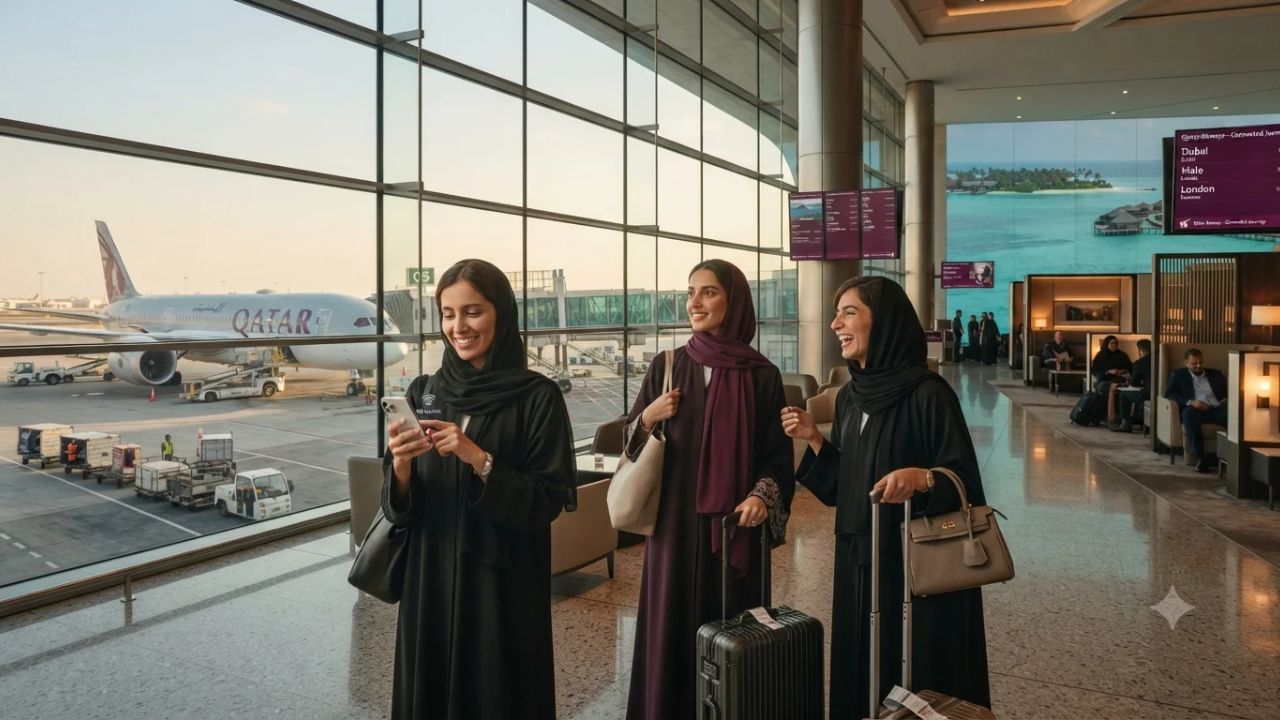
Qatar Airways integrates high-speed Starlink Wi-Fi and Qsuite Next Gen across its expanding network connecting Doha and the Maldives
While commercial aircraft cabins were long regarded as the final sanctuary where travelers were forced offline, more than twenty-three million passengers have streamed high-definition video and conducted real-time video calls at thirty-five thousand feet since Qatar Airways introduced Starlink satellite connectivity in October 2024. In an expansive showcase presented at the Arabian Travel Market (ATM) in Dubai—an industry convention that brought together over 2,800 exhibitors and more than 55,000 travel professionals representing 166 countries under the banner of developing tomorrow's tourism through enhanced connectivity—the Doha-based carrier revealed how digital engineering, artificial intelligence, and cabin design are converging to reshape long-haul aviation. By August 2026, the airline reached 150 Starlink-equipped widebody aircraft delivering inflight data speeds up to 500 Mbps across as many as 323 daily flights, a schedule projected by Qatar’s Civil Aviation Authority to expand to 340 daily connected flights during the upcoming winter season.
The technological deployment signals a fundamental rethink of what long-distance flying represents. Rather than treating flight hours as an unproductive, disconnected void between continents, international voyagers can now work without interruption, stream entertainment, and stay in direct contact with families on the ground. By pairing high-speed connectivity with bespoke cabin hardware, virtual reality planning tools, and targeted destination partnerships, the airline is redefining the entire travel experience from initial booking to arrival.
High-Speed Skies and Quad Suites: Inside Qatar Airways’ Connected Vision
At the core of this aviation transformation sits Qsuite Next Gen, the airline's latest evolution of its business-class cabin. Designed for enhanced flexibility, the updated layout introduces Quad Suites configured for groups of four colleagues or family members, alongside Companion Suites for couples. The suites incorporate movable 4K OLED entertainment screens, digitally controlled privacy dividers, increased dining space, ambient lighting, and a dedicated “Make My Bed” service, balancing shared social space with personal seclusion.
On the ground, digital planning is becoming increasingly conversational. The airline introduced an Arabic-speaking version of Sama, its AI-powered digital human cabin crew capable of communicating in Modern Standard Arabic and regional Arabic dialects. Accessible through mobile apps and the virtual QVerse platform, Sama assists travelers with flight bookings, baggage inquiries, and destination recommendations. Additionally, travelers can take virtual reality tours of The ORCHARD, the indoor tropical garden at Hamad International Airport, familiarizing themselves with transit concourses before their flight departs.
This digital infrastructure supports a massive physical hub expansion. A recently completed capital project increased Hamad International Airport’s annual throughput capacity to more than 65 million passengers, adding two concourses and 17 boarding gates. For the winter 2026–27 season, Qatar Airways plans to serve more than 170 destinations worldwide, operating nearly 1,800 weekly frequencies during December 2026. The schedule introduces expanded services to Tokyo Narita, Manchester, Madrid, Lisbon, London Heathrow, Zanzibar, Seychelles, Johannesburg, Kuala Lumpur, and Canberra.
Strategic tourism alliances anchor this network growth. Through a formal memorandum of understanding with Visit Maldives, the carrier is collaborating on international promotional campaigns, trade partnerships, and educational outreach to channel leisure travelers directly into the island nation. A similar tourism partnership signed with Indonesia's Ministry of Tourism reinforces the objectives of the Qatar National Development Strategy 2024–2030, establishing aviation as a primary driver of cultural exchange and economic diversification.
From Mud-Brick Souqs to Turquoise Atolls: What Makes the Doha–Maldives Corridor Unmatched
What gives this technological expansion its real charm is the sensory journey it unlocks between the Persian Gulf and the Indian Ocean. Flying through Doha allows travelers to experience an intriguing contrast: an ultra-modern global aviation hub nestled against an ancient Arabian trading post.
Stepping out of the climate-controlled concourses of Hamad International Airport brings travelers into the cultural heart of Doha. At Souq Waqif, mud-plastered alleyways, timber-beamed arcades, and open courtyards preserve the atmosphere of a nineteenth-century Bedouin marketplace. The air carries the rich scents of frankincense resin (luban), crushed cardamom, and sweet shisha smoke. In the Falcon Souq, master handlers tend to hooded hunting falcons resting on burlap perches, while nearby camel stables recall centuries of desert caravans.
Along the Doha Corniche, world-class architecture celebrates regional arts. Rising from an artificial island, the Museum of Islamic Art—designed by architect I.M. Pei—houses fourteen centuries of calligraphy, illuminated manuscripts, metalwork, and ceramics. North of the capital on the coast sits the UNESCO World Heritage Centre inscribed Al Zubarah Archaeological Site, a remarkably preserved eighteenth-century fortified pearl-fishing port that reveals the Gulf's maritime history before the oil era.
Boarding an onward flight to Malé transports travelers into an entirely different paradise. The Maldives unfolds beneath aircraft wings as a scattered constellation of coral atolls resting in turquoise lagoons. From the bustling seaplane docks of Velana International Airport, twin-engine floatplanes fly visitors directly to secluded island resorts and local island guesthouses, trading Doha’s desert architecture for coral reefs, overwater villas, and ocean breezes.
Visitor Insider Tips
Experiencing the Doha-to-Maldives corridor with insider efficiency requires local planning and savvy transit choices:
- Relaxing Inside The ORCHARD: During long connections at Hamad International Airport, skip standard terminal seating and walk to The ORCHARD in the North Terminal. This indoor botanical sanctuary features winding gravel paths, canopy viewing platforms, and thousands of tropical trees beneath an expansive glass roof, offering a tranquil natural space to unwind between flights.
- The Discover Qatar Stopover Advantage: Passengers transiting through Doha with connection windows of twelve hours or more can book luxury stopover hotel packages through Discover Qatar starting from just fourteen US dollars per person. This allows you to explore the city for one or two nights without incurring high accommodation expenses.
- Souq Waqif Dining and Tea Customs: Visit Souq Waqif after 17:30 when the heat dissipates and local families gather. Order a cup of sweet karak tea (spiced with crushed cardamom, ginger, and saffron) from street stalls, and dine on fragrant machboos (spiced basmati rice with slow-cooked lamb) at traditional restaurants like Al Jasra.
- Doha Metro Transit Hack: Avoid road traffic entirely by taking the modern, driverless Doha Metro Red Line directly from the airport terminal into central Msheireb Downtown and Souq Waqif in just fifteen minutes for only two Qatari riyals.
- Planning Coral Reef Safaris: Consult seasonal whale shark and manta ray migration charts through official visitor portals at Visit Qatar and Visit Maldives to coordinate domestic seaplane transfers with peak marine wildlife activity.
Cultural and Environmental Context
Connecting millions of travelers across sensitive desert and marine environments requires deep ecological awareness. In Qatar, rapid infrastructural modernization is balanced with marine conservation. The shallow coastal waters surrounding the peninsula support the world's second-largest population of dugongs, prompting strict environmental protections across sea-grass grazing beds. Along the northern coast, the mangrove forests of Al Thakira serve as a vital coastal sanctuary for migratory flamingos and juvenile fish, where eco-tour operators enforce strict non-motorized kayaking regulations.
In the Maldives, the delicate nature of low-lying coral atolls makes sustainable tourism an urgent priority. Rising ocean temperatures and sea levels threaten fragile coral ecosystems. Through destination partnerships, tourism authorities encourage visitors to patronize resorts that run active coral regeneration nurseries, eliminate single-use plastics, and generate electricity through rooftop photovoltaic arrays.
On an operational level, Qatar Airways’ investments in digital flight path optimization, modern lightweight widebody aircraft, and high-speed Starlink connectivity serve broader sustainability goals. Real-time satellite data allows flight dispatchers to adjust flight levels and navigation routes to avoid headwinds, optimizing fuel burn and reducing overall carbon emissions across long-haul journeys.
FAQ: Traveling Doha and the Maldives in 2026
How do passengers connect to Starlink Wi-Fi on Qatar Airways flights?
Passengers aboard Starlink-equipped aircraft can connect their personal devices seamlessly to high-speed inflight Wi-Fi with one click, completely free of charge, with data speeds reaching up to 500 Mbps.
What is the Qatar Airways stopover transit program?
The program allows international travelers with layovers in Doha to book subsidized four-star and five-star hotel stays from fourteen US dollars per night, turning a simple connection into a mini-vacation.
How do travelers reach central Doha from Hamad International Airport?
The driverless Doha Metro Red Line connects the airport terminal directly to Msheireb and Souq Waqif stations in approximately fifteen minutes for two Qatari riyals.
What is the best season to combine Doha and the Maldives?
November through April provides optimal travel conditions, offering mild temperatures in Qatar and dry, sunny weather with peak water visibility for diving across the Maldives.
From high-speed satellite connectivity soaring above desert clouds to the quiet lap of Indian Ocean waves on coral sands, modern travel proves that seamless technology makes the world feel wonderfully close.
Related Travel Guides
- Mountain Peaks and Charter Runways: How Ras Al Khaimah Airport’s Expansion Reinvents UAE Leisure Travel
- The Modern Silk Road Takes Flight: How Uzbekistan Airways and Lufthansa Technik Elevate Central Asian Travel
- Cross-Continental Air Corridors: How LATAM’s Customer Day Deals Unlock the Wild Contrasts of Brazil
Disclaimer
This article is for informational and educational purposes only. It does not constitute legal, financial, or professional advice. While we strive to provide accurate and up-to-date information, travel policies, regulations, and conditions change rapidly. Always verify information with official sources before making travel decisions. Nomad Lawyer makes no representations about the accuracy, reliability, completeness, or suitability of the information provided. Readers should consult qualified professionals for advice specific to their circumstances. The views expressed in this article are those of the author and do not necessarily reflect the views of Nomad Lawyer.
Raushan Kumar
Founder & Lead Developer
Full-stack developer with 11+ years of experience and a passionate traveller. Raushan built Nomad Lawyer from the ground up with a vision to create the best travel and law experience on the web.
Learn more about our team →