
Mountain Peaks and Charter Runways: How Ras Al Khaimah Airport’s Expansion Reinvents UAE Leisure Travel
Ras Al Khaimah International Airport targets 2 million passengers following a 51 percent traffic surge, preparing widebody runways and direct European and Asian routes to serve the UAE’s outdoor adventure capital.

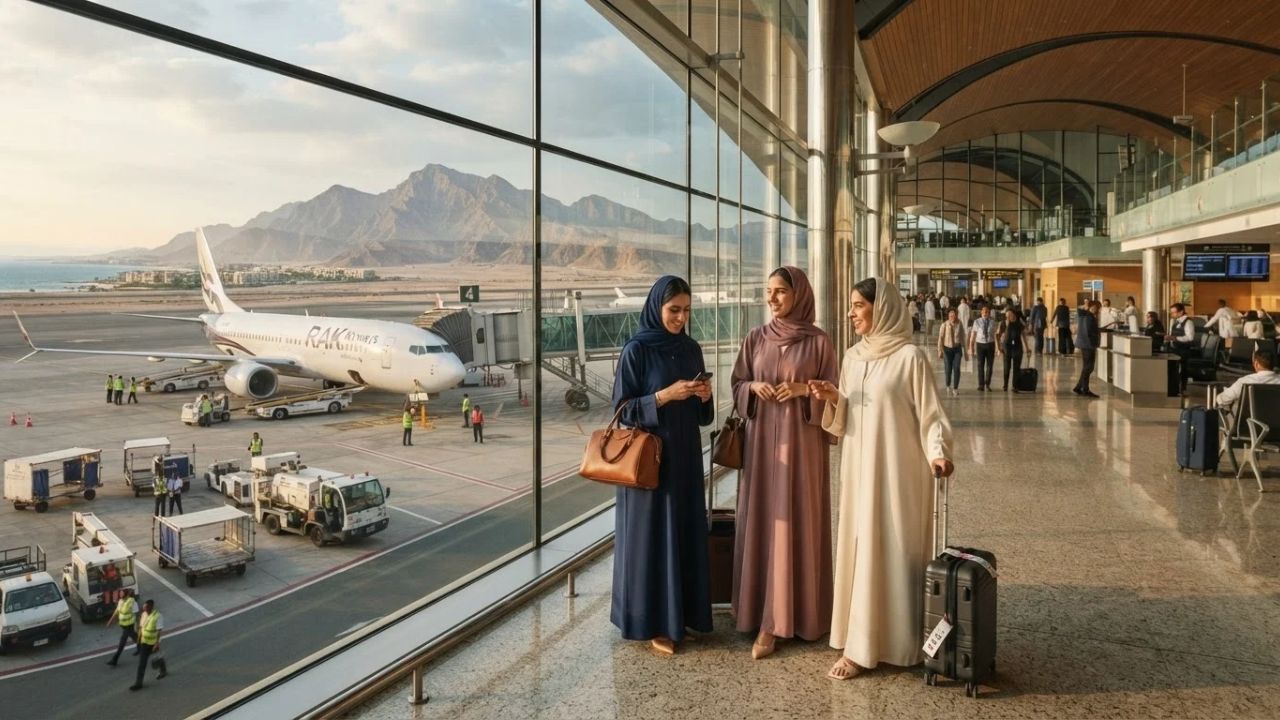
Ras Al Khaimah International Airport accelerates global leisure connectivity to support the emirate’s rapid tourism expansion
While the northernmost emirate of Ras Al Khaimah welcomed approximately 1.4 million international tourists last year, its local airport captured only a modest fraction of that arriving demand—yet after posting a dramatic 51 percent traffic surge in 2025 to reach one million passengers, the gateway is orchestrating an aggressive pivot directly toward global leisure travelers. In an exclusive interview, Manish Seth, Chief Executive Officer of Ras Al Khaimah International Airport, detailed the strategic blueprint to double terminal traffic and achieve a target milestone of 2 million passengers. Currently serving 15 cities across five countries through scheduled and charter flights, the gateway is actively diversifying beyond its traditional base of visiting friends and relatives (VFR) traffic. By utilizing its 3,600-meter-long widebody-ready runway and capitalizing on the upcoming opening of the Wynn integrated resort on Al Marjan Island next year, the airport is preparing to launch direct long-haul flight links connecting travelers from the United Kingdom, Germany, and China by the end of 2027.
The expansion marks a decisive shift in how international visitors access the United Arab Emirates. For decades, travelers bound for the northern emirates arrived almost exclusively through congested mega-hubs in neighboring Dubai or Sharjah, enduring lengthy highway transfers. By expanding direct flight schedules, Ras Al Khaimah is establishing itself as an independent, friction-free arrival portal that places holidaymakers on mountain hiking paths, desert dunes, and tranquil beaches within minutes of clearing customs.
The Two-Million Milestone: Inside RAK Airport’s Leisure Aviation Blueprint
Ras Al Khaimah International Airport’s ongoing transformation reflects the wider economic ambitions of the emirate. Manish Seth explained that while 2025's 51 percent growth established solid operational foundations, the airport's strategic priority is unlocking dedicated leisure tourism. Today, scheduled and charter services link the facility with five key countries:
- Regional and South Asian Scheduled Routes: High-frequency passenger services connecting destinations across India and Pakistan, alongside flights linking Cairo in Egypt and Jeddah in Saudi Arabia.
- Eastern European and Eurasian Flight Corridors: Scheduled connections to Russian hubs including Moscow, Kazan, and Yekaterinburg, complemented by seasonal European charter flights operating from Warsaw and Katowice in Poland, Prague in the Czech Republic, and Bucharest in Romania.
The airport is actively courting major carriers from the United Kingdom and Germany, which Seth identified as ranking among the top five tourist source markets for the emirate. Additionally, the upcoming debut of the Wynn integrated resort next year on Al Marjan Island is poised to generate significant leisure visitor demand from Europe, South Asia, and China.
To support this demand, Ras Al Khaimah International Airport is preparing its physical infrastructure for long-haul operations. With a 3,600-meter runway engineered to handle widebody passenger aircraft, the airport is working toward introducing long-haul services to the UK or China sometime next year, with dedicated direct China connectivity targeted for the end of 2027.
What Makes Ras Al Khaimah the Wild Outdoor Frontier of the Emirates
Unlike the ultramodern glass canyons of Dubai or Abu Dhabi, Ras Al Khaimah presents an untamed, dramatic terrain shaped by raw geology and seven millennia of continuous human settlement. It is an emirate where terracotta desert sands give way to tidal mangrove creeks and the soaring limestone escarpments of the Hajar Mountains.
At the center of this outdoor appeal stands Jebel Jais, the highest mountain peak in the United Arab Emirates, rising 1,934 meters above the Arabian Gulf. The mountain has become a global destination for adventure seekers, hosting Jais Flight—the world's longest zipline, spanning 2.83 kilometers across dramatic canyon chasms—alongside the Jais Sledder alpine coaster and miles of marked mountain hiking trails. Temperatures at the summit remain ten to twelve degrees Celsius cooler than at sea level, offering a temperate mountain sanctuary even during warmer seasons.
Down along the coast and alluvial plains, the emirate protects remarkable archaeological monuments. High on a jagged limestone hill sits Dhayah Fort, the only surviving hilltop military fortification in the UAE, inscribed on the UNESCO World Heritage Centre Tentative List. Here, indigenous Qawasim defenders staged a heroic last stand against British naval forces in 1819. In the nearby coastal lagoon of Al Rams, the Suwaidi Pearls farm preserves the historic pearling traditions that sustained Gulf maritime communities for centuries. Further south, the evocative ghost town of Al Jazirah Al Hamra preserves hundreds of eighteenth-century coral-stone houses, wind towers, and mosques, standing as the last intact traditional seafaring village in the Arabian Gulf.
Visitor Insider Tips
Navigating Ras Al Khaimah with insider expertise ensures you avoid tourist bottlenecks and discover the emirate's authentic wilderness:
- Frictionless Terminal Arrivals: Arriving directly into Ras Al Khaimah International Airport is an enormous time-saver. Passenger processing from jetway to taxi curb typically takes under twenty minutes. Rental car desks are situated directly in the compact arrivals hall, allowing travelers to reach beach resorts on Al Marjan Island in twenty-five minutes or reach Jebel Jais basecamp in under an hour.
- Morning Window for Jebel Jais: Plan mountain excursions for early morning. The winding scenic mountain highway is practically empty before 08:30, and canyon air is at its crispest. Book early morning slots for Jais Flight to enjoy crystal-clear panoramic visibility stretching across the mountain ridges toward the Musandam Peninsula of Oman before desert heat creates atmospheric haze.
- Authentic Pearling Tours in Al Rams: Reserve your excursion to the Suwaidi Pearl Farm in advance. Visitors board a traditional wooden dhow to navigate through shallow mangrove waters populated by wild flamingos. During the tour, local pearl experts demonstrate historical free-diving equipment—including sheep-bone nose clips and turtle-shell diving knives—and open live oysters for guests.
- Dhayah Fort at Sunset: Avoid climbing the 239 stone steps of Dhayah Fort during midday heat. Arrive around 17:15 to climb the ramparts as the late-afternoon sun casts golden light across surrounding date palm oases and the distant sea, creating the most atmospheric photography conditions in the region.
- Local Culinary Etiquette: Dine at family-run heritage eateries in Old Ras Al Khaimah city, such as Al Fanar, and order fragrant machboos (spiced rice slow-cooked with fresh local fish, dried limes, and saffron) accompanied by fresh flatbread and sweet cardamom tea.
- Planning Adventure Trails: Review detailed topo hiking maps and climbing route guides through the official tourism portal at Visit Ras Al Khaimah.
Cultural and Environmental Context
Ras Al Khaimah’s rapid tourism expansion operates within a thoughtful conservation framework. The government has prioritized sustainable tourism development, ensuring that new mountain resorts and coastal developments adhere to strict ecological standards. On Jebel Jais, environmental rangers protect rare wildlife corridors, providing sanctuary for indigenous Arabian tahr, mountain gazelles, and caracals among secluded rock fissures.
Along the Arabian Gulf coast, the emirate's expansive mangrove lagoons are recognized as critical marine nurseries. Mangrove ecosystems around Khor Ras Al Khaimah absorb carbon, protect shoreline soils against sea-level rises, and provide foraging grounds for migrating greater flamingos and reef herons. Municipal regulations strictly prohibit motorized watercraft from entering the inner mangrove channels, limiting access to eco-friendly guided kayak and paddleboard excursions.
Cultural preservation is equally prioritized. Rather than bulldozing historic quarters to make way for modern towers, the Department of Antiquities and Museums has carefully conserved the coral-stone architecture of Al Jazirah Al Hamra, transforming the historic settlement into an open-air cultural center that hosts the annual Ras Al Khaimah Art Festival. By celebrating traditional boatbuilding, poetry, and artisanal crafts, the emirate ensures that rapid airport expansion and international leisure arrivals celebrate, rather than displace, its rich heritage.
FAQ: Visiting Ras Al Khaimah in 2026
How far is Ras Al Khaimah from Dubai International Airport?
Ras Al Khaimah sits approximately eighty-five kilometers north of Dubai, taking forty-five to sixty minutes by car or airport express bus along modern multi-lane highways.
What airlines operate flights to Ras Al Khaimah International Airport?
The airport hosts scheduled and charter flights from carriers across India, Pakistan, Egypt, Saudi Arabia, Russia, Poland, the Czech Republic, and Romania, with long-haul services expanding.
When is the best season to explore Ras Al Khaimah?
October through April offers ideal outdoor weather with daytime temperatures between twenty-two and twenty-eight degrees Celsius, perfect for mountain trekking, desert camping, and beach activities.
Can visitors reach Jebel Jais without renting a private vehicle?
The Jebel Jais Shuttle bus runs daily from major hotels in central Ras Al Khaimah and Al Marjan Island up to the mountain viewing deck park, offering an affordable transit option.
Where towering red mountains plunge directly into emerald Arabian waters, Ras Al Khaimah proves that the true soul of the Emirates is found in quiet canyons and enduring maritime traditions.
Related Travel Guides
- The Modern Silk Road Takes Flight: How Uzbekistan Airways and Lufthansa Technik Elevate Central Asian Travel
- Cross-Continental Air Corridors: How LATAM’s Customer Day Deals Unlock the Wild Contrasts of Brazil
- The Iberian Atlantic Wave: Inside Portugal’s Record-Breaking Summer Aviation Boom and Travel Guide
Disclaimer
This article is for informational and educational purposes only. It does not constitute legal, financial, or professional advice. While we strive to provide accurate and up-to-date information, travel policies, regulations, and conditions change rapidly. Always verify information with official sources before making travel decisions. Nomad Lawyer makes no representations about the accuracy, reliability, completeness, or suitability of the information provided. Readers should consult qualified professionals for advice specific to their circumstances. The views expressed in this article are those of the author and do not necessarily reflect the views of Nomad Lawyer.
Raushan Kumar
Founder & Lead Developer
Full-stack developer with 11+ years of experience and a passionate traveller. Raushan built Nomad Lawyer from the ground up with a vision to create the best travel and law experience on the web.
Learn more about our team →