Qatar Airways Calls Iran Conflict Its Biggest Crisis in 30 Years as Middle East Flights Recover

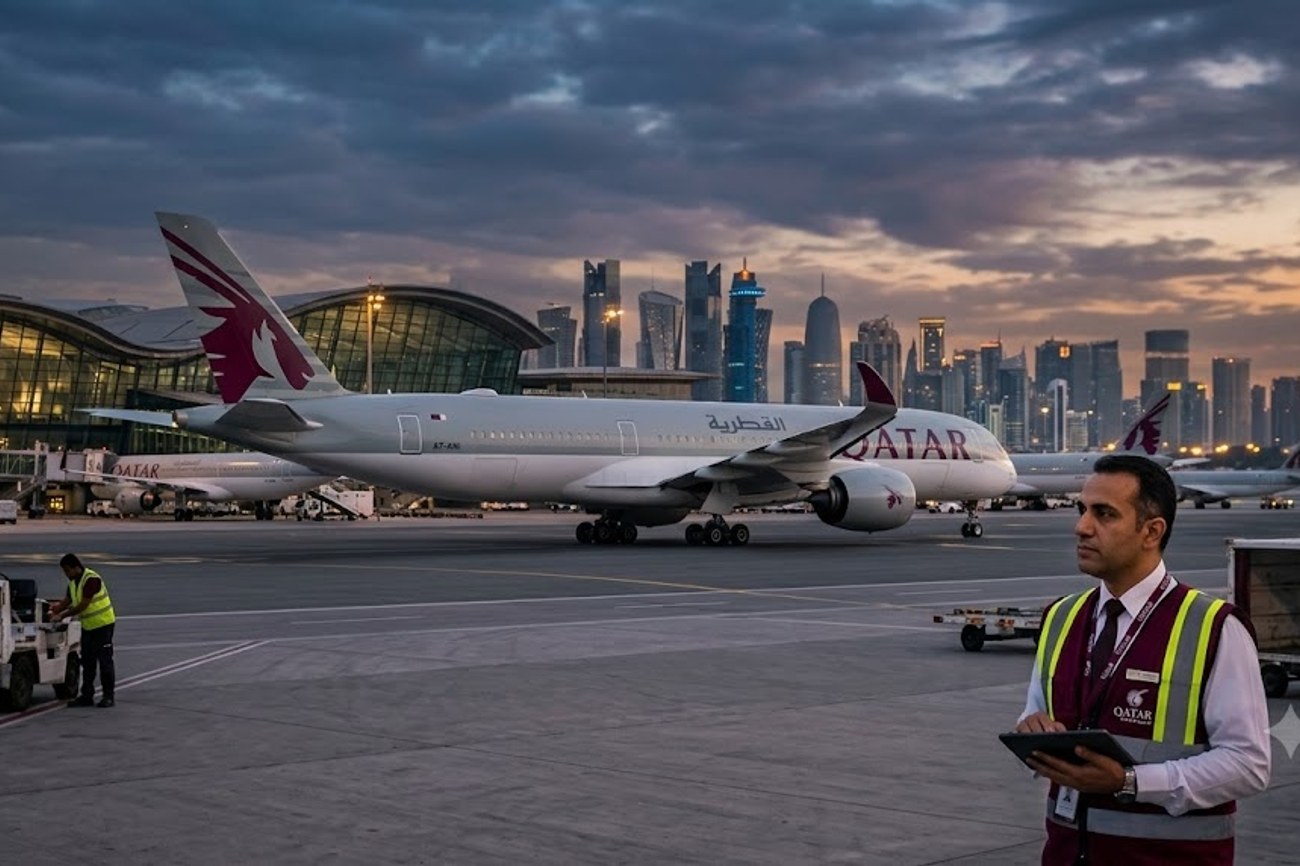
Image generated by AI
[Doha, September 20, 2026] — Qatar Airways is currently navigating the most severe operational crisis in its 30-year history as ongoing conflict in Iran forces a wholesale reconfiguration of Middle East aviation. Chief Executive Officer Hamad Al-Khater confirmed the scale of the upheaval during a Bloomberg TV interview, noting that the geopolitical instability has fundamentally disrupted airspace access, aircraft deployment, and passenger booking patterns.
The crisis arrives despite a period of significant financial strength for the carrier. For the 2025/26 financial year, the airline group reported a post-tax profit of QAR7.08 billion (approximately US$1.94 billion) on total revenues of QAR83.75 billion. During this period, the carrier transported 41.8 million passengers and moved more than 2.8 million tonnes of cargo. The airline currently operates a fleet of more than 300 aircraft and employs over 57,800 staff.
Geopolitical Airspace Restrictions
The immediate trigger for this crisis is the volatility of Iranian airspace and the surrounding region, which serves as a primary corridor for flights connecting Europe, Asia, Africa, and the Americas. Because Hamad International Airport functions as a global transit hub, any restriction on Gulf airspace creates a ripple effect across the entire international flight network.
CEO Hamad Al-Khater stated that geopolitical management has become a daily operational requirement. The crisis is characterized by a "perfect storm" of restricted flight paths, shifting passenger psychology, and a volatile energy market. When airspace is closed or restricted, the airline must execute immediate rerouting, which extends flight durations, alters aircraft rotation cycles, and disrupts tight connecting windows for transit passengers.
Markets and Routes Under Pressure
Despite the instability, Qatar Airways is aggressively restoring its network to pre-crisis levels. The recovery has occurred in distinct phases:
- June 2026 Milestone: The airline restored 85% of its pre-crisis network, maintaining over 140 daily departures from Doha to more than 160 destinations.
- September 2026 Winter Plan: The carrier is expanding to more than 170 destinations, with a schedule featuring over 186 weekly flights across the Middle East, Europe, the Americas, Asia Pacific, and Africa.
- UAE Restoration: Daily services to Dubai and Sharjah resumed in April, followed by Damascus in May. Abu Dhabi now sees twice-daily passenger services.
- Saudi Arabian Expansion: For the winter season, services to Tabuk, Yanbu, Taif, and Qassim are returning, pushing the total Saudi network to over 155 weekly flights.
Practical Traveler Advisory and Strategic Insights
For the average passenger, the corporate language of "operational challenges" translates into several tangible risks and changes in the travel experience.
Flight Durations and Scheduling Because airlines are forced to avoid restricted airspace, flight paths are longer. Passengers should expect increased time spent in the air and potential shifts in departure and arrival times. The reliance on diverted routes also increases the likelihood of delays if secondary corridors become congested.
Pricing Volatility The most immediate financial pressure is the cost of fuel. Jet fuel prices have surged by 90% since the start of the year. According to the International Air Transport Association (IATA), the global average jet fuel price has reached US$194.90 per barrel. While Qatar Airways has not yet passed the full brunt of these costs to the consumer, IATA warns that fuel could consume nearly one-third of all airline operating costs in 2026, with total industry spending estimated at US$350 billion. This creates a high probability of sudden fare increases or the introduction of fuel surcharges.
Booking Risks There is a documented shift in passenger behavior, with travelers booking flights much closer to their departure dates. This "late-booking" trend makes it harder for the airline to forecast demand, which can lead to sudden capacity adjustments or the cancellation of less-profitable flights. Passengers booking far in advance are advised to monitor their itineraries closely, as schedules in geopolitically sensitive regions remain fluid.
The Path Toward Stabilization
The airline is utilizing its strong balance sheet to absorb current shocks while continuing its expansion. A key part of the passenger experience strategy includes the rollout of Starlink connectivity, which has already reached more than 14 million passengers, aiming to maintain service quality despite longer flight times.
The airline is urging all customers to maintain updated contact information via the official Qatar Airways app and website to ensure they receive real-time notifications regarding schedule changes. The focus for the winter 2026/27 season is the aggressive recapture of the Saudi Arabian market and the stabilization of the Doha hub as a reliable transit point.
FAQ: Qatar Airways Operations 2026
Why are my flight times changing or journeys taking longer? Ongoing conflicts in Iran and the surrounding region have restricted access to traditional airspace. Qatar Airways must use longer alternative routes to ensure safety, which increases total flight time and alters scheduled arrival and departure windows.
Will ticket prices increase due to the fuel crisis? Jet fuel prices have risen by 90% this year. While the airline has absorbed some of these costs, the high global average of US$194.90 per barrel puts significant upward pressure on airfares and ticket pricing stability.
Is it safe to book flights through Doha right now? Qatar Airways continues to operate to over 170 destinations and is expanding its winter schedule. However, because geopolitics affect daily operations, passengers should book through official channels and keep contact details updated for immediate alerts.
Which regional routes have been restored? The airline has resumed daily services to Dubai, Sharjah, and Abu Dhabi, as well as services to Damascus. It is also expanding its Saudi Arabian network to include Tabuk, Yanbu, Taif, and Qassim.
Navigating a map in flux requires constant vigilance and a flexible itinerary.
Related Travel Guides
This article is for informational purposes. Flight routes, passenger regulations, visa rules, and transit advisories are subject to change by airlines and aviation authorities. Readers are advised to verify schedules and travel documentation with relevant carriers and border agencies before departure.
Related Stories

Jet Airways vs. Boeing NCLAT Battle: Why Manufacturer Litigation Offers No Quick Ticket Refunds for Indian Travel Agents

easyJet Launches Direct Liverpool to Reykjavik Flights: Inside the North West's New Winter Gateway to Iceland