
Breaking Airline News: Severe Travel Chaos Averted as Qatar and Gulf Allies Aggressively Defend Airspace Against Regional Gridlock
Breaking airline news: Amidst a terrifying era of massive geopolitical tension, Qatar and its Gulf allies execute a highly aggressive airspace defense strategy to completely bypass paralyzing regional security restrictions.

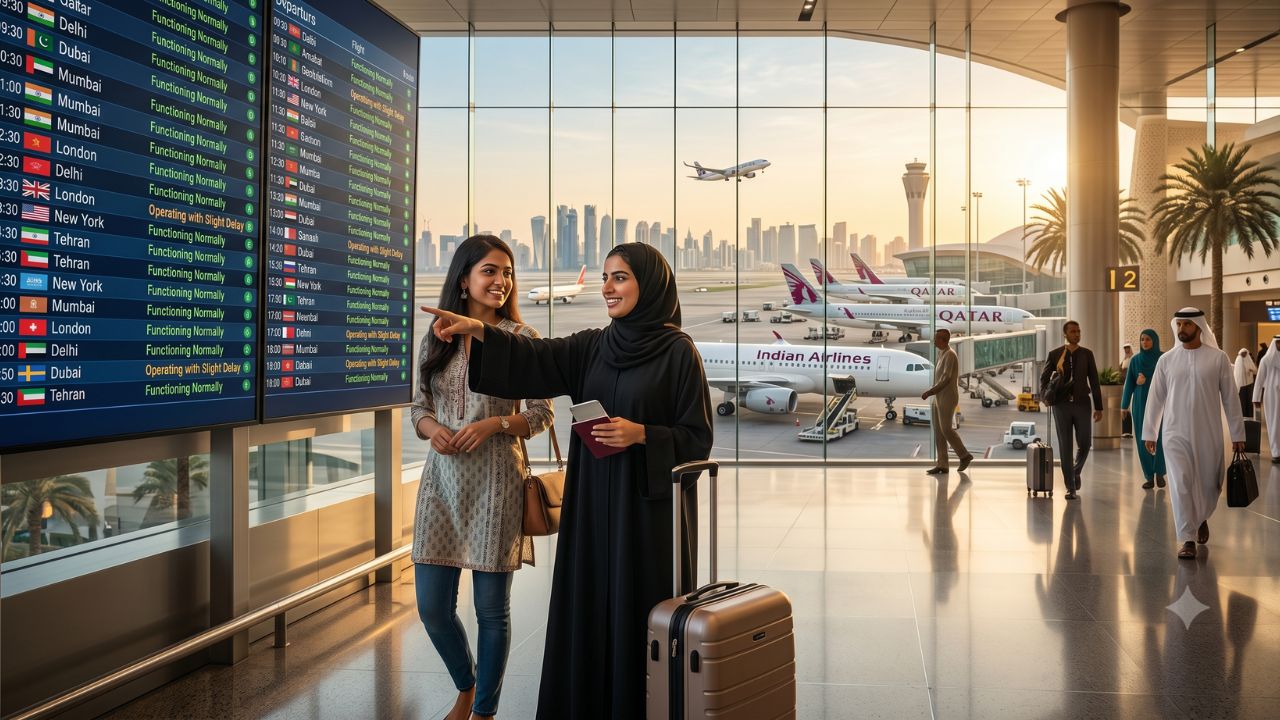
Image representing the intense strategic battle as global aviation leaders aggressively deploy massive rerouting strategies to combat severe passenger congestion and bypass paralyzing regional airspace restrictions.
Breaking Airline News: Severe Travel Chaos Averted as Qatar and Gulf Allies Aggressively Defend Airspace Against Regional Gridlock
As paralyzing airport disruptions, highly constrained operational bandwidth, and severe international security concerns violently sweep through the Middle Eastern aviation network, a massive coalition of regional powers has executed a high-stakes infrastructural maneuver. In a desperate bid to physically rescue millions of intercontinental travelers from the terrifying threat of a complete airspace lockdown, Qatar has forcefully reaffirmed that its critical commercial airspace remains fully operational. Joining a massive defense perimeter alongside India, Saudi Arabia, the United Arab Emirates, Oman, Bahrain, and Iran, Doha's aviation authorities are aggressively deploying dynamic routing bypasses to combat localized restrictions active through June 14, 2026. By actively rerouting commercial fleets away from restricted zones within the Doha Flight Information Region (FIR), this unprecedented global alliance is directly averting severe travel chaos and terrifyingly high flight cancellation rates.
In a harrowing display of modern aviation survival, the sheer volume of geopolitical pressure currently overwhelming standard transit routes is forcing global airline dispatchers to completely rewrite their airspace blueprints. Historically, sudden regional security developments resulted in violently closed borders, grounded fleets, and entirely ruined travel itineraries for millions of passengers connecting between North America, Europe, Africa, and Asia. However, Qatar’s aggressive defense of Hamad International Airport—one of the absolute largest long-haul transit hubs on the planet—is fighting back against this structural collapse. By forcefully establishing alternative flight corridors rather than executing a blanket closure, this massive deployment ensures that airlines can bypass dangerous friction zones, ultimately shielding furious passengers from the agonizing misery of being stranded in a paralyzed terminal.
Expanded Overview: The Massive Scale of the Airspace Defense
The terrifying crisis of overwhelming geopolitical tension currently gripping the global network brutally exposes the severe vulnerability of relying on static flight paths. Recent NOTAM-related restrictions triggered massive online panic, leading desperate passengers to believe Qatar had completely severed its aviation lifelines. However, aviation authorities are attempting to forcefully decompress the tension by executing heavily modified traffic management procedures. Instead of cancelling flights outright and igniting severe travel chaos, airlines are actively choosing longer, highly fuel-intensive flight paths. This aggressive tactical rerouting fits into an evolving operational model where safety considerations drive rapid, dynamic flight planning, ensuring that the interconnected global aviation system does not buckle under regional strain.
Section-Wise Breakdown: The Operational Realignment
Securing the Doha Strategic Gateway
To survive the terrifying surge in passenger anxiety without triggering immediate operational meltdowns, Qatar has deployed a brilliant tactical shield around Hamad International Airport. Recognizing that Doha serves as the absolute critical connecting point between East and West, authorities refused to execute a full airspace closure. Instead, airlines are being aggressively directed to utilize heavily monitored, designated alternative routes. This ensures maximum safety and continuous operational flow, isolating passengers from the terrifying chaos of suddenly grounded flights while still respecting the regional security restrictions active until June 14.
The Indian Subcontinent Lifeline
The massive infrastructural shift aggressively centers around completely defending the incredibly dense passenger traffic originating from the Indian subcontinent. Doha remains one of the absolute busiest international transfer points for massive Indian mega-cities, including Delhi, Mumbai, Bengaluru, Hyderabad, Chennai, Kochi, Kolkata, Ahmedabad, and Pune. Because a substantial share of Indian outbound traffic entirely relies on this specific Gulf transit hub, even minor friction in Doha triggers massive cascading delays. Currently, the strategic rerouting has successfully prevented widespread cancellations affecting India-Qatar passenger flows, keeping the critical lifeline to Europe and North America securely open.
The ICAO Regulated Defense Perimeter
From a strategic aviation perspective, the travel turmoil currently forcing these massive deployments highlights the brilliant design of the International Civil Aviation Organization (ICAO) traffic management systems. Across the Middle East, flight information regions have experienced terrifying volatility. Rather than grounding large numbers of flights, allied authorities across Saudi Arabia, Oman, and the UAE have opted for aggressively managed access, utilizing massive alternative routing corridors and controlled operations to safely thread commercial passenger jets through the geopolitical crossfire.
Aviation Strategy & Operational Defense Matrices
To fully comprehend the massive logistical and strategic fallout of this intercontinental airspace defense, corporate travel managers and affected passengers must review the exact operational metrics currently defining the new routing corridors. The following matrices provide a granular breakdown of the specific, officially verified airspace statuses, passenger impacts, and regional environments that are currently driving this massive disruption mitigation strategy.
Airspace Status at a Glance
| Aviation Element | Current Status |
|---|---|
| Qatar Airspace | Open with operational restrictions |
| Doha Airport Operations | Functioning normally |
| Passenger Flights | Continuing as scheduled |
| Air Traffic Management | Using alternative corridors |
| Restrictions Valid Until | June 14, 2026 |
| Transit Through Doha | Available |
Possible Passenger Impact
| Potential Effect | What Travellers May Experience |
|---|---|
| Flight Duration | Slightly longer travel times |
| Flight Schedules | Minor adjustments possible |
| Transit Connections | Generally maintained |
| Airport Operations | No widespread disruptions reported |
| Ticket Validity | Unaffected |
| Travel Plans | Continue as normal with monitoring |
Regional Aviation Environment
| Region | Operational Trend |
|---|---|
| Qatar | Restricted but operational |
| Saudi Arabia | Major alternative routing corridor |
| Oman | Important southern bypass route |
| UAE | Operating with flow management measures |
| Bahrain | Controlled operations |
| Iran | Partial restrictions remain |
Passenger Impact: Surviving the Rerouting Reality
For the millions of global tourists and corporate commuters attempting to navigate the heavily monitored Middle Eastern transit corridors, this massive airspace defense represents a highly anticipated lifeline against severe operational delays. The brutal reality of enduring terrifying airspace closures inflicts intense psychological stress and entirely destroys meticulously planned itineraries. By aggressively utilizing longer, alternative flight paths, airlines are actively preventing the terrifying friction that results in severely abandoned vacations and entirely ruined travel plans, though passengers must endure slightly longer hours confined to the aircraft cabin.
Survival Guide for Transit Travelers
Travelers desperately preparing to navigate the massive Doha mega-hub must immediately execute the following survival protocols:
- Monitor Dynamic Flight Status: Because airlines are executing rapid, dynamic route changes to bypass the restricted FIR zones, passengers must relentlessly review booking details and enable airline mobile app notifications 24 hours prior to departure.
- Prepare for Extended Flight Durations: The strategic alternative routing corridors require extra flying time; travelers with incredibly tight connections in Europe or Asia must prepare for potential friction and mentally brace for minor schedule adjustments upon arrival.
- Leverage Stopover Defenses: Because Hamad International Airport remains fully open, passengers facing unexpected layover extensions due to the rerouting should aggressively utilize Qatar’s official stopover programs and transit experiences to salvage their personal time.
Conclusion: A Strategic Retreat to Ensure Aviation Survival
As the extremely critical June 14, 2026, restriction deadline approaches, the massive airspace defense strategy executed by Qatar and its Gulf allies represents a massive warning to passengers ignoring geopolitical travel alerts. The aggressive maneuvering by this international coalition proves that surviving modern aviation requires terrifyingly swift and highly optimized rerouting upgrades. Corporate travel buyers and everyday passengers attempting to navigate this highly unstable era of airport disruptions must embrace these new, highly efficient alternative corridors. By acting aggressively to remain informed and maintaining extreme flexibility, travelers can successfully survive the intense routing shifts and completely avoid the paralyzing threat of global travel chaos.
Key Takeaways
- Massive Airspace Defense: Qatar, alongside India, Saudi Arabia, the UAE, Oman, Bahrain, and Iran, has successfully kept its critical airspace open despite terrifying regional security concerns.
- Doha FIR Restrictions: Temporary routing restrictions are actively forcing airlines to bypass specific portions of the Doha Flight Information Region until June 14, 2026.
- Strategic Rerouting Deployed: Airlines are aggressively choosing longer, alternative flight paths rather than cancelling flights, ensuring seamless global connectivity remains intact.
- Indian Subcontinent Protected: The aggressive defense of the Doha gateway has successfully protected the massive volume of outbound traffic departing from major Indian mega-cities.
- Traveler Advisory: Passengers must prepare for slightly longer flight durations and aggressively monitor airline apps for minor schedule adjustments, but their overall travel itineraries remain highly secure.
Related Travel Guides
Disclaimer
This article is for informational and educational purposes only. It does not constitute legal, financial, or professional advice. While we strive to provide accurate and up-to-date information, travel policies, regulations, and conditions change rapidly. Always verify information with official sources before making travel decisions. Nomad Lawyer makes no representations about the accuracy, reliability, completeness, or suitability of the information provided. Readers should consult qualified professionals for advice specific to their circumstances. The views expressed in this article are those of the author and do not necessarily reflect the views of Nomad Lawyer.
Kunal K Choudhary
Co-Founder & Contributor
A passionate traveller and tech enthusiast. Kunal contributes to the vision and growth of Nomad Lawyer, bringing fresh perspectives and driving the community forward.
Learn more about our team →