
Qantas Airlines Cuts U.S. and Domestic Routes Amid Fuel Crisis
Qantas airlines cuts domestic and U.S. flights in 2026 as geopolitical fuel disruptions and Middle East tensions force strategic route restructuring and European pivot.

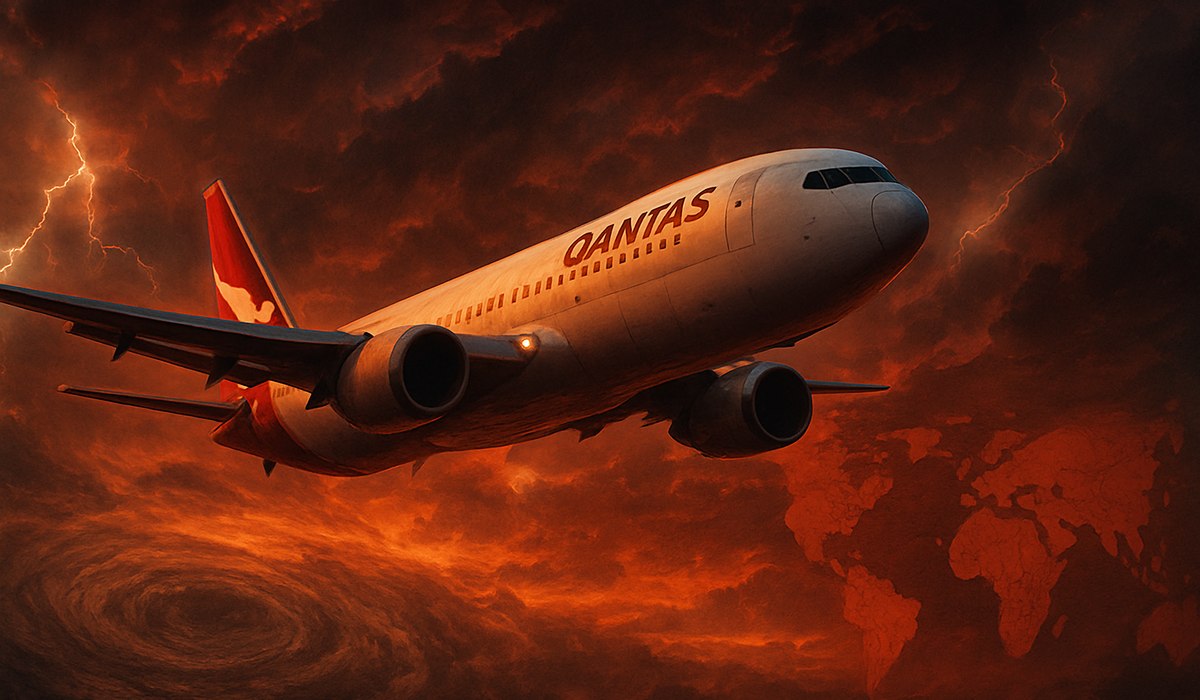
Image generated by AI
Qantas Airlines Cuts Domestic and International Routes Amid Fuel Surge
Qantas Airways is implementing significant route reductions across its U.S. and domestic flight networks as geopolitical tensions in the Middle East drive jet fuel prices to unsustainable levels. The Australian carrier announced capacity cuts affecting hundreds of weekly departures, forcing a strategic pivot toward European operations while scaling back Pacific region services. This marks one of 2026's most consequential airline restructuring events, reshaping business travel corridors and impacting per diem budgets for corporate travelers relying on traditional Sydney-to-Los Angeles and Melbourne-to-San Francisco connections.
Why Qantas Is Cutting Routes
The decision to reduce Qantas airlines cuts stems from a perfect storm of operational challenges. Middle East geopolitical instability has disrupted conventional jet fuel supply chains, pushing global aviation fuel costs upward by 18-24% since January 2026. Simultaneously, atmospheric jet stream disruptions are forcing aircraft to consume additional fuel on transpacific routes, particularly affecting the eight-hour-plus journeys to the U.S. West Coast.
Management signaled that maintaining unprofitable capacity on premium-priced long-haul routes contradicts shareholder expectations. Rather than absorb margin erosion, Qantas is reallocating aircraft to higher-yield European services, where demand remains resilient and fuel hedging contracts provide cost certainty. The carrier also cited labor cost pressures following 2025 enterprise agreement negotiations.
This pivot represents a calculated bet that medium-haul European expansion outweighs short-term revenue loss on North American routes. However, the gambit depends on sustained geopolitical stability and crude oil price stabilization above $75 per barrel.
Impact on Business Travel and Corporate Per Diem Costs
Business travelers and corporate travel managers face immediate disruption. Companies with established Qantas supplier agreements must renegotiate routing through alliance partners or competing carriers, often at premium fares during peak booking windows. Per diem policies tied to specific flight times and seat classes now require recalibration.
Qantas's capacity reduction on U.S. routes eliminates approximately 12,000 weekly seats across its six domestic Australian corridors and fourteen international U.S. destinations. Competitors including United Airlines, American Airlines, and Oneworld partner British Airways are rapidly deploying larger aircraft to capture stranded traffic, though availability remains tight through June 2026.
Employers with significant Australian operations report rerouting employees through Singapore and London hubs, adding 8-14 hours to journey times. Travel policy compliance rates have declined as employees book alternate carriers to avoid extended layovers.
The Fuel Crisis and Geopolitical Reality
Jet fuel volatility reflects broader geopolitical fragility. The Strait of Hormuz remains the world's most critical oil transit chokepoint, with 30% of seaborne crude passing through these waters daily. Recent naval incidents and sanctions compliance uncertainty have encouraged refineries to stockpile, constraining spot market availability.
Airlines hedge fuel exposure through forward contracts and derivatives, but Qantas's existing hedges expire progressively through Q3 2026. Unhedged exposure leaves the carrier vulnerable to further crude price spikes if regional tensions escalate. Aviation analysts predict fuel costs will remain 12-16% above 2024 averages through year-end absent diplomatic breakthroughs.
Domestic Australian routes, reliant on fuel trucked from coastal refineries, face additional logistics costs during supply chain stress periods. Regional carriers serving smaller Australian markets are absorbing these costs differently, creating pricing disparities that disadvantage Qantas on competitive routes.
What's Next for the Airline Industry
The Qantas restructuring signals a broader industry reorientation toward European and Asian-Pacific hub strategies. Competitors are evaluating similar North American capacity reductions, with Air New Zealand and LATAM already announcing modest U.S. route suspensions.
Long-term, airlines are accelerating sustainable aviation fuel (SAF) procurement, though SAF supplies remain limited and cost-prohibitive at scale. Airbus and Boeing are prioritizing fuel-efficient aircraft deliveries, but fleet renewal cycles stretch across five-to-ten-year horizons.
Industry analysts expect consolidation among smaller carriers unable to absorb fuel-driven margin compression. Qantas's move also pressures regional Australian airlines competing on fuel-sensitive routes, potentially triggering further capacity rationalization across domestic networks.
Aircraft utilization efficiency will define competitive advantage in 2026. Carriers deploying larger, more efficient widebody aircraft on remaining profitable routes will outperform competitors forced to maintain smaller fleets or inefficient schedules.
| Metric | Impact | Timeline | Affected Markets | Passenger Effect | Recovery Forecast |
|---|---|---|---|---|---|
| Weekly Seat Reduction | 12,000 seats removed | April–September 2026 | Australia-USA, domestic AU | 10-15% fare increases on remaining flights | Q4 2026 stabilization |
| Fuel Cost Increase | 18-24% above 2024 baseline | Ongoing through June 2026 | All Qantas routes | 8-12% per-ticket cost pass-through | Crude stabilization required |
| U.S. Route Cuts | 14 destinations affected | Immediate | US West/East coasts | Rerouting delays (8-14 hours) | Dependent on competitor capacity |
| Domestic AU Reductions | 6 major corridors impacted | Rolling through May 2026 | Sydney-Melbourne, Perth | 5-8% fare increases | Gradual restoration July+ |
| European Expansion | New A350 deployments | May-July 2026 | London, Paris, Frankfurt | Improved frequency on existing routes | Full deployment by Q3 2026 |
| Hedge Expiration Risk | Unhedged fuel exposure | Q3-Q4 2026 | All routes | Potential additional fare pressure | Depends on crude market |
What This Means for Travelers
Qantas airlines cuts create immediate planning challenges for leisure and business travelers. Here's how to navigate disruption:
1. Book alternative carriers early. Oneworld Alliance partners including British Airways, American Airlines, and Japan Airlines offer comparable service. Reserve seats 6-8 weeks ahead to secure preferred routing.
2. Monitor schedule changes via FlightAware. Track Qantas route announcements daily; capacity reductions often trigger schedule adjustments with limited advance notice.
3. Review baggage policies across replacement airlines. Qantas, American, and British Airways have distinct allowance structures. Confirm inclusions before rebooking.
4. Verify per diem eligibility for rerouted flights. Longer journeys via intermediate hubs may trigger additional hotel and meal reimbursements. Update employer travel policies accordingly.
5. Consider travel insurance enhancements. Route cuts increase flight cancellation risk. Policies covering airline bankruptcy and schedule discontinuation protect against stranded bookings.
6. Check frequent-flyer point redemption. Award availability on Qantas flights will tighten. Convert points to cash or transfer to partner airlines before depletion.
7. Explore premium cabin repositioning. Business class fares on replacement carriers may offer better value than inflated Qantas coach pricing as fuel costs compress margins.
FAQ
What specific Qantas routes are being cut?
Qantas is reducing capacity on Los Angeles, San Francisco, Dallas, and New York routes while maintaining limited service to secondary U.S. markets. Domestic cuts affect Sydney-Melbourne, Brisbane-Perth, and regional Canberra/Hobart services. Exact schedule changes are announced weekly via the airline's website and [FlightAware
Disclaimer
This article is for informational and educational purposes only. It does not constitute legal, financial, or professional advice. While we strive to provide accurate and up-to-date information, travel policies, regulations, and conditions change rapidly. Always verify information with official sources before making travel decisions. Nomad Lawyer makes no representations about the accuracy, reliability, completeness, or suitability of the information provided. Readers should consult qualified professionals for advice specific to their circumstances. The views expressed in this article are those of the author and do not necessarily reflect the views of Nomad Lawyer.
Preeti Gunjan
Contributor & Community Manager
A passionate traveller and community builder. Preeti helps grow the Nomad Lawyer community, fostering engagement and bringing the reader experience to life.
Learn more about our team →