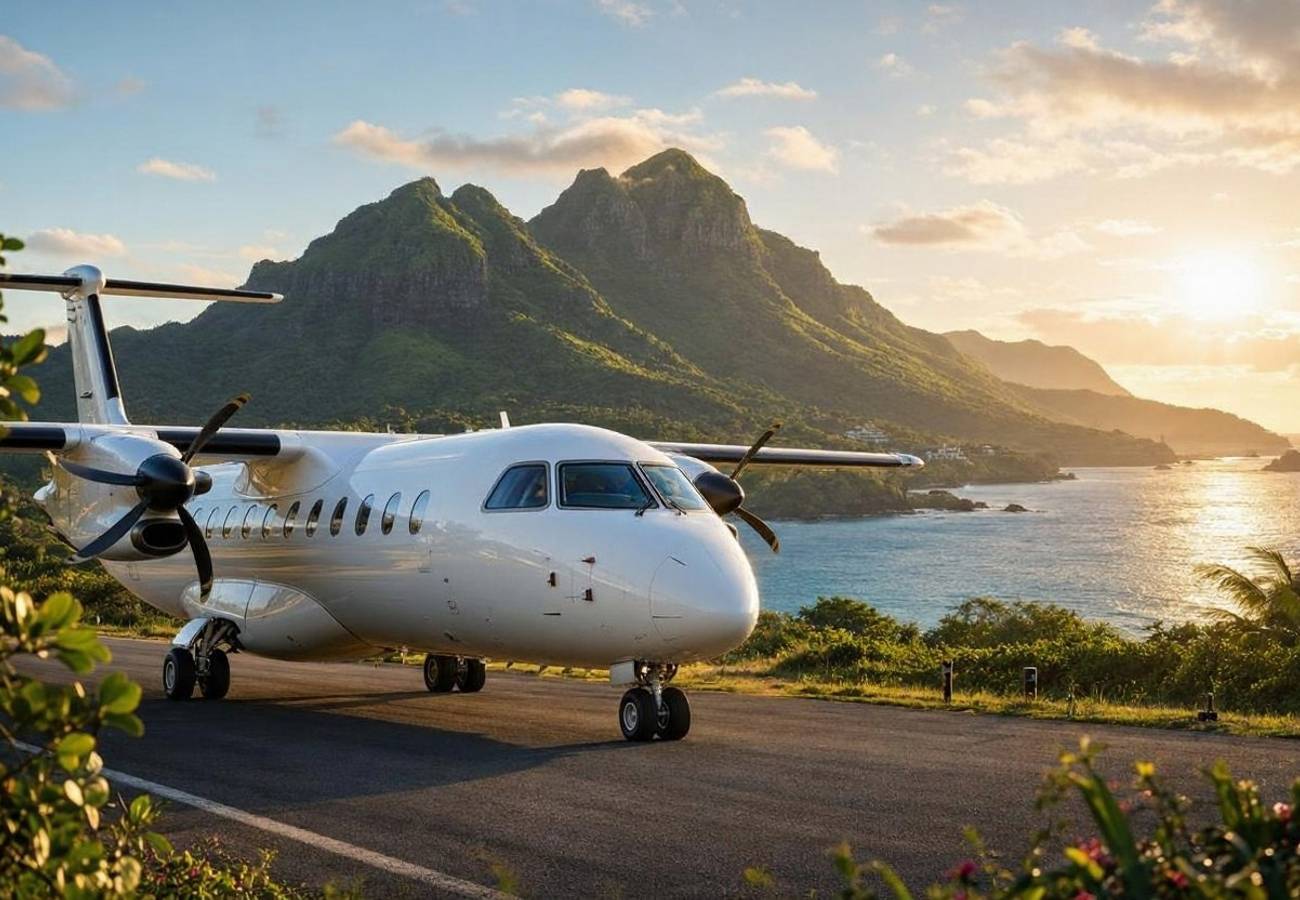
Crossing the Date Line: How Oceanian Carriers Bridge the Pacific for Thanksgiving Travel

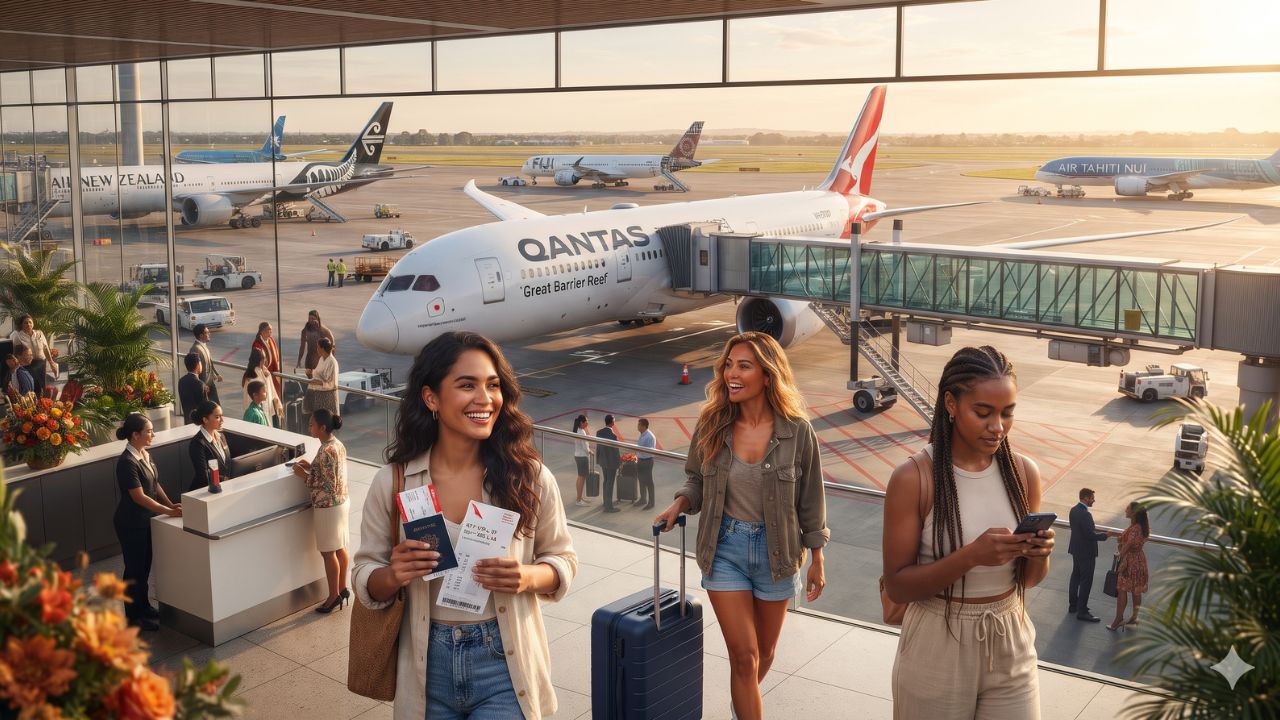
Because eastbound flights across the Pacific traverse the International Date Line, a passenger departing Sydney or Auckland on Thursday morning lands in California on Thursday morning before they even took off, gaining an entire calendar day that can make or break holiday connection windows.
As millions of Americans gather for Thanksgiving on Thursday, 26 November 2026, air carriers anchored across Oceania are providing critical international conduits into the continental United States. Leading carriers—including Qantas Airways, Air New Zealand, Fiji Airways, Jetstar, and Air Tahiti Nui, alongside partner services from Virgin Australia and Aircalin—are linking Pacific origins directly to primary American gateways. With high holiday seat occupancies and domestic winter storms threatening connecting hubs, understanding how to select gateways and navigate United States entry formalities is vital for long-haul trans-Pacific travelers.
Pacific Flag Carriers Expand Non-Stop Gateways to the US Mainland
The trans-Pacific market is characterized by distinct routing strategies designed to bypass congested coastal entry points. Rather than routing all traffic exclusively through Los Angeles, carriers have developed direct flights into the American South, Midwest, and East Coast.
Australia’s national carrier, Qantas, operates a comprehensive long-haul network from its eastern bases in Sydney, Melbourne, and Brisbane. While Los Angeles remains the core anchor with daily non-stop flights from all three Australian metropolises, Qantas deploys ultra-long-range Boeing 787-9 and Airbus A380 airframes to connect Sydney and Melbourne directly to Dallas/Fort Worth (DFW), Sydney to San Francisco (SFO), and Sydney to Honolulu (HNL). Additionally, Qantas operates a specialized one-stop service from Sydney to New York (JFK) via Auckland, delivering passengers straight to the Atlantic Seaboard.
Air New Zealand anchors its trans-Pacific operations out of Auckland International Airport, offering direct non-stop flights to Los Angeles, San Francisco, Houston (IAH), Honolulu, and New York JFK, with seasonal service to Chicago O'Hare. Through its close alliance with United Airlines, the carrier provides seamless baggage interlining and domestic transfers from Houston and San Francisco across the central and southern United States.
In the South Pacific, Fiji Airways leverages Nadi International Airport (NAN) as a strategic regional mid-Pacific transfer point. Operating modern Airbus A350-900 aircraft, the airline links travelers originating in Australia, New Zealand, and island nations directly with Los Angeles, San Francisco, Honolulu, and Dallas/Fort Worth. French Polynesia’s Air Tahiti Nui complements this with daily flights from Papeete (PPT) to Los Angeles, connecting onward via American Airlines codeshares.
Trans-Pacific Carrier Network Matrix and US Entry Gateways
Comparing Oceanian carrier networks illustrates how origin cities connect into American domestic distribution hubs.
| Carrier & Flag Country | Primary Origin Hubs | Direct US Destination Gateways | Domestic US Connecting Alliances |
|---|---|---|---|
| Qantas Airways (Australia) |
Sydney (SYD), Melbourne (MEL), Brisbane (BNE) |
Los Angeles, San Francisco, Dallas/Fort Worth, Honolulu, New York JFK (via Auckland) |
American Airlines (oneworld) Alaska Airlines |
| Air New Zealand (New Zealand) |
Auckland (AKL) (Feeders: WLG, CHC) |
Los Angeles, San Francisco, Houston (IAH), Honolulu, New York JFK, Chicago (Seasonal) |
United Airlines (Star Alliance) |
| Fiji Airways (Fiji) |
Nadi (NAN) | Los Angeles, San Francisco, Dallas/Fort Worth, Honolulu |
American Airlines (oneworld) Alaska Airlines |
| Jetstar Airways (Australia) |
Sydney (SYD), Melbourne (MEL) | Honolulu (HNL) | Interline agreements / Qantas Group |
| Air Tahiti Nui (French Polynesia) |
Papeete (PPT) | Los Angeles (LAX) | American Airlines / Alaska Airlines |
| Virgin Australia (Australia) |
Brisbane, Sydney, Melbourne | Indirect via partner hubs (LAX, SFO) | United Airlines codeshare network |
| Aircalin (New Caledonia) |
Nouméa (NOU) | Indirect via regional and Asian gateways | Air France / Qantas / Partner links |
These regional operations are complemented by American carriers operating reciprocal routes across the Pacific, with United Airlines, American Airlines, and Delta Air Lines providing competing non-stop flights from Sydney, Melbourne, Brisbane, and Auckland into California and Texas.
Managing the Arrival Formalities: Baggage and Terminal Transfers
One of the most frequent points of failure for long-haul international arrivals occurs during the transition from the international arrival concourse to domestic connecting gates.
Under border procedures enforced by U.S. Customs and Border Protection (CBP), every passenger arriving from an international origin must undergo complete border screening at their first port of entry. At gateways like Los Angeles International Airport (LAX), travelers disembarking at the Tom Bradley International Terminal (TBIT) must clear passport control, collect all checked suitcases from arrival carousels, pass through agricultural customs inspection, and re-deposit their luggage at the designated airline transfer counter.
Even if an itinerary is booked on a single ticket through to Boston or Atlanta, checked luggage does not transfer automatically across the international threshold. After re-checking luggage, passengers must exit the terminal and pass through Transportation Security Administration (TSA) physical checkpoints before reaching their domestic departure gate.
Because international arrival processing at LAX, SFO, or DFW can require 60 to 90 minutes during morning arrival waves, connection buffers under two and a half hours carry severe misconnect risks during the high-density Thanksgiving corridor.
Visitor Insider Tips for Pacific Holiday Flights
Navigating long-haul trans-Pacific flights during late November requires proactive planning:
- Audit Dates Across the International Date Line: When booking return flights from the United States back to Australia or New Zealand, double-check your calendar arrival date. Flying westbound across the Pacific loses an entire calendar day. A flight departing Los Angeles late on Thursday evening, 26 November, lands in Sydney or Auckland on Saturday morning, 28 November, skipping Friday entirely.
- Verify ESTA Approvals Weeks Before Flying: Australian and New Zealand citizens traveling under the Visa Waiver Program must secure an approved Electronic System for Travel Authorization (ESTA) before boarding. While processing often takes minutes, administrative holds can take up to 72 hours. Ensure passport validity extends at least six months beyond your intended stay.
- Target DFW and Houston to Bypass West Coast Hubs: If your final holiday destination lies east of the Mississippi River, avoid connecting through Los Angeles or San Francisco. Booking Qantas directly into Dallas/Fort Worth or Air New Zealand into Houston cuts two hours off your total journey and deposits you directly into primary domestic hub networks with thousands of daily onward departures.
- Prepare for Terminal Walks at LAX: At Los Angeles, transferring between Tom Bradley International Terminal and domestic terminals (Terminals 4 and 5 for American, Terminals 7 and 8 for United, Terminal 2 and 3 for Delta) involves utilizing elevated airside connector walkways. Follow the interior pedestrian bridges to avoid having to re-clear TSA security checkpoints on the curbside sidewalk.
Bilateral Commerce and Pacific Tourism Resilience
The air bridges connecting Oceania to North America represent critical economic arteries. According to market data from Tourism Australia, the United States ranks among Australia's highest-spending inbound visitor markets, generating substantial trade, academic exchange, and family visits (Visiting Friends and Relatives).
During November, trans-Pacific passenger traffic shifts into a dual-flow dynamic. American expatriates and holidaymakers living across Australasia fly home to celebrate Thanksgiving, while Australian and New Zealand residents head stateside to take advantage of Black Friday retail shopping and early-season ski resorts in Colorado and Utah.
Simultaneously, intermediate island hubs like Nadi and Papeete rely on trans-Pacific transit passengers to sustain widebody route viability, supporting local employment and tourism infrastructure across small island developing economies. As airlines navigate heavy holiday volumes, these established flight paths maintain an enduring cultural and economic bond across the world's widest ocean.
Frequently Asked Questions
Which Australian cities offer nonstop flights to the United States?
Qantas operates nonstop flights to Los Angeles from Sydney, Melbourne, and Brisbane, alongside direct services to Dallas/Fort Worth, San Francisco, and Honolulu from Sydney, and Dallas from Melbourne. Jetstar also flies from Sydney and Melbourne to Honolulu.
Do I have to recheck my bags at my first US arrival airport?
Yes. United States federal regulations require all international passengers to collect their checked luggage at their first port of entry, clear customs, and re-deposit their bags at the transit transfer desk before proceeding to domestic flights.
What travel authorization do Australian and New Zealand citizens need for the US?
Eligible Australian and New Zealand passport holders must obtain an approved ESTA (Electronic System for Travel Authorization) under the Visa Waiver Program prior to boarding their flight to the United States.
Calculating Date Line time changes and booking ample customs buffers ensures your trans-Pacific journey connects effortlessly with family holiday celebrations.
Related Travel Guides
This article is for informational purposes. Flight routes, passenger regulations, visa rules, and transit advisories are subject to change by airlines and aviation authorities. Readers are advised to verify schedules and travel documentation with relevant carriers and border agencies before departure.
Related Stories
Oceania to USA Thanksgiving 2026: Logistics Guide for Qantas, Air New Zealand and Fiji Airways

European Aviation Crisis 2026: Surging Jet Fuel Costs Trigger Massive Job Cuts and Fare Hikes