
Providence Opens Its Secret Doors: Exploring Rhode Island's Historic Mansions, Industrial Mills, and Modern Sanctuaries

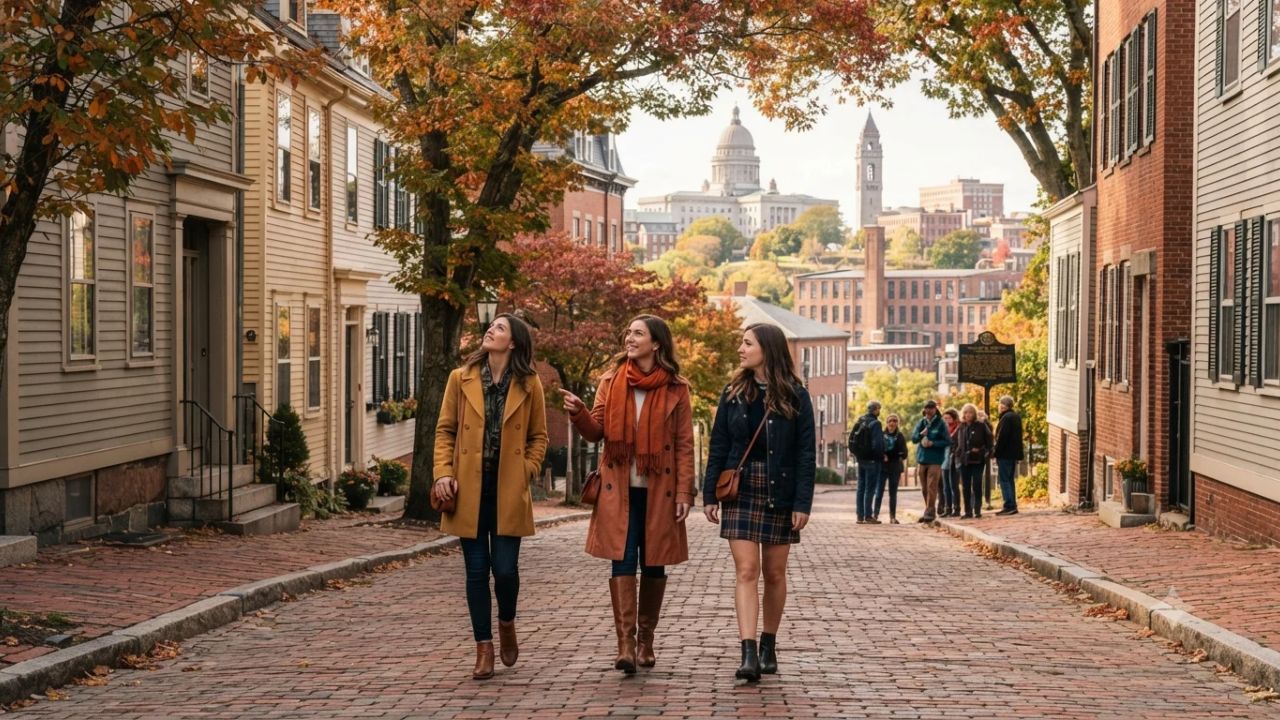
While Newport draws international crowds for its gilded oceanfront mansions, Rhode Island's capital city holds the nation's most concentrated mile of preserved 18th- and 19th-century colonial homes—many of which remain strictly private behind wrought-iron gates. That historic veil lifts from September 26 through October 30, 2026, as the five-week Festival of Architecture and Design unlocks secret residences, working power plants, and converted industrial complexes across Providence. Staged to mark the 70th anniversary of the Providence Preservation Society, the curated 20-event programme invites travelers to discover the city through its architectural evolution.
Rather than staging a standard weekend street fair, the festival transforms Rhode Island's creative capital into an open-air urban study. Supported by official state tourism resources from Visit Rhode Island, the itinerary navigates beyond traditional tourist enclaves into working-class mill corridors, forested hilltop reservations, and cutting-edge energy facilities. For architectural enthusiasts and autumn voyagers, this initiative offers rare access to the physical spaces that defined three centuries of American civic and industrial development.
A Five-Week Journey Through Providence's Living Architecture
The festival opens on September 26 with its flagship event: the Benefit Street House Tour in historic College Hill. Perched on the hillside beneath Brown University and the Rhode Island School of Design (RISD), this walking experience guides visitors through six private residences constructed between 1737 and 1864. Known locally as the "Mile of History," Benefit Street displays an unbroken timeline of early American building styles, from modest clapboard early-colonial dwellings and symmetrical Georgian manors to ornate Federal and Greek Revival estates.
The calendar continues by branching out into diverse urban quarters:
- October 2 (Neutaconkanut Hill, Silver Lake): An exploration of Providence's highest natural elevation, tracing how municipal park design, forested trails, and glacial ridges shaped community growth in the Silver Lake district.
- October 4 (Modernism Field Trip, Foster): A regional excursion into rural Foster, highlighting how mid-century modern architects broke away from colonial conventions using clean geometry, glass curtains, and natural cedar wood.
- October 13 and 20 (Manchester Street Power Station, Downtown): A behind-the-scenes engineering tour of the 510-megawatt combined-cycle gas power station located near Point Street, offering insight into large-scale urban energy infrastructure.
- October 15 (Atlantic Mills Studio Visits, Olneyville): A look inside three contemporary artist studios within the former 19th-century Atlantic Mills textile complex, showcasing adaptive reuse in action.
- October 23 (Sheridan Homes Passive House, Dyerville): A showcase of next-generation low-carbon residential architecture, demonstrating ultra-insulated building envelopes and net-zero energy design.
- October 30 (Cranston Street Armory, West End): A rare interior tour of the massive castellated fortress built in 1907 for the Rhode Island National Guard, celebrated for its yellow-brick towers and immense drill hall.
What Makes Providence's Heritage Distinct
Providence occupies a unique position in American urban history. Unlike cities that demolished their historic cores during 20th-century urban renewal campaigns, grassroots advocacy led by the Providence Preservation Society rescued entire residential quarters from destruction in the 1950s. The result is an exceptionally authentic historic urban fabric where active student life, immigrant communities, and artisan workshops inhabit century-old structures.
The city's cultural geography is defined by distinct neighborhood identities. College Hill retains its scholarly, colonial charm with brick sidewalks, gas lamps, and historic libraries. Just across the Providence River, the historic downtown district features grand early-20th-century commercial stone buildings and theaters.
To the west, Olneyville and the West End reflect the city's manufacturing golden age, where red-brick woolen mills, steam plants, and iron foundries have transformed into vibrant lofts, indie coffee roasters, recording studios, and community printshops. This harmony between strict historic preservation and experimental adaptive reuse gives Providence an artistic vitality that separates it from standard New England postcard towns.
Visitor Insider Tips
Experiencing Providence during the autumn festival season requires an insider approach to neighborhood navigation, dining, and transit:
- Book Individual Festival Tickets Promptly: Due to strict capacity limits inside private homes and the Manchester Street Power Station, individual event tickets through the Providence Preservation Society sell out weeks in advance. Reserve early online.
- Explore Federal Hill's Culinary Scene: After touring the West End or Cranston Street Armory, walk up to Atwells Avenue on Federal Hill. Skip the tourist-heavy chain spots and head to historic family bakeries like Scialo Bros. Bakery for handmade cannoli and Pasticceria e Biscottificio for traditional almond biscotti.
- Walk the Riverwalk and Time WaterFire: Time your visit to coincide with WaterFire Providence, the world-renowned public art installation where dozens of braziers are lit along the Woonasquatucket and Providence rivers, filling downtown with cedar smoke and classical music.
- Utilize RIPTA and Walking Routes: Providence is an exceptionally walkable city, but College Hill features steep inclines. Use Rhode Island Public Transit Authority (RIPTA) buses to connect from Downtown to Olneyville, or rent an electric bicycle through the city's shared mobility hubs.
- Base Yourself in Boutique Quarters: Choose boutique accommodations housed in restored historic buildings, such as The Dean Hotel in Downtown Providence or the historic Christopher Dodge House near the State House.
Cultural and Environmental Context
The Festival of Architecture and Design addresses a fundamental question facing historic American cities: how to honor cultural heritage while advancing modern climate sustainability. The inclusion of the Sheridan Homes Passive House in Dyerville demonstrates that historic preservation and green building technology are mutually reinforcing rather than opposing forces.
Adaptive reuse projects like the Atlantic Mills in Olneyville have preserved industrial structures while creating affordable workspace for hundreds of working artists, immigrant-owned businesses, and community organizers. This model prevents unnecessary building demolition, drastically reducing construction waste and embodied carbon emissions.
By dispersing cultural tourism across seven distinct neighborhoods—from Silver Lake to the West End—the festival directs economic benefits directly to local restaurants, neighborhood bakeries, and artisan markets. This distributed tourism approach protects the social character of Providence's residential streets while celebrating the diverse generations of workers, immigrants, and visionaries who built Rhode Island's capital.
FAQ: Visiting Providence 2026
When is the 2026 Providence Festival of Architecture and Design?
The festival runs for five weeks from September 26 through October 30, 2026, featuring approximately 20 guided tours, lectures, and open-house events.
How do I get to Providence from Boston or New York?
Take the Amtrak Northeast Regional or Acela train directly to Providence Station (approx. 35 minutes from Boston South Station, 3 hours from New York Penn Station).
Can visitors enter the historic Benefit Street homes year-round?
No. These private homes are only open to the public during special ticketed heritage events like the annual Providence Preservation Society house tours.
Is Providence suitable for a car-free weekend trip?
Yes. With an Amtrak station located right in Downtown Providence, walkable historic districts, and reliable RIPTA transit, visitors can easily explore the city car-free.
Behind Providence's quiet brick facades and weathered iron gates lie three hundred years of radical design, quiet craftsmanship, and living American history.
Related Travel Guides
Disclaimer
This article is for informational and educational purposes only. It does not constitute legal, financial, or professional advice. While we strive to provide accurate and up-to-date information, travel policies, regulations, and conditions change rapidly. Always verify information with official sources before making travel decisions. Nomad Lawyer makes no representations about the accuracy, reliability, completeness, or suitability of the information provided. Readers should consult qualified professionals for advice specific to their circumstances. The views expressed in this article are those of the author and do not necessarily reflect the views of Nomad Lawyer.
Raushan Kumar
Founder & Lead Developer
Full-stack developer with 11+ years of experience and a passionate traveller. Raushan built Nomad Lawyer from the ground up with a vision to create the best travel and law experience on the web.
Learn more about our team →