
Private Jet Luxury Travel: A&K's Decade-Long Quest to Unlock Earth's Remotest Destinations
Abercrombie & Kent's private jet director reveals how three years of advance planning and Boeing 757 operations unlock destinations unreachable by commercial aviation in 2026.

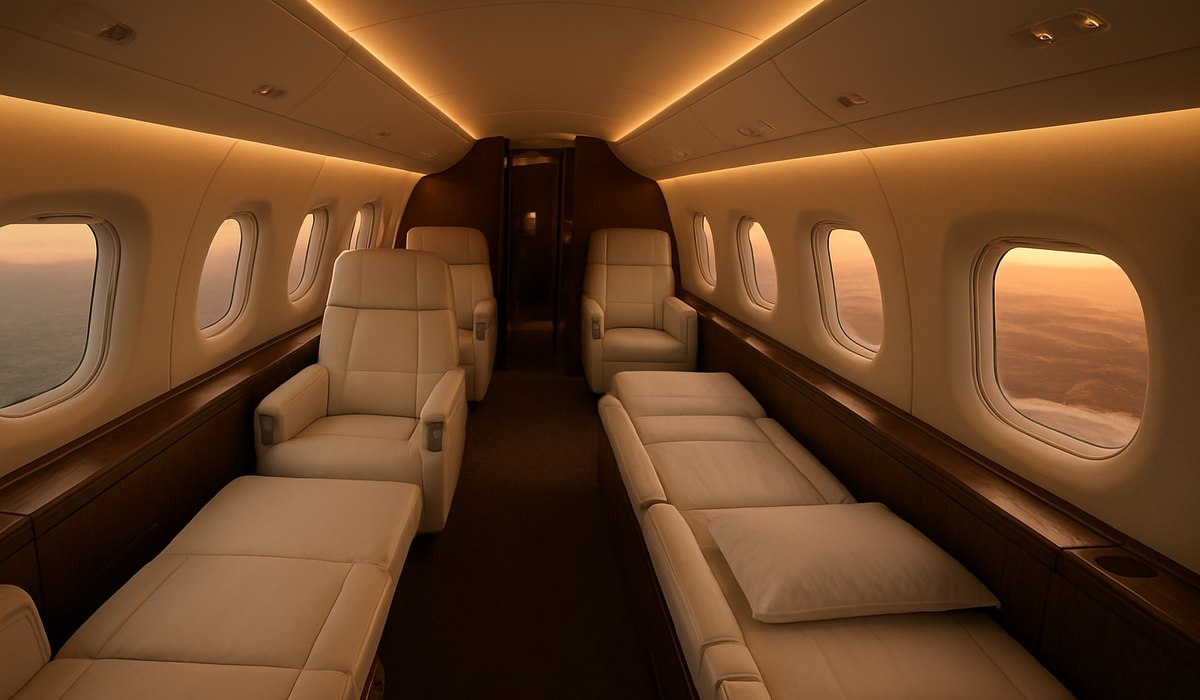
Image generated by AI
Abercrombie & Kent Redefines Private Jet Luxury Travel Through Decade-Long Innovation
Abercrombie & Kent's director of private jet travel, Rami Girgis, has spent over a decade transforming impossible journeys into reality. The luxury travel company now operates specialized private jet expeditions to the world's most isolated destinations—places that would require four to five commercial flights or multiple days of ground travel. Through meticulous three-year advance planning cycles and exclusive airport partnerships, A&K's private jet luxury travel program delivers guests to remote locations in under 50 minutes. This breakthrough approach combines sophisticated logistics with unprecedented access, fundamentally reshaping how affluent travelers experience off-the-beaten-path destinations globally.
A Decade Designing the Impossible: Private Jet Luxury Travel's Evolution
The journey toward modern private jet luxury travel began when visionary travel planners recognized an untapped market: ultra-high-net-worth individuals seeking authenticity beyond crowded commercial routes. Abercrombie & Kent invested heavily in research, regulatory navigation, and relationship-building with government aviation authorities worldwide. Girgis emphasizes that this wasn't a quick pivot—rather, it represented a fundamental reimagining of what luxury travel could accomplish. The company's commitment meant securing exclusive landing rights at airports many commercial carriers had never approached. Today, A&K's proprietary network spans continents, including previously inaccessible destinations across Africa, the South Pacific, and beyond.
The competitive advantage lies not in flash or marketing—it's rooted in genuine access. Few travel companies possess the institutional knowledge, political relationships, and operational infrastructure to land private jets in locations with minimal aviation infrastructure. This exclusivity has become the cornerstone of modern private jet luxury travel, attracting discerning travelers who prioritize discovery over displays of wealth.
Inside the Planning Process: Years of Groundwork for Seamless Expeditions
Creating a single private jet journey to an exclusive destination requires orchestration rivaling diplomatic missions. Girgis and his team conduct advance site visits comparable to Secret Service protocols, meeting with airport authorities, government officials, and community leaders. They evaluate not just landing capabilities but also accommodation capacity, catering infrastructure, and logistical support. For St. Helena—the remote Atlantic island where Napoleon Bonaparte was exiled—the planning extended beyond typical travel logistics. The island receives just one weekly commercial flight from Johannesburg and monthly food supply shipments. When A&K secured private jet access, the team had to negotiate hotel buyouts, establish temporary kitchen facilities, and personally recruit hospitality staff during weekend community gatherings.
This meticulous approach transforms potential chaos into curated experiences. Three years of planning isn't excessive—it's essential. Teams must address geopolitical considerations, obtain special permits, coordinate with local authorities, and build sustainable relationships ensuring future access. The result: guests arrive at destinations where infrastructure has been thoughtfully prepared, guides speak their preferred languages, and every logistical detail anticipates their needs.
Remote Destinations Redefined: Where Exclusive Access Meets Authentic Exploration
Private jet luxury travel through Abercrombie & Kent has literally redrawn the map of accessible destinations. St. Helena exemplifies this transformation. Before A&K's exclusive access program, reaching this historically significant island required patience and compromise—one weekly flight, month-long food supply cycles, and minimal tourism infrastructure. A&K's private jet operations bypassed these constraints entirely. Guests now experience genuine community engagement, with local residents—recruited personally by leadership—providing authentic cultural perspectives.
The destinations selected reflect evolving traveler preferences. Rather than chasing novelty, A&K focuses on authentic encounters in truly remote regions. African expeditions now include Philanthropy Arm experiences, where guests participate in real development projects like classroom construction among the Maasai. Pacific island nations, Arctic regions, and Central Asian landscapes that commercial aviation rarely reaches are now accessible via private jet. Each destination offers what Girgis calls "places money can't buy"—authentic human experiences that transcend luxury's traditional definition.
This shift represents fundamental change in what private jet luxury travel actually means. It's no longer purely about speed or comfort. It's about access to moments and places that reshape perspectives—and importantly, about traveling sustainably by supporting local economies directly.
The Aircraft and the Experience: Boeing 757 Operations and Onboard Innovation
At the heart of Abercrombie & Kent's private jet luxury travel capability sits their Boeing 757, configured with 50 lie-flat seats and state-of-the-art amenities. This aircraft selection reflects strategic thinking: the 757 offers range sufficient for intercontinental journeys while maintaining operational flexibility at smaller, remote airfields where larger aircraft cannot land. The cabin configuration prioritizes comfort over density, allowing guests to rest properly during extended journeys.
Onboard capabilities have evolved dramatically. Recognizing that younger affluent travelers increasingly choose remote jet expeditions because remote work is now viable, A&K equipped aircraft with enterprise-grade internet infrastructure and dedicated workspace. A hedge fund manager recently maintained trading access during New York Stock Exchange opening hours from 30,000 feet above remote regions. This flexibility has expanded the demographic choosing private jet luxury travel beyond traditional retirees to working professionals in their 40s and 50s.
Catering, entertainment, wellness services, and cultural programming all operate at luxury hospitality standards. Yet increasingly, guests value authenticity over opulence. They request active components—hiking, kayaking, biking, and wellness activities—alongside cultural immersion. The aircraft becomes less a destination itself and more an enabler of genuine exploration.
Demographic Shifts: Younger Travelers Embrace Remote Jet Expeditions
Abercrombie & Kent has observed significant demographic evolution in private jet luxury travel adoption. Traditionally, this market comprised wealthy retirees with abundant leisure time. Today, remote work capabilities have fundamentally altered that equation. Professionals in technology, finance, and entrepreneurship—many in their 40s and 50s—now view private jet expeditions as viable options, maintaining professional productivity while exploring remote territories.
This shift has required product innovation. Younger demographics demand different experiences. They seek active engagement: hiking expeditions in Patagonia, kayaking through remote fjords, biking across Saharan landscapes. They want wellness integration—yoga and meditation in authentic settings rather than spa performances. They demand cultural authenticity—genuine village encounters rather than staged performances designed for tour groups. Abercrombie & Kent's Philanthropy Arm addresses this directly, incorporating development participation into itineraries. Guests don't simply observe rural communities; they engage meaningfully with real projects, contributing to genuine social impact.
This authenticity imperative has become central to positioning private jet luxury travel in 2026. As artificial intelligence and technology proliferate, travelers increasingly value human connection and real-world discovery. Private jet expeditions deliver exactly this—access to remote villages and communities untouched by typical tourism infrastructure.
| Metric | Details | Impact on Travelers |
|---|---|---|
| Planning Timeline | 3-year advance coordination required | Ensures seamless, unexpected-free expeditions |
| Aircraft Capacity | Boeing 757 with 50 lie-flat seats | Comfort during long-distance remote journeys |
| Destination Access | Landing at airports unreachable by commercial carriers | Direct access to previously isolated regions |
| Infrastructure Preparation | Hotel buyouts, kitchen establishment, staff recruitment | Full-service hospitality in remote locations |
| Demographic Range | Ages 40-70+, working professionals and retirees | Flexible options for active and wellness-focused travelers |
| Community Engagement | Direct local hiring and Philanthropy Arm projects | Authentic cultural experiences with measurable impact |
| Travel Time Reduction | 4-5 flights/multiple days becomes 50-minute direct flights | Significant time savings accessing remote destinations |
| Connectivity Options | Enterprise-grade internet and dedicated workspace | Ability to |
Disclaimer
This article is for informational and educational purposes only. It does not constitute legal, financial, or professional advice. While we strive to provide accurate and up-to-date information, travel policies, regulations, and conditions change rapidly. Always verify information with official sources before making travel decisions. Nomad Lawyer makes no representations about the accuracy, reliability, completeness, or suitability of the information provided. Readers should consult qualified professionals for advice specific to their circumstances. The views expressed in this article are those of the author and do not necessarily reflect the views of Nomad Lawyer.
Raushan Kumar
Founder & Lead Developer
Full-stack developer with 11+ years of experience and a passionate traveller. Raushan built Nomad Lawyer from the ground up with a vision to create the best travel and law experience on the web.
Learn more about our team →