
Port Everglades Uber and Lyft Pickup Guide: Navigating Cruise Terminal Rideshares in 2026
Master the logistics of Uber and Lyft at Port Everglades with this comprehensive guide to terminal pickup zones, surge pricing, and traffic patterns for 2026 cruise departures.
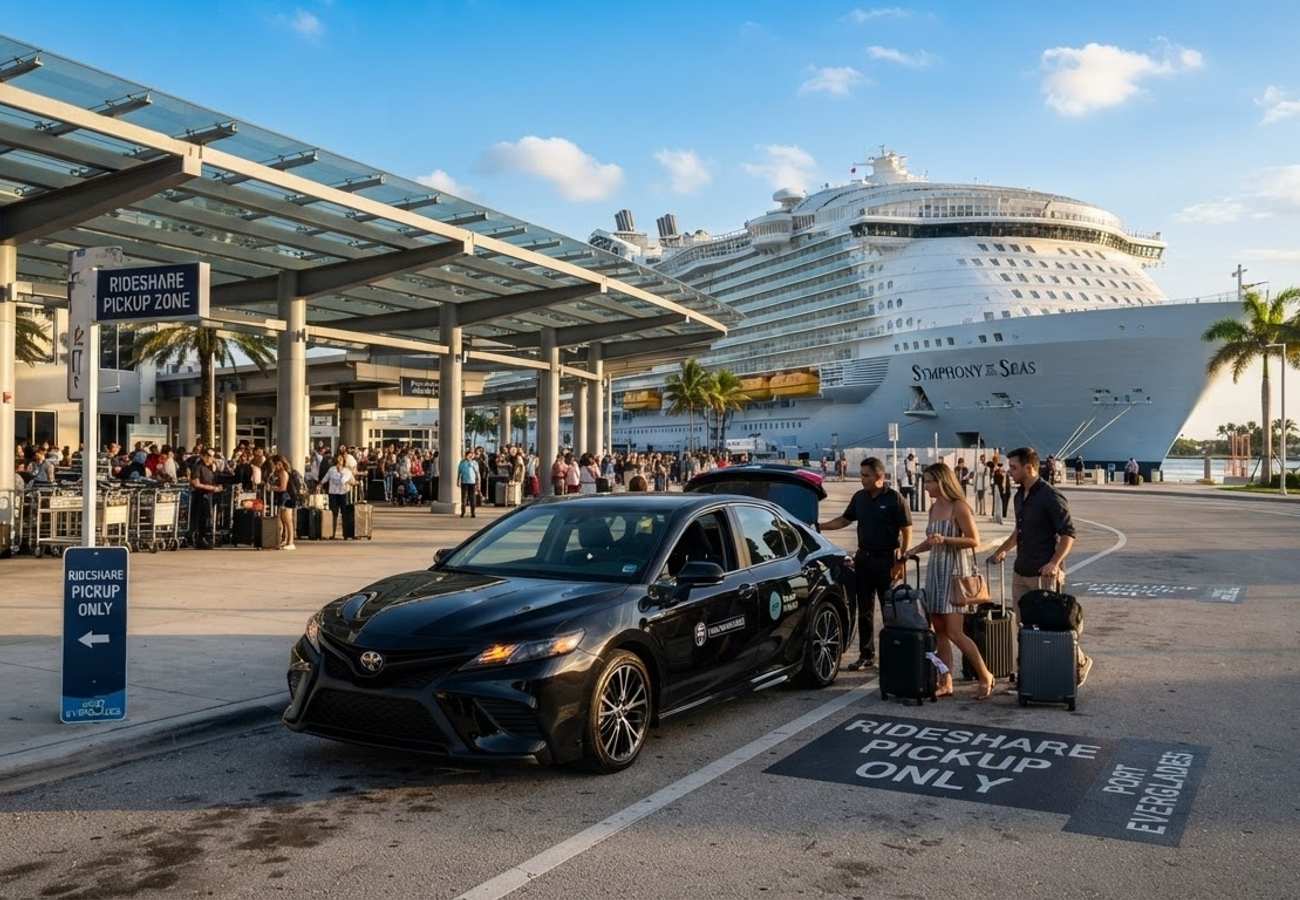
Image generated by AI
Thousands of passengers converge on Port Everglades every weekend, turning a short trip from Fort Lauderdale–Hollywood International Airport (FLL) into a potential logistical nightmare. For travelers relying on app-based transportation, understanding the specific layout of terminal pickup zones and the volatility of cruise-day traffic is the difference between a seamless vacation start and a stressful race against the ship's departure clock.
The port, situated just south of downtown Fort Lauderdale, serves as a primary hub for global cruise lines. While the physical distance between the airport and the port is minimal, the operational reality on embarkation and disembarkation days is far more complex.
Rideshare Logistics and Security Access at Port Everglades
Uber and Lyft are fully operational throughout Broward County, providing the primary means of transit for many cruise passengers. However, Port Everglades is a secure facility. While drivers do not require specialized taxi licenses to operate in the city, they must possess the necessary credentials to pass through the port's security checkpoints.
Industry reports indicate that passengers occasionally encounter drivers who are unable or unwilling to proceed past the security gates. In these instances, travelers should immediately cancel the request and book a new ride, specifically confirming with the driver that they have port access. Alternatively, moving to a designated pickup point at a nearby shopping center or hotel outside the secure perimeter can resolve the issue.
Once inside, the port utilizes a strictly regulated traffic system. Police officers and port authorities manage one-way flows and dedicated lanes. To prevent gridlock, app-based rideshares are separated from the heavy lanes occupied by hotel shuttles and tour buses. These designated zones function similarly to airport arrivals, allowing drivers to wait briefly while passengers retrieve their luggage.
Terminal-Specific Pickup and Drop-Off Zones
Port Everglades is not a single entity but a sprawling complex of multiple basins and terminals. Because different cruise lines—including Carnival, Royal Caribbean, Princess, Celebrity, and Holland America—utilize different buildings, passengers must verify their specific terminal number via the cruise line app or the official port assignment list before requesting a ride.
There is no centralized rideshare lot; instead, each terminal manages its own curbside logistics.
- Terminal 18 and Terminal 25: Frequently used by Celebrity and Royal Caribbean, these terminals feature dedicated access roads. Drop-offs occur directly under the terminal canopies. Upon return, passengers should exit the baggage hall and follow signage for "App-Based Rides" or "Rideshare," which often lead to lettered or numbered curb zones.
- Terminal 4: Recent traveler data highlights that Terminal 4 maintains a clearly marked rideshare area a short distance from the exit. The key for passengers here is to bypass the initial congestion of porters and buses to reach the designated pickup signage.
Because security arrangements and construction can alter the layout, passengers are advised to use the "pin" feature in their Uber or Lyft app. If the default location is inaccurate, manually dragging the pin to your exact standing position—especially if you are in a parking garage rather than at the main curb—is essential for a quick pickup.
Analyzing Traffic Patterns on Peak Cruise Days
Traffic at Port Everglades fluctuates wildly based on the time of day and the day of the week, with Saturdays and Sundays seeing the highest volume.
Morning Embarkation: Activity typically ramps up between 9:30 a.m. and 10:00 a.m., reaching a peak in the early afternoon. For those flying into FLL, the standard 10-to-20-minute drive can easily extend by 15 to 30 minutes due to security checkpoints and terminal bottlenecks. Passengers landing between 9:00 a.m. and 11:00 a.m. on a peak Saturday should budget at least 45 minutes to get from the aircraft to the ship's curb.
Morning Disembarkation: The rush begins as early as 7:00 a.m. for self-assist passengers and remains intense until approximately 10:00 a.m. During this window, outbound cruisers and inbound shuttles create a high-density traffic environment.
Seasonal and Weather Variables: Mid-week arrivals during shoulder seasons are significantly calmer, often reducing airport transfers to a mere 10-to-15-minute trip. However, Florida's frequent summer downpours can slow traffic across the Port Everglades Expressway and nearby interstates, leading to increased caution from drivers and longer wait times.
Estimated Costs and Surge Pricing for 2026
Due to the short distances involved, rideshare costs are generally affordable, though they are subject to dynamic pricing.
| Route | Standard Fare (Estimated) | Peak/Surge Fare (Estimated) | Notes |
|---|---|---|---|
| FLL Airport $\rightarrow$ Port Everglades | $15 – $25 | $28 – $35 | Includes airport pickup fees |
| 17th Street Hotel $\rightarrow$ Port Everglades | $9 – $15 | $18 – $25 | Depends on proximity to main gate |
| Port Everglades $\rightarrow$ FLL Airport | $15 – $25 | $28 – $35 | Higher demand during disembarkation |
For those staying at mid-range hotels along the SE 17th Street Causeway, fares are often in the low teens. However, during holiday weekends or high-demand Saturdays, surge pricing can push these costs upward.
Why This Matters: The Traveler's Perspective
From a logistical standpoint, the "last mile" of a cruise journey is often the most volatile. For the traveler, this means that relying solely on a GPS estimate is a risk. The transition from a secure port environment to a public rideshare vehicle involves multiple variables—security clearance, terminal assignment, and surge pricing—that the app cannot always predict.
The most critical takeaway for 2026 travelers is the necessity of terminal verification. Because ships often shift terminals between seasons or even between sailings, requesting a ride to "Port Everglades" without a specific terminal number can result in the driver dropping you at the wrong end of the complex, potentially costing you 20 minutes of walking with heavy luggage.
Plan for the peak, verify your terminal, and always build in a 30-minute buffer to ensure your vacation starts on a high note.
Related Travel Guides
Disclaimer
This article is for informational and educational purposes only. It does not constitute legal, financial, or professional advice. While we strive to provide accurate and up-to-date information, travel policies, regulations, and conditions change rapidly. Always verify information with official sources before making travel decisions. Nomad Lawyer makes no representations about the accuracy, reliability, completeness, or suitability of the information provided. Readers should consult qualified professionals for advice specific to their circumstances. The views expressed in this article are those of the author and do not necessarily reflect the views of Nomad Lawyer.