
10 Best Ancient Cities to Visit in 2026: From Pompeii's Frozen Streets to Machu Picchu's Mountain Peaks
Discover the world's most stunning ancient cities frozen in time. Explore Pompeii, Petra, Bagan, and seven more archaeological wonders that define human civilization.

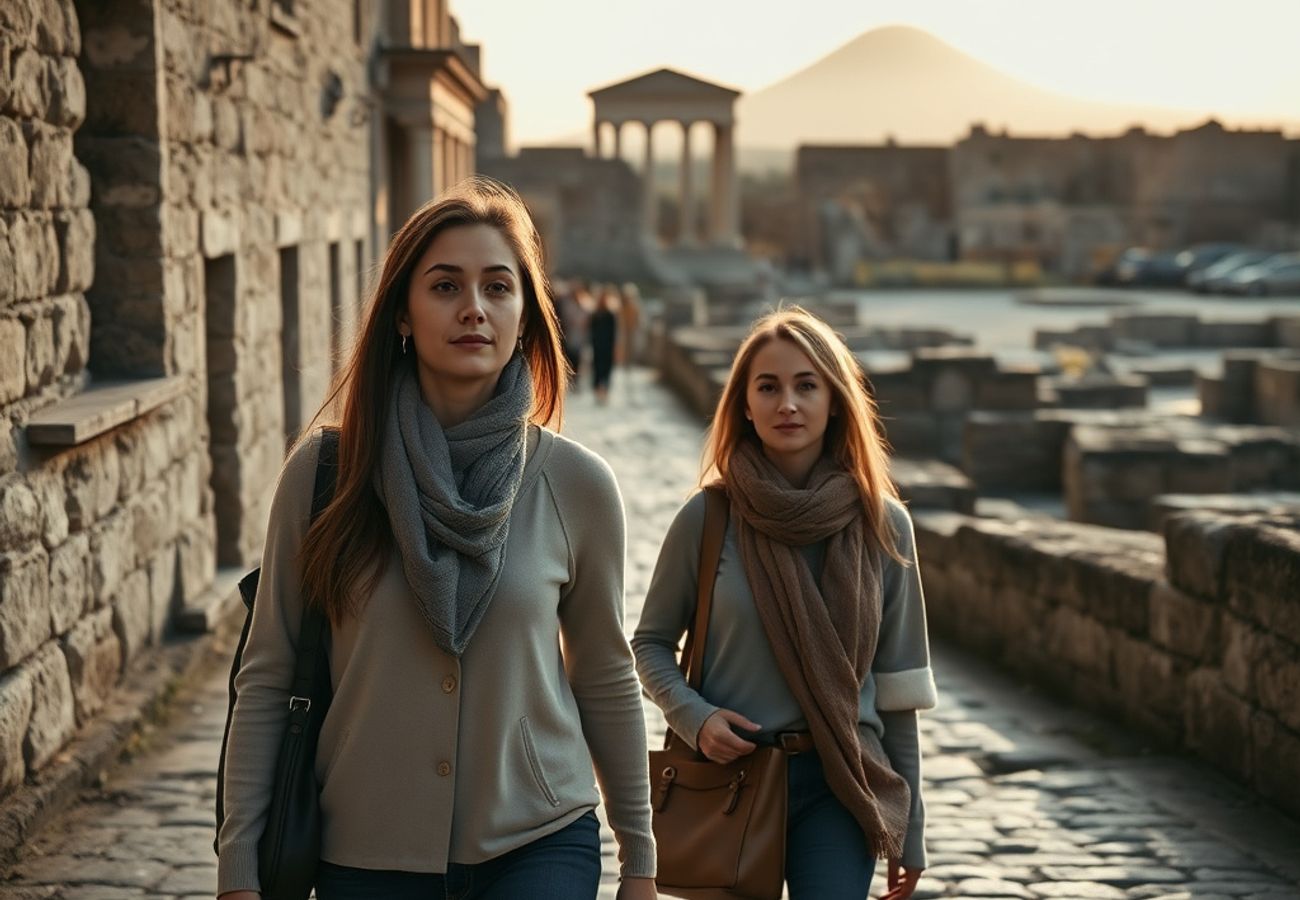
Image generated by AI
The Allure of Walking Through Time
There's something profoundly stirring about standing where civilizations once thrived—where merchants haggled in marketplaces, emperors ruled from palaces, and monks chanted in temples centuries ago. The modern world offers convenience, but it can't replicate the raw historical magnetism of witnessing human achievement frozen across millennia.
I've spent years documenting travel destinations, and nothing compares to the emotional impact of stepping into an ancient city. These aren't museum exhibits behind glass—they're living, breathing archaeological narratives you can walk through, touch, and experience firsthand.
Whether you're drawn to architectural engineering marvels, spiritual landscapes, or the haunting remnants of civilizations lost to time, the world harbors ten extraordinary ancient cities that deserve your passport's attention.
Pompeii, Italy: When Vesuvius Paused Time
The most startling fact about Pompeii is its completeness. In 79 AD, Mount Vesuvius erupted catastrophically, burying this Roman trading hub under volcanic ash. The eruption didn't destroy Pompeii—it preserved it, creating a time capsule so precise you can still see the shadows of residents etched into hardened lava.
Walking the original cobblestone streets, I found myself genuinely disoriented by how intact everything remains. Bakeries still contain loaves of bread. Market stalls display the very vessels used for commerce. The haunting hollow casts of residents frozen mid-moment serve as visceral reminders of the disaster's sudden ferocity.
Reddit: "Pompeii hit me harder emotionally than I expected. Seeing those casts... it's not just history, it's real people." — r/travel
Insider tip: Don't limit yourself to Pompeii alone. Herculaneum, Paestum, and Cumae sit within an hour's drive from Naples, making for an comprehensive archaeological weekend that reveals layers of Roman civilization most tourists miss.
Petra, Jordan: The Rose-Red City Carved from Stone
Named one of the New Seven Wonders of the World, Petra transcends typical archaeological sites. Dating back to 7000 BC, this Nabataean Kingdom capital was hewn directly into rose-colored sandstone cliffs with such precision that you initially question whether humans actually carved it or nature created it as a cosmic accident.
The city's name derives from the Greek word for "rock"—a literal descriptor for this feat of ancient engineering. Petra functioned as a thriving trade hub connecting Arabia, Egypt, and the Mediterranean. Today, the ruins reveal magnificent temples, churches, and palaces that command reverence simply through their architectural audacity.
The location has attracted Hollywood's attention repeatedly. Filmmakers behind "Indiana Jones and the Last Crusade" and "The Mummy" franchises recognized that Petra needs no special effects—it's already cinematically breathtaking.
Bagan, Myanmar: The Kingdom of Two Thousand Temples
Until recently, Bagan remained relatively obscure due to government restrictions. This UNESCO World Heritage Site was once a major center of Buddhist art and culture spanning the 9th through 13th centuries, serving as the capital of the Pagan Kingdom.
What astonishes visitors is the sheer density of preserved structures. Over 2,000 Buddhist temples still stand across approximately 40 square kilometers, creating a spiritual landscape without equal. Earthquakes ravaged the region periodically, yet the temples endured, suggesting either remarkable construction methods or divine intervention—depending on your perspective.
The vastness demands logistical planning. Rent a bike, hire a car, or embrace the adventurous route: book a hot-air balloon ride at dawn. Floating above the temple-studded plains as sunrise illuminates golden spires is an experience that justifies the journey alone.
The Pyramids of Giza, Egypt: Humanity's Geometric Obsession
Discussing the Pyramids of Giza risks cliché—they're so monumentally famous that expectations often exceed reality. Yet standing before the Great Pyramid humbles even cynical travelers.
Built as pharaonic tombs on a limestone plateau just outside Cairo, these structures have endured 4,500 years of erosion, wars, and climate shifts. The Great Sphinx remains enigmatic, its missing nose still sparking theories and speculation.
What travelers often overlook: Memphis, another ancient Egyptian city along the Nile River, sits nearby and reveals additional pharaonic wonders most tourists skip. The Egyptian Ministry of Tourism documents these sites comprehensively for those seeking deeper context.
Rome, Italy: The Eternal City's Layered History
Rome represents history stacked vertically. The Colosseum stands as the ancient world's greatest amphitheater, hosting gladiator combats and public spectacles for nearly 400 years. The Pantheon remains the oldest intact temple in Rome, its engineering so sound that it's still used as a church.
Palatine Hill demands particular attention—emperors built palaces here, and exploring the ruins chronologically reveals how Roman imperial power manifested architecturally across centuries.
Pro tip: Skip the main Roman Forum entrance entirely. Enter through Palatine Hill instead. Lines are consistently shorter, and you'll descend through the ruins chronologically, literally walking downward through history just as Roman citizens once did. The perspective shift transforms the entire experience from tourist checkpoint to temporal journey.
Kyoto, Japan: Where Geishas Still Walk Ancient Streets
Kyoto, founded over 1,000 years ago as Japan's imperial capital, feels suspended in time differently than Western ancient cities. Rather than ruins, Kyoto preserves living traditions.
Monks still inhabit historic temples. Geishas still traverse lantern-lit streets in traditional districts. The city contains over 1,600 Buddhist temples and 400 Shinto shrines, making it the cultural heart of Japan.
The iconic Fushimi Inari-taisha Shrine features thousands of vermillion torii gates creating tunnels of color—a photographic opportunity that's become almost obligatory. Pair temple visits with a traditional Japanese tea ceremony to understand how ancient aesthetics continue shaping contemporary life.
Machu Picchu, Peru: The Lost City Reclaimed
Built in the 15th century and abandoned mysteriously before Spanish conquistadors even arrived, Machu Picchu was "lost" until American historian Hiram Bingham rediscovered it in 1911.
Perched high in the Andes Mountains near Cusco, this Incan citadel represents architectural and agricultural genius simultaneously. The vertical farming terraces sustained the mountain city, while precisely-fitted stone temples demonstrate engineering sophistication that predates modern tools.
The mountaintop location itself is the story—how did the Inca construct such sophistication at such elevation? Some areas allegedly hosted ritual sacrifices, adding spiritual and darker dimensions to the site's purpose.
Timing matters critically: Arrive at the 6:00 AM opening slot. Cooler temperatures, softer light for photography, and solitude during early hours justify the early wake-up. By mid-morning, tour buses flood the site, transforming the experience from transcendent to chaotic.
Tikal, Guatemala: The Jungle Reclaims Its Throne
Deep within the Guatemalan rainforest, Tikal represents one of the largest urban centers of the Mayan civilization. The jungle has literally reclaimed much of the site—massive trees grow through temple structures, creating surreal juxtapositions of human architecture and nature's persistence.
Exploring Tikal requires genuine effort. The remoteness deters casual tourists, preserving the site's authentic archaeological atmosphere. Temple IV stands approximately 65 meters tall—one of the tallest structures built by pre-Columbian civilizations, now dwarfed by surrounding rainforest canopy.
Angkor Wat, Cambodia: The Temple Complex That Swallowed a City
Angkor Wat functions simultaneously as a temple, a city, and a historical paradox. Built in the 12th century as a Hindu temple dedicated to Vishnu, it's actually the largest religious monument globally—larger than Angkor Thom, the city that surrounded it.
The temple gradually transformed into a Buddhist sanctuary, reflecting Cambodia's religious evolution. The complexity of carved reliefs and architectural sophistication suggests resource abundance and organizational capability rivaling any medieval European power.
Visiting Angkor Wat requires appreciating it across multiple days. Sunrise at the temple ranks among travel's most ethereal moments, mist rising from surrounding reservoirs as light touches the central towers.
Ephesus, Turkey: Where Classical Civilization Left Its Mark
Ephesus was once among the Mediterranean's most significant cities. The Library of Celsus still stands with remarkable preservation—its facade is so photogenic that your camera will essentially take the shot itself.
The Temple of Artemis (one of the Seven Wonders of the Ancient World) no longer exists as a structure, but its ruins evoke the grandeur that once characterized this site.
Walking Ephesus's marble streets, you traverse pathways used by St. Paul during his missionary journeys. History here intersects with religious significance, creating layered meaning for Christian travelers particularly.
Luxor, Egypt: The Ancient Capital Unearthed
Luxor literally sits atop the ancient city of Thebes, once the pharaonic empire's capital during the New Kingdom period. The Valley of the Kings contains royal tombs hidden in desert cliffs, while the Karnak Temple Complex displays architectural grandeur rivaling any ancient structure.
The Luxor Temple itself, illuminated at night, presents one of travel photography's most compelling subjects. Standing before it as evening light strikes its columns, you understand why ancient Egyptians regarded their architectural achievements as eternal defiance of mortality itself.
Planning Your Ancient City Pilgrimage
These destinations demand respect, preparation, and genuine curiosity. Book guided tours when possible—archaeologists provide context that transforms sightseeing into education. Visit during shoulder seasons (spring and autumn) to avoid peak crowds while maintaining decent weather conditions.
Respect archaeological sites. Don't touch carved reliefs excessively. Follow designated pathways. Understand that these places represent the achievements and tragedies of real civilizations—approach them as sacred spaces, not Instagram backdrops.
The world's ancient cities aren't museum pieces. They're conversations with human history, invitations to understand how civilizations imagined, created, and persisted through centuries. Walking their streets connects you directly to humanity's collective memory.
Pack your curiosity deeper than your camera gear—these ancient cities demand both.
Related Travel Guides
Disclaimer
This article is for informational and educational purposes only. It does not constitute legal, financial, or professional advice. While we strive to provide accurate and up-to-date information, travel policies, regulations, and conditions change rapidly. Always verify information with official sources before making travel decisions. Nomad Lawyer makes no representations about the accuracy, reliability, completeness, or suitability of the information provided. Readers should consult qualified professionals for advice specific to their circumstances. The views expressed in this article are those of the author and do not necessarily reflect the views of Nomad Lawyer.
Preeti Gunjan
Contributor & Community Manager
A passionate traveller and community builder. Preeti helps grow the Nomad Lawyer community, fostering engagement and bringing the reader experience to life.
Learn more about our team →