
Poland Surpasses Germany and More in Leading Orebić Tourism Growth as Croatia Sees Strong 2026 Visitor Demand
Poland Surpasses Germany and More in Leading Orebić Tourism Growth as Croatia Sees Strong 2026 Visitor Demand

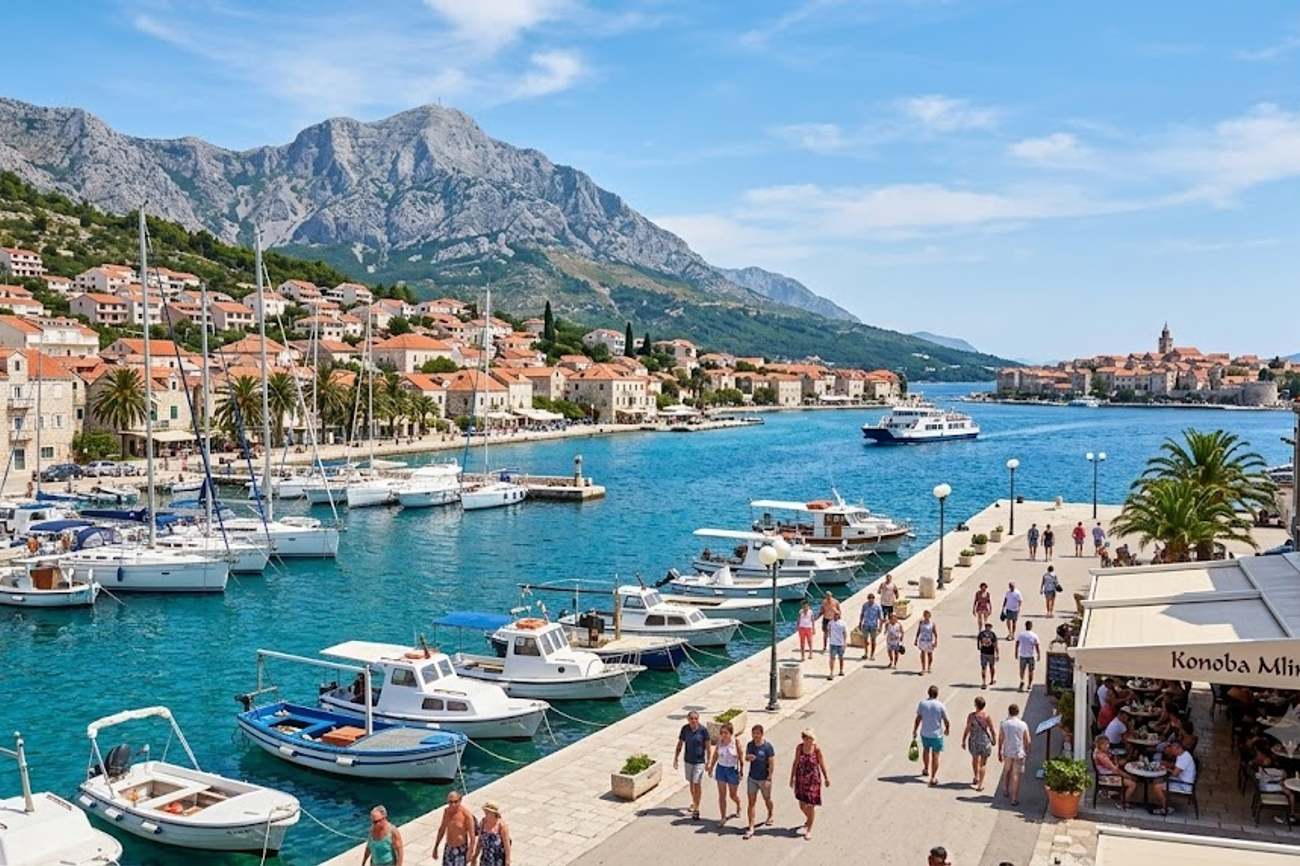
Image generated by AI
845,000 overnight stays recorded between January 1 and September 15, 2026, signal a remarkable resilience for the town of Orebić. This figure, while reflecting a moderate decline compared to the previous year, underscores a critical pivot in how the Pelješac Peninsula is absorbing European travel demand. As the traditional summer peak recedes, the data reveals a destination successfully decoupling its economic viability from the volatile July-August window and leaning into a diversified, multi-market strategy.
The Shift Toward Central European Dominance
The most significant structural change in Orebić’s visitor demographics is the ascent of Poland as the primary source market. For decades, the Croatian coast relied heavily on the "traditional" Western European axis—primarily Germany and Austria. However, 2026 data confirms a geopolitical shift in travel preferences. Polish travelers have now surpassed all other international groups to become the leading driver of overnight stays in Orebić.
This transition is not accidental. It reflects a broader trend where Central European outbound tourism is seeking a balance of value, accessibility, and authenticity. The Polish market, in particular, has shown a high propensity for Mediterranean destinations that offer a blend of coastal leisure and cultural depth without the hyper-commercialization found in larger hubs like Split or Dubrovnik.
The stability of the destination is further bolstered by a strong regional base. The proximity of Bosnia and Herzegovina and Slovenia ensures a consistent flow of short-haul visitors who are less susceptible to the flight disruptions or pricing spikes that often plague long-haul travel. This creates a "buffer" of demand that protects the local economy during the volatile transition from summer to autumn.
Quantifying the Shoulder Season: The September Surge
The viability of the "extended season" is no longer a theoretical goal for the Pelješac Peninsula; it is a documented reality. The first 15 days of September 2026 alone generated approximately 77,000 overnight stays. When analyzed against the total seasonal volume, this September spike proves that a significant portion of the European traveling public is actively avoiding the "overtourism" peaks of mid-summer.
The following table outlines the current hierarchy of visitor markets fueling this growth:
Poland has emerged as a primary driver of tourism growth for Orebić, outpacing traditional markets like Germany in recent visitor trends. This surge is supported by broader strategic initiatives from the Croatian National Tourist Board, which focuses on diversifying source markets to ensure sustainable growth through 2026.
| Market Rank | Origin Country | Strategic Value |
|---|---|---|
| 1 | Poland | Primary growth driver; high volume |
| 2 | Bosnia and Herzegovina | Regional stability; short-haul |
| 3 | Slovenia | High repeat visitation potential |
| 4 | Croatia | Domestic resilience |
| 5 | Germany | Legacy market; consistent demand |
| 6 | Czech Republic | Emerging Central European interest |
| 7 | Austria | Traditional high-spend demographic |
This distribution suggests that Orebić is effectively insulating itself against a downturn in any single national economy. By diversifying its visitor base across seven distinct European markets, the town reduces its dependency on the German economy—which has historically been the linchpin of Croatian tourism—and taps into the rising middle-class travel appetite of the East.
Expert Analysis: The "Value-Culture" Pivot
For travelers and investors tracking the Adriatic market, the Orebić data reveals a calculated move away from "Sun and Sea" tourism toward "Experience-Based" travel. The direct consequence of this shift is a change in the type of infrastructure being prioritized. We are seeing a transition from high-density beach resorts to boutique wine tours, maritime heritage sites, and hiking trails.
The Pelješac Peninsula is leveraging its unique geography to create a "hedonic" travel experience. By integrating the region's world-renowned vineyards with its seafaring history, Orebić is transforming from a seasonal stopover into a destination. This is a strategic necessity. When a destination relies solely on beach weather, it is vulnerable to climate volatility and a narrow two-month revenue window. By promoting wine routes and gastronomy, Orebić creates a product that is viable in October and November.
Furthermore, the reliance on road and ferry connectivity—rather than purely on airport capacity—gives Orebić a logistical advantage. While major hubs struggle with International Air Transport Association (IATA) regulated slot constraints and airport congestion, the Pelješac Peninsula remains accessible to the growing trend of European road-tripping. This makes the destination particularly attractive to the Polish and Czech markets, where independent vehicle travel is a preferred mode of vacationing.
The pricing pressure created by this shift is interesting: as the destination attracts a more diverse, culture-seeking crowd, we can expect a gradual rise in "off-peak" pricing. The "cheap September" is disappearing, replaced by a premium shoulder season that rewards early planners and those seeking authenticity over crowds.
Increased demand is placing higher pressure on regional passenger logistics, particularly regarding flight connectivity and seasonal transit. Travelers are increasingly utilizing services coordinated through the Croatian Airports, which manages the critical infrastructure necessary to handle the projected rise in international arrivals.
Key Takeaways
- Market Leadership: Poland has officially overtaken traditional Western European markets to become the number one source of tourists for Orebić.
- Seasonal Extension: The recording of 77,000 stays in the first half of September proves the successful implementation of a shoulder-season tourism model.
- Volume Resilience: Despite a slight year-over-year dip, the town maintained a robust 845,000 overnight stays through mid-September 2026.
- Diversification Strategy: The shift toward wine tourism and maritime heritage is actively reducing the destination's reliance on peak-summer beach tourism.
- Regional Strength: A strong contingent of visitors from Slovenia and Bosnia and Herzegovina provides a critical safety net of short-haul demand.
FAQ: Orebić Tourism 2026
When is the best time to visit Orebić to avoid crowds? Based on 2026 data, the first half of September offers a prime balance. With 77,000 stays registered in early September, it remains active but avoids the extreme congestion of July and August while maintaining favorable weather.
What are the primary attractions in Orebić beyond the beaches? The region is now heavily focused on the Pelješac wine routes, maritime heritage museums, and hiking trails. There are also frequent ferry connections to the island of Korčula for those seeking further exploration.
Is Orebić accessible for those not flying into Croatia? Yes. The town relies heavily on regional road and ferry links across southern Croatia, making it a top choice for European travelers from Poland, Czech Republic, and Slovenia who prefer driving.
How has the visitor demographic changed in 2026? There is a marked shift toward Central Europe. While Germany remains important, Poland has become the leading market, reflecting a broader trend of Polish travelers seeking authentic Mediterranean experiences.
As the Adriatic pivots from mass tourism to curated experiences, Orebić serves as the blueprint for the sustainable coastal town of the future.
Tags: Orebić, Pelješac Peninsula, Croatia Tourism 2026, Polish Outbound Travel, Wine Tourism Croatia, Dalmatian Coast Logistics
Related Travel Guides
- Spain Is Now on the Path to Unlock More of Galicia Tourism as 14 New Routes Create a Unique Autumn Opportunity
- Oman Follows Sri Lanka as Asia’s Expanding Wellness Landscape Gains Momentum With Luxury Retreats and Ayurveda
- US Issues New Travel Advisory For Saudi Arabia Amid Regional Security Risks And Drone Threats Affecting Riyadh And Jeddah Tourists
Disclaimer
This article is for informational and educational purposes only. It does not constitute legal, financial, or professional advice. While we strive to provide accurate and up-to-date information, travel policies, regulations, and conditions change rapidly. Always verify information with official sources before making travel decisions. Nomad Lawyer makes no representations about the accuracy, reliability, completeness, or suitability of the information provided. Readers should consult qualified professionals for advice specific to their circumstances. The views expressed in this article are those of the author and do not necessarily reflect the views of Nomad Lawyer.
Raushan Kumar
Founder & Lead Developer
Full-stack developer with 11+ years of experience and a passionate traveller. Raushan built Nomad Lawyer from the ground up with a vision to create the best travel and law experience on the web.
Learn more about our team →